
How Do You Prepare a Guest Room for a Long-Term Visitor?
Preparing a guest room for a long-term visitor takes more than changing the sheets and clearing a nightstand. Someone staying for several weeks needs enough comfort, storage, privacy, and everyday function to live in the room without feeling as though they are permanently camping out of a suitcase.
The goal is not to imitate a hotel. It is to create a room that feels welcoming while giving your guest enough independence to settle into a normal routine. That usually means removing some of your own belongings, improving the bed, making usable storage available, and thinking about the small daily tasks that become surprisingly important during an extended stay.
Start by making the room feel available, not borrowed
A guest room often doubles as storage, a home office, an exercise room, or the place where miscellaneous household objects quietly migrate. That can work for a weekend visitor. For a stay lasting several weeks, the guest should not have to negotiate around boxes, files, seasonal clothes, or a desk covered with household paperwork.
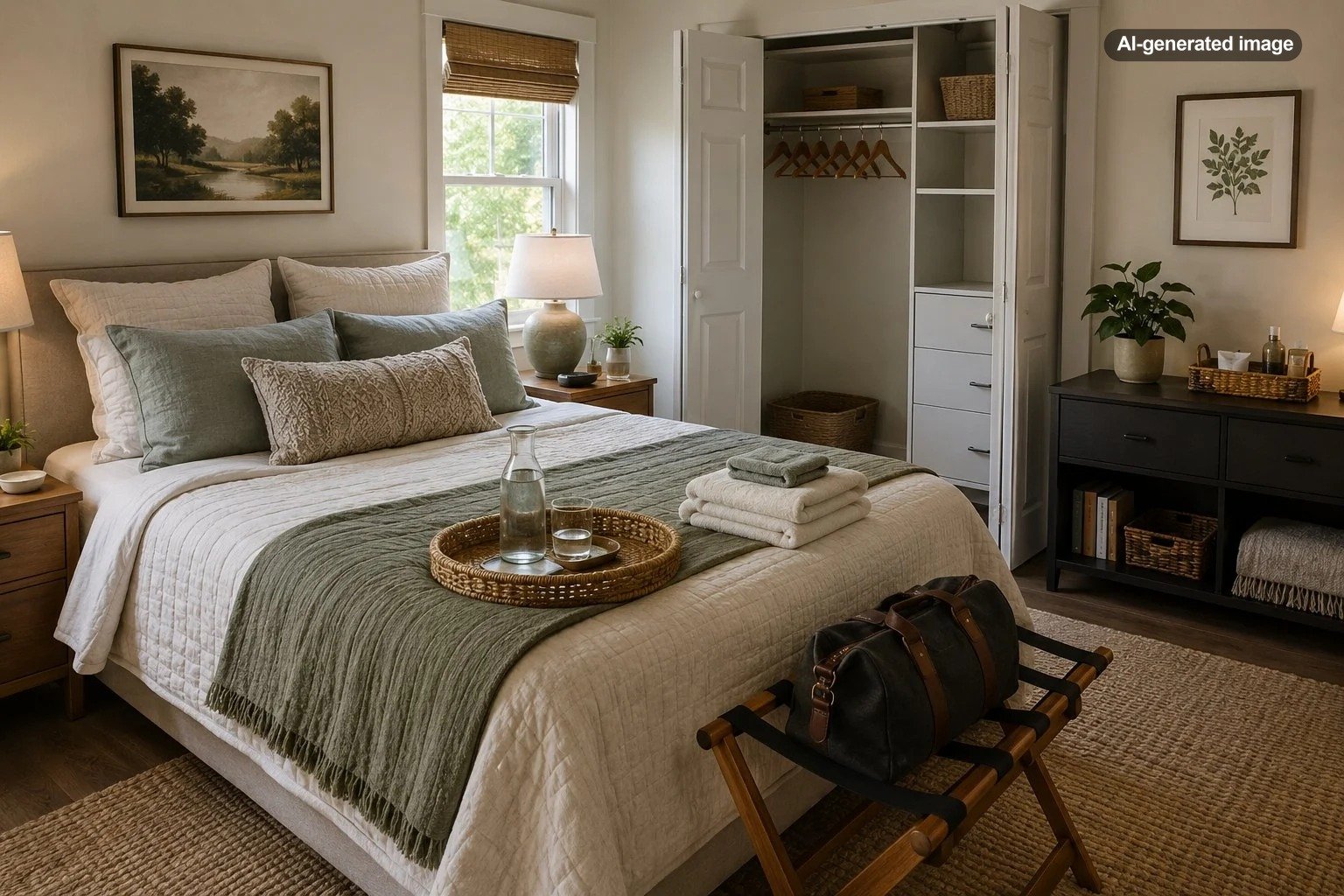
You do not need to empty the room completely, but create obvious territory that belongs to the visitor. Clear at least a substantial portion of the closet, provide several hangers, empty one or more dresser drawers, and leave accessible floor space for shoes or a travel bag. If the closet is full, a freestanding garment rack or a compact drawer unit can be more useful than pretending a crowded closet is available.
Look at surfaces as well. A nightstand should have enough open space for a phone, glasses, a book, or medication. A dresser top should not require moving framed photographs and decorative objects before a guest can set down a toiletry bag.
Make the bed comfortable enough for everyday sleep
An attractive guest bed is not necessarily a comfortable one. Before an extended visit, sleep in the room yourself for a night if practical, or at least inspect the mattress, foundation, pillows, sheets, and bed frame carefully. Listen for squeaks, check whether the mattress has obvious sagging, and make sure the bed does not shift when someone sits on the edge.
Freshly laundered sheets are the baseline. Beyond that, give the guest some flexibility. A lighter blanket plus a warmer layer is often more useful than one very heavy comforter because people have different temperature preferences. If your existing duvet insert is still in good condition but the outer bedding looks tired, changing the cover can provide a cleaner visual reset without replacing the entire bed setup.
Affiliate disclosure: CraneManor.com may earn a commission when you purchase through links on this page. This does not affect the price you pay. Learn more.
For example, a soft duvet-cover set can be a practical way to refresh an existing insert. Confirm the dimensions and care instructions before ordering, and remember that the insert itself is not included with every duvet-cover set.
Pillows deserve equal attention because a flattened or overly firm guest pillow becomes much more noticeable over a month than over a single weekend. Keeping more than one pillow available lets a visitor adjust the height or support. If the room needs a refresh, a pair of queen-size bed pillows is one simple option. Pillow comfort is highly personal, however, so avoid assuming one style will suit every sleeper.
Provide storage that can actually be used
Storage becomes one of the biggest differences between an overnight guest room and an extended-stay room. A visitor should be able to unpack enough belongings to establish a routine. Otherwise, the suitcase becomes a dresser, laundry hamper, shoe rack, and general obstacle all at once.
A useful setup might include several empty dresser drawers, closet space, hangers, a laundry basket or hamper, and a designated place for luggage. If you cannot spare much furniture, prioritize hanging space and one drawer or bin for smaller items. Under-bed containers can also work if they are genuinely empty and easy for the guest to access.
Consider what happens to the suitcase after unpacking. If there is no closet shelf or bench, it may sit open on the floor for weeks. A luggage rack can help, but so can a sturdy bench or another stable surface that does not interfere with walking paths.
Add the everyday conveniences a longer stay requires
Small inconveniences accumulate during a long visit. Make sure the guest can reach an electrical outlet without moving the bed, unplugging a lamp, or stretching a charging cable across a walkway. If outlets are limited, use an appropriate household power solution rather than creating a tangle of improvised extension cords.
Good bedside lighting matters for reading and for moving around the room after dark. A chair can be useful if the space allows it, especially for putting on shoes or taking a phone call. A wastebasket, tissues, drinking glass, spare towels, and a simple place to put laundry reduce the number of small requests a guest has to make.
Wi-Fi information is another easy courtesy. You can place the network name and guest password on a small card rather than having the visitor ask again after changing devices.
Before you decide the room is ready
- Open the closet and drawers to confirm there is truly usable space.
- Check that bedside lamps and outlets are easy to reach.
- Provide a hamper or another obvious place for laundry.
- Leave room for luggage without blocking a door or walkway.
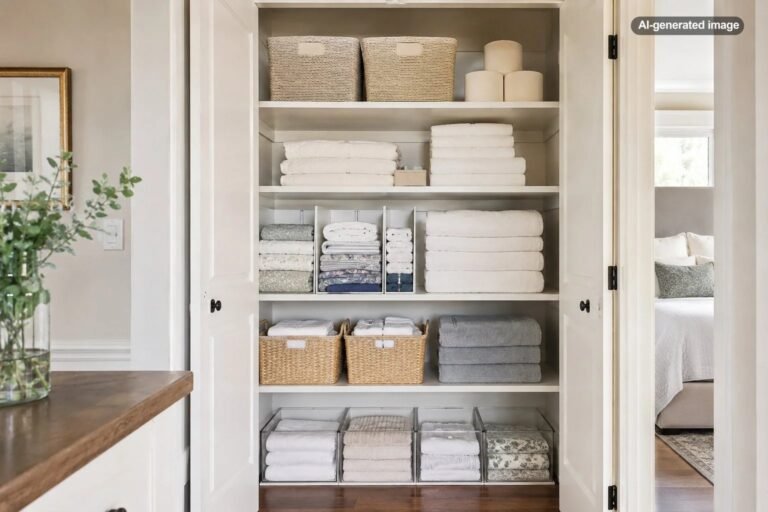
- Make extra bedding and towels easy to find.
- Remove fragile, highly personal, or irreplaceable objects you would worry about during normal daily use.
Think about privacy as carefully as comfort
Long-term guests need occasional separation from the household, even when everyone enjoys one another’s company. Check whether the bedroom door closes properly and whether window coverings provide reasonable privacy. If the room faces a street or neighboring property, evaluate it after dark with the lights on rather than assuming curtains are sufficiently opaque.
Privacy also means respecting the room as temporary personal space. Avoid routinely entering to retrieve stored household items. If you know you will need something from a closet or cabinet during the visit, move it before the guest arrives whenever possible.
If the room normally serves another purpose, decide in advance how that function will change. Asking a guest to vacate the room every weekday because the household printer or exercise equipment is inside may make an extended stay unnecessarily awkward.
Plan for clothing, laundry, and bathroom routines
A long-term visitor eventually needs to do laundry, replace towels, and replenish basic toiletries. Explain how your household handles these things early rather than waiting until the guest has run out of clean clothes.
If the visitor shares a bathroom, clear enough cabinet, drawer, or countertop space for everyday toiletries. A small basket or caddy can help when permanent storage is limited. Provide hooks or towel bars that are actually available instead of expecting the guest to drape wet towels over furniture or doors.
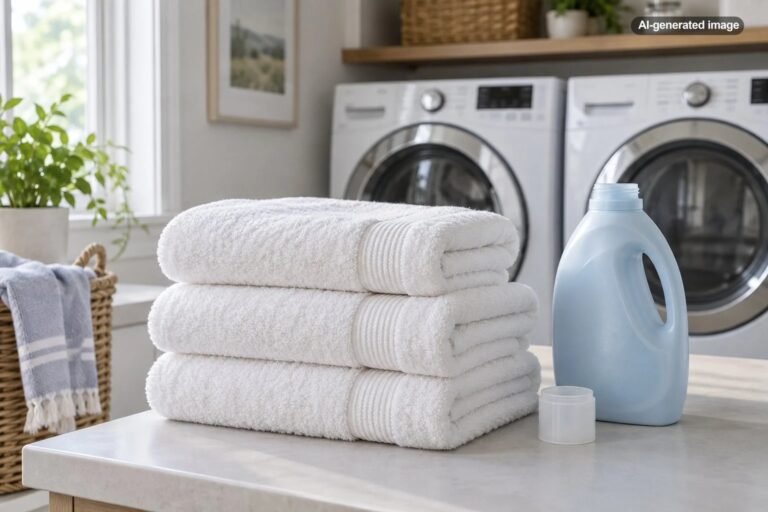
For laundry, show where detergent is kept, how the machines operate, and whether your household follows any particular schedule. These practical details may not be glamorous, but they do more to make someone feel capable and independent than decorative guest-room signs ever will.
Leave some flexibility instead of finishing every inch
A long-term guest room should not be packed so tightly with decor that there is nowhere for the visitor’s own belongings. One or two attractive accessories can make the room feel considered, but deliberately empty space is useful. A bare section of dresser, an open shelf, and a few empty hangers communicate that the room is meant to be lived in.
Ask before adding strongly scented candles, diffusers, or room sprays. Fragrance preferences vary widely, and some visitors may simply prefer an unscented sleeping space. The same principle applies to decorative pillows: a few can look polished, but a mountain that must be relocated every night quickly becomes household clutter in a different costume.
A good long-term guest room gives someone enough room to temporarily build a routine of their own.
Discuss household expectations before the stay begins
The physical room is only part of preparing for a longer visit. Clear expectations about meals, work schedules, parking, laundry, pets, quiet hours, keys, and shared spaces can prevent more friction than any bedding upgrade.
This conversation does not need to feel formal. Simply explain the household rhythms that affect the guest and ask whether they have needs you should know about. If they work remotely, for example, reliable Wi-Fi and a reasonably quiet place to take calls may matter more than adding another decorative chair.
Similarly, if your visitor has mobility limitations, consider whether the route to the bedroom and bathroom is easy to navigate. Do not assume a room is practical merely because it looks tidy.
Frequently asked questions
How much closet space should a long-term guest have?
There is no universal amount, but the space should be large enough for the clothing they are likely to use regularly. Several hangers plus a few shelves or drawers can be far more practical than a nominally available closet that is almost completely full.
Should you buy new bedding for a long-term visitor?
Not necessarily. Clean, comfortable bedding in good condition is more important than new bedding. Replace or refresh items when they are worn, flattened, stained, damaged, or no longer comfortable rather than purchasing everything automatically.
What should you remove from a guest room before a long stay?
Remove unnecessary storage, confidential paperwork, fragile valuables, items you expect to retrieve frequently, and excess decor that occupies useful surfaces. The room does not need to be empty, but your guest should have enough open space to unpack and live normally.
How can a small guest room work for an extended stay?
Prioritize vertical and concealed storage, keep walking paths clear, use furniture that earns its footprint, and leave at least one usable surface open. In a small room, reducing unnecessary objects is often more effective than adding more organizers.