

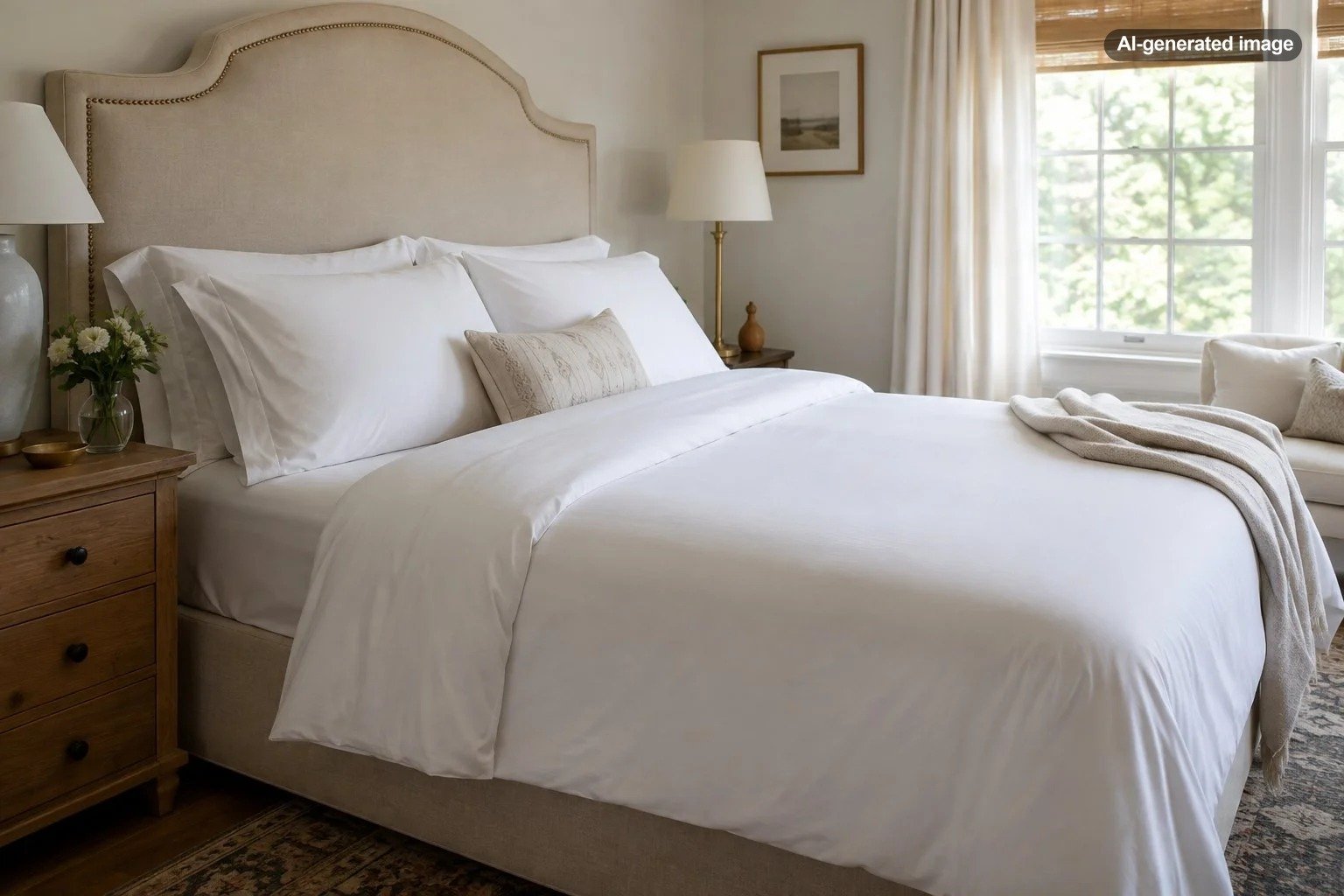
Should Guest Room Sheets Be White?
White sheets are an excellent choice for a guest room, but they are not a rule. Their biggest advantages are visual simplicity, easy coordination, and the unmistakable impression of a freshly prepared bed. Their main drawback is equally obvious: stains, makeup, body oils, and discoloration tend to show quickly.
For most homes, the better question is not whether guest sheets should be white. It is whether white bedding suits the way the room is used, how often you host, and how much laundry maintenance you want to take on.
Why white sheets work so well in guest rooms
White bedding has a useful visual quality: it immediately makes the sleeping area feel intentional. Even in a room with colorful walls, patterned curtains, antique furniture, or layered artwork, a white sheet set gives the bed a quiet foundation.
That flexibility can be especially helpful in guest rooms because these spaces often change more slowly than primary bedrooms. You may replace a throw pillow, duvet cover, bedside lamp, or wall color over time while keeping the same basic sheets.
White also makes it easier to mix replacement pieces. If a fitted sheet eventually wears out, you are not necessarily trying to match a very specific shade or discontinued print. Two whites from different manufacturers may still vary slightly, but the result is usually less visually disruptive than mismatched colors or patterns.
White sheets make cleanliness visible, for better and worse
There is a reason a freshly made white bed tends to look especially clean: there is nowhere for obvious discoloration to hide. That can be reassuring for guests, particularly when the room is used only occasionally and you want the bed to look unmistakably prepared for their arrival.
The tradeoff is that white fabric can display marks that darker or patterned bedding disguises. Cosmetic residue, self-tanner, hair products, food, and ordinary body oils can all become more noticeable. This does not necessarily mean white sheets are harder to clean, but they can make you more aware of when cleaning is needed.
White is not automatically more comfortable
Color has very little to do with how enjoyable the bed is to sleep in. Guests are more likely to notice whether the sheets feel clean, fit the mattress properly, stay in place overnight, and suit the temperature of the room.
Fabric choice can make a much larger difference. Cotton percale often has a crisp feel, sateen tends to feel smoother, linen has a relaxed texture, and synthetic or blended fabrics may appeal to households prioritizing easy care. No single material is right for every sleeper.
Fit deserves attention as well. A beautifully styled guest bed becomes considerably less appealing when the fitted sheet pops off the corners or bunches underneath the sleeper. Check the mattress dimensions, including its height, before buying replacement bedding.
The best guest room sheets are the ones that make the bed look prepared and make the guest forget about the sheets once they climb in.
When another sheet color may be more practical
White is versatile, but several situations make an alternative worth considering.
- Frequent hosting: A pale gray, oatmeal, taupe, or muted blue can be slightly more forgiving of small marks while still looking calm and coordinated.
- Children use the room: A subtle pattern or medium-light neutral may reduce the stress associated with every visible spot.
- The guest room doubles as another space: If the room is also an office, craft room, or casual lounging space, colored bedding can make the bed feel more integrated with the rest of the decor.
- You prefer warmer interiors: Bright white can look stark next to cream walls, natural woods, antique textiles, or warm-toned paint. Ivory, flax, mushroom, or soft beige may create a more harmonious effect.
- You simply dislike white bedding: A guest bedroom should still feel like part of your home. There is no hospitality rule requiring hotel-style white sheets.
Think about undertones, not just color names
One of the easiest ways to make guest bedding look considered is to pay attention to undertones. A cool, bright white can look slightly blue beside warm cream paint. A yellow-toned ivory may look dingy beside a crisp white duvet.
If you want a monochromatic bed, place the sheets, pillowcases, duvet or comforter, and bed skirt next to one another in natural daylight before deciding they match. They do not need to be identical, but the differences should look intentional.
You can also avoid the matching problem entirely by creating contrast. White sheets under a deep green quilt, for example, do not need to match anything except the other white sheet pieces. Likewise, cream sheets can work beautifully under a patterned duvet that already contains warm neutral tones.
Should the sheets match the duvet?
Not necessarily. In fact, a little contrast often gives a bed more depth. White sheets can work with almost any duvet color, from charcoal to floral prints, while colored sheets can create an attractive layered effect beneath a white or cream coverlet.
The simplest approach is to decide which part of the bed should visually lead. If the duvet, quilt, or headboard is already patterned or strongly colored, quiet sheets keep the composition balanced. If the top of the bed is very simple, lightly colored or patterned sheets can add personality when the bedding is turned down.
How many guest sheet sets should you keep?
For a guest room that is used occasionally, two complete sets for the bed are usually more convenient than one. One can be on the mattress while the other is clean and ready to rotate in. This also helps when guests arrive close together or laundry timing is inconvenient.
Storage matters almost as much as quantity. Keep complete sets together so you are not searching for matching pillowcases shortly before someone arrives. Folding each set together or storing the smaller pieces inside one of the pillowcases can make linen storage easier to manage.
Before you decide
- Consider how often the guest room is actually used.
- Choose a color that works with the room’s existing undertones.
- Check mattress size and depth before buying fitted sheets.
- Choose fabric based on feel and care preferences, not color alone.
- Think realistically about stain treatment and laundry maintenance.
- Keep at least one clean backup set if you host regularly.
How to make white guest bedding feel less plain
If your hesitation is that white sheets seem boring, remember that very little of the sheet set is visible on a fully made bed. Texture and color can come from elsewhere.
A quilt, coverlet, duvet, lumbar pillow, folded blanket, upholstered headboard, or patterned curtains can give the room personality while the sheets remain intentionally simple. This approach also lets you change the mood of the room without replacing every layer of bedding.
For a softer look, mix white with natural materials such as wood, woven baskets, linen, cotton, or wool. For a more graphic room, pair it with dark furniture or a strongly colored throw. White sheets are less a design statement than a useful blank background.
What matters more than having white sheets
If you are preparing a room for overnight guests, prioritize the basics before worrying about whether the sheets resemble those in a boutique hotel. Wash the bedding according to its care instructions, make sure it smells neutral rather than heavily fragranced, check that the mattress is fully covered, and provide pillows and blankets appropriate for the room’s temperature.
It is also worth examining stored guest bedding before making the bed. Sheets that have sat unused for a long period may benefit from being refreshed even if they were clean when stored.
Finally, make the room easy for a guest to use. A comfortable bed is helped enormously by a clear place for a phone, accessible lighting, somewhere to put a suitcase, and enough space to move around without navigating household storage.
So, should you choose white?
For many guest rooms, yes. White sheets are adaptable, easy to style, and particularly good at making a freshly prepared bed look fresh. They are also easy to pair with changing decor over the years.
But there is no functional requirement for guest sheets to be white. Soft neutrals, muted colors, and restrained patterns can be just as welcoming and may suit some households better. Choose the option that you can keep clean, maintain easily, and coordinate with the room.
A guest is unlikely to remember whether the sheets were pure white, ivory, or pale blue. They are much more likely to remember that the bed felt clean, comfortable, and thoughtfully prepared.
Frequently asked questions
Are white sheets better for a guest bedroom?
They are often convenient because they coordinate easily and make visible cleanliness easy to assess, but they are not inherently better than other colors. Fabric, condition, fit, and cleanliness are more important.
What is the best alternative to white sheets?
Soft neutrals such as ivory, beige, light gray, flax, or muted blue are versatile alternatives. Choose a shade that complements the room’s walls, furniture, and top bedding.
Do guest room sheets and pillowcases need to match?
No. Coordinating colors can look intentional even when they are not identical. Matching pieces are simply the easiest option when you want a visually quiet, orderly bed.
Should you wash guest sheets before someone arrives?
If the bedding has been stored for a long time or no longer seems fresh, laundering it according to its care instructions before making the bed can be worthwhile. Bedding should always be clean for a new guest.