Should You Cover Patio Furniture Every Night?
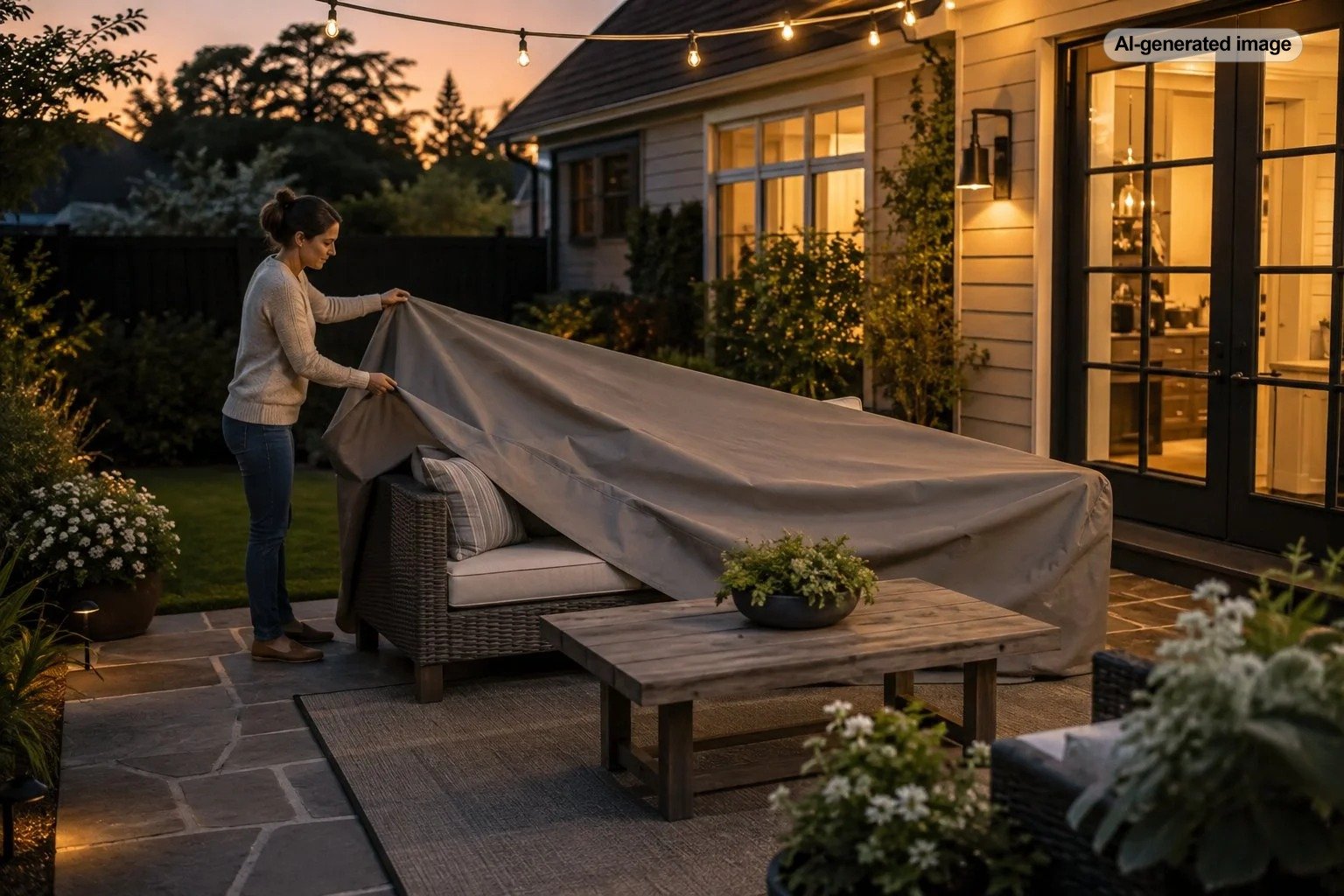
No, you do not necessarily need to cover patio furniture every night. A nightly cover routine makes the most sense when your furniture is exposed to frequent dew, rain, pollen, falling debris, strong sun, bird activity, or other conditions that leave you cleaning and drying it more often than you would like.
The more useful rule is to cover outdoor furniture when doing so meaningfully reduces exposure, while making sure the furniture is clean and dry enough that the cover does not simply trap moisture underneath. Climate, furniture material, cushions, placement, and how often you use the patio all matter.
When nightly covering is worth the effort
A patio with no roof or overhang gives furniture very little protection from weather and airborne debris. In that setting, covering pieces after they are dry can reduce how much rain, pollen, dust, leaves, and general grime land directly on the furniture between uses.
Nightly covering can also make sense during seasons when heavy dew is common. Dew may seem minor compared with a rainstorm, but repeated moisture can leave cushions damp in the morning and make exposed surfaces slower to become usable. A cover can reduce direct exposure, although condensation can still occur underneath it.
Strong sunlight is another reason to consider regular covering. Outdoor materials are designed for exterior use, but prolonged exposure can still contribute to fading and weathering over time. If a seating area receives hours of intense direct sun and sits unused much of the week, keeping it covered between uses may be a practical maintenance habit.
When you probably do not need to cover it every night
Furniture beneath a deep porch roof, pergola with substantial protection, screened enclosure, or other sheltered area may already avoid much of the exposure that makes covers worthwhile. If your furniture remains clean and dry for days at a time, a nightly ritual can become more work than protection.
Frequent use matters too. If you eat outside every morning and evening, repeatedly installing and removing several fitted covers can become tedious. In mild, dry weather, it may be more sensible to leave durable outdoor frames uncovered and concentrate on protecting cushions or covering the set only when rain, storms, extended absence, or messy seasonal conditions are expected.
| Situation | Cover nightly? | Why |
|---|---|---|
| Fully exposed patio | Often worthwhile | Reduces routine exposure to weather and debris |
| Covered porch | Usually optional | The structure may already provide substantial protection |
| Heavy dew or humid nights | Use judgment | Cover only when furniture is dry and ventilation is adequate |
| Furniture unused for several days | Usually helpful | Limits accumulated dirt and weather exposure between uses |
| Wet furniture after rain | Wait first | Trapping existing moisture under a cover can be counterproductive |
Dry furniture before you cover it
This is one of the most important parts of a successful covering routine. Placing a cover over furniture that is already wet can hold moisture close to the surface instead of allowing it to evaporate. That is particularly undesirable around cushions, fabric, seams, crevices, and areas where organic debris has accumulated.
Classic Accessories advises that furniture should be clean and completely dry before it is covered and notes that condensation can still occur because of humidity and dew point. The manufacturer also recommends storing cushions separately when possible rather than assuming a furniture cover will eliminate every moisture concern.
Fit and ventilation matter as much as frequency
A cover that fits poorly can undermine the entire routine. An oversized cover may collect water in low spots or move excessively in wind, while one that is too small may leave significant portions of the furniture exposed. Measure the furniture at its widest, deepest, and tallest points and compare those dimensions with the cover manufacturer’s sizing guidance.
Ventilation is also valuable. Classic Accessories says air vents on its patio covers are intended to reduce condensation buildup and wind lofting. Secure straps, buckles, elastic hems, or similar fastening systems can also help keep a properly sized cover in position during breezy weather.
Affiliate disclosure: CraneManor.com may earn a commission when you purchase through links on this page. This does not affect the price you pay. Learn more.
If you need a fitted option for a compatible lounge chair, a Classic Accessories Veranda cover is one example from the manufacturer’s water-resistant patio-cover line. Measure carefully before ordering, secure the cover as directed, and remember that water-resistant protection does not mean every trace of moisture or condensation will be excluded.
What about cushions?
Cushions deserve a slightly different strategy from metal, resin, wood, or other furniture frames. Even when the frame can comfortably remain outside, cushions may benefit from being moved to a dry storage location during wet stretches or long periods between uses.
A cover can save time when moving every cushion indoors after every use is unrealistic, but it should not become an excuse to seal damp cushions underneath. If cushions have been caught in rain or feel damp from humidity, allow them to dry appropriately before covering or storing them. Follow the furniture or cushion manufacturer’s care instructions when available.
A practical covering routine
What to do
- Check whether the furniture is dry before covering it.
- Brush away leaves, pollen, crumbs, and other loose debris that would otherwise be trapped underneath.
- Remove or separately store cushions when conditions make lingering moisture a concern.
- Install a correctly sized cover without forcing it over sharp corners or stretching it excessively.
- Secure the cover so wind cannot easily lift or shift it.
- After wet weather, uncover the furniture when practical and check that moisture is not lingering underneath.
This approach is usually more sensible than following a rigid every-night rule. During a dry week, you may barely need the covers. Before several rainy days, a vacation, a pollen-heavy stretch, or a season when the patio is rarely used, covering consistently can save considerable cleanup.
What people often overlook
The cover itself needs care. Dirt, moisture, and organic material can collect on it just as they do on furniture. Let a wet cover dry before folding it for storage, and follow its manufacturer’s cleaning instructions rather than assuming it can go into a washing machine.
Also consider whether water can pool on horizontal sections. Dining sets and deep seating arrangements sometimes create low areas where a large cover can sag. Proper sizing and positioning can help, and the furniture should still be checked periodically rather than remaining covered indefinitely without inspection.
The best covering routine protects your furniture without trapping the very moisture you are trying to avoid.
FAQ
Should patio furniture be covered when it rains?
Covering dry furniture before rain is generally useful when the furniture will otherwise be directly exposed. If the furniture is already wet, allowing it to dry before sealing it beneath a cover is usually the better approach.
Can patio furniture stay covered for several days?
Yes, particularly during periods when it is not being used, provided the furniture went under the cover clean and dry and the cover is appropriate for outdoor use. Periodic checks are sensible after prolonged damp or humid weather.
Do furniture covers stop condensation?
No cover can guarantee that condensation will never develop. Humidity and temperature changes can still create moisture beneath a cover, which is why ventilation and starting with dry furniture matter.
Should outdoor cushions stay under the furniture cover?
That depends on the cushion manufacturer’s guidance and your conditions. Separate dry storage provides more protection during wet or humid periods, while a ventilated furniture cover may be convenient during shorter stretches of ordinary weather.