
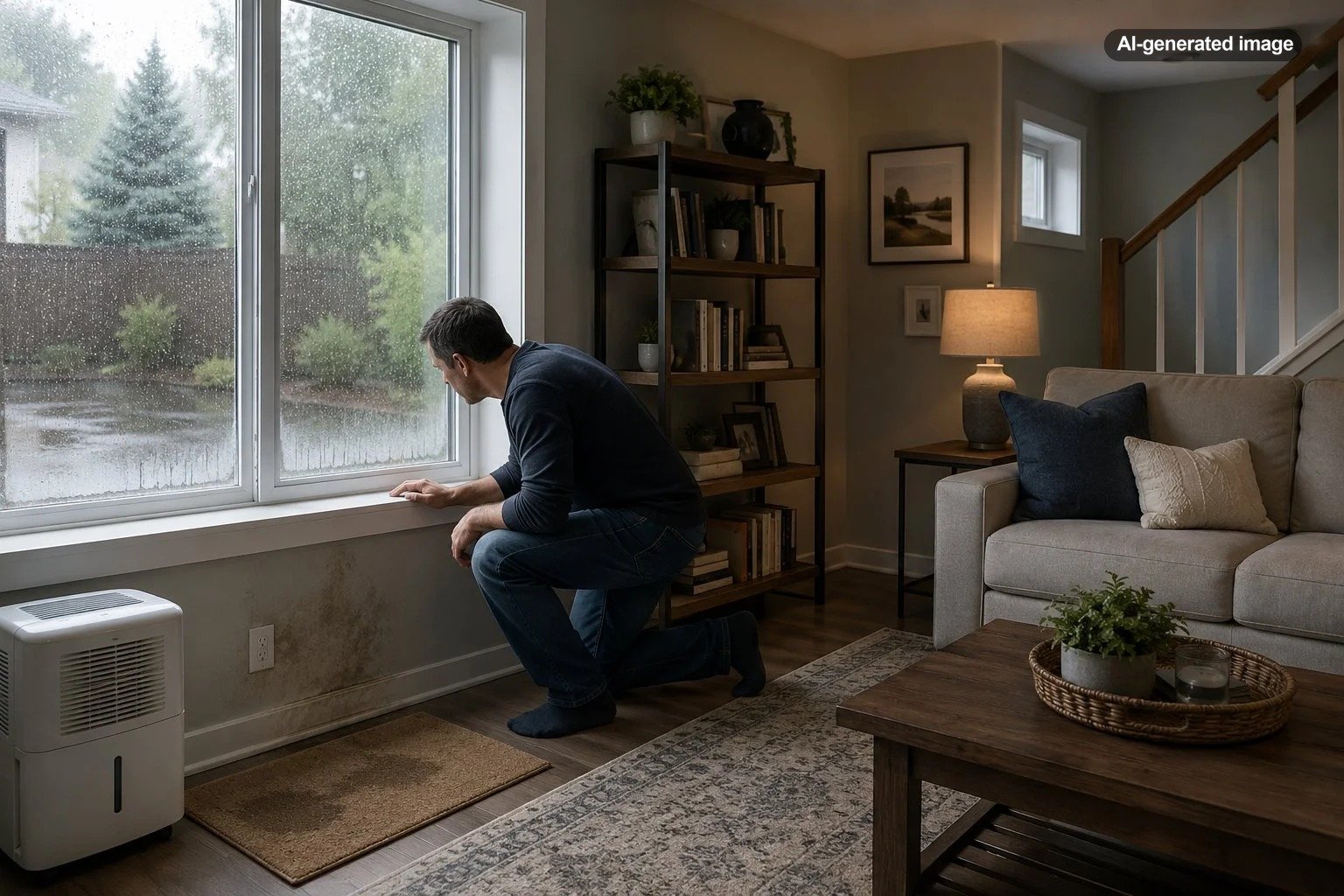
Why Does My House Smell Musty After It Rains?
If your house smells musty after it rains, the rain itself is usually not creating the odor. More often, wet weather is revealing a moisture problem that already exists or temporarily raising indoor humidity enough to make a previously faint odor more noticeable. Common possibilities include damp basements or crawl spaces, small roof or window leaks, moisture entering around the foundation, condensation, wet building materials, or mold growing somewhere that is not immediately visible.
The useful question is not simply how to cover the smell. It is where the moisture is coming from and why the odor becomes stronger after rain. Treating the moisture source is what prevents the problem from returning.
Why rain can make a house smell musty
Musty odors are closely associated with damp conditions. The U.S. Environmental Protection Agency notes that mold requires moisture to grow and recommends controlling indoor moisture as the central strategy for preventing mold growth. The Centers for Disease Control and Prevention likewise advises addressing both mold and the moisture problem that allowed it to grow.
Rain can change conditions around and inside a home in several ways. Soil next to the foundation becomes saturated. Roofs, flashing, siding, windows, and exterior joints are exposed to moving water. Outdoor humidity can rise, and cool interior surfaces may collect condensation if humid air reaches them. In a basement, crawl space, attic, wall cavity, or enclosed closet, even a relatively modest increase in moisture can make an existing earthy or stale odor easier to detect.
A musty smell does not prove that you have a particular type of mold, nor does odor alone reveal exactly where the problem is. It does, however, give you a useful clue: if the smell predictably tracks rainy weather, investigate water entry and humidity rather than trying to perfume the room.
Start where rain is most likely to affect the house
The fastest way to narrow down the cause is to work from the exterior inward. After a rain, walk around the house when conditions are safe. Look for water collecting near the foundation, overflowing or poorly draining gutters, downspouts releasing water close to the building, damaged exterior finishes, and areas where the ground directs water toward rather than away from the house.
Then inspect the interior spaces nearest those areas. Basements and crawl spaces deserve particular attention because moisture can enter through foundation cracks, joints, penetrations, or damp soil conditions. Check along exterior walls, around basement windows, near floor-to-wall joints, beneath stairs, around stored boxes, and behind furniture where airflow may be limited.
Upstairs, look at ceilings and walls below the roof, especially around chimneys, skylights, roof valleys, plumbing vents, and exterior wall intersections. A roof leak does not always produce a dramatic drip. It may first appear as discoloration, softened drywall, peeling paint, a damp attic surface, or an odor that intensifies after storms.
What to do after the next rain
- Note which room or area smells strongest instead of assuming the odor is coming from the whole house.
- Check nearby ceilings, walls, floors, baseboards, windows, closets, cabinets, and stored materials for dampness or water staining.
- Inspect the corresponding exterior area for drainage or weather-entry problems.
- Check indoor relative humidity and compare readings in the affected room with other parts of the home.
- If you find moisture, focus on identifying and correcting its source before cleaning, repainting, or masking the odor.
High humidity may be enough to bring out the smell
Not every rainy-day odor comes from water actively leaking through the building envelope. Indoor humidity may simply climb high enough to make a basement, bathroom, laundry area, closet, or poorly ventilated room smell stale. Porous materials such as carpet, cardboard, fabric, wood, and upholstered furniture can also hold moisture and odors.
EPA guidance recommends keeping indoor relative humidity below 60 percent when possible, ideally between 30 and 50 percent. CDC guidance recommends keeping household humidity no higher than 50 percent. A basic humidity meter can help you determine whether rainy weather corresponds with a noticeable indoor humidity increase.
If humidity is the primary issue, air conditioning, appropriately used dehumidification, exhaust ventilation, and better air circulation can help. But there is an important distinction: humidity control manages moisture in the air; it does not fix liquid water entering through a roof, wall, window, plumbing line, or foundation.
Do not overlook the basement or crawl space
If the smell is strongest on the lowest level of the house, wet weather may be affecting the foundation or the soil beneath the building. Rainwater that remains close to the foundation can contribute to damp conditions, which is why exterior drainage deserves attention before assuming the solution is simply a stronger dehumidifier.
In a crawl space, look for standing water, visibly wet soil, damp wood, plumbing leaks, staining, or insulation that appears wet or displaced. In a basement, pay attention to corners, utility penetrations, areas behind finished walls, floor edges, and stored belongings. Cardboard boxes and textiles can develop a musty odor after repeated exposure to damp conditions even when there is no obvious puddle.
Finished basements can make troubleshooting harder because moisture may be concealed behind drywall, flooring, or built-ins. If the odor is persistent but you cannot find a visible source, avoid casually opening walls or disturbing suspect material. EPA advises caution when investigating hidden mold because disturbing contaminated materials can release spores.
Windows, doors, and exterior walls can admit surprisingly small amounts of water
A window does not have to be visibly pouring water to create trouble. Failed exterior seals, flashing problems, deteriorated trim, or drainage issues can allow water into materials around an opening. The same principle applies to exterior doors, wall penetrations, vents, and transitions between different building materials.
Look for bubbling or peeling paint, swollen trim, staining below windows, soft drywall, recurring condensation, or flooring that changes shape near an exterior wall. These signs do not identify the exact defect, but they help establish where a more careful inspection should begin.
What to do if you find visible mold
If you discover visible mold, address the moisture source as part of the cleanup. Cleaning a surface while leaving the underlying leak or humidity problem unchanged makes recurrence much more likely. EPA guidance says that small mold areas of less than roughly 10 square feet can often be handled by homeowners following appropriate cleanup precautions, while larger areas, extensive water damage, contaminated water, suspected HVAC contamination, or difficult hidden growth can justify professional evaluation.
For hard surfaces, EPA recommends cleaning mold with detergent and water and drying the surface completely. Porous materials can be more difficult because mold may penetrate spaces that cannot be effectively cleaned. EPA also advises against simply painting or caulking over moldy surfaces.
Be careful with chemical cleaners. CDC states that bleach should never be mixed with ammonia or other cleaners because dangerous gas can result. Follow product directions and use appropriate protective measures for the work being performed.
Drying the house matters, but timing matters too
When a leak, spill, or other water event occurs, drying should begin promptly. EPA recommends drying wet or damp materials within 24 to 48 hours when possible to reduce the likelihood of mold growth. The same general principle applies after rain-related water intrusion: remove the water source, dry affected materials, and verify that concealed areas are not staying wet.
This is also why repeatedly running a dehumidifier without investigating the cause can be misleading. The machine may lower the room’s humidity and reduce the odor while operating, yet the building material behind a wall or beneath flooring may become wet again after every storm.
Should you have the house tested for mold?
Routine mold testing is often less useful than homeowners expect. CDC does not recommend routine home mold testing, and EPA notes that if visible mold growth is present, sampling is generally unnecessary. There are no federal limits that turn a mold sample into a simple pass-or-fail result for a house.
If you can see mold or identify a musty area with a clear moisture source, correcting the water problem and properly addressing affected materials is generally more actionable than learning the species name. Specialized investigation may still have a role in complicated situations, but sampling should not substitute for finding and fixing moisture.
How to keep the smell from returning
Once you have found the cause, prevention becomes much more straightforward. Keep gutters and drainage working properly, direct water away from the foundation, repair roof, wall, window, and plumbing leaks promptly, keep HVAC drain components functioning correctly, use bathroom and kitchen exhaust appropriately, and monitor humidity in rooms that tend to become damp.
Also pay attention to storage. Leaving cardboard boxes, rugs, textiles, or furniture tightly against a repeatedly damp wall can make odors harder to control and can conceal early warning signs. A little breathing room around vulnerable surfaces makes inspection easier and can improve air movement.
The goal is not to make a house completely free of mold spores; EPA notes that this is not realistically possible. The practical goal is to keep indoor materials dry enough that mold does not have the moisture it needs to grow.
Frequently asked questions
Does a musty smell after rain always mean mold?
No. The odor can be associated with damp materials, elevated humidity, wet soil near or beneath the house, or other moisture conditions. Mold is one possibility, especially when moisture persists, but odor alone is not a diagnosis.
Will a dehumidifier get rid of a musty smell?
It can help when excessive indoor humidity is contributing to the problem. It will not repair a roof leak, foundation water entry, plumbing problem, failed window detail, or other source of liquid water.
Why does the smell disappear when the weather dries out?
Materials and indoor air may become drier between storms, reducing the strength of the odor. A repeating rain-and-odor pattern is still worth investigating because intermittent moisture can remain a building problem even when surfaces appear dry later.
Can mold be hidden even if I cannot see it?
Yes. EPA notes that hidden mold can occur behind drywall, wallpaper, paneling, carpeting, and other concealed materials, particularly where there has been water damage or a persistent musty odor.