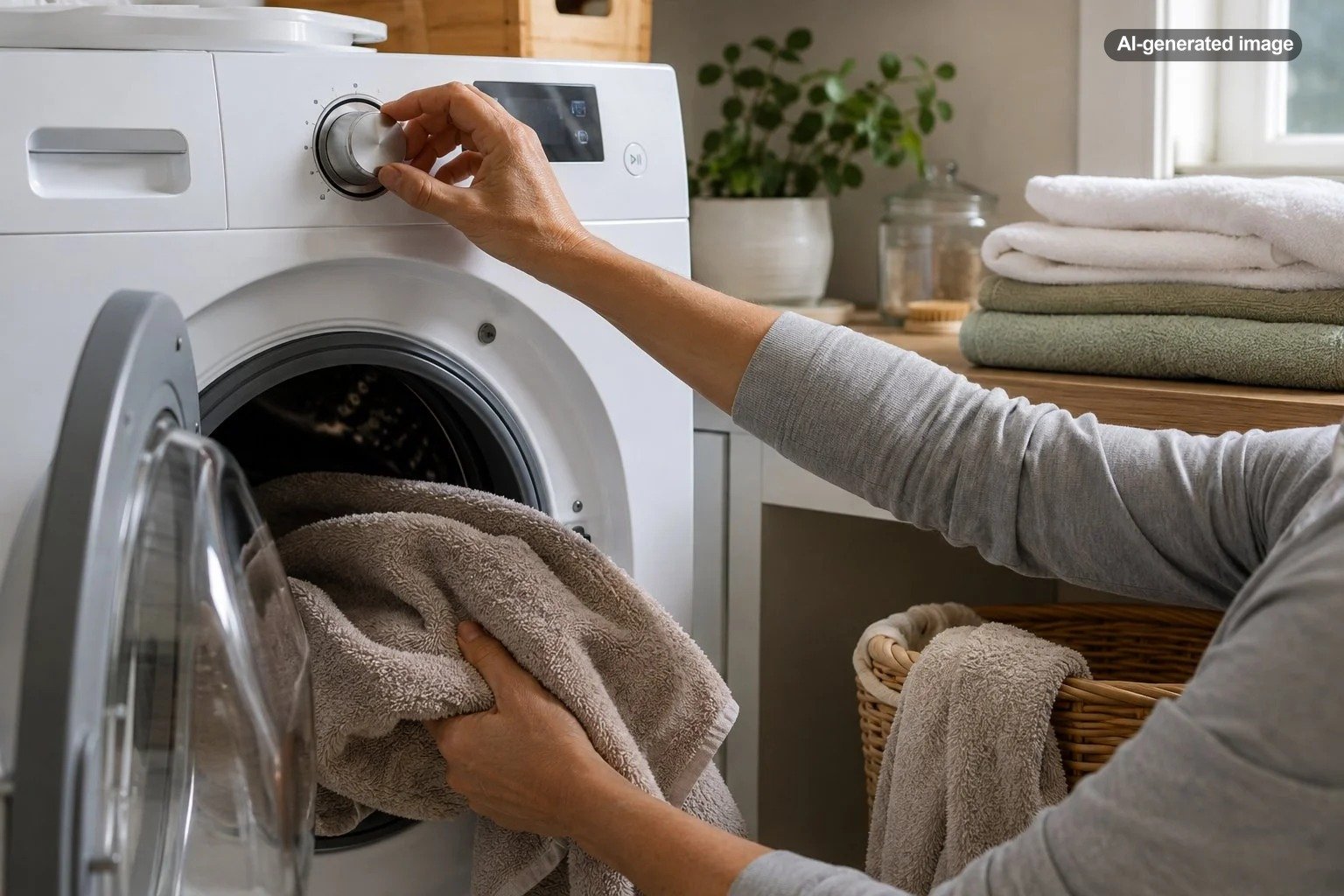
What Is the Best Water Temperature for Washing Towels?
For most everyday bath towels, warm water is the best all-around washing temperature. It gives detergent a useful working environment for removing body oils, skin residue, and ordinary soil without exposing towels to the greater fading, shrinkage, and energy use that can come with consistently choosing the hottest setting.
That does not mean every towel belongs in a warm wash. Durable white cotton towels may sometimes benefit from hot water when they are heavily soiled, while dark, brightly colored, or more delicate towels may be better suited to cool or cold water. The care label should always have the final word.
Why warm water is the practical default for most towels
Towels have a slightly different laundry job from shirts or lightly worn clothing. Their loops and dense fibers repeatedly collect moisture, body oils, skincare residue, and detergent from frequent washing. They also need to remain absorbent rather than merely look clean.
Warm water strikes a sensible balance. It is suitable for many ordinary cotton towel loads and can handle everyday soil without making maximum heat the default for every wash. Modern washers may also regulate incoming water temperatures, so the machine’s warm setting is more useful than trying to judge the exact temperature by touch.
There is another practical reason not to treat hot water as mandatory: heating wash water requires energy. ENERGY STAR recommends cold washing for many ordinary laundry loads because water heating represents a large share of washer energy use. Towels sometimes justify warmer settings because of how they are used, but there is little reason to select more heat than the fabric and level of soil require.
| Water setting | Best suited to | Main tradeoff |
|---|---|---|
| Cold | Dark colors, bright colors, lightly used towels, delicate fabrics | May need a suitable detergent and cycle for heavier soil |
| Warm | Most everyday cotton bath and hand towels | Uses more water-heating energy than cold |
| Hot | Durable, colorfast towels with heavier soil when the care label allows it | Greater potential for fading, shrinkage, fabric wear, and energy use |
When should you wash towels in hot water?
Hot water can make sense for certain loads, but it should be a deliberate choice rather than a standing rule. Consider it for sturdy white or colorfast cotton towels that are unusually dirty, greasy, or otherwise need a more intensive wash, provided their care labels allow a hot setting.
Do not assume that hotter automatically means better. Some fibers, decorative trims, dyes, and finishes can respond poorly to high temperatures. Repeatedly using the hottest cycle can also be unnecessary for towels that have simply been used after an ordinary shower and are being washed on a regular schedule.
When cold water is the better choice
Cold water deserves more credit than it sometimes receives. It can be a smart choice for dark towels, richly colored towels, lightly soiled loads, and fabrics whose labels specify cooler washing. It also reduces the energy required to heat the wash water.
Cold washing is especially worth considering when the main goal is preserving color. A stack of navy, charcoal, or saturated green towels does not necessarily benefit from repeated exposure to hot water simply because the items happen to be towels.
The limitation is that heavily soiled towels may need more than a quick cold cycle. In that situation, look at the entire laundry process: detergent amount, cycle selection, load size, and drying matter alongside water temperature.
The care label matters more than a universal temperature rule
Towels can look remarkably similar while being made from different fibers and constructions. Traditional cotton terry, organic cotton, cotton blends, microfiber, decorative hand towels, and towels with special finishes do not necessarily share the same care requirements.
Before changing your laundry routine, check the sewn-in label. Manufacturers may specify cold, warm, or another appropriate setting based on the towel’s materials and dyes. Following that guidance is particularly important with new, dark, embellished, or unusually textured towels.
The best towel temperature is the warmest setting that suits the fabric, color, and actual level of soil – not simply the hottest button on the washer.
Water temperature is only part of getting towels clean
If towels still feel stiff, smell stale, or seem less absorbent after washing, turning up the temperature may not solve the underlying problem. Laundry habits elsewhere in the cycle can have just as much influence on the result.
Use a sensible amount of detergent
More detergent is not automatically more cleaning power. Excess product can be difficult to rinse completely from dense towel fibers, particularly when the washer is overloaded. Follow the detergent directions and washer guidance for the load size, water conditions, and soil level rather than pouring by instinct.
Give towels room to move
A drum packed tightly with thick bath towels leaves less room for water and detergent to circulate through the load. Towels are bulky when dry and considerably heavier when saturated, so a visually full washer may already be carrying a substantial load.
Be restrained with fabric softener
If maintaining absorbency is important, check the towel manufacturer’s guidance before making fabric softener an automatic addition. Some softening products can leave coatings on fibers, and repeated use may work against the absorbent quality people expect from bath towels.
Dry towels completely
Do not leave clean, wet towels sitting in the washer for long periods. Move them to the dryer or drying area promptly and dry them completely. Complete drying is part of good laundry hygiene and also helps prevent the stale odor that can develop when damp textiles remain bunched together.
Before you start the load
- Read the towel care labels, especially on new or unfamiliar towels.
- Separate whites from dark or strongly colored towels when color transfer is a concern.
- Choose warm water for an ordinary compatible towel load.
- Move to hot only when the fabric permits it and the soil level justifies it.
- Choose cold when color protection, fabric care, or lower energy use is the priority.
- Avoid cramming the washer with more bulky towels than can move freely.
- Dry the load completely after washing.
What about towels used when someone is sick?
Ordinary household laundry does not necessarily require the washer’s hottest or sanitizing cycle simply because an item is a towel. For laundry associated with illness, follow current health guidance, the textile’s care instructions, and the washer and detergent directions rather than improvising with extreme temperatures.
Current CDC household guidance advises laundering clothing, towels, and linens with detergent at the recommended water temperature and drying items completely. In other cleaning guidance, the CDC describes using the warmest appropriate water setting for washable textiles. The important phrase is appropriate: the fabric still needs to tolerate the selected setting.
So, what setting should you choose tonight?
If you are standing in front of the washer with an ordinary load of cotton bath towels and the labels permit it, start with warm water. It is the most useful middle ground for routine washing.
Move toward cold for dark colors, delicate materials, lightly soiled towels, or greater energy efficiency. Move toward hot for compatible, durable towels with heavier soil when their care instructions allow it. Instead of relying on one permanent temperature setting, match the wash to the towels actually in the drum.
Frequently asked questions
Is 60 F or tap-cold water too cold for towels?
Not necessarily. Cold water can be appropriate for lightly soiled, dark, or delicate towels when the care label permits it. Washer temperatures also vary, so rely on the machine setting and textile instructions rather than assuming an exact tap temperature.
Should white towels always be washed in hot water?
No. White towels can often tolerate warmer washing than some colored towels, but their care labels should determine the maximum appropriate temperature. Routine lightly soiled whites may not need the hottest cycle every time.
Should colored towels be washed in cold water?
Cold or cool water is often a sensible option when preserving dark or vivid colors is the priority. If the towels are more heavily soiled and the label allows it, warm water may provide a useful compromise.
Does a sanitizing cycle need to be used for every towel load?
No. Sanitizing cycles use substantially hotter conditions and are not necessary for routine everyday loads. Use specialized cycles only when there is a reason to do so and when the towel and washer instructions support that choice.
What matters most if towels keep smelling musty?
Look beyond temperature alone. Avoid leaving damp towels piled up before washing, use an appropriate amount of detergent, avoid overloading the machine, transfer clean towels promptly, and dry them completely. If the washer itself has an odor, follow its manufacturer-approved cleaning procedure as well.