
Should a Guest Room Have a Desk?
Yes, a guest room can benefit from having a desk, but only when the desk earns the space it takes up. In a roomy guest bedroom, a compact desk gives visitors a place to use a laptop, write, apply makeup, charge devices, or simply set down the collection of small belongings that otherwise migrates to the nightstand. In a tight room, however, preserving comfortable circulation and space for luggage is usually more valuable than squeezing in another piece of furniture.
The best decision comes down to how the room is used when nobody is visiting. If it regularly doubles as a home office, study area, or household command center, a desk can make the room considerably more useful throughout the year. If the room exists almost entirely for overnight guests, a dresser, bench, luggage rack, or generous bedside table may serve visitors better.
Start With the Room’s Real Job
A guest room that is occupied only occasionally has a great deal of potential between visits. That makes it a natural candidate for a second function, and a desk is one of the simplest ways to create one. The room might become a quiet place for remote work, paperwork, studying, hobbies, or household planning without requiring a full-time dedicated office.
The balance changes if guests stay frequently. In that case, design the room as a bedroom first and consider the desk an extra. Visitors generally benefit more from an uncluttered path around the bed, somewhere to open a suitcase, accessible outlets, bedside lighting, and a little usable storage than from an expansive workstation.
A successful guest room desk should make the room more useful without making the room feel less welcoming.
When a Desk Makes Sense
A desk is particularly worthwhile when someone in the household actually needs a workspace between guest visits. Rather than reserving an entire room for occasional overnight stays, the room can work every week while remaining easy to reset for company.
It can also be thoughtful for guests who may need to work during a longer visit. A modest writing surface and chair can be more comfortable than balancing a laptop on the bed. Even guests who never open a computer may appreciate an additional surface for a handbag, glasses, keys, chargers, travel documents, or other small items.
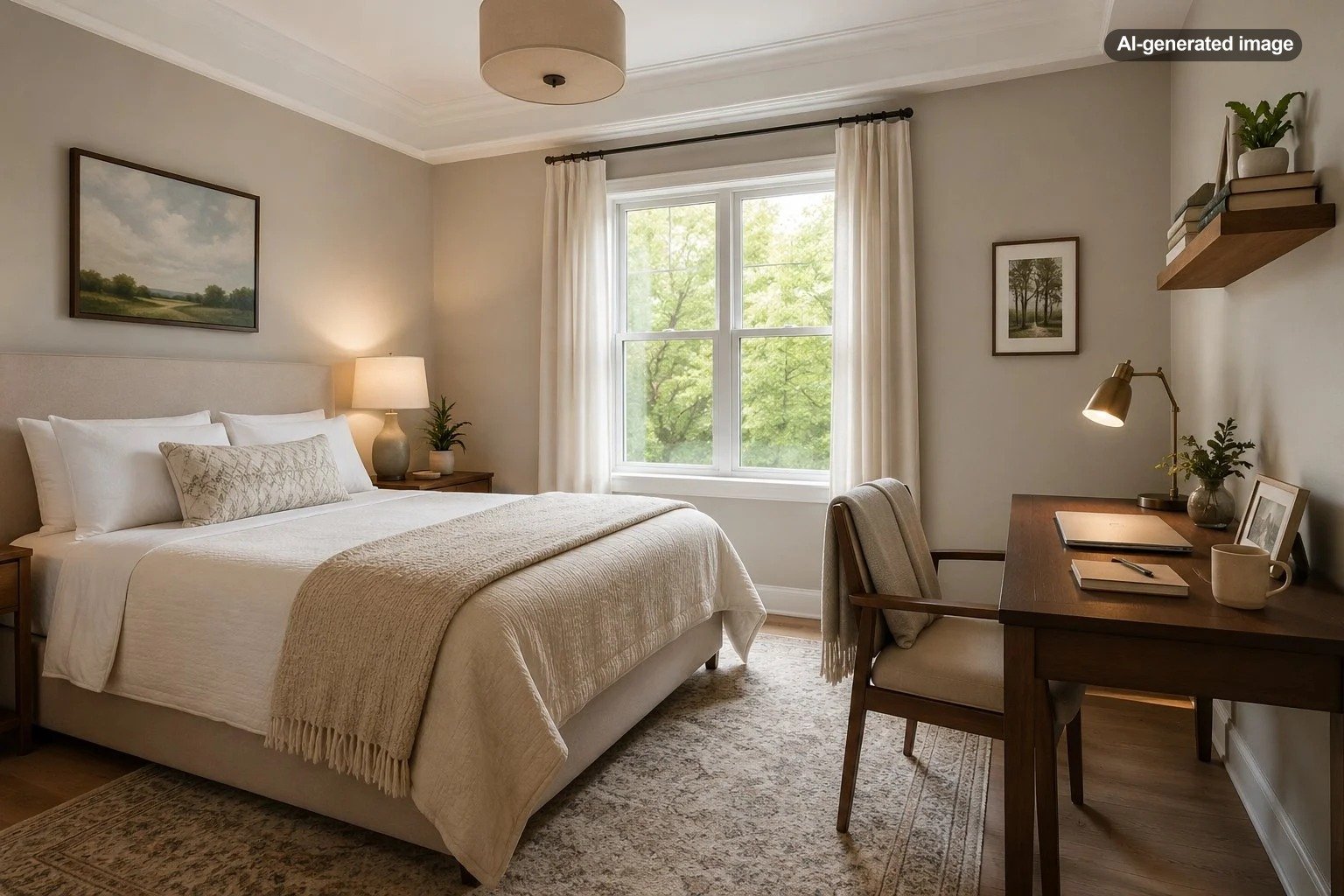
The key word is modest. A guest bedroom rarely needs an executive-size workstation. A slim writing desk, wall-mounted work surface, compact console-style desk, or carefully chosen desk that can double as a dressing table is often enough. Furniture that visually relates to the bed, nightstands, and other finishes helps the work area feel like part of the room rather than an office annex.
When You Are Better Off Without One
A desk is not automatically a sign of a well-equipped guest room. In a small bedroom, every piece of furniture competes for walking space. If adding a desk forces guests to sidestep around a chair, blocks a closet door, crowds the bed, or takes away the only reasonable suitcase location, it is solving a less important problem by creating a more noticeable one.
Consider how many horizontal surfaces the room already has. A dresser with an open top may provide enough space for personal belongings. A generous nightstand can handle devices and glasses. A console can offer a lightweight work surface while remaining visually quieter than a conventional office desk. Sometimes the smartest desk is no desk at all.
Where to Put a Desk in a Guest Room
Placement matters almost as much as size. Start by protecting the bedroom’s natural circulation. The path from the doorway to the bed, closet, and window should feel straightforward rather than like a furniture obstacle course. A chair should also be able to pull out without colliding with the bed or another major piece.
A desk against an open wall is the simplest arrangement. If the room has a window, placing the workspace nearby can provide pleasant daylight, although the exact position should account for glare on computer screens when the desk is used for work. A shallow desk can also occupy a nook that would otherwise go unused.
Another approach is to let one piece do two jobs. In the right layout, a small desk can substitute for one bedside table or serve as a dressing surface. This can be especially useful in a small space because it avoids adding a completely separate furniture zone.
How to Keep the Room From Feeling Like an Office
The most common design problem is not having a desk; it is allowing the desk to dominate the room. Large monitors, visible cords, stacks of paperwork, office equipment, and a bulky task chair can make an overnight visitor feel as though a bed was dropped into somebody else’s workspace.
Closed storage is useful when the room changes roles frequently. Papers, chargers, notebooks, and work accessories can disappear into drawers, a cabinet, boxes, or nearby closet storage before guests arrive. Leaving most of the desk surface clear immediately makes the room feel calmer.
Think about the chair as part of the bedroom design as well. If the desk is used only occasionally, a comfortable dining-style or upholstered chair may blend more naturally with the room than a visually heavy office chair. If the desk is used for full workdays, comfort should take priority; in that case, choose the work chair first and make the surrounding room accommodate it rather than pretending an occasional chair can do a demanding job.
Advantages
- Gives an occasionally used room a productive second purpose.
- Offers guests a useful surface for laptops and personal belongings.
- Can double as a dressing table or console.
- Makes better use of an otherwise empty wall or nook.
Tradeoffs
- Uses floor and wall space that might be better reserved for luggage or storage.
- Can make a bedroom feel work-oriented if office equipment remains visible.
- Adds another chair that must fit comfortably into the layout.
- May be unnecessary when other surfaces already meet guests’ needs.
What Size Desk Works Best?
There is no single ideal desk size because the right choice depends on what must happen there. For occasional laptop use, letter writing, or a small household workspace, favor a relatively shallow surface that does not project unnecessarily far into the room. Someone who works from the room every day may need more surface area for equipment and a more supportive chair.
Measure the furniture together rather than measuring the desk alone. The usable footprint includes the chair and the space needed to sit down and stand up. Also account for dresser drawers, closet doors, room doors, and luggage. A narrow desk that technically fits can still be inconvenient if its chair occupies the room’s main walking path.
Before you decide
- Decide whether the room is primarily a guest bedroom, an office, or genuinely both.
- Identify where a guest will place and open luggage.
- Make sure the bed, closet, windows, and doors remain easy to access.
- Choose a desk depth and chair combination that suits the actual work being done.
- Plan where office supplies and cords will go when guests arrive.
- Consider whether a dresser, console, or bedside table could provide the same useful surface with less furniture.
A Guest Room Office Should Be Easy to Reset
If you work in the room regularly, the strongest setup is one that can switch identities without requiring a weekend reorganization project. Give work supplies a defined storage destination. Keep the bed from becoming overflow filing space. Avoid filling the closet so completely with office materials that a guest has nowhere to hang clothing.
Before someone arrives, clear the desktop except for a lamp or another simple room accessory, remove confidential or work-related papers, manage loose cords, and make sure the guest has access to convenient outlets. The goal is not to conceal the fact that the room has another purpose. It is simply to make the bedroom function feel intentional while someone is staying there.
So, Should Your Guest Room Have a Desk?
For many homes, yes. A compact, well-placed desk can make an underused guest room work much harder and can be useful to visitors as well. It is especially sensible when the household needs a regular workspace but does not have a separate home office.
But a desk should never be added just because a guest room appears to have an empty wall. Start with comfort, circulation, luggage, storage, and the bed. If those needs are satisfied and there is still a logical place for a workspace, a desk can be an excellent addition. If fitting one requires compromises everywhere else, leave the wall open and let the guest room do its first job well.
Frequently Asked Questions
Can a guest room desk double as a nightstand?
Yes, when the desk is positioned conveniently beside the bed and its proportions work with the mattress height and surrounding furniture. This can be an efficient solution in a smaller room because one piece handles two functions.
Is a desk necessary for overnight guests?
No. Most guest rooms do not require a dedicated desk. Comfortable sleeping space, easy circulation, lighting, outlets, luggage space, and some storage are usually higher priorities.
What can I use instead of a desk?
A console table, dresser, wall-mounted surface, generous nightstand, or compact drop-leaf surface may provide enough usable space without creating a full office setup.
How do I make a guest room office feel less like an office?
Keep work materials in closed storage, clear the desktop before guests arrive, manage visible cords, and choose furniture and lighting that relate to the bedroom as a whole. The work zone should look integrated rather than visually taking over the room.