
How Do You Protect Electronics From Power Surges During a Storm?
The safest way to protect sensitive electronics from power surges during a storm is to combine everyday surge protection with one very simple precaution: when severe weather is approaching and it is safe to do so, unplug valuable electronics before the storm arrives. Surge-protective devices can reduce exposure to many voltage spikes, but no plug-in device should be treated as a guarantee against a direct or nearby lightning event.
Storm protection works best in layers. That may include properly installed whole-home surge protection, quality point-of-use surge protectors for sensitive equipment, protection for data or communication lines where appropriate, and a plan for disconnecting equipment before lightning is already close. During an outage, leaving unnecessary electronics disconnected also helps protect them from momentary surges or spikes when utility power returns. Ready.gov specifically advises turning off or disconnecting appliances, equipment, and electronics during a power outage for this reason.
Why storms can damage electronics
Electronics are designed to operate within a normal range of electrical conditions. A sudden voltage surge can stress or damage sensitive components, and storm-related electrical disturbances can reach equipment through more than one connected pathway. Power wiring is an obvious route, but communication and signal wiring can also matter in a comprehensive lightning-protection strategy. NFPA lightning-protection material describes coordinated surge protection at service equipment and downstream equipment as a way to reduce the effects of conducted and induced surges on electrical and electronic systems.
There is another vulnerable moment homeowners sometimes overlook: the end of an outage. Electricity may return with brief spikes or surges, which is why federal emergency guidance recommends disconnecting electronics and appliances during a power interruption.
The strongest storm-protection plan does not depend on a single power strip; it uses several sensible layers and good timing.
Unplug sensitive electronics before the storm arrives
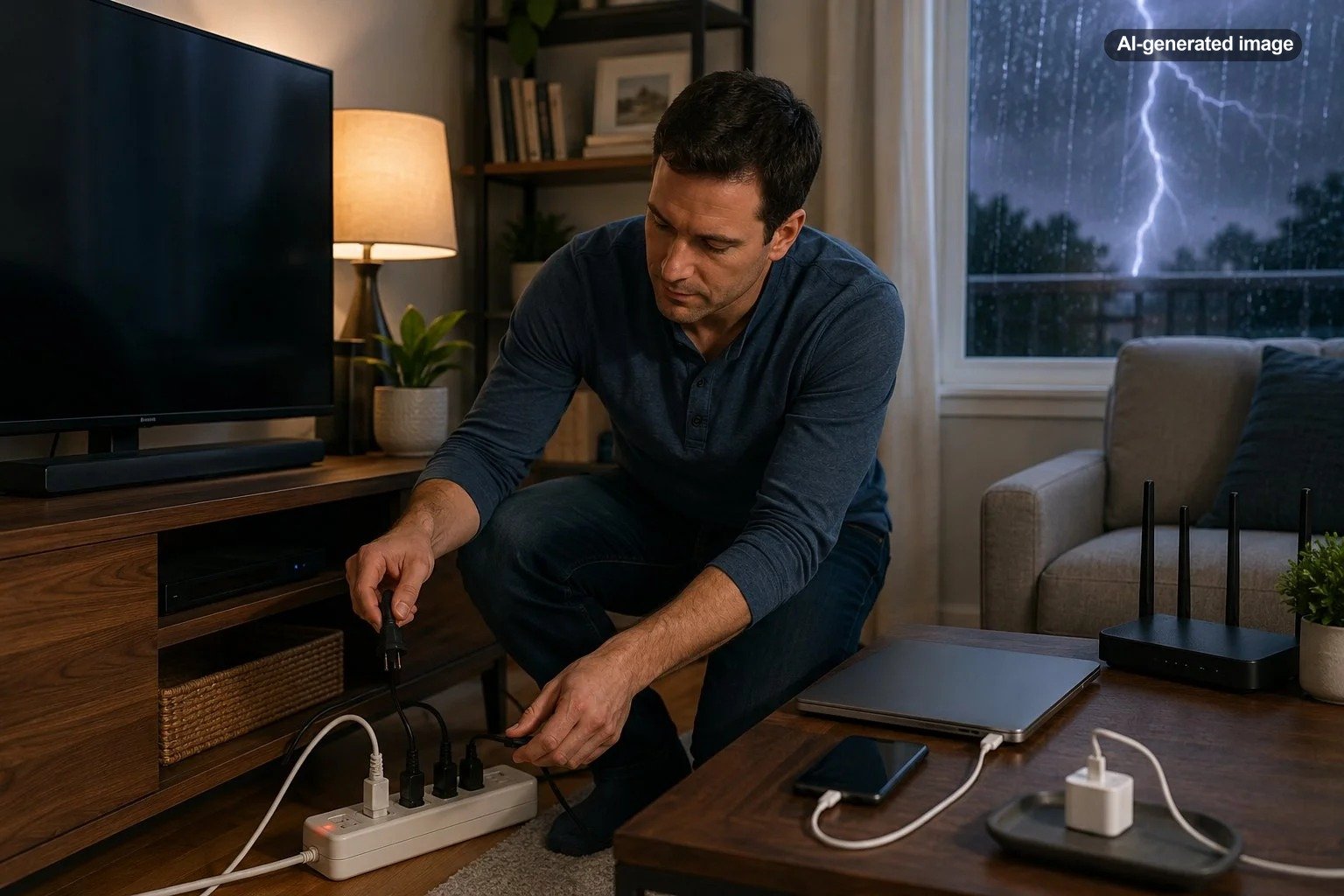
If thunderstorms are forecast, the most straightforward protection for nonessential electronics is physical disconnection from the electrical system before lightning is close. Televisions, desktop computers, monitors, gaming consoles, audio equipment, networking hardware, and other expensive electronics are reasonable priorities.
Timing matters. The National Weather Service advises people indoors to stay away from plug-in electrical devices during thunderstorms, and its lightning-safety guidance includes unplugging major appliances. In practical terms, that means storm preparation should happen before thunder and lightning are already in the immediate area, not while the storm is actively overhead.
What to do before severe weather
- Charge phones, battery packs, and other essential portable devices early.
- Save computer work and shut down equipment normally.
- Unplug nonessential sensitive electronics while conditions are still safe.
- Leave essential equipment connected only when necessary, using appropriate protection and following its manufacturer instructions.
- If the power goes out, keep unnecessary electronics disconnected until utility power has returned and appears stable.
Use real surge protection, not simply extra outlets
A power strip and a surge protector are not automatically the same thing. Some products primarily provide additional receptacles, while surge-protective devices are intended to limit transient overvoltage reaching connected equipment. When buying one, confirm that the product is actually identified for surge protection and follow its instructions, ratings, and replacement guidance.
Condition matters too. Do not continue using a power strip, extension device, or surge protector that is damaged, unusually hot, cracked, scorched, loose, or subject to a safety recall. CPSC maintains recall information for cables and surge and power-protection products, and individual surge protectors and power strips have been recalled for shock, electrocution, and fire hazards.
Consider whole-home surge protection for another layer
For homeowners who want broader protection, a qualified electrician can evaluate surge-protective equipment installed at the electrical service or panel. This approach can help address surges before they reach individual branch circuits, while point-of-use protection can add another downstream layer for particularly sensitive electronics.
The important distinction is that these layers complement one another rather than making every other precaution unnecessary. NFPA material on lightning protection discusses surge protection at service equipment as well as downstream equipment, reflecting the value of a coordinated approach.
Installation at electrical service equipment is not a casual DIY project. The appropriate device and installation method depend on the home’s electrical system and applicable requirements. If you are considering panel-level surge protection, have a qualified electrician assess the system rather than assuming a generic installation method will suit every home.
Remember devices connected by more than a power cord
A television, computer, modem, or other connected device may have electrical, coaxial, Ethernet, telephone, antenna, or other signal connections. That matters because a comprehensive protection strategy considers the conductive paths connected to valuable equipment, not simply the wall receptacle.
Do not improvise grounding or lightning-protection modifications. If your home has exterior antennas, specialized networking, extensive audiovisual equipment, a lightning-protection system, or other complex infrastructure, a qualified professional can determine what coordinated protection is appropriate.
Be careful when power goes out and comes back
A blackout can feel like the danger has passed because everything is already off, but equipment may still be physically connected to energized circuits. Ready.gov recommends turning off or disconnecting appliances, equipment, and electronics because power may return with momentary surges or spikes.
If an outage occurs, disconnecting nonessential electronics can be a sensible precaution when doing so does not expose you to active lightning hazards. Once service returns, there is usually no need to switch every device on at once. Reconnect important equipment deliberately after conditions have settled and follow manufacturer instructions for appliances or systems with specific restart procedures.
What about generators and battery backup?
Battery backup systems and uninterruptible power supplies can be useful for equipment that needs time to shut down properly or remain available during short interruptions, but their capabilities differ. Choose and use them according to the equipment manufacturer’s instructions and the backup unit’s documented specifications rather than assuming every battery backup provides the same degree of surge protection.
Portable generators introduce separate electrical, fire, and carbon-monoxide hazards. Ready.gov says generators should be used outdoors, away from building openings, and specifically advises keeping them dry and following manufacturer instructions. Generator connection to household wiring requires particular care; do not improvise a connection method.
A practical storm-protection setup
For many households, the sensible approach is uncomplicated: use appropriate surge-protective devices for valuable electronics, consider professionally installed whole-home surge protection, keep an inventory of the equipment you would unplug before severe weather, and make storm preparation part of your routine rather than a last-second scramble.
Before the next storm
- Identify your most valuable and sensitive electronics.
- Confirm which outlet strips are actual surge-protective devices.
- Replace damaged or recalled electrical accessories.
- Know which electronics can be unplugged quickly before storms.
- Include network, television, and communication connections in your planning.
- Ask a qualified electrician about whole-home surge protection if you want broader coverage.
- Keep unnecessary electronics disconnected during an outage until power has returned.
Frequently asked questions
Should I unplug my television during a thunderstorm?
If severe weather is approaching and you can unplug it before lightning is nearby, doing so removes its connection to household electrical power. National Weather Service lightning guidance advises unplugging major appliances and avoiding plug-in electrical devices during storms.
Is a surge protector enough for lightning?
Do not treat a plug-in surge protector as guaranteed protection from every lightning-related event. A more resilient approach uses layers, including appropriate surge-protective equipment and advance disconnection of nonessential electronics when severe weather is expected.
Should electronics stay unplugged during a power outage?
Federal emergency guidance recommends turning off or disconnecting electronics and appliances because power can return with momentary spikes or surges.
Do I need an electrician for whole-home surge protection?
Panel- or service-level electrical work should be evaluated and performed as appropriate by a qualified professional. The correct equipment and installation depend on the home’s electrical system and applicable requirements.