How Do You Protect a Fire Pit From Rust?
The most effective way to protect a fire pit from rust is surprisingly unglamorous: keep moisture from lingering on the metal. That means removing wet ash and debris, letting the pit cool and dry before covering it, protecting vulnerable finishes, and keeping rain, irrigation, and standing water out whenever possible.
The exact routine depends on what your fire pit is made from. Painted or powder-coated steel, stainless steel, cast iron, and weathering steel do not all behave the same way outdoors. In fact, what looks like rust on one fire pit may be damage, while the rusty-looking patina on certain weathering-steel models can be an intentional part of the material’s design.
Start by knowing what kind of metal you have
Before reaching for a wire brush or a can of paint, identify the fire pit material and finish. This matters because rust prevention is not a one-method-fits-all project.
Ordinary carbon steel relies heavily on its painted, powder-coated, seasoned, or otherwise protected surface. Once that barrier is scratched or worn through, exposed steel can begin oxidizing when moisture and oxygen reach it. Cast iron can also develop surface rust readily when left damp and may require manufacturer-specific seasoning or protective treatment.
Stainless steel generally offers greater corrosion resistance, but it is not magically immune to staining or corrosion. Dirt, ash, moisture, chemicals, and salty environments can still make exterior care important. Follow the cleaning directions for your particular fire pit rather than assuming an abrasive cleaner or aggressive wire brush is appropriate.
Weathering steel, often called Corten steel, is the important exception. Some fire pits are specifically designed to develop a stable, rust-colored exterior patina. Breeo, for example, explains that its Corten fire pits develop a protective patina as part of the material’s intended weathering process. Scrubbing that appearance away simply because it looks rusty can work against the intended finish.
Keep ash and debris from becoming a damp sponge
Leaving old ash in a wood-burning fire pit is convenient until rain, humidity, or condensation enters the picture. Ash and debris can hold moisture against the bottom and interior surfaces, extending the amount of time the metal remains damp.
After every few uses, or sooner if the pit will sit unused, allow the fire and all remaining material to cool completely. Remove the ash according to the manufacturer’s directions. Solo Stove’s current fire-pit care guidance likewise recommends regular ash removal as part of routine maintenance and emphasizes working only after the pit is completely cool.
What to do
- Allow the fire pit and all ash to cool completely.
- Remove loose ash and burned debris using the method recommended for your model.
- Inspect the bottom, drainage areas, seams, and air openings for trapped debris.
- Wipe away remaining residue with a cleaning method suitable for the finish.
- Let the fire pit dry fully before installing a cover or placing it into storage.
This is especially worthwhile before a rainy stretch or seasonal storage. A clean, dry fire pit is much easier to protect than one containing several inches of damp ash.
Use a cover, but do not trap moisture underneath it
A properly fitted cover can substantially reduce direct exposure to rain, dirt, and other outdoor grime. Solo Stove, for example, describes its Shelter fire-pit cover as weather-resistant protection intended to shield compatible fire pits from the elements. The important detail is that a cover works best as part of a moisture-control strategy, not as permission to seal a wet fire pit under fabric.
Wait until the fire pit is completely cool before covering it. It should also be reasonably dry. If rain has already entered the bowl or damp ash remains inside, deal with that moisture before leaving the pit covered for an extended period.
Fit matters as well. A cover that constantly blows off is not doing much protecting, while a makeshift sheet that creates deep pockets can collect rainwater. Use the manufacturer’s recommended cover when available, or choose one appropriately sized and designed for outdoor equipment.
The goal is not merely to cover the fire pit; it is to shorten the amount of time vulnerable metal stays wet.
Prevent standing water around and inside the pit
Take a look at the fire pit after a typical rainstorm. If water is pooling in the bowl, sitting around a base, or repeatedly splashing onto the same section from a sprinkler, correcting that exposure can be more useful than repeatedly treating rust after it appears.
Keep manufacturer-designed drainage openings unobstructed. Do not drill new drainage holes or modify a gas, propane, alcohol-fueled, or otherwise manufactured fire pit unless the manufacturer specifically permits the modification. Altering a fire appliance can create problems far more consequential than a rusty surface.
Placement can also make maintenance easier. Where the manufacturer permits it, a location protected from routine irrigation and excessive runoff will generally demand less rust control than a spot where the pit is soaked several times a week. Always preserve the clearances and placement requirements in the fire pit’s manual; corrosion prevention should never override fire safety.
Repair damaged protective finishes before corrosion spreads
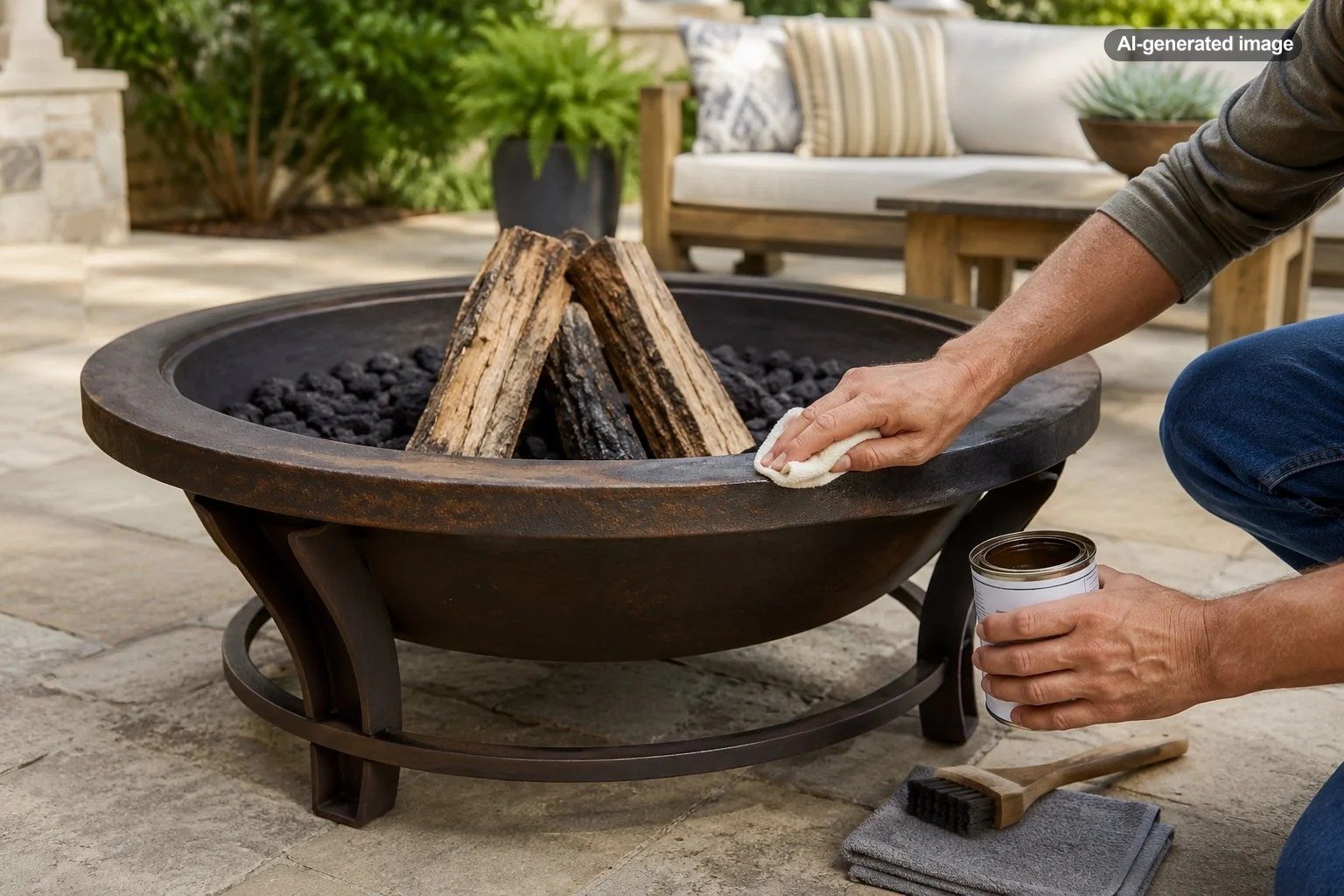
On painted or coated steel, small chips and scratches deserve attention because they expose the underlying metal. Inspect high-contact areas periodically, especially around rims, feet, handles, fasteners, and places where accessories rub against the body.
If you find a damaged coating, consult the manufacturer before applying ordinary household paint. A fire pit is exposed to heat, and finishes that are suitable for a patio chair are not automatically appropriate near combustion. Use only a repair product and preparation method suitable for the specific fire pit, surface, and temperature exposure.
Likewise, avoid attacking every rust spot with the most aggressive tool available. Heavy abrasives can damage adjacent coatings or change the appearance of stainless and weathering steel. Start with the manufacturer’s cleaning and refinishing directions.
Before you decide
- Confirm whether the metal is coated steel, stainless steel, cast iron, or weathering steel.
- Check whether the rust-colored surface is intentional patina or unwanted corrosion.
- Look for scratches, chips, peeling coatings, deep scaling, or thinning metal.
- Use only cleaners, coatings, and repair methods appropriate for the model.
- Contact the manufacturer if corrosion affects structural parts, fuel components, burners, connections, or supports.
Give coastal fire pits extra attention
Homes near saltwater can be tougher environments for outdoor metal. Salt deposits and persistent humidity can make routine inspection and cleaning more important, even for materials that normally resist corrosion well.
Breeo notes that weathering steel performs differently depending on environmental conditions and specifically points to salt exposure as a consideration for Corten steel. If your patio receives salt spray or salty wind, consult the manufacturer’s guidance for your exact model and clean deposits using approved methods rather than assuming the normal inland maintenance schedule will be sufficient.
Moving a portable pit beneath appropriate weather protection during long periods of disuse may help, provided the location is suitable for storage and the unit is completely cool. Never operate an outdoor fire pit in an enclosed storage area simply because moving it back outside is inconvenient.
Know when rust is more than cosmetic
A little superficial discoloration on an otherwise sound piece of exposed steel is different from deep scaling, holes, weakened legs, deteriorated fasteners, damage around a burner, or corrosion affecting a gas connection. Once rust begins compromising components that support the fire pit or contain and deliver fuel, the question is no longer simply how to make the surface look better.
Fire safety also matters during ordinary maintenance. The U.S. Consumer Product Safety Commission advises consumers never to use gasoline to start or restart a backyard fire and to use appropriate fire starters only before lighting. CPSC has also issued warnings concerning certain fire pits that burn pooled alcohol or other liquid fuel because of serious pool-fire and flame-jetting hazards. Rust treatment should never involve working on a hot or burning fire pit.
A simple routine that prevents most avoidable rust
You do not need to turn fire-pit ownership into a weekend restoration hobby. For a conventional metal wood-burning pit, a sensible routine is to let it cool completely, remove accumulated ash, keep drainage and ventilation areas clear, dry the surfaces, inspect the finish, and cover the pit before prolonged exposure to wet weather.
At the beginning and end of your outdoor season, take a closer look for damaged coatings, loose components, deep corrosion, and water-trapping debris. Portable models that will not be used for months can be cleaned and stored according to their manuals.
The best approach is preventative rather than cosmetic. Keeping water and damp debris away from vulnerable metal is easier than repeatedly grinding away corrosion after it develops, and understanding the material prevents you from accidentally treating an intentional weathered patina as a defect.
Frequently asked questions
Should you cover a fire pit every time it rains?
If the manufacturer permits outdoor covering, keeping a completely cool, dry fire pit under a properly fitted weather-resistant cover is a practical way to limit rain exposure. Avoid sealing significant moisture or wet ash underneath the cover for long periods.
Can you leave ash in a fire pit?
It is better not to leave accumulated ash in a metal wood-burning fire pit indefinitely. Once completely cool, periodic ash removal helps prevent debris from holding moisture against interior surfaces and keeps drainage and airflow areas easier to inspect.
Should you paint a rusty fire pit?
Not automatically. First identify the metal and finish. A coated-steel model may have a manufacturer-approved refinishing procedure, while weathering steel may be designed to develop a rust-colored patina. Never apply an ordinary coating simply because it is labeled for outdoor metal; fire pits are also exposed to substantial heat.
Is surface rust on a fire pit dangerous?
Surface discoloration can be primarily cosmetic, depending on the material, but deep corrosion, holes, thinning metal, damaged supports, or corrosion near burners and fuel components deserves more caution. Stop using the unit if its structural integrity or fuel system appears compromised and seek model-specific guidance.