How Do You Secure Outdoor Furniture on a High-Rise Balcony?
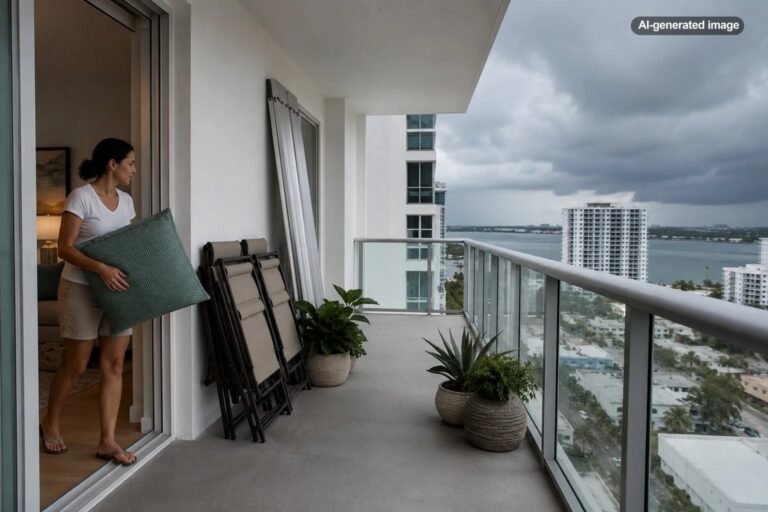
To secure outdoor furniture on a high-rise balcony, start by bringing lightweight and loose items indoors, then restrain furniture that must remain outside only with methods approved for your building. High-rise balconies can experience strong, turbulent wind, so a chair that seems perfectly stable on an ordinary afternoon should not be treated as permanently secure.
The safest strategy is layered: choose low-profile furniture that is difficult to lift, keep cushions and small accessories easy to store, position larger pieces away from exposed edges when practical, and use only building-approved anchoring or restraint points. When strong winds or severe weather are forecast, moving furniture indoors is generally a better plan than trusting a casual tie-down arrangement.
Start With Your Building’s Rules
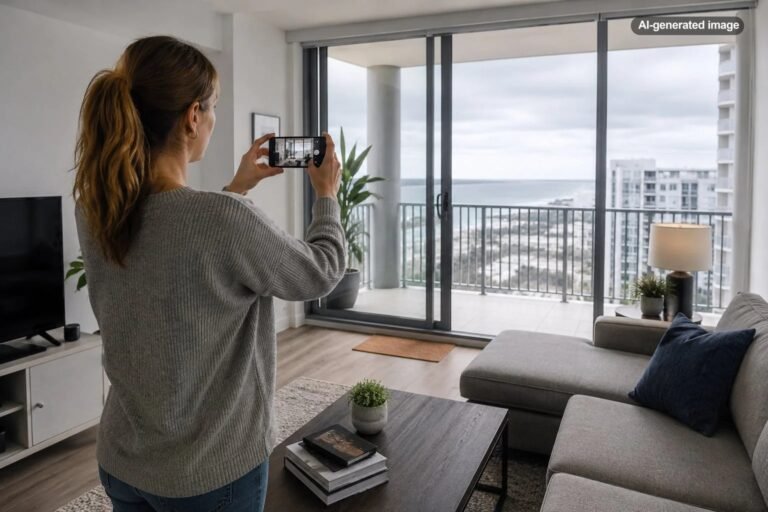
Before buying straps, anchors, weights, or hardware, check what your building actually permits. Condominium associations, apartment managers, and high-rise owners may restrict drilling, attachments to railings, floor penetrations, umbrellas, grills, planters, privacy screens, or other objects that can affect the building envelope or create a falling-object hazard.
That matters because there is no universal high-rise balcony anchoring method. A concrete balcony slab, glass guard system, metal railing, and waterproofed terrace each have different structural and maintenance concerns. Altering them without permission can damage finishes or waterproofing and may create a problem larger than the furniture you were trying to secure.
Choose Furniture That Is Easier to Manage in Wind
Furniture selection is part of the security plan. Low, compact pieces generally present fewer wind-management problems than tall, broad, lightweight pieces. Folding chairs, very light side tables, freestanding screens, umbrellas, and empty lightweight planters deserve particular attention because they can be easy for wind to move.
Heavier furniture can be more stable, but weight is not a guarantee. Wind can push, slide, tip, or lift objects depending on their shape, orientation, and exposure. Instead of asking only whether a table feels heavy, consider how much surface area it presents to the wind and whether there are parts that can catch air.
| Balcony item | Everyday approach | Before strong winds |
|---|---|---|
| Lightweight chairs | Keep grouped or restrained if building rules allow | Bring indoors |
| Large table | Keep in a protected position and use approved restraints if needed | Move indoors when practical or follow the building’s storm procedure |
| Cushions and pillows | Use secure storage between uses | Bring indoors |
| Umbrella | Keep closed when unattended | Close, remove, and store indoors |
| Planters and decor | Keep away from edges and avoid unstable arrangements | Bring loose or lightweight pieces indoors |
Use Restraints Only With Approved Attachment Points
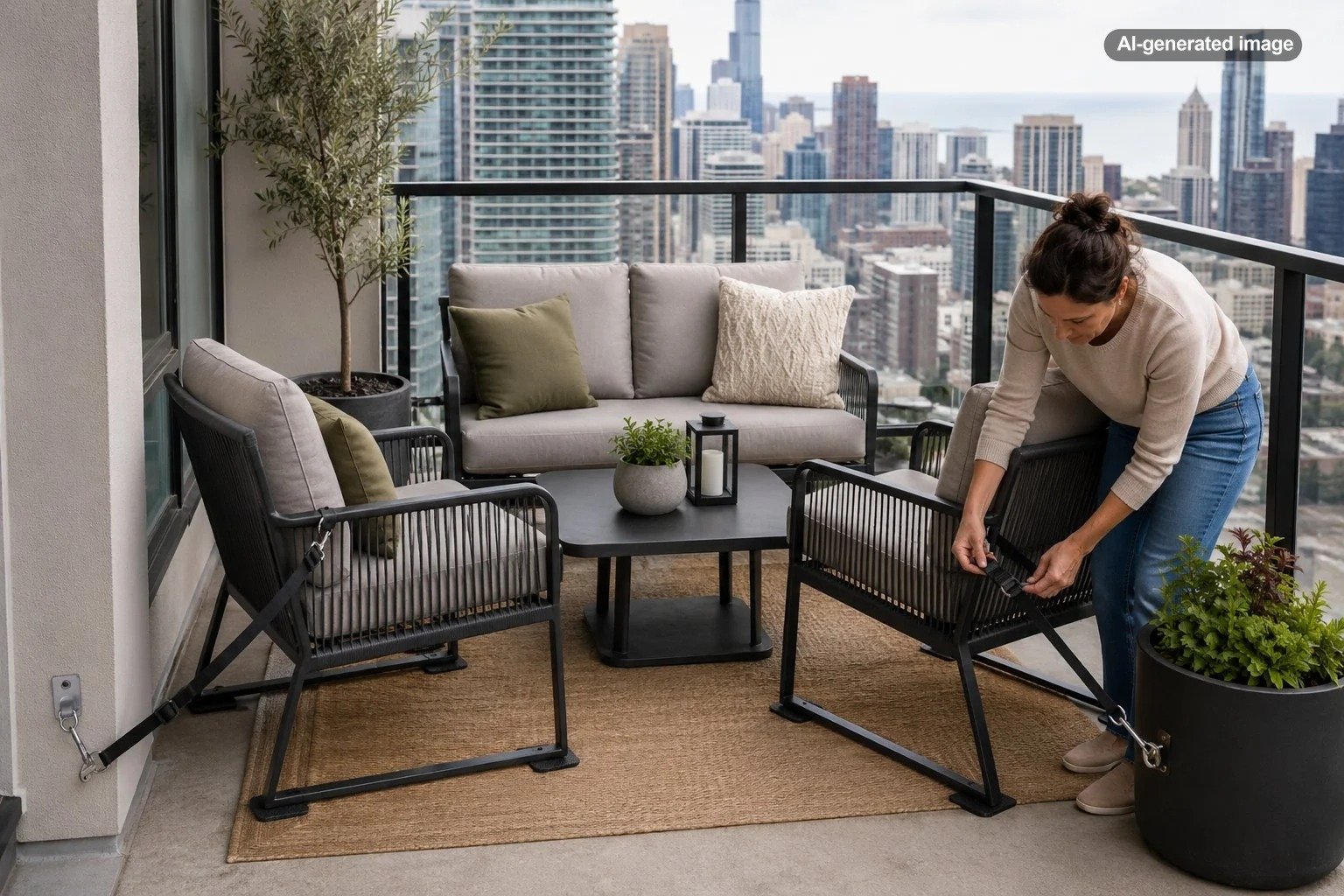
If your building allows furniture to be restrained, the attachment point matters as much as the strap. A restraint is useful only when every part of the system can handle the forces involved. Tying a strong strap to an unsuitable railing component, decorative screen, drain, pipe, or other improvised point does not create a reliable anchoring system.
Ask management whether the balcony has approved attachment points or whether a specific restraint method is permitted. If permanent anchoring is being considered, building management or an appropriately qualified professional should determine what can be attached to the structure without compromising waterproofing, finishes, guards, or other components.
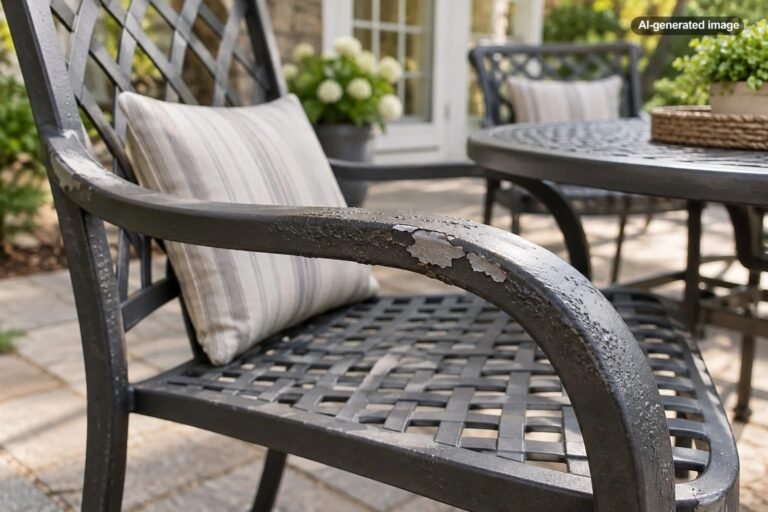
For furniture that can be restrained without modifying the building, use a configuration that limits both sliding and tipping rather than merely looping a cord around one furniture leg. Keep excess strap material controlled so it does not become another loose object. Inspect restraints periodically for looseness, fraying, corrosion, UV deterioration, and damaged hardware.
The best balcony restraint is not the strongest-looking strap; it is a complete system with an appropriate attachment point, well-secured furniture, and a plan for severe weather.
Treat Cushions, Covers, and Accessories as Separate Objects
A secured sofa is not a secured balcony if its cushions, throw pillows, trays, lanterns, watering cans, mats, or decorative objects can still blow away. These smaller items are often the easiest part of the setup to manage because they can be moved indoors quickly.
Create a designated indoor storage location before you need it. A closet, storage bench approved for balcony use, utility room, or other accessible space can make storm preparation much less chaotic. The goal is to avoid discovering during a weather alert that six cushions, a tablecloth, three planters, and an umbrella have nowhere to go.
Furniture covers require similar judgment. A well-fitted cover can protect furniture during ordinary conditions, but a loose cover can catch wind. During significant wind events, follow the cover manufacturer’s instructions and your building’s procedures rather than assuming a cover will help hold furniture in place.
Have a Different Plan for High-Wind Weather
Everyday stability and storm preparation are different jobs. The National Weather Service advises bringing unsecured objects in from patios and balconies and securing outdoor objects that could blow away. New York City Emergency Management similarly advises bringing loose, lightweight outdoor objects inside when high winds threaten.
That means the right response to a high-wind watch, severe thunderstorm threat, tropical system, or other significant wind forecast may be to clear the balcony rather than add more straps. Furniture and accessories that are easy to move should come inside early, before conditions deteriorate. Do not go onto an exposed balcony during dangerous winds to retrieve something that should have been moved earlier.
A Practical Balcony Security Routine
What to do
- Read your lease, condo rules, or building balcony policy before attaching anything to the structure.
- Identify every lightweight or loose item that can be brought indoors quickly.
- Place larger furniture in the least exposed practical location without blocking doors, drainage, or required access.
- Ask management about approved restraint or anchoring methods if furniture regularly shifts in ordinary wind.
- Secure or store cushions, pillows, umbrellas, covers, mats, planters, and decor separately.
- Inspect permitted restraints and furniture connections periodically for wear or looseness.
- When significant winds are forecast, follow official guidance and your building’s storm procedures rather than relying on the everyday setup.
Common Mistakes to Avoid
One common mistake is assuming that heavy furniture cannot move. Another is securing several pieces to one another without considering whether the entire group could slide or tip as a unit. A third is tying furniture to whatever fixed object happens to be nearby, including railings or building components that were not intended to serve as anchors.
Do not overlook the smaller pieces, either. An umbrella left open, an unsecured furniture cover, or a lightweight planter can defeat an otherwise thoughtful setup. Wind preparation is less about making the balcony feel fortified and more about reducing the number of objects that could move in the first place.
Finally, avoid waiting until a storm is underway. The National Weather Service and emergency-management agencies consistently emphasize securing or bringing in loose outdoor objects before winds increase. Your balcony should have a simple routine that can be completed while conditions are still safe.
Frequently Asked Questions
Can I tie balcony furniture to the railing?
Do not assume that you can. Railing and guard systems are structural safety components, and building rules may prohibit attaching objects to them. Ask your property manager or condo association what attachment methods, if any, are approved.
Is heavy furniture safe on a high-rise balcony?
Weight can improve everyday stability, but it does not make furniture immune to wind. Shape, exposure, placement, and wind direction also matter. Your building may have additional restrictions on what can remain outside.
Should balcony furniture stay tied down during a hurricane or severe storm?
Do not treat tie-downs as a substitute for storm preparation. Official emergency guidance recommends bringing outdoor furniture and other loose objects inside when possible and securing items that cannot safely be brought in. Follow local emergency guidance and your building’s instructions.
What should I do with balcony cushions?
Store them indoors when unattended during windy conditions and before severe weather. Cushions and pillows are easier to manage than large furniture and should not be left loose simply because the furniture beneath them is secured.
Who should I ask about permanent balcony anchors?
Start with building management, the property owner, or the condo association. Permanent attachment to a high-rise balcony can involve structural components, guards, waterproofing, and building-specific requirements, so it should not be improvised.