
What Should You Check First After Returning Home After a Hurricane?
The first thing to check after returning home after a hurricane is not the condition of your furniture, refrigerator, or landscaping. It is whether the property is safe to approach and enter. Look for downed power lines, leaning trees, damaged walls, a shifted roofline, standing water, the smell of gas, and instructions from local authorities before crossing the threshold.
If anything suggests structural collapse, electrical danger, fire, a gas leak, or contaminated floodwater, stay outside and contact the appropriate utility, emergency service, building official, or qualified professional. A careful inspection can wait. Personal safety cannot.
Wait for official clearance before returning
Do not assume that calm weather means the area is safe. Roads may still be flooded, bridges may be compromised, traffic signals may be out, and emergency crews may need clear access. Follow evacuation notices, reentry instructions, road closures, and utility advisories from local authorities.
Return during daylight when possible. Visibility makes it easier to identify wires, debris, roof damage, unstable branches, animals, and standing water. Bring battery-powered flashlights rather than candles, torches, or other open flames.
Survey the property from a safe distance
Before walking into the yard, pause at the street or driveway and study the entire property. Look upward as well as down. Hurricane hazards are often above eye level, including hanging branches, loose gutters, damaged soffits, displaced roof materials, and utility lines caught in trees.
Before you approach
- Check for fallen or sagging power lines.
- Look for leaning trees, broken limbs, and unstable fences.
- Observe whether walls, porches, carports, or roof sections appear shifted.
- Watch for standing water that may conceal sharp debris or energized equipment.
- Listen for cracking, shifting, hissing, or unusual mechanical sounds.
- Notice strong gas, fuel, sewage, or chemical odors.
Treat every downed wire as energized. Keep people and pets away, and report it to the electric utility or emergency authorities. Do not move branches, fencing, or debris that is touching a wire.
Check for structural warning signs before entering
Wind and water can damage a building without causing an obvious collapse. Inspect the foundation, exterior walls, roofline, windows, doors, porches, stairs, and attached structures. A door that suddenly will not open may be swollen from moisture, but it can also indicate movement in the frame.
Do not enter if you see a noticeably leaning wall, a sagging roof, large foundation cracks, separated framing, partially collapsed ceilings, or supports that have shifted. Leave immediately if you hear unusual creaking, popping, or movement after going inside.
Treat electricity and gas as immediate hazards
Water and electricity are a dangerous combination. Never touch wet electrical devices, outlets, panels, cords, or switches while standing in water. Do not assume a neighborhood power outage makes the system harmless; power may return without warning, and generators or damaged circuits can create additional hazards.
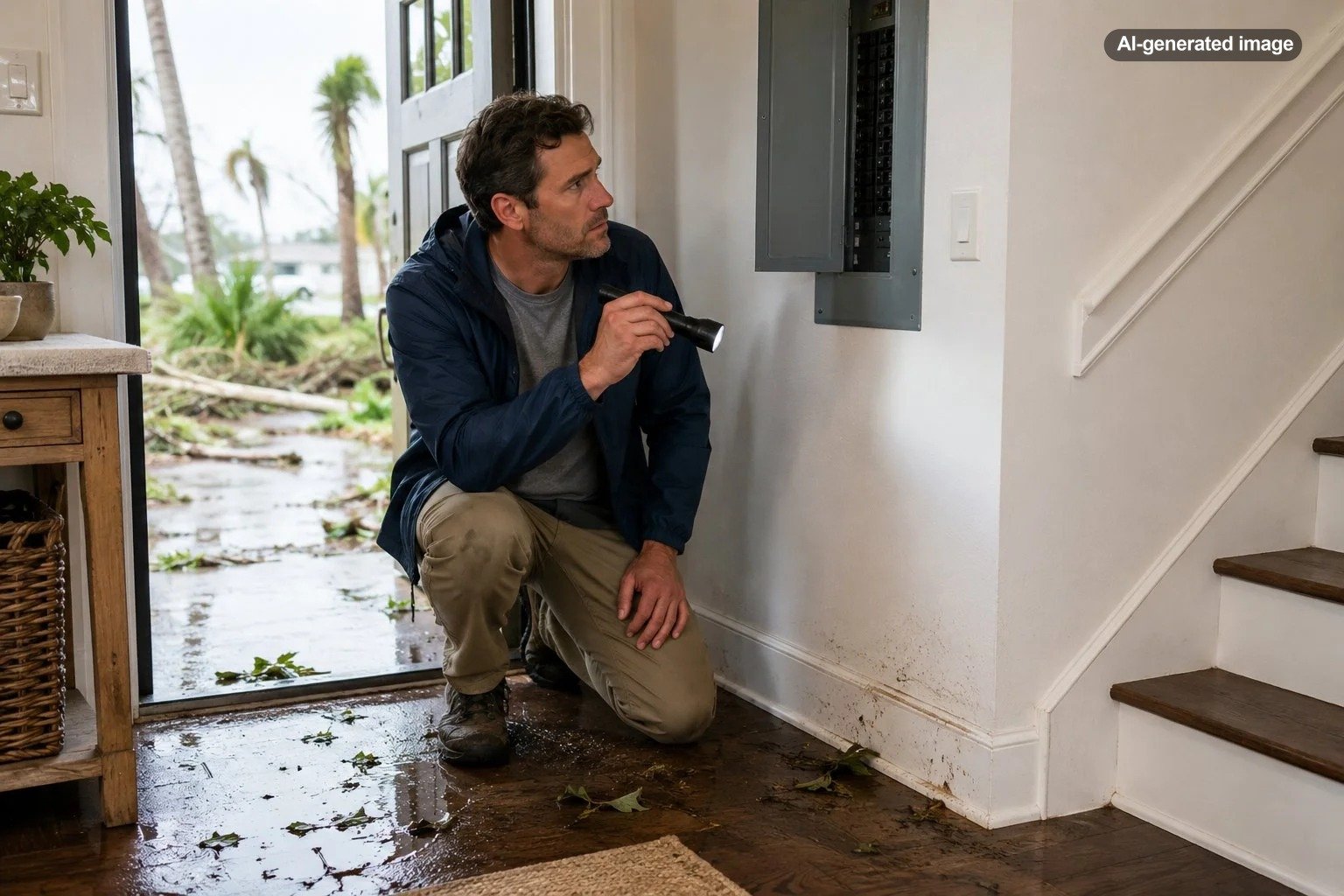
If the main electrical panel is dry, accessible, and can be reached without crossing water, follow local emergency guidance about shutting off power. If the panel is wet, damaged, buzzing, sparking, or located near standing water, stay away and call the utility or a qualified electrician.
If you smell gas, hear hissing, or suspect a damaged fuel line, leave immediately. Do not operate switches, light flames, start vehicles nearby, or use a phone inside the building. Contact the gas utility or emergency services from a safe location.
The safest inspection is the one that stops as soon as the house shows you it is not ready to be entered.
Use generators and fuel-burning equipment outdoors
Portable generators, charcoal grills, camp stoves, and pressure washers produce carbon monoxide, an invisible and odorless gas that can cause sudden illness or death. Use fuel-burning equipment outdoors and at least 20 feet from doors, windows, and vents. Never operate it in a house, garage, basement, porch enclosure, or partly open carport.
Use a battery-powered or battery-backup carbon monoxide detector whenever a generator or other fuel-burning equipment is operating. If a detector sounds, leave the building immediately and call 911 from outside.
Assess standing water before walking through it
Floodwater may contain sewage, bacteria, chemicals, fuel, displaced animals, glass, nails, and other debris. It may also conceal damaged flooring, open drains, holes, or electrical hazards. Avoid contact whenever possible.
If entry has been declared safe and limited contact is unavoidable, wear appropriate protective equipment, including waterproof boots, gloves, long sleeves, and eye protection. Cover cuts before entering the area, and wash exposed skin promptly with clean water and soap.
Children, pregnant people, older adults, and people with asthma, weakened immune systems, or other health vulnerabilities should not participate in flood cleanup.
Inspect the interior without turning systems on
Once the building is safe to enter, use a flashlight and move slowly. Do not immediately test lights, appliances, air conditioning, plumbing fixtures, or garage-door openers. A system can look intact while containing water, damaged wiring, blocked vents, or contaminated components.
Look for wet ceilings, bowed drywall, buckled floors, broken glass, displaced cabinets, fallen insulation, damaged ductwork, and water lines on walls. A ceiling holding trapped water can release suddenly. Stay out from beneath bulges or sagging materials.
What to do
- Walk only through areas that appear structurally stable.
- Photograph visible conditions before moving belongings.
- Mark rooms with standing water or ceiling damage as off-limits.
- Keep electrical, gas, and HVAC systems off until they are assessed.
- Ventilate naturally when conditions are safe and outdoor air is suitable.
- Begin water removal and drying only after hazards are controlled.
Document damage before cleanup
Take wide photographs of every affected room, followed by closer images of damaged materials and belongings. Record exterior damage, water lines, roof openings, broken windows, appliance damage, and the apparent source of water entry. Save receipts for temporary protection, cleanup supplies, lodging, and professional services.
Contact your insurer or property manager before discarding items or beginning major repairs when practical. Insurance requirements vary, so do not assume a specific loss, service, or temporary expense is covered. If an item must be removed immediately for safety, photograph it in place first when doing so does not create additional risk.
Check drinking water and food safety
Do not drink tap water until local officials or the water utility confirm that it is safe. Flooding can affect municipal systems and private wells. Use bottled water or another officially recommended source for drinking, brushing teeth, preparing food, making ice, and washing dishes until advisories are lifted.
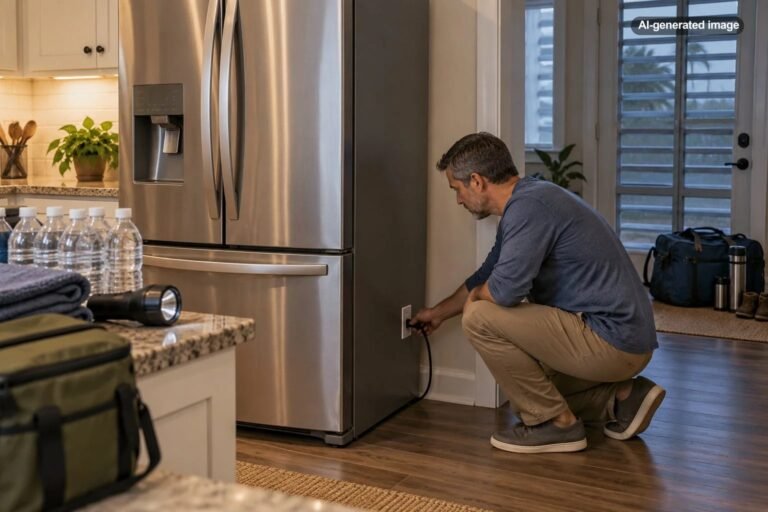
Discard food that contacted floodwater. Also discard food in damaged, leaking, bulging, rusted, or badly dented containers. Refrigerated and frozen food may become unsafe during a prolonged outage even when it looks or smells normal. Follow current government food-safety guidance rather than tasting food to test it.
Start moisture control quickly, but safely
Wet materials should be cleaned and dried as quickly as practical, ideally within 24 to 48 hours when conditions allow. Mold can develop on drywall, wood, carpeting, furniture, and other porous materials after prolonged dampness.
Before cleanup, wear an N95 respirator, goggles without vent holes, protective gloves, long sleeves, long pants, and sturdy boots or work shoes. Remove materials that cannot be cleaned and dried. Clean hard surfaces with water and detergent before using any appropriate disinfectant.
Never mix bleach with ammonia, acids, or other cleaning chemicals. If you do not know what contaminants are present in floodwater, avoid combining products altogether. Ventilate the space when safe, but do not point fans at visible mold before it has been gently cleaned because air movement may spread contamination.
Do not overlook the HVAC system
Do not run an air-conditioning or heating system that was submerged, exposed to contaminated water, or connected to wet ductwork. Operating it can damage equipment and distribute pollutants throughout the house. Have affected equipment, ducts, insulation, and controls evaluated before restarting the system.
Even when the equipment itself stayed dry, inspect return grilles, filters, closets, drain pans, and nearby ceilings for moisture. Replace wet filters and follow the manufacturer’s instructions for inspection and service.
Separate emergency protection from permanent repair
Temporary measures may prevent additional rain entry, but they should not conceal structural damage or create new hazards. Avoid climbing onto a wet, steep, visibly damaged, or debris-covered roof. Roof tarping, major tree removal, electrical repair, gas work, structural stabilization, and extensive mold remediation may require trained professionals.
Use only contractors who are appropriately qualified for the work, verify credentials required in your location, request written scopes, and be cautious about pressure to authorize immediate permanent repairs. Local permit and inspection requirements differ, particularly after a widespread disaster.
A practical first-return checklist
| Inspection stage | What to check | When to stop |
|---|---|---|
| Neighborhood | Official clearance, road access, flood conditions | Authorities restrict entry or roads remain unsafe |
| Property exterior | Power lines, trees, roof, walls, standing water | Wires, collapse risk, gas odor, or unstable debris |
| Utilities | Electrical panel, gas lines, generator placement | Water near electricity, sparks, hissing, or fuel leaks |
| Interior | Ceilings, floors, walls, windows, water level | Sagging materials, shifting sounds, or unsafe footing |
| Health conditions | Flood contamination, mold, ventilation, protective gear | Sewage, extensive mold, or symptoms during entry |
| Recovery | Photos, insurer contact, drying, professional assessment | Work exceeds safe tools, training, or access |
Frequently asked questions
Should I turn the power back on when I arrive?
Not until the building and electrical system are dry and considered safe. If the panel, wiring, outlets, appliances, or surrounding area got wet, contact the utility or a qualified electrician.
Can I stay in the house if only one room flooded?
Possibly, but the source and contamination level matter. Sewage, electrical exposure, wet structural materials, mold, and contaminated HVAC components can affect more than the visibly flooded room. Seek professional guidance when the extent is uncertain.
Should I open windows immediately?
Open them when the structure is safe, weather permits, and doing so will not admit more rain or contaminated outdoor air. Natural ventilation can support drying, but it does not replace removal of wet materials or professional remediation.
How quickly should damaged materials be dried?
Begin drying as soon as immediate electrical, structural, and contamination hazards are controlled. Official guidance recommends cleaning and drying wet materials within 24 to 48 hours when possible.
When should I call a professional?
Stop and seek help for structural movement, roof instability, electrical or gas damage, sewage contamination, extensive flooding, large mold areas, damaged HVAC systems, hazardous materials, or any condition that cannot be reached and assessed safely.