How Do You Store Patio Cushions in a Small Space?
The best way to store patio cushions in a small space is to keep them clean, completely dry, and arranged vertically in the narrowest protected area available. A slim storage bench, tall cabinet, under-bed bag, or designated indoor closet can work better than a large outdoor deck box when floor space is limited.
The right solution depends on how often you use the cushions, whether the storage area stays dry, and whether the cushions can be folded or compressed without damaging their shape. The goal is not merely to make them disappear. It is to prevent trapped moisture, crushed foam, stains, pests, and the annual mystery of where the matching back cushion went.
Start by measuring the cushions and the available space
Before buying a container or reorganizing a closet, measure the cushions as a group. Record the total height when they are stacked, their widest dimension, and the depth of the thickest cushion. Include curved backs, ties, piping, and any firm foam inserts that resist bending.
Then measure potential storage areas rather than relying on visual estimates. Useful small-space locations may include:
- The vertical space beside a balcony door
- The area beneath a console table or raised bed
- The upper portion of a coat or utility closet
- A narrow section of a garage wall
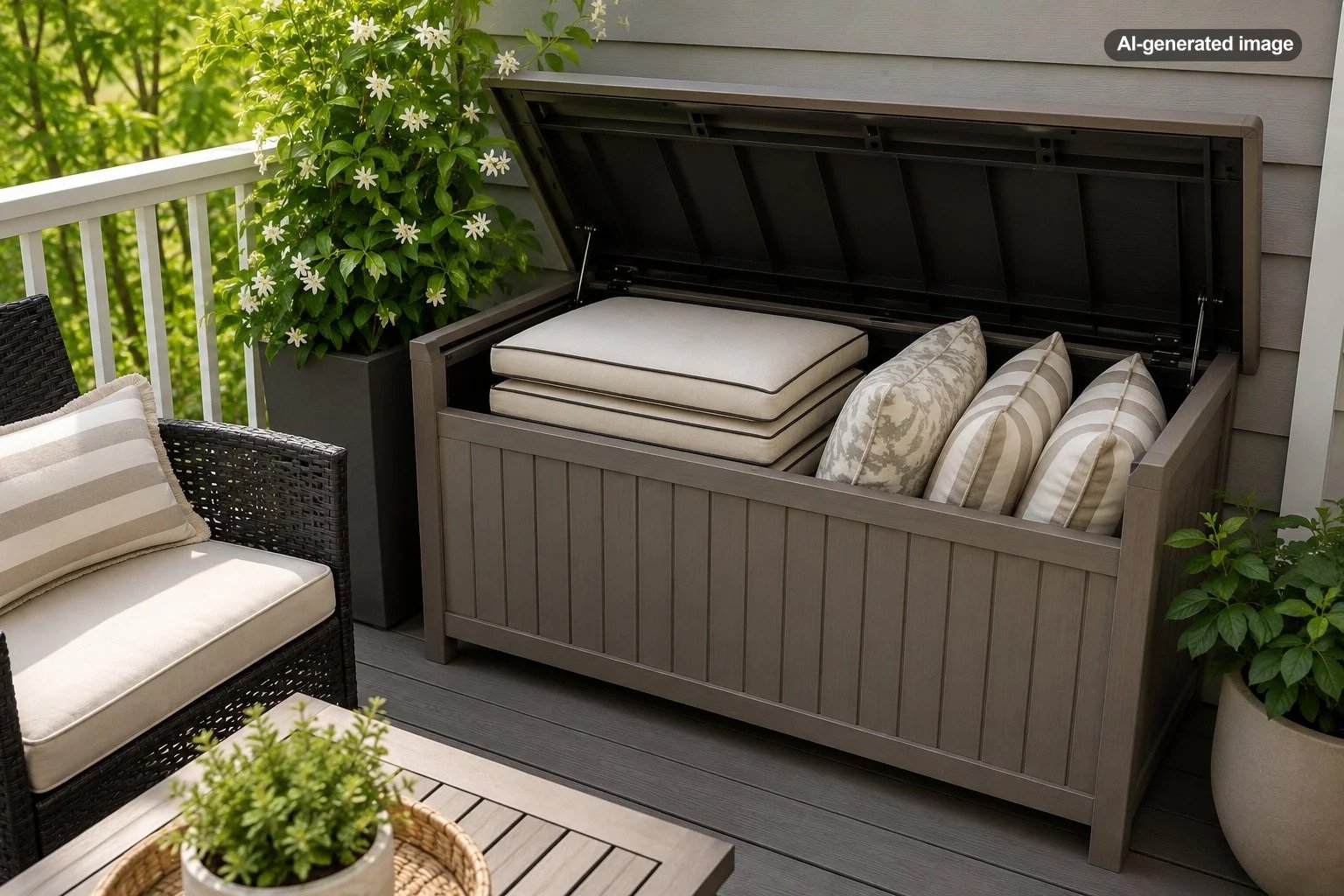
- The interior of a storage bench
- An unused corner behind a folding screen
Measure door openings, closet trim, and cabinet hinges as well. A container that technically fits inside a closet is not useful if it cannot pass through the doorway when loaded.
Clean and dry the cushions before storing them
Brush away loose dirt, pollen, leaves, and crumbs before the cushions go indoors or into a container. Address spills according to the cushion manufacturer’s care instructions, especially when the covers have coatings, removable inserts, or fabric-specific cleaning requirements.
After cleaning, allow every layer to air-dry completely. Check seams, zippers, ties, tufted areas, and the underside of the foam. The surface may feel dry while moisture remains inside a thick cushion.
Use vertical storage whenever the cushion construction allows it
Vertical storage usually makes better use of a small footprint than a wide horizontal stack. Seat and back cushions can often stand on their edges like oversized books, provided they are supported and not sharply bent.
A tall, narrow cabinet can hold several cushions while occupying less floor area than a conventional deck box. Inside a closet, a freestanding shelving unit can create a dedicated vertical bay. Adjustable straps or a simple fabric sling can keep the group from tipping forward when the door opens.
Avoid resting light-colored cushions directly against unfinished wood, rusty metal, damp masonry, or a wall that develops condensation. Place a clean barrier between the cushions and the surface, while still allowing air to circulate.
The most efficient cushion storage uses height without turning the cushions into a compressed block.
Choose storage based on how often you use the cushions
| Storage method | Best for | Main tradeoff |
|---|---|---|
| Slim outdoor cabinet | Frequent seasonal use | Requires protected outdoor floor space |
| Storage bench | Small patios needing extra seating | Interior dimensions may be restrictive |
| Indoor closet shelf | Long-term protection | Uses valuable household storage |
| Under-bed bag | Flat or moderately flexible cushions | Not suitable for every foam shape |
| Hanging fabric organizer | Small pillows and thin pads | Limited weight capacity |
| Vacuum storage bag | Compressible fiber-filled cushions only | May deform foam or structured inserts |
For cushions used several times each week, prioritize easy access. A bench or slim cabinet near the patio door is more practical than carrying a full set to a distant basement after every use.
For winter or extended storage, an indoor closet, under-bed area, or dry utility room may provide better protection. Less convenient storage becomes reasonable when the cushions will remain packed for months rather than days.
Be cautious with compression bags
Vacuum bags look appealing because they reduce volume, but they are not appropriate for every cushion. Fiber-filled pillows may tolerate temporary compression better than thick foam, layered inserts, tufted cushions, or pieces with rigid internal structure.
Compression can leave foam misshapen, stress seams, bend piping, or create deep creases in the cover. Check the manufacturer’s instructions before using a vacuum bag. When no guidance is available, use a loose protective bag rather than extracting most of the air.
Even when compression is acceptable, the cushion must be completely dry first. Label each bag by furniture piece so the contents can be identified without opening every package.
Turn furniture into hidden storage
On a compact patio or balcony, furniture should earn its footprint. A weather-resistant storage bench can provide seating while holding small cushions, throws, and outdoor accessories. A hollow side table or storage ottoman may accommodate lumbar pillows and chair pads.
Confirm the usable interior dimensions before purchasing storage furniture. Thick walls, sloped lids, hinges, and internal supports can make the actual storage cavity much smaller than the exterior suggests.
Outdoor storage should also have a sensible approach to ventilation and water management. A lid may shed ordinary rain without making the interior suitable for damp cushions or severe weather. Keep the unit raised from standing water, inspect it after storms, and avoid packing items so tightly that air cannot move.
Use indoor storage without surrendering an entire closet
If outdoor floor space is unavailable, look for underused indoor volume. A high closet shelf can hold lightweight cushions in breathable bags. Flat chair pads may fit beneath a bed, above a wardrobe, or behind luggage in a guest-room closet.
Clean protective bags help prevent outdoor dust from transferring to bedding or clothing. Choose bags that can be opened and inspected rather than wrapping cushions permanently in multiple layers of plastic.
Small cushions can also be divided among several locations. Matching seat cushions might go under a bed while decorative pillows occupy a closet shelf. Keep a written label or photograph of the storage arrangement so the set is easy to retrieve later.
Avoid common small-space storage mistakes
- Storing cushions while damp: Moisture can remain inside foam and along seams after the fabric surface feels dry.
- Placing heavy objects on top: Boxes, tools, and luggage can leave foam compressed or piping distorted.
- Using an airtight container in a humid location: A sealed container does not correct moisture that is already inside.
- Forcing cushions through a narrow opening: Repeated folding can strain zippers, seams, and inserts.
- Ignoring pests: Food crumbs and organic debris can make stored cushions more attractive to insects or rodents.
- Choosing storage that is too inconvenient: A complicated system often leads to cushions being left outdoors during rain or overnight dew.
Before you decide
- Measure the complete cushion set and every access opening.
- Confirm whether the cushions can stand, fold, or compress.
- Choose a location protected from moisture and direct contact with dirty surfaces.
- Allow room for ventilation and occasional inspection.
- Keep frequently used cushions within easy reach.
- Label divided sets so every piece is easy to find.
What is the simplest workable system?
For many small homes, the simplest system is a pair of breathable storage bags placed upright on a high closet shelf or inside a narrow cabinet. One bag holds seat cushions and the other holds back pillows. The divided weight is easier to handle, and the bags can fit into spaces that would not accommodate one large rigid box.
On a balcony, a compact storage bench may be the better choice when it also replaces separate seating or a side table. In a rental, portable bags, freestanding shelves, and storage ottomans avoid permanent wall attachments.
The best system is the one that protects the cushion construction while remaining easy enough to use before a storm, during pollen season, or at the end of an evening. Small-space storage works through careful dimensions and sensible routines, not heroic amounts of squeezing.
Frequently asked questions
Can patio cushions be stored in plastic bags?
They can be placed in clean plastic storage bags only after they are completely dry. For long storage periods or humid areas, a breathable bag or ventilated container may reduce the risk of trapping residual moisture.
Can outdoor cushions be stored upright?
Yes, many cushions can be stored upright on an edge. Support them so they do not slump or fold, and avoid putting pressure on decorative piping, ties, or rigid inserts.
Should patio cushions be stored indoors for winter?
Indoor storage is often the most protective option when winters are wet, freezing, or prolonged. Choose a dry location away from leaks, pests, heaters, and surfaces that may transfer dirt or moisture.
Can cushions stay in an outdoor storage bench all year?
That depends on the bench, the climate, and the cushion manufacturer’s guidance. Inspect the interior for moisture, provide ventilation where appropriate, and move cushions indoors during severe or extended weather when the storage furniture does not provide adequate protection.