
Why Does My House Smell Different After It Rains?
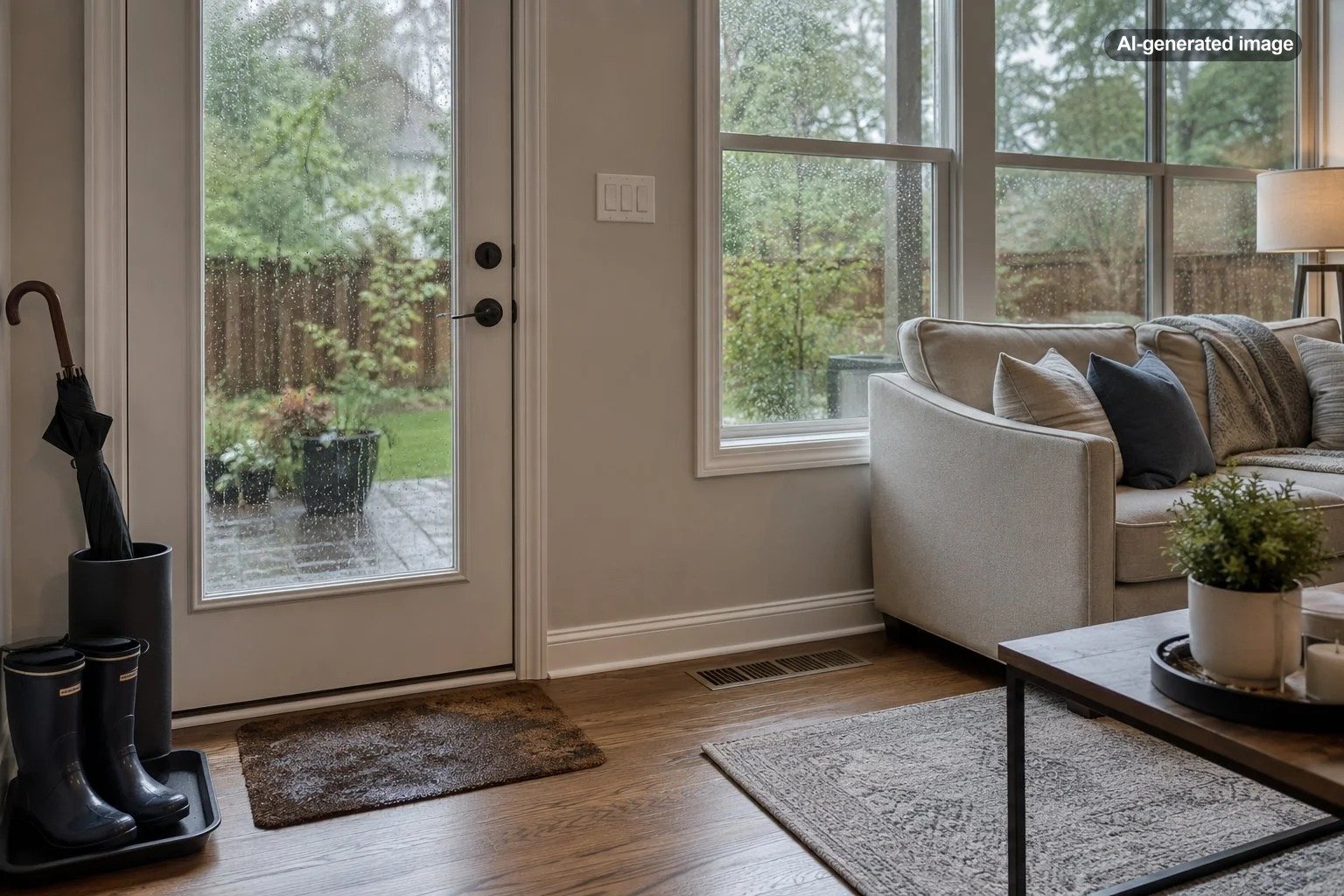
Your house may smell different after it rains because rainfall changes the moisture level, air pressure, drainage conditions, and airflow around the building. Those changes can intensify ordinary outdoor smells, reactivate odors in damp materials, expose a small leak, or push air from drains, crawl spaces, basements, attics, and wall cavities into occupied rooms.
A brief earthy scent near an open window may be harmless. A recurring musty, sewage-like, chemical, or rotting odor deserves a closer look, especially when it appears in the same room after every storm.
Rain makes hidden moisture easier to notice
Many rain-related odors begin with moisture entering a place that normally stays dry. Water may leak through roofing, flashing, siding joints, windows, doors, foundation cracks, or penetrations for pipes and cables. It can also seep through a basement wall or floor without creating an obvious puddle.
Porous materials such as drywall, wood, insulation, carpet padding, cardboard, and fabric can hold moisture out of sight. Once damp, they may release stale or musty odors that become more noticeable as indoor humidity rises.
The U.S. Environmental Protection Agency explains that water can enter a home through exterior leaks or basement seepage, while indoor humidity can also lead to condensation on cooler surfaces. The agency recommends controlling water sources and drying wet materials promptly. EPA guidance on mold and moisture in the home provides additional background.
Where to inspect first
- Window corners, sills, and the wall below each window
- Ceilings beneath roof valleys, chimneys, vents, and upstairs bathrooms
- Exterior walls facing wind-driven rain
- Baseboards and carpet edges in basements or ground-floor rooms
- Closets positioned against exterior walls
- The underside of sinks, cabinets, and nearby flooring
- Crawl-space access points and the floor above them
Use your hands and eyes rather than relying on smell alone. Look for swollen trim, peeling paint, soft drywall, darkened wood, loose flooring, rusted fasteners, water rings, condensation, or a surface that feels cooler and damper than its surroundings.
A musty odor can point to mold or damp building materials
A musty smell does not identify a particular mold species, nor does it prove that a large mold problem exists. It does indicate that moisture and organic material may be interacting somewhere nearby. Mold can grow behind wallpaper, beneath carpet, inside a wall cavity, above a ceiling, or on the paper facing of drywall before it becomes readily visible.
The EPA notes that molds can produce compounds associated with a moldy or musty odor and recommends investigating such smells rather than attempting to cover them with fragrance. Read the EPA explanation of mold odors.
If a small washable hard surface has light visible growth, follow appropriate cleaning guidance and dry the area completely. Do not paint, caulk, or seal over a wet or contaminated surface. Extensive growth, repeated water intrusion, sewage contamination, hidden damage, or symptoms affecting occupants may justify assessment by a qualified remediation or building professional.
The odor may be coming from outside
Not every post-rain smell signals damage. Rain releases familiar outdoor odors from soil, mulch, leaves, wood, pavement, and vegetation. Open windows, bathroom exhaust fans, clothes dryers, range hoods, and leaky exterior doors can draw those scents indoors.
Fresh mulch can smell woody or sour when saturated. Wet soil near a foundation may produce an earthy scent. A clogged gutter filled with decaying leaves can smell unpleasant near an upstairs window. Standing water in a planter, birdbath, window well, or poorly drained corner of the yard can also create odors that seem to originate inside.
Heavy rain can affect drains and sewer odors
A sewage-like smell should be treated differently from an ordinary damp odor. Rain can coincide with changes in municipal sewer flow, septic conditions, plumbing vent performance, or pressure around buried drainage lines. Inside the home, the immediate source may be as simple as a dry trap in a rarely used floor drain, shower, sink, or utility basin.
Every frequently used fixture should have water in its trap to block sewer gases. Pouring water into a little-used drain may restore that barrier. Also check whether a removable cleanout plug, drain cover, or sink overflow area is loose or dirty.
Stop troubleshooting and call a plumber or septic professional when the odor is strong, widespread, persistent, or accompanied by gurgling drains, slow fixtures, wastewater backup, bubbling toilets, soggy ground, or sewage appearing around a cleanout. Avoid entering confined spaces or attempting to open a septic tank.
Your HVAC system can redistribute the smell
Rain raises outdoor humidity and may change how an HVAC system cycles. When the blower runs, it can distribute odors from a damp return cavity, wet filter, condensate area, basement, crawl space, attic, or mechanical closet throughout the home.
Notice whether the smell appears only when heating or cooling starts. Check the filter for dampness and inspect accessible areas around the indoor unit for standing water, staining, or a blocked condensate drain. Do not open energized equipment or reach into a blower compartment.
A dirty filter may contribute to stale air, but replacing it will not solve water intrusion or microbial growth elsewhere in the system. The EPA similarly states that air cleaners and HVAC filters do not correct the moisture source behind mold and musty odors. See the EPA guide to air cleaners in the home.
Use a room-by-room process to narrow down the source
What to do
- Describe the smell. Decide whether it is earthy, musty, sewage-like, smoky, fishy, chemical, or simply stale.
- Find the strongest point. Compare rooms, closets, vents, drains, exterior walls, and lower levels.
- Note the timing. Record whether the odor begins during rain, after several hours, when the HVAC starts, or when the storm ends.
- Look for moisture. Inspect surfaces, stored items, rugs, cabinets, ceilings, window frames, and accessible mechanical areas.
- Check simple odor pathways. Close windows, add water to unused drains, remove wet mats, empty trash, and examine outdoor areas beside the affected room.
- Recheck after dry weather. An odor that remains after surfaces should have dried is more concerning than a brief outdoor scent.
- Document recurrence. Photograph stains and note which storms trigger the problem. This information can help a roofer, plumber, HVAC contractor, drainage specialist, or remediation professional investigate efficiently.
Humidity can amplify odors without an active leak
Odor molecules may become more noticeable when indoor humidity rises, even if rainwater is not entering the structure. Carpets, upholstered furniture, pet bedding, stored textiles, old books, unfinished wood, and dusty return grilles can all smell stronger in damp air.
Measure indoor relative humidity with a reliable hygrometer instead of judging by comfort alone. The EPA recommends keeping indoor relative humidity below 60 percent and ideally between 30 and 50 percent. Review EPA moisture-control principles for indoor air.
Depending on the climate and season, better bathroom exhaust, kitchen ventilation, air-conditioning operation, drainage improvements, or a properly sized dehumidifier may help. Avoid running a dehumidifier as a substitute for repairing a leak.
Watch for signs that require faster action
Damp-building concerns should not be diagnosed from odor alone. However, the Centers for Disease Control and Prevention notes that indoor dampness and mold can be associated with respiratory symptoms and that finding and correcting moisture is more useful than relying only on short-term air sampling. Read the CDC overview of dampness and mold.
How to reduce rain-related odors in the future
- Keep gutters and downspouts clear and direct discharge away from the foundation.
- Repair failed window seals, exterior caulk joints, flashing, and roof penetrations as appropriate.
- Maintain grading so surface water moves away from the house.
- Keep mulch, soil, and dense vegetation from trapping moisture against siding.
- Inspect basements, crawl spaces, attics, and rarely used rooms after major storms.
- Dry wet rugs, cardboard, upholstery, and stored fabrics promptly.
- Use exhaust fans that vent outdoors during bathing and cooking.
- Keep plumbing traps filled and address recurring drain odors.
- Maintain HVAC filters and condensate components according to the equipment manufacturer’s instructions.
The useful question is not simply whether the smell is unpleasant. It is whether rain is carrying an outdoor odor inside, changing indoor humidity, or revealing water in a place where it should not be. Once you identify the room, timing, odor type, and moisture clues, the likely cause usually becomes much easier to narrow down.
Frequently asked questions
Why does my basement smell musty after heavy rain?
Moisture may be seeping through the foundation, entering around a window, condensing on cool surfaces, or raising humidity enough to intensify odors in stored materials. Check walls, floor edges, rugs, boxes, and the area around floor drains.
Can rain make mold smell stronger?
Yes. Higher humidity and newly damp materials can make a musty odor more noticeable. The smell may also travel farther when HVAC operation or pressure differences move air through the house.
Why does my bathroom smell like sewage when it rains?
Possible causes include a dry fixture trap, a plumbing vent problem, a compromised seal, a drain issue, or conditions affecting the sewer or septic system. Persistent odors, gurgling, slow drains, or backups warrant professional plumbing evaluation.
Should I have my home tested for mold?
Testing is not always the most useful first step when visible growth, water damage, or a musty odor already indicates a moisture problem. Begin by locating and correcting the water source. Professional assessment may be appropriate when damage is hidden, extensive, recurring, or connected to health concerns.
Sources & further reading
- U.S. Environmental Protection Agency: Mold and Your Home
- U.S. Environmental Protection Agency: What Does Mold Smell Like?
- U.S. Environmental Protection Agency: Guide to Air Cleaners in the Home
- U.S. Environmental Protection Agency: Biological Contaminants and Indoor Air Quality
- Centers for Disease Control and Prevention: Mold in the Workplace