

What to Put Under Every Sink to Catch Leaks Early
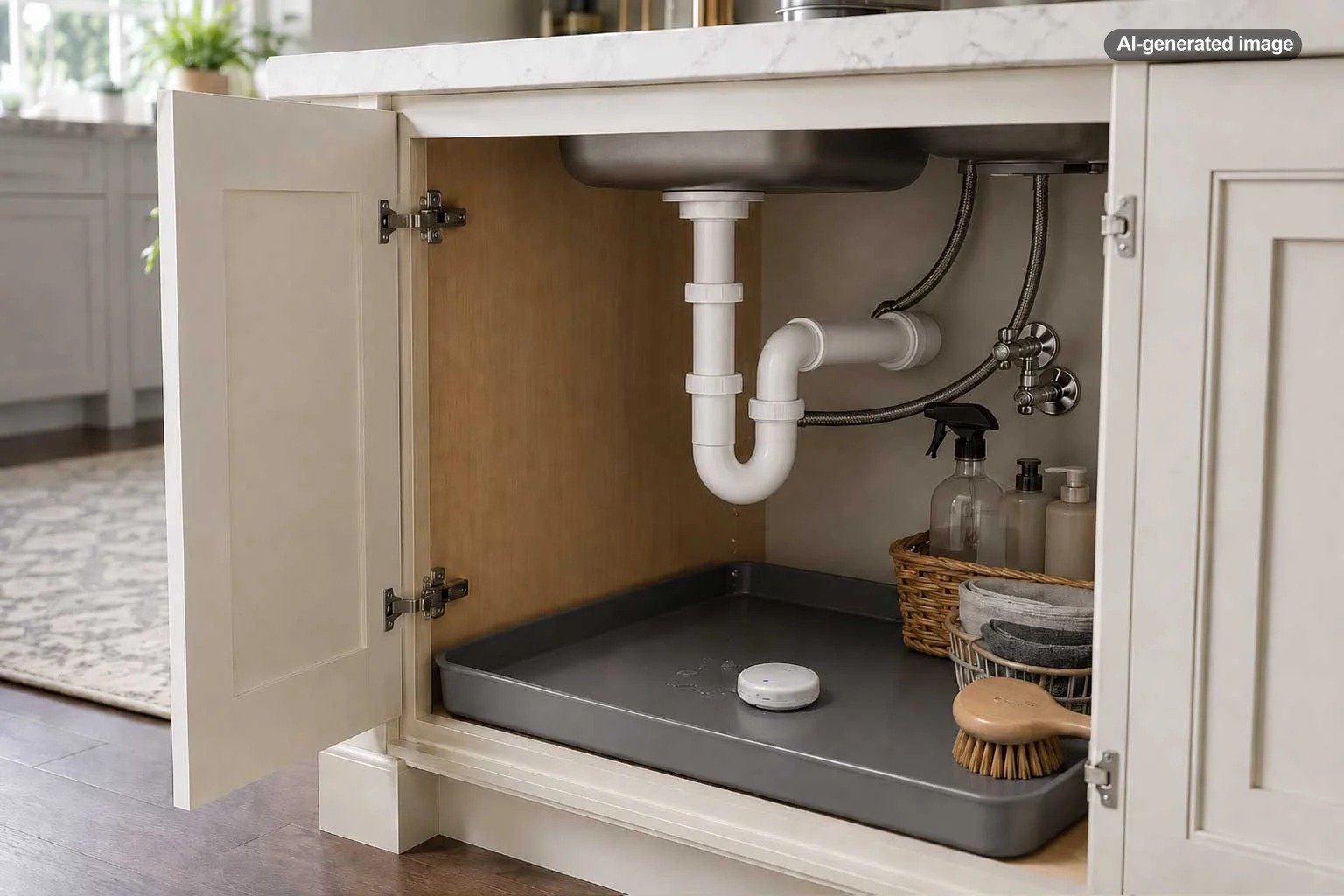
The most useful setup under a sink is a shallow waterproof tray or fitted cabinet liner paired with a battery-powered water alarm. The tray contains small drips and makes moisture easier to see, while the alarm can warn you before water sits unnoticed long enough to swell cabinet panels, stain flooring, or encourage musty odors.
A tray should be treated as an early-warning tool, not permanent plumbing. It can buy time during a slow drip, but it cannot safely contain a loose supply line, overflowing disposal, failed drain connection, or other fast-moving leak. A recurring puddle still needs to be traced and repaired.
Start With a Waterproof Tray or Fitted Liner
A shallow tray is the best first layer because it creates a defined surface for water to collect. Look for a rigid or semi-rigid material that will not absorb moisture, sag when wet, or disintegrate beneath cleaning products. A raised perimeter is more useful than a completely flat liner because it can contain a modest amount of water instead of allowing it to run immediately toward the cabinet doors.
Measure the cabinet floor at its narrowest usable points, accounting for door hinges, center stiles, pipes, disposal units, filters, and other obstructions. The tray should cover as much of the floor as practical without forcing you to bend, disconnect, or crowd plumbing components.
A removable tray is generally easier to clean and inspect than adhesive shelf covering. Fitted cabinet liners can work well in irregular spaces, but the edges and seams should remain visible. A liner that disappears beneath piles of supplies may protect the finish while doing very little to help you notice a leak.
Before you choose a tray
- Measure the cabinet width, depth, and door opening.
- Check whether plumbing enters through the floor or back wall.
- Choose a nonabsorbent material with raised edges.
- Confirm that the tray can be removed without disturbing pipes.
- Leave shutoff valves and supply connections accessible.
Add a Water Alarm for Leaks You Cannot See
A passive tray only helps when someone opens the cabinet and notices the water. A compact moisture alarm adds an audible warning when water reaches its sensor contacts. This is especially useful beneath guest-bathroom sinks, utility sinks, vacation-home fixtures, or kitchen cabinets that are opened infrequently.
Place the sensor where water is most likely to settle, usually near the lowest point of the cabinet floor rather than directly beneath a bottle that might drip during normal use. Under a kitchen sink, sensible locations may include the area below the supply valves, faucet connections, drain assembly, disposal, water filter, or dishwasher connection. Do not position the alarm where it will be buried beneath trash bags or cleaning supplies.
Affiliate disclosure: CraneManor.com may earn a commission when you purchase through links on this page. This does not affect the price you pay. Learn more.
For several leak-prone locations, a five-pack of leak detectors can be distributed beneath sinks and near other water-using fixtures. Whichever alarms you choose, follow their instructions for placement, battery replacement, testing, and cleaning.
Use an Absorbent Indicator Sparingly
A thin, light-colored absorbent sheet can make a tiny drip easier to spot because the wet mark creates a visible contrast. It may be useful during a short diagnostic period after replacing a faucet, tightening a drain connection, or investigating an occasional damp spot.
However, absorbent material should not be the primary protection layer. Thick towels, carpet remnants, foam mats, cardboard, and stacks of paper can hold water against the cabinet floor while hiding the source. They may also develop odors before the leak becomes obvious.
When using a paper towel or purpose-made absorbent pad for monitoring, place it on top of the waterproof tray, keep it visible, and replace it promptly if it becomes damp. Do not leave it indefinitely as part of the cabinet organization.
Keep the Cabinet Simple Enough to Inspect
The space beneath a sink often becomes a crowded collection of sprays, brushes, trash bags, soaps, and spare containers. That clutter can delay detection by absorbing drips, blocking the alarm, and hiding corrosion or mineral deposits around plumbing joints.
Use one or two removable bins rather than filling the cabinet from wall to wall. Keep paper products and electrical devices away from plumbing connections. Avoid hanging heavy organizers from pipes, valves, or the disposal assembly, since plumbing was not designed to support household storage.
Know Where Sink Leaks Commonly Begin
Do not limit your inspection to the drainpipe directly beneath the basin. Water may originate higher up and travel along a hose, pipe, cabinet wall, or underside of the sink before dripping onto the floor.
- Supply connections: Look around shutoff valves, flexible supply lines, and faucet connections.
- Drain joints: Check slip nuts, traps, strainers, and disposal connections while water is running.
- Faucet base: Water on the counter can seep through an imperfect seal and appear inside the cabinet.
- Sprayer or pull-down hose: A hose may leak only while the faucet is in use.
- Water filter: Inspect housings, tubing, fittings, and cartridges after service.
- Dishwasher connection: In kitchen cabinets, examine accessible supply and drain connections without moving or disconnecting them.
- Condensation: Cold pipes or equipment can sometimes create moisture even when a plumbing joint is not actively leaking.
What to do when the alarm sounds
- Stop using the sink and move stored items away from the wet area.
- Identify whether water is actively flowing or merely left from a spill.
- If water continues to appear, close the accessible fixture shutoff valves when you can do so safely.
- Dry the tray and cabinet so new moisture is easier to trace.
- Test the faucet, drain, sprayer, disposal, or connected equipment one function at a time.
- Stop testing and contact a qualified plumber if the source is unclear, a valve will not close, or water is spreading beyond the cabinet.
What Not to Put Under a Sink
Avoid any material that absorbs water while concealing the cabinet surface. Decorative fabric liners, bath mats, cardboard packaging, newspapers, and thick stacks of paper towels can make a small leak less visible rather than more manageable.
Do not use a deep, improvised container that blocks shutoff valves or places pressure against supply lines. A large bin may catch water, but it can also make the plumbing difficult to inspect and encourage the false assumption that a continuing leak is safely contained.
Likewise, do not seal every edge and pipe opening with caulk merely to create a watertight basin. Water that escapes outside the sealed area may become trapped in a wall, toe kick, or cabinet seam. Alterations around plumbing penetrations can also complicate future repairs.
Build a Small Inspection Routine
Even the best tray and alarm need occasional attention. Open the cabinet periodically, move the storage bins, look at the entire tray, and run a dry finger or tissue around accessible joints. Check for droplets, corrosion, mineral deposits, darkened cabinet material, peeling finishes, and musty odors.
Test leak alarms as directed by the manufacturer and replace batteries when required. After plumbing work, filter replacement, disposal installation, or faucet service, inspect the area during use and again later. Some leaks appear only under pressure, during draining, or after a hose has moved through several cycles.
The best under-sink protection does not merely catch water; it makes a small plumbing change difficult to ignore.
Frequently Asked Questions
Is a silicone mat enough under a sink?
A silicone or similar waterproof mat can protect the cabinet surface from minor drips, but a model with raised edges is more useful for containment. Pairing it with a moisture alarm provides earlier notice when the cabinet is closed.
Can I use a disposable absorbent pad instead of a tray?
A pad can reveal a small drip during short-term monitoring, but it should sit on a waterproof surface and remain visible. It can become saturated or conceal moisture if left unchecked.
Where should a leak detector go under the kitchen sink?
Place it at a low point near likely leak sources without blocking plumbing access. Depending on the cabinet, that may be below supply connections, the drain assembly, a filter, the disposal, or the dishwasher connections.
Will a tray stop water damage from a burst supply line?
No. A shallow tray is intended for small leaks and early detection, not a major plumbing failure. Rapid or continuing water flow requires immediate action and may require a plumber.
How often should I check beneath sinks?
Make the check part of routine home maintenance and inspect sooner after plumbing work or whenever you notice an odor, cabinet change, unusual water use, alarm, or unexplained moisture.