
Why Is My Shower Curtain Turning Pink?
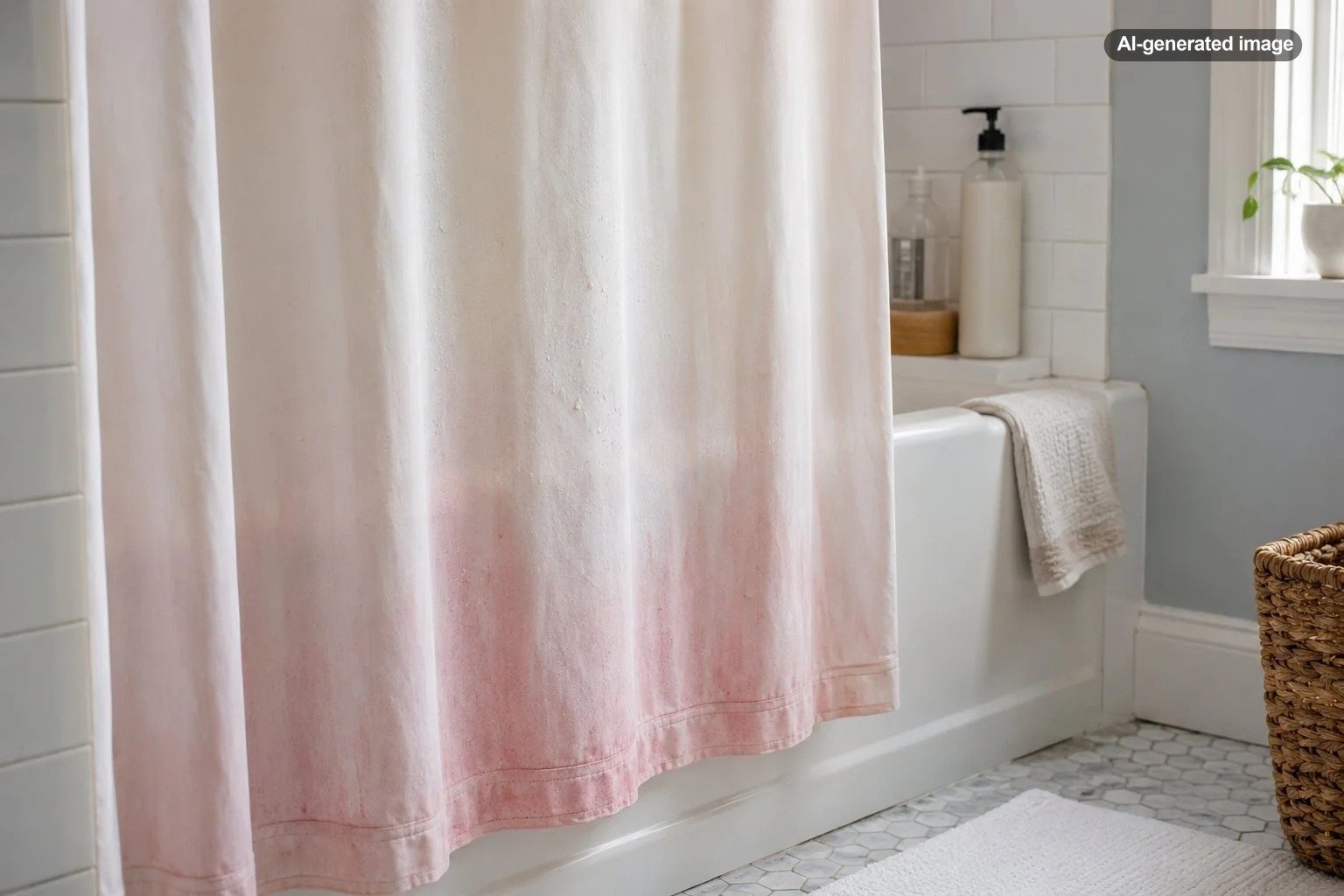
Your shower curtain is probably turning pink because a microbial biofilm is growing on the damp surface. The discoloration is commonly associated with pigmented bacteria, including Serratia marcescens, although other bacteria and yeasts can contribute to pink bathroom films. It is not simply soap changing color, and it is not automatically the same thing as household mold.
The film thrives where moisture, warmth, soap residue, body oils, and limited airflow meet. Shower-curtain liners are particularly inviting because their folds stay wet long after the rest of the bathroom appears dry.
What the pink material actually is
The pink, peach, orange, or reddish film is usually a biofilm: a community of microorganisms attached to a surface within a protective layer. The Centers for Disease Control and Prevention notes that Serratia marcescens can occur in damp environments and may appear in bathrooms as pink, orange, or red discoloration.
However, color alone cannot identify a microorganism. Research on pink bathroom biofilms has also found organisms such as Methylobacterium and pink-pigmented yeasts. In practical household terms, the precise species matters less than the conditions allowing the film to grow: persistent moisture and a surface carrying organic residue.
Why it keeps appearing on the curtain
A shower curtain receives a fresh coating of water every day, along with traces of shampoo, conditioner, soap, skin oils, and mineral deposits. These residues give microorganisms places to attach and material on which to persist.
The lower edge is usually affected first because it may touch the tub, remain submerged in shallow water, or cling to itself. Pleats and folds slow evaporation. A closed bathroom door, weak exhaust fan, damp bath mat, or frequently used shower can extend the drying time even further.
- Plastic and vinyl-style liners: Smooth surfaces may be washable, but creases and textured areas can hold residue.
- Fabric curtains: Many can be laundered, but absorbent fibers may remain damp longer.
- Old or damaged liners: Cloudiness, stiffness, cracks, and permanently embedded staining can make cleaning less worthwhile.
How to clean a pink shower curtain
Begin with the manufacturer’s care label. Curtain materials vary, and a method suitable for a washable polyester curtain may damage a decorative coating, delicate fabric, or unsupported plastic liner.
What to do
- Open a window or run the bathroom exhaust fan to improve ventilation.
- Remove the curtain or liner so you can clean the entire surface rather than only the visible spots.
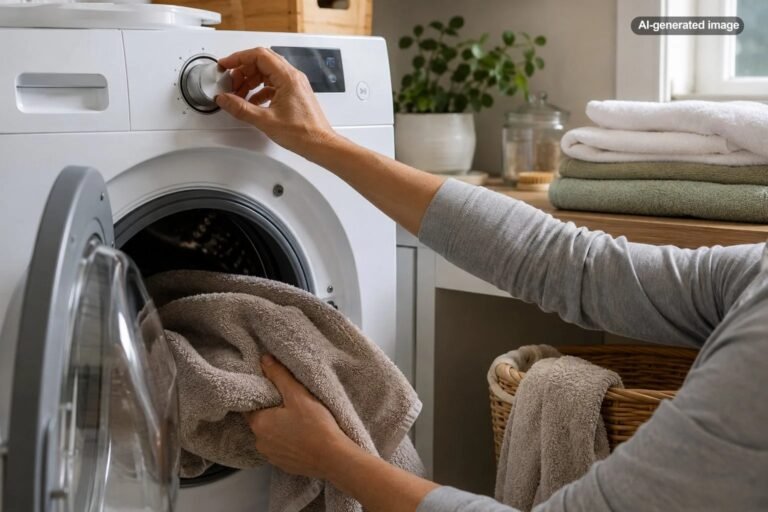
- Wash a machine-washable curtain on the permitted cycle using ordinary laundry detergent. Follow its label for water temperature and drying instructions.
- For a hand-wash-only liner, use warm water and a mild detergent, gently wiping both sides with a soft cloth or nonabrasive sponge.
- Rinse away loosened residue and detergent thoroughly.
- Rehang the curtain fully extended so both sides can dry. Do not bunch it into wet folds.
- Clean the tub rim, wall seams, curtain hooks, and rod areas so the freshly washed curtain does not immediately contact existing buildup.
Avoid mixing cleaning products. In particular, never combine chlorine bleach with ammonia, acids, vinegar, toilet-bowl cleaners, or other household chemicals. The combination can release dangerous fumes. When a care label permits a disinfecting product, follow that product’s directions, ventilation requirements, contact time, and rinsing instructions exactly.
Scrubbing harder is not always better. Abrasive pads can scratch some liners and bathroom finishes, creating additional texture where residue can collect.
When replacement makes more sense
Cleaning is reasonable when the liner is structurally sound and the discoloration lifts without damaging the material. Replacement is more sensible when the liner is cracked, peeling, brittle, permanently discolored, or difficult to dry completely.
Affiliate disclosure: CraneManor.com may earn a commission when you purchase through links on this page. This does not affect the price you pay. Learn more.
For a standard tub or shower, a basic replacement such as a clear PEVA shower-curtain liner can be a straightforward option. Verify the dimensions, hook compatibility, curtain-rod setup, and care instructions before ordering. No liner should be assumed to be permanently mildew-proof or maintenance-free.
The easiest shower curtain to maintain is the one that can spread out fully and dry between uses.
How to stop the pink film from returning
Prevention is mostly a moisture-management routine. The U.S. Environmental Protection Agency recommends using bathroom exhaust fans or opening windows to reduce moisture, cleaning biological growth from appropriate surfaces, and drying wet materials completely.
- Run the exhaust fan during the shower and afterward. A fan helps only when it moves air effectively and vents as intended.
- Stretch the curtain across the rod. Separate folds so trapped water can evaporate.
- Keep the bottom edge out of standing water. Adjust the liner or rod height if the material pools excessively in the tub.
- Rinse heavy residue. A brief rinse can reduce the soap and conditioner film left behind.
- Wash before staining becomes established. Light maintenance is easier than removing a mature, slippery film.
- Dry nearby items. Wet towels, bath mats, and sponges add moisture to the room and can harbor their own buildup.
- Check for ventilation or leak problems. Persistent condensation and slow drying may indicate that the room needs better airflow or that a water source is being overlooked.
When the problem deserves more attention
A small recurring film on a curtain is usually a cleaning and moisture-control issue. Broader growth on drywall, ceilings, trim, cabinetry, or other porous building materials is different. Those surfaces may indicate a leak, chronic condensation, or a ventilation problem that should be corrected rather than covered.
Frequently asked questions
Is the pink film dangerous?
Its appearance alone cannot determine risk. Serratia marcescens is an opportunistic pathogen in clinical settings, but a bathroom stain is not proof of illness or a specific exposure. Avoid direct contact with unwanted biological growth, wash your hands after cleaning, and take additional precautions when someone in the household is medically vulnerable.
Can I clean the curtain without removing it?
You can wipe a small spot in place, but removal usually produces a better result because you can reach the reverse side, folds, grommets, and bottom hem. It also makes thorough rinsing and inspection easier.
Why does the pink color return so quickly?
Cleaning may remove visible film without changing the conditions that produced it. Residue on nearby surfaces, a constantly folded liner, inadequate ventilation, or standing water can allow regrowth.
Is a fabric curtain better than a plastic liner?
Neither is universally better. Washable fabric can be convenient for regular laundering, while a smooth liner can be easy to wipe and rinse. The better choice is one that suits the shower, follows a clear care routine, and dries efficiently in the room.