
Why Are My Kitchen Cabinets Sticky Even After Cleaning?
Your kitchen cabinets can remain sticky after cleaning because the surface is not always covered by ordinary dirt. Cooking grease may have bonded with dust, the cleaner itself may have left a film, or the cabinet finish may be softening or breaking down. In some cases, repeated cleaning simply moves the residue around rather than removing it.
The solution is to identify what kind of stickiness you are dealing with before applying another product. A gentle, finish-safe cleaning process is usually the best place to begin. More scrubbing and stronger chemicals are not automatically better, particularly on painted wood, veneer, laminate, or older finishes.
The most common reason: grease mixed with dust
Cabinet doors collect a fine airborne layer of cooking oils, especially near the range, oven, microwave, toaster oven, or countertop fryer. The oil alone may be nearly invisible. Once dust, flour, smoke particles, and everyday kitchen debris settle into it, however, the mixture becomes tacky.
This explains why cabinets can look clean but still feel unpleasant. A quick wipe may remove loose dirt from the top of the layer without dissolving the grease beneath it. The cloth can also spread softened grease across a wider area, creating a thin film that becomes noticeable after drying.
Look at the pattern. Grease buildup is usually heaviest on upper doors beside the stove, above the refrigerator, around frequently touched pulls, and along the lower edges of cabinets positioned over food-preparation areas. If the stickiness fades as you move away from the cooking zone, airborne grease is the likely cause.
Your cleaning solution may be leaving residue
Too much soap, an overly concentrated all-purpose cleaner, furniture polish, disinfecting spray, or a product that is not intended for cabinets can leave its own sticky coating. This is especially common when the cleaner is sprayed directly onto the door and allowed to pool in corners, grooves, seams, or decorative molding.
A cleaner does not disappear simply because the surface has been wiped. Surfactants and other ingredients may remain unless they are removed with a separate damp cloth. If the cabinet feels slick while wet but tacky after it dries, product residue deserves suspicion.
The cabinet finish may be softening
Sometimes the sticky feeling is coming from the finish rather than something sitting on top of it. Paint, varnish, lacquer, clear coatings, and thermofoil surfaces can react poorly to heat, moisture, age, harsh cleaners, or repeated exposure to cooking oils.
A deteriorating finish may feel gummy even after careful rinsing. You may also notice dull patches, discoloration, tiny wrinkles, peeling edges, fingerprints that seem to press into the surface, or paint that transfers onto a cloth. Cabinets near ovens, dishwashers, kettles, and other sources of heat or steam may show the problem first.
Do not keep escalating to abrasive pads, solvent-based cleaners, or concentrated degreasers if the coating appears to be changing. Continued cleaning can remove or permanently dull an already weakened finish. At that point, the appropriate remedy may be finish repair, repainting, refacing, or replacement of an affected door rather than another round of washing.
A practical way to clean sticky cabinets
Before cleaning the entire kitchen, test your method on a discreet spot. Cabinet materials and coatings vary widely, and a treatment that is acceptable for durable laminate may damage painted wood or an aging clear coat. Follow the cabinet manufacturer’s care instructions when they are available.
What to do
- Dust first. Use a dry microfiber cloth to remove loose dust and crumbs. This keeps them from turning into muddy residue when water is added.
- Mix a mild solution. Add a few drops of grease-cutting dish soap to a bowl of warm water. The water should feel lightly soapy, not heavily foamed.
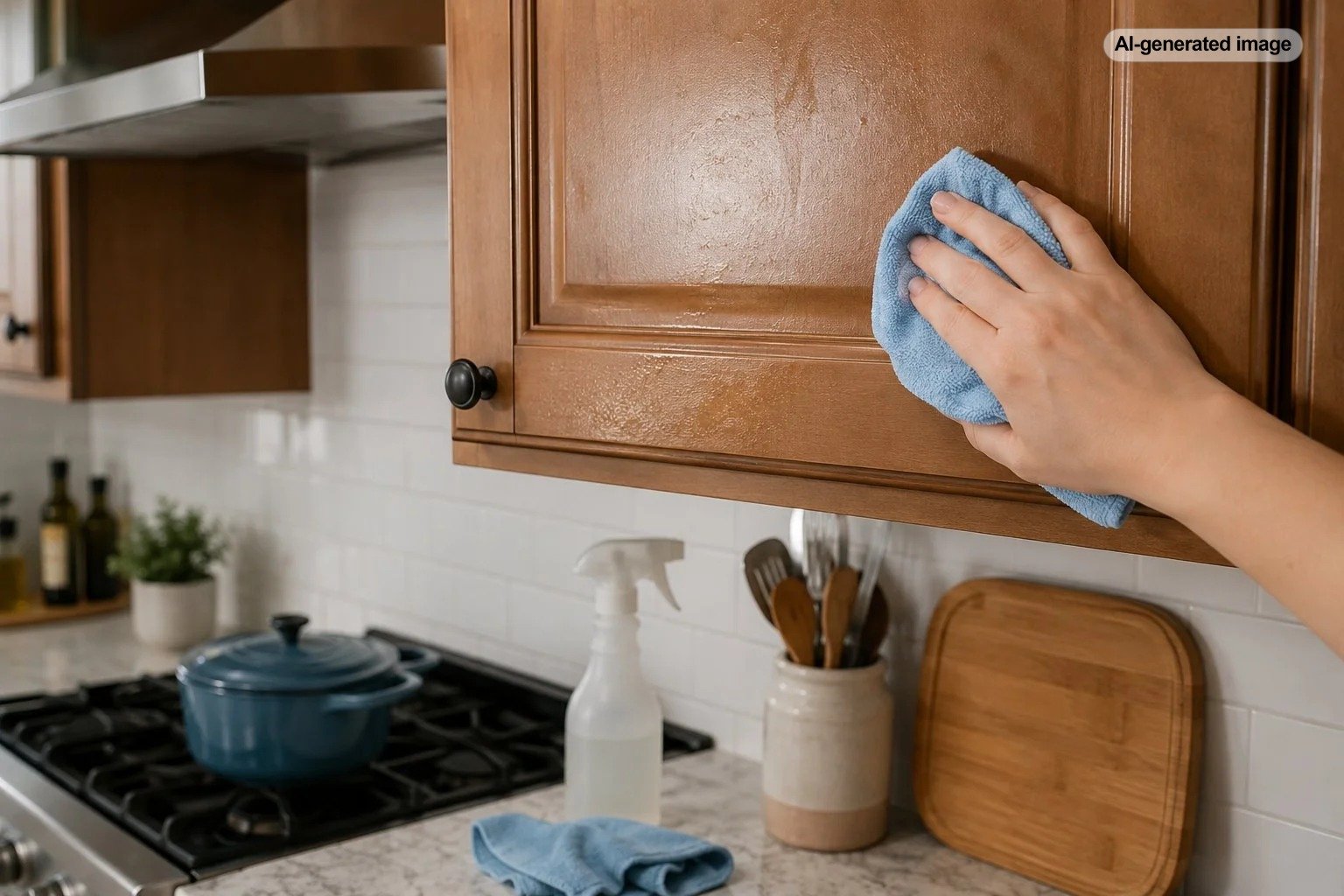
- Dampen the cloth. Dip a soft microfiber cloth into the solution and wring it thoroughly. The cloth should be damp rather than dripping.
- Work in small sections. Wipe gently in the direction of the wood grain when applicable. Give extra attention to pulls, door edges, corners, and areas near the stove.
- Rinse the surface. Wipe the area again with a different cloth dampened only with clean water. Rinse and wring that cloth frequently.
- Dry immediately. Use a clean, dry microfiber cloth so moisture does not remain in joints, seams, or unfinished edges.
- Reassess after drying. Wait until the test area is fully dry before deciding whether the stickiness is gone.
For stubborn grease, repeat the mild process instead of immediately reaching for a stronger chemical. Several gentle passes are often safer than one aggressive treatment. Replace or wash cloths as they become dirty; otherwise, you may redeposit grease onto the next door.
What not to use without checking the finish
Cabinets are not all-purpose work surfaces. Abrasive powders, rough scrubbers, steel wool, strong solvents, undiluted vinegar, concentrated degreasers, steam cleaners, and soaking-wet cloths may harm paint, wood, veneer, adhesives, or protective coatings.
Baking soda is frequently suggested for greasy surfaces, but it is mildly abrasive. It may leave fine scratches or change the sheen of glossy and dark finishes. Similarly, a product labeled natural, plant-based, or heavy-duty is not automatically suitable for every cabinet.
Spraying cleaner directly onto doors is also risky. Liquid can run behind pulls, enter panel joints, collect along the lower edge, or penetrate damaged seams. Applying a small amount to the cloth gives you much better control.
Do not forget the hardware and nearby surfaces
Handles and knobs often hold more skin oil and cooking residue than the doors themselves. When greasy hardware is touched immediately after cleaning, it can make the surrounding cabinet feel sticky again. Clean hardware according to its material and finish, taking care not to expose the cabinet door to excess moisture.
The range hood and its filter also matter. If the hood is not capturing grease effectively, airborne residue will settle back onto the cabinets. Clean reusable filters according to the appliance instructions, replace filters that are designed to be disposable, and use the hood while cooking whenever practical.
Check the tops of upper cabinets, the backsplash, nearby walls, and the sides of appliances as well. A kitchen with widespread oily residue may need a coordinated cleaning rather than isolated attention to the doors.
How to keep the stickiness from returning
Once the buildup is removed, maintenance can be simple. Wipe frequently touched areas and cabinets near the cooking zone with a lightly dampened microfiber cloth before a thick film has time to develop. Dry the surface afterward, particularly around joints and edges.
Use the range hood during frying, sauteing, searing, and other cooking that releases visible vapor or oil. Cover pans when appropriate, clean splatters promptly, and avoid layering polish over cabinets that are already collecting grease.
A modest routine is usually more effective than occasional aggressive cleaning. The goal is to remove a thin, fresh film while it is still easy to lift, not to battle months of grease with a harsh product that may damage the finish.
When a cabinet stays sticky, the next step is better diagnosis, not automatically stronger cleaner.
Frequently asked questions
Why do my cabinets feel sticky only near the stove?
That pattern usually points to airborne cooking grease. Oil droplets settle on nearby doors and combine with dust, smoke residue, and food particles. Improve ventilation and clean those areas more frequently with a mild, finish-safe method.
Can dish soap remove grease from kitchen cabinets?
A small amount of diluted grease-cutting dish soap is a sensible starting point for many washable cabinet finishes. Use a damp cloth, follow with a clean-water wipe, and dry promptly. Always test first and consult the manufacturer’s care guidance when available.
Why are my painted cabinets gummy?
The paint or clear coating may be reacting to heat, moisture, oils, age, or an incompatible cleaning product. If the gumminess remains after gentle cleaning and rinsing, or if paint transfers onto the cloth, stop and have the finish evaluated.
Should I use vinegar on sticky cabinets?
Vinegar can affect some finishes and should not be treated as universally safe. Do not use it unless the cabinet manufacturer or finish maker approves it. Mild dish soap and water are generally a more cautious first test.
When should cabinets be refinished instead of cleaned?
Consider refinishing when the coating itself is soft, peeling, permanently cloudy, discolored, cracked, or worn through. Cleaning can remove residue, but it cannot restore a finish that has chemically or physically deteriorated.