How Do You Keep Outdoor Cushions From Fading Unevenly?
To keep outdoor cushions from fading unevenly, rotate their positions regularly, flip reversible cushions, reduce prolonged direct sunlight, and protect furniture when it is not being used. The goal is not to eliminate every minute of sun exposure. It is to prevent one cushion, one edge, or one side of a seating arrangement from receiving substantially more ultraviolet exposure than everything around it.
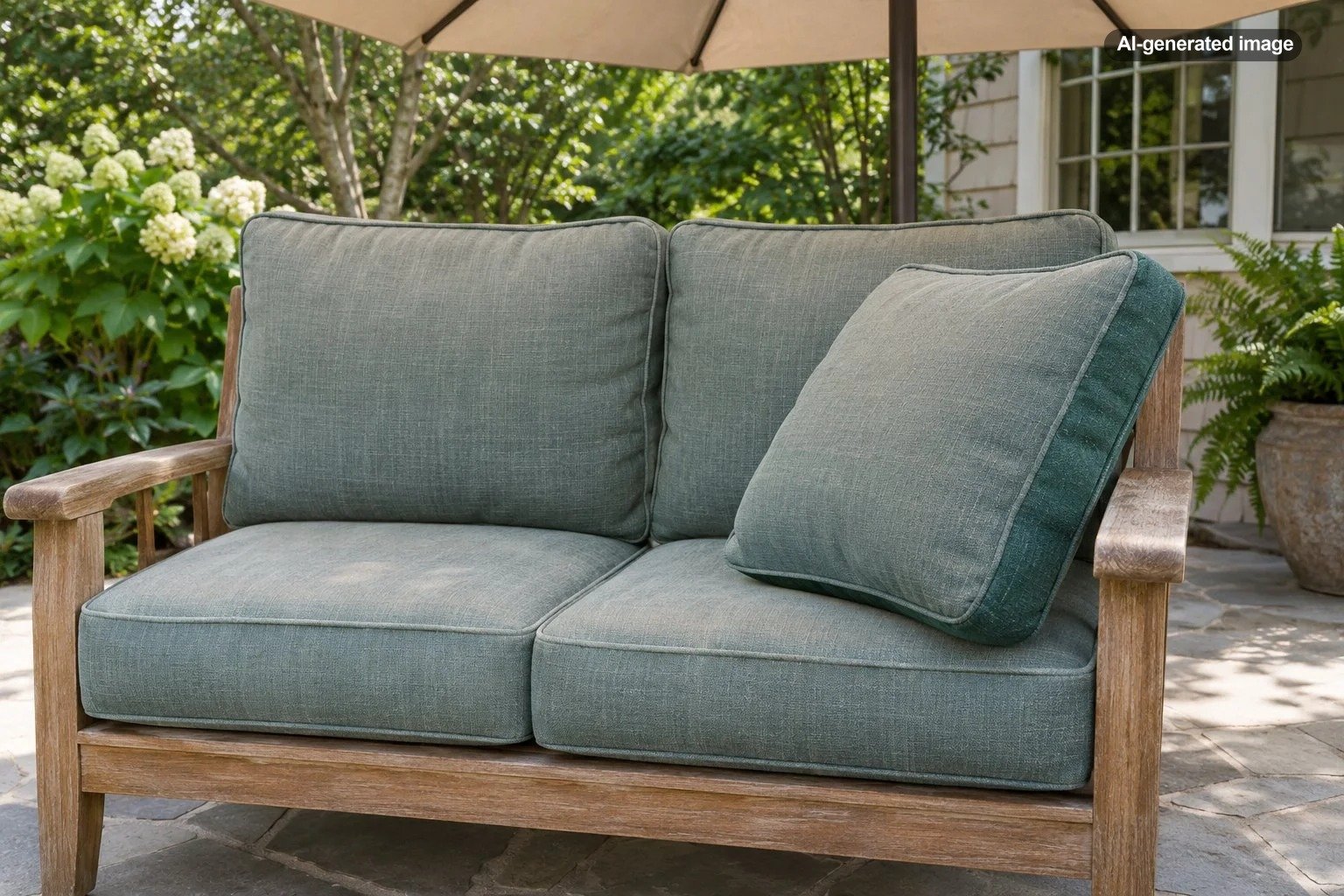
Uneven fading often becomes noticeable before the cushions look particularly old. A seat beneath an overhang may retain its original color while the matching chair beside it develops a lighter, washed-out appearance. Even a single cushion can show a darker back and a noticeably paler front.
Fortunately, a few practical habits can help preserve a more consistent appearance without requiring you to dismantle the patio every afternoon.
Why Do Outdoor Cushions Fade at Different Rates?
Sunlight is the primary reason outdoor cushions develop uneven fading. Ultraviolet radiation can gradually alter dyes and other color-producing compounds in fabric. The rate and appearance of that change depend on the textile, its coloring process, and the amount of exposure it receives.
Two cushions purchased together can therefore age quite differently when their locations create different conditions.
Direct sunlight versus partial shade
Consider a four-seat outdoor sofa positioned beneath a pergola. The two cushions on one end receive morning shade, while the other two remain exposed throughout the afternoon. Over time, the exposed cushions may become noticeably lighter.
The difference can be more pronounced when a nearby wall, roofline, or tree produces a consistent shadow. An area that looks evenly shaded at breakfast may have a very different exposure pattern by midafternoon.
Unequal exposure on the same cushion
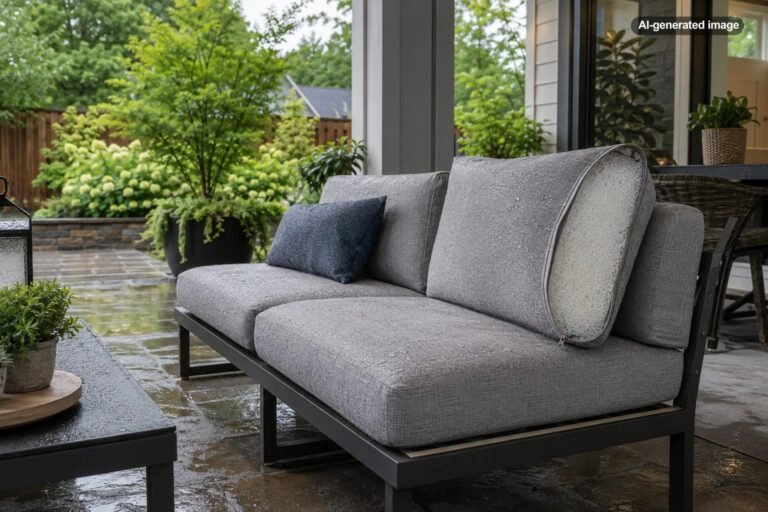
A cushion does not necessarily fade uniformly across its surface. The top of a back cushion may sit in sunlight while its lower half remains shaded by another cushion. Raised piping, fabric folds, and partially covered areas can create additional differences.
That is why a cushion sometimes looks striped or two-toned even when the entire furniture set occupies the same general location.
Fabric construction and color
Outdoor textiles differ in how their colors are incorporated and how well they resist ultraviolet exposure. Solution-dyed fabrics, for example, incorporate pigment into the fibers during production rather than relying exclusively on coloring the finished textile surface.
This can provide strong colorfastness, but it does not make the fabric immune to every form of weathering. Color, pattern, construction, and exposure conditions still influence how visible changes become.
Rotate Cushions Instead of Leaving Them in Fixed Positions
Rotation is one of the simplest ways to reduce visible differences between matching cushions. Rather than allowing the same pieces to occupy the sunniest seats indefinitely, move them through different positions.
For a patio used frequently during sunny weather, checking cushion placement every week or two is a reasonable starting habit. This is a suggested household routine, not a manufacturer-required maintenance interval. Adjust it according to the amount of sunlight your furniture receives.
Swap cushions between sunny and shaded seats
If your outdoor sofa has three interchangeable seat cushions, move the most exposed cushion to a more protected position and shift the others along. A similar approach works with matching dining chairs or lounge chairs.
Rotating complete cushion sets can help maintain a consistent appearance across the patio. However, avoid forcing cushions into furniture with incompatible dimensions or support requirements.
Flip cushions only when they are designed for it
Some cushions are fully reversible, with matching upholstery on both faces. Others have ties, textured undersides, nonslip panels, or construction intended for a specific orientation.
For a reversible cushion, flipping distributes exposure between its two usable surfaces. For a nonreversible cushion, rotating its location may be the better solution.
Use Shade Where It Makes the Biggest Difference
Reducing direct sunlight is another effective approach, particularly when cushions receive concentrated afternoon exposure. You do not necessarily need a fully covered patio. Strategic shade over the most exposed seating can make a meaningful difference.
Choose shade that matches the sun’s movement
An umbrella positioned directly above a table may provide pleasant midday shade while doing very little for cushions exposed to low-angle afternoon sunlight.
Before investing in additional shade, observe the seating area at several points during a sunny day. Notice which cushions remain exposed longest and whether an umbrella, adjustable shade sail, pergola covering, or furniture rearrangement would address that particular exposure.
For renters and balcony owners, a movable umbrella may be more practical than a permanent installation. Any shade equipment should be compatible with the available space, securely supported, and used according to its wind and installation instructions.
Consider reflected sunlight
Direct overhead exposure is not the only consideration. Light-colored walls, pale paving, glass surfaces, and nearby building finishes can reflect sunlight into seating areas.
Reflected light does not always create dramatic fading on its own, but it can contribute to the overall exposure of cushions that appear partly protected.
Moving a chair farther from a reflective wall or changing its orientation may help when the existing arrangement concentrates sunlight on one side.
Cover or Store Cushions Between Uses
When outdoor seating is used only on weekends or for occasional entertaining, leaving cushions exposed every day creates unnecessary wear. Protective storage can reduce sunlight exposure while also limiting contact with dust and debris.
The right approach depends on how frequently the furniture is used, how much storage space is available, and how easily the cushions can be moved.
| Protection method | Best suited for | Main consideration |
|---|---|---|
| Furniture covers | Large seating pieces used regularly | Fit, ventilation, and moisture management |
| Indoor cushion storage | Seasonal or infrequently used furniture | Requires dry, accessible space |
| Deck storage boxes | Removable cushions and smaller patios | Must remain sufficiently dry and ventilated |
| Umbrellas or overhead shade | Frequently occupied seating areas | Shade moves as the sun changes position |
Choose a properly fitting furniture cover
A furniture cover can reduce routine sunlight exposure without requiring you to carry cushions indoors after every use. The important details are fit, secure fastening, adequate airflow, and keeping trapped moisture from accumulating.
Affiliate disclosure: CraneManor.com may earn a commission when you purchase through links on this page. This does not affect the price you pay. Learn more.
For example, a water-resistant patio chair cover may be a practical option for a compatible lounge chair. Measure the furniture before choosing a cover, and remember that water-resistant construction does not guarantee protection against every storm or prevent condensation underneath.
Remove a cover periodically to check for dampness. Allow wet cushions to dry thoroughly before enclosing them for extended periods.
Store cushions when exposure is unnecessary
For longer periods of nonuse, a dry indoor storage location offers more complete protection from sunlight than simply leaving cushions outside under partial shade.
Brush away debris, clean spills according to the fabric instructions, and allow every cushion to dry completely before storage. Avoid tightly enclosing damp foam or upholstery in plastic, which can trap moisture.
Storage should also protect cushions from pests, sharp objects, and excessive compression that might alter their shape.
Choose Fabrics That Resist Fading
If you are replacing noticeably faded cushions or purchasing new outdoor furniture, fabric selection deserves attention. A good-looking textile is only a good long-term choice if it suits the conditions where it will be used.
Look beyond the phrase outdoor fabric
Outdoor-rated fabric may offer resistance to moisture, stains, sunlight, or combinations of these conditions. Those properties are not interchangeable, and the label alone does not establish identical performance across products.
Look for clear information about ultraviolet resistance, colorfastness, fiber content, and appropriate care. Solution-dyed acrylic is one established option for outdoor upholstery, with manufacturers such as Outdura explaining how pigments incorporated into the fibers support color resistance.
Solution-dyed alternatives made from other synthetic fibers are also available. Compare the actual fabric information rather than assuming every outdoor polyester or acrylic cushion performs identically.
Think about color and pattern
Some fading is visually easier to notice than others. Deep, saturated solids may make a change in color intensity particularly obvious. A textured weave or subtle multicolor pattern can sometimes disguise small variations better than a perfectly uniform surface.
That does not mean patterned fabric is inherently more resistant to sunlight. Pattern affects how changes appear, while fiber construction, dyes, and environmental exposure influence the underlying durability.
For a sunny coastal patio, a textured neutral or gently patterned performance fabric may provide a forgiving appearance. For a sheltered terrace, a rich solid color may be perfectly reasonable, especially when cushions are covered between uses.
Clean Outdoor Cushions Without Creating Uneven Color
Uneven appearance is not always caused by fading. Accumulated dust, pollen, sunscreen residue, food spills, or inconsistent cleaning can make part of a cushion look lighter or darker than the surrounding fabric.
Before assuming a cushion has permanently lost color, determine whether the difference may be surface contamination.
Start with the manufacturer’s care instructions
Different textiles have different cleaning requirements. Some removable cushion covers can be machine washed, while others require hand cleaning or treatment while still installed.
Sunbrella’s upholstery guidance, for example, describes gentle cleaning with mild soap, thorough rinsing, and air drying for suitable fabrics. It also advises checking with the furniture manufacturer before machine washing removable casings because cushion construction varies.
Do not apply a cleaning procedure intended for one brand or textile indiscriminately to another.
Clean consistently across the surface
Aggressively scrubbing one small area can affect the appearance of the fabric or leave a visible boundary between cleaned and uncleaned sections.
When the manufacturer’s instructions allow it, cleaning the entire affected panel from seam to seam can help prevent noticeable cleaning outlines and residue marks. Use suitable gentle tools rather than stiff brushes or abrasive pads.
Rinse away cleaning products thoroughly and allow the cushions to air dry as directed. Avoid applying bleach, stain removers, or fabric treatments without confirming that they are appropriate for the particular textile.
Understand what protective sprays can and cannot do
Water-repellent or stain-resistant fabric treatments are not automatically ultraviolet-protection treatments. A product that helps liquid bead on a cushion should not be assumed to prevent color fading.
Some manufacturers recommend retreating specific outdoor fabrics after repeated cleanings to maintain water repellency. That recommendation concerns the fabric finish and does not necessarily mean lost color can be restored.
If you are considering a UV-protection spray, verify that the manufacturer permits its use on the cushion fabric and that the product makes a relevant UV-protection claim. Test compatibility in an inconspicuous area according to its instructions.
What If Your Cushions Have Already Faded Unevenly?
Once ultraviolet exposure has permanently changed the fabric color, ordinary cleaning will not restore the original pigment. However, there are several ways to improve the overall appearance without immediately replacing an entire patio set.
First, distinguish fading from a removable stain
Inspect the cushion in even daylight. If a lighter area corresponds closely to a surface that has remained in direct sun, fading is a plausible explanation. If the difference follows spill marks, runoff patterns, or dusty patches, careful cleaning may help.
Test any approved cleaning method on a discreet area first. Do not attempt increasingly harsh treatments simply because the color does not return.
Consider repositioning, replacement covers, or new upholstery
If only one cushion has faded dramatically, you may be able to move it to a less prominent location. This is a cosmetic adjustment, not a reversal of fading.
Replacement cushion covers can be a more economical and less wasteful option than replacing furniture when the cushions and frames remain in good condition. Check the exact cushion shape, thickness, zipper placement, and attachment details before ordering.
For cushions with deteriorating foam, damaged seams, or brittle fabric, a complete cushion replacement may make more sense than simply replacing the outer casing.
Reupholstering can also be worthwhile for well-built outdoor furniture with unusual dimensions, although the labor involved may not be practical for inexpensive standard cushions.
Common Mistakes That Make Uneven Fading Worse
Most uneven fading comes from ordinary exposure rather than a single dramatic mistake. Still, a few habits can make the differences more noticeable.
- Leaving one cushion permanently in full sun: Even high-performance fabric can develop a different appearance when neighboring cushions receive much less exposure.
- Assuming water resistance equals fade resistance: Protection against moisture and resistance to ultraviolet-related color changes are separate characteristics.
- Using covers on damp cushions: This can create moisture problems even while protecting against sunlight.
- Scrubbing discoloration aggressively: Permanent fading cannot be removed like surface dirt, and abrasive cleaning may damage the fabric.
- Ignoring the back cushions: Vertical cushions can receive concentrated sunlight, particularly when the sun is lower in the sky.
- Waiting until the season ends to inspect: Small differences in exposure are easier to address before they become obvious color contrasts.
A simple cushion-care routine
- Observe which seats receive the most direct sunlight during the day.
- Exchange matching cushions between exposed and shaded positions regularly.
- Flip reversible cushions and check the backs of upright cushions.
- Brush away debris and address spills using the appropriate fabric instructions.
- Use shade or properly fitted covers when seating is not needed.
- Dry cushions completely before enclosing or storing them.
- Inspect for differences in color, damaged seams, and moisture at intervals throughout the season.
Frequently Asked Questions
Can faded outdoor cushions regain their original color?
Not through ordinary cleaning when the color has genuinely changed from sunlight exposure. Cleaning may improve the appearance of discoloration caused by dirt or residue, but permanent fading usually requires new fabric or replacement covers for a consistent original-color appearance.
Should outdoor cushions be turned over every day?
Daily flipping is generally unnecessary for typical household use. Regularly rotating reversible cushions and monitoring their exposure is more practical. The best frequency depends on sun intensity, fabric characteristics, and the patio’s layout.
Will a patio umbrella completely prevent fading?
No. An umbrella can reduce direct sunlight on covered areas, but its effectiveness changes with the sun’s position, canopy coverage, and surrounding reflected light. It is best considered one part of a broader protection strategy.
Do outdoor cushion covers need to breathe?
Moisture management matters. A cover that traps water against upholstery can create problems even while blocking sunlight. Choose a suitable cover, secure it correctly, check beneath it after wet weather, and ensure cushions are dry before extended storage.
Is solution-dyed fabric worth considering for a very sunny patio?
Yes. Solution-dyed outdoor textiles are worth comparing when long-term color resistance is a priority. However, evaluate the specific fabric’s published performance information, comfort, cleaning needs, and suitability for your furniture rather than choosing on fiber terminology alone.
The Best Approach Is Consistent Exposure Management
Outdoor cushions are meant to be enjoyed, not treated like museum textiles. The most effective maintenance plan is one that fits how you actually use your outdoor space.
For frequently used seating, concentrate on rotation and sensible shade. For occasional-use furniture, covering or storing cushions can reduce unnecessary exposure. When buying replacements, choose outdoor fabrics with documented colorfastness characteristics and designs that suit the patio’s conditions.
Above all, remember that matching cushions stay visually consistent when they experience reasonably similar conditions. A small amount of attention throughout the season can make a greater difference than trying to correct years of uneven fading afterward.
Sources & Further Reading
- Outdura: Frequently Asked Questions – Explanation of solution-dyed acrylic fibers and outdoor fabric colorfastness.
- Outdura: Fabric Care – Manufacturer guidance on cleaning and maintaining outdoor upholstery fabrics.
- Sunbrella: How to Clean Upholstery Fabric – Care instructions for removable and nonremovable upholstery, including cleaning and air drying.