How Do You Protect Outdoor Furniture From Salt Air?
Living near the ocean comes with a particular maintenance challenge: salt air can gradually damage outdoor furniture, even when the patio never receives a direct splash of seawater. The best way to protect outdoor furniture from salt air is to rinse away salt deposits regularly, keep surfaces and hardware clean and dry, repair damaged finishes promptly, and use breathable protection when furniture is not in use.
Material choice matters just as much as maintenance. Powder-coated aluminum, quality outdoor-grade polymer furniture, and appropriately maintained teak generally offer practical advantages in coastal settings. Steel, exposed fasteners, certain finishes, and neglected cushions often require more attention. The goal is not to eliminate every trace of salt, which is unrealistic beside the ocean, but to prevent residue and moisture from remaining against vulnerable surfaces.
Why Salt Air Damages Outdoor Furniture
Ocean breezes carry tiny salt-containing droplets that can settle on tables, chairs, frames, and cushions. As moisture evaporates, salt residue remains. Humidity, rain, and condensation can repeatedly dampen that residue, creating conditions that encourage corrosion on susceptible metals.
The effects are not limited to obvious rust. Coastal exposure can contribute to staining around hardware, deterioration of damaged protective coatings, and buildup in joints and crevices. Salt residue also attracts attention to an often-overlooked problem: outdoor furniture is assembled from multiple materials, and the least resistant component may determine how well the entire piece ages.
For example, a polymer Adirondack chair may resist moisture extremely well while its metal screws still require inspection. Similarly, a powder-coated aluminum dining table may have a durable frame but vulnerable scratches, connectors, or decorative accessories.
Choose Furniture Materials That Handle Coastal Conditions
If you are furnishing a seaside patio from scratch, choosing the right materials can substantially reduce future maintenance. Existing furniture can still be protected, but some materials are naturally better suited to repeated salt exposure.
| Material | Coastal advantage | What needs attention |
|---|---|---|
| Powder-coated aluminum | Lightweight and does not develop iron rust | Coating damage, surface oxidation, and mixed-metal hardware |
| HDPE outdoor lumber | Resists moisture absorption and does not rust | Metal fasteners, surface grime, and scratches |
| Teak | Suitable for outdoor exposure when maintained appropriately | Weathering, stains, joints, and finish preferences |
| Stainless steel | Good corrosion resistance in suitable grades | Salt buildup, surface staining, and grade selection |
| Painted or powder-coated steel | Strong and widely available | Rust where protective coatings wear or chip |
| Synthetic wicker | Many outdoor-grade versions tolerate moisture | Frame materials, trapped debris, and weave deterioration |
Aluminum Is Often the Practical Coastal Choice
Aluminum is particularly useful near the ocean because it does not rust like iron or ordinary steel. This makes it a sensible option for exposed dining sets, lounge chairs, and balcony furniture. However, corrosion resistance is not the same as complete immunity to damage.
Examine the quality of the protective finish and the material used for screws, hinges, and connectors. If the aluminum frame is paired with ordinary steel hardware, the hardware may become the first visible maintenance problem. Painted or powder-coated aluminum should also be cleaned according to its manufacturer’s instructions.
HDPE Furniture Offers Low-Maintenance Durability
High-density polyethylene, often used in outdoor lumber-style chairs and tables, does not absorb water like untreated wood and cannot rust. This makes it attractive for busy coastal households, vacation properties, and patios where frequent refinishing would be inconvenient.
It still needs periodic washing, and metal fasteners remain important. Avoid assuming that every plastic-looking piece is equivalent: construction quality, UV resistance, and the hardware used can vary substantially.
Teak Works Well for a More Natural Appearance
Teak is valued for outdoor furniture because of its natural durability, but it changes appearance as it weathers. Untreated teak commonly develops a silver-gray patina, which some homeowners prefer. Others want to maintain a warmer wood tone through manufacturer-approved maintenance.
Salt deposits, dirt, and standing moisture should still be addressed. Avoid aggressive sanding or pressure washing simply to restore a fresh appearance. Teak care products and surface treatments should be chosen for the specific furniture rather than applied indiscriminately.
Rinse Salt Deposits Before They Become a Problem
Fresh-water rinsing is one of the simplest and most useful maintenance habits for coastal furniture. It removes deposits before they accumulate around bolts, joints, textured finishes, and other difficult-to-clean areas.
A shaded, screened patio a considerable distance from the beach may need less attention than furniture beside an exposed oceanfront railing. Rather than following one rigid schedule, watch how quickly salt returns. A faint gritty film, cloudy residue, or recurring deposits around fittings are signs that more frequent cleaning would be worthwhile.
A simple salt-removal routine
- Remove loose sand and debris with a soft brush or cloth to reduce scratching.
- Rinse suitable weather-resistant furniture gently with fresh water, following the manufacturer’s care guidance.
- Wash stubborn residue using mild dish soap and a soft sponge or brush approved for the finish.
- Pay particular attention to joints, undersides, screw heads, and places where water collects.
- Rinse away soap thoroughly and towel-dry exposed metal hardware.
- Allow furniture and cushions to dry completely before covering or storing them.
A gentle garden hose is generally more appropriate than a powerful pressure washer. High-pressure cleaning can damage coatings, force water into joints, and affect certain furniture materials. If a manufacturer permits pressure washing, follow its specific restrictions.
Protect Metal Frames, Screws, and Connections
Metal hardware is often the weak point in otherwise durable coastal furniture. Screws, brackets, hinges, and adjustable mechanisms are exposed to the same salt deposits as the visible frame, but they receive far less attention during ordinary cleaning.
Inspect these areas periodically for discoloration, surface corrosion, loose connections, or deterioration around the mounting points. Light staining should not automatically be treated as structural failure, but substantial corrosion, weakened fasteners, or unstable joints should not be ignored.
Repair Small Coating Chips Promptly
A chip in the paint or powder coating of a steel frame can expose material that is vulnerable to rust. If the surrounding structure remains sound, the manufacturer’s approved touch-up procedure may help protect the area. Clean and dry the surface first, then follow the specific preparation and application instructions.
Do not apply an arbitrary automotive spray, clear coat, or rust treatment to every metal surface. A product suitable for one finish may stain or damage another. Replacement hardware should match the manufacturer’s specifications, including material compatibility and mechanical requirements.
Use Covers Without Trapping Moisture
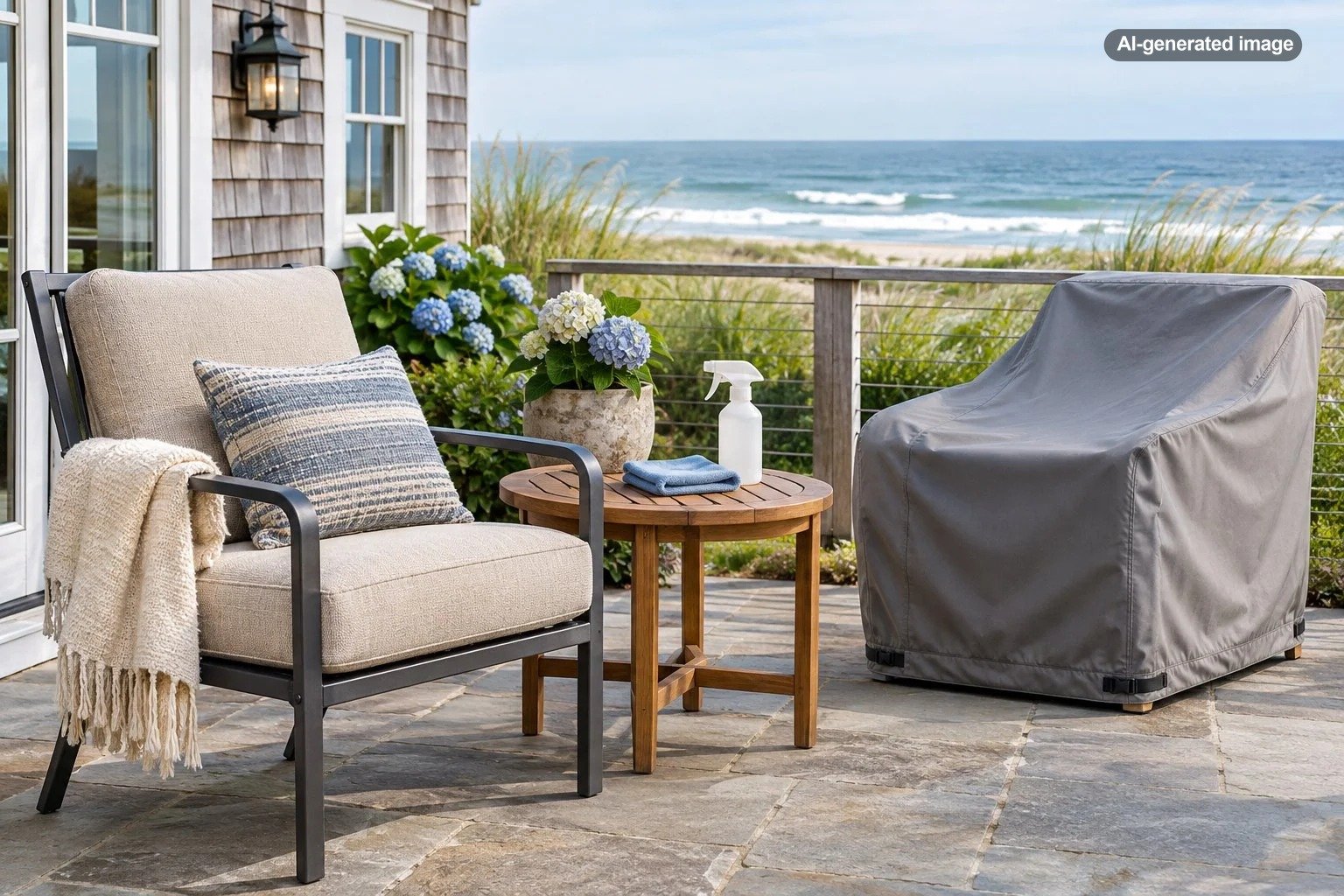
Furniture covers can reduce exposure to airborne debris, dirt, sun, and some salt deposits between uses. However, the wrong cover can create another problem by holding condensation against furniture that is already damp.
Look for a cover that fits the furniture’s actual dimensions, can be secured against wind, and permits appropriate airflow. Water resistance is helpful, but it does not mean that the furniture beneath a cover will remain perfectly dry through every storm.
A loose plastic tarp wrapped tightly around a damp chair is not an ideal long-term solution. It may restrict ventilation and encourage moisture to remain against the finish, cushions, or hardware.
Affiliate disclosure: CraneManor.com may earn a commission when you purchase through links on this page. This does not affect the price you pay. Learn more.
For a compatible lounge chair, a fitted option such as a Classic Accessories Veranda patio chair cover may offer practical protection between uses. Check the chair measurements carefully, secure the cover properly, and leave the furniture dry before placing it underneath.
Affiliate disclosure placement notice
For everyday coastal conditions, covers are most useful when paired with cleaning rather than treated as a substitute for it. If salt is already coating the furniture, covering it simply leaves those deposits in place.
Keep Cushions and Outdoor Fabrics Dry and Clean
Outdoor cushions do not corrode like metal, but coastal conditions can still make them difficult to maintain. Salt residue, humidity, sunscreen, food spills, and frequent dampness all contribute to dirt accumulation and potential odor or mildew problems.
Choose fabrics intended for outdoor use, follow the care labels, and remove cushions when extended wet weather is expected. If cushion covers are removable, confirm whether the manufacturer permits machine washing before cleaning them that way.
When possible, stand cushions on edge after rain so air can circulate around them. Avoid stacking damp cushions in a closed storage box. A storage container should protect against rain while allowing the contents to remain dry rather than trapping moisture inside.
For vacation homes that are unoccupied for weeks, storing clean, fully dry cushions indoors may be more dependable than leaving them exposed on the patio.
Position Furniture to Reduce Direct Salt Exposure
Where furniture sits can make a meaningful difference. An open beachfront deck receives a different level of salt spray and wind-driven moisture than a covered courtyard behind the house.
If the layout allows, position vulnerable pieces away from direct spray and persistent puddles. Covered patios and recessed balconies can offer some shelter, although they do not completely exclude airborne salt.
Keep furniture legs out of standing water and avoid placing susceptible metal components directly against permanently damp surfaces. Outdoor rugs should be allowed to dry, especially where they sit under table and chair legs.
Know When Rust or Corrosion Needs More Than Cleaning
Not every orange mark indicates serious deterioration. Sometimes rust-colored staining originates from a small fastener or another nearby metal object. Other times, corrosion has progressed beneath a coating or into an important connection.
Look closely for bubbling paint, spreading rust at joints, flaking metal, weakened welds, seized adjustment mechanisms, or chairs that have become unstable. These signs deserve more attention than superficial staining alone.
Build a Coastal Furniture Maintenance Schedule
The most effective routine is one that fits your property’s exposure and how often you use the furniture. You do not need to turn patio care into a major weekend project every time the wind changes direction.
A practical coastal care checklist
- After direct ocean spray or wind-driven salt exposure: Rinse suitable furniture and dry vulnerable hardware.
- During regular patio use: Wipe tables, brush away grit, and inspect areas where residue accumulates.
- Every few weeks, or as conditions require: Wash exposed surfaces gently and check underneath chairs and tables.
- Periodically: Inspect finish damage, hardware corrosion, loose connections, and deteriorating fabrics.
- Before extended absences: Clean and dry furniture, secure appropriate covers, and store cushions where they will stay dry.
- Before severe weather: Follow local emergency guidance and secure or move outdoor furniture indoors when directed or when safe to do so.
These are practical checkpoints rather than universal manufacturer-prescribed intervals. Follow any product-specific care requirements, especially when a finish or warranty specifies a particular cleaning method.
Common Mistakes That Shorten Coastal Furniture Life
Using abrasive pads on finished metal: Scratching a protective coating can expose susceptible material and make later deterioration more likely.
Assuming all stainless steel performs identically: Different grades and finishes offer different levels of corrosion resistance, particularly in salt-heavy environments.
Covering furniture while wet: Trapped moisture can undermine the benefit of a protective cover.
Ignoring inexpensive hardware: A durable chair frame does not protect its screws or connectors from corrosion automatically.
Using harsh cleaning chemicals: Bleach, acidic cleaners, strong solvents, or abrasive metal polishes may damage some furniture finishes. Follow material-specific instructions rather than relying on a universal cleaning mixture.
Leaving furniture unsecured before storms: Coastal furniture protection is not only about preventing corrosion. Wind can move outdoor objects, so proper storm preparation takes priority over ordinary maintenance.
Frequently Asked Questions
How often should you rinse outdoor furniture near the ocean?
Rinse when visible or noticeable salt residue accumulates, and more promptly after direct saltwater spray. Highly exposed oceanfront furniture may need attention much more often than pieces on a sheltered patio. Use manufacturer guidance and actual conditions to determine a suitable routine.
Does aluminum outdoor furniture rust in salt air?
Aluminum does not develop the reddish iron oxide rust associated with steel, but it can still experience corrosion or surface deterioration. Protective finishes, clean surfaces, and suitable hardware remain important.
Is teak better than metal for coastal furniture?
Neither is universally better. Teak offers a natural appearance and good outdoor durability, while quality powder-coated aluminum can be easier to move and maintain. The better choice depends on the desired appearance, exposure, construction details, and willingness to perform maintenance.
Should you cover patio furniture every night near the beach?
Not necessarily. Covers may be useful during periods of nonuse, but constantly covering damp furniture can be counterproductive. Furniture should be clean and dry, and the cover should fit and ventilate appropriately. Follow the manufacturer’s advice for the material and cover.
Can you save patio furniture that has started rusting?
Minor surface corrosion may be manageable through approved cleaning and finish restoration, depending on the material. Deep rust, damaged welds, weakened joints, or structural instability require professional evaluation or replacement rather than cosmetic repair.
The Bottom Line
Protecting outdoor furniture from salt air is primarily a matter of choosing appropriate materials, removing deposits before they build up, and keeping vulnerable components dry and maintained. A well-made aluminum or HDPE set can simplify coastal ownership, while teak remains an attractive option for homeowners comfortable with natural weathering and occasional upkeep.
Pay particular attention to the details that are easy to miss: screws, underside connections, coating chips, damp cushions, and moisture trapped beneath covers. With a modest routine tailored to your exposure, a coastal patio can remain comfortable and attractive without demanding constant maintenance.
Sources & Further Reading
- Fermob: Outdoor Furniture Maintenance – Manufacturer guidance on cleaning furniture, maintaining finishes, and caring for furniture in salty environments.
- Fermob: Frequently Asked Questions – Manufacturer information about aluminum, steel, coastal conditions, and outdoor furniture care.
- POLYWOOD: Hardware Care & Maintenance – Guidance on cleaning exposed hardware, rinsing saltwater residue, and monitoring corrosion.
- POLYWOOD: Choosing Outdoor Furniture for Your Beach House – Coastal furniture selection guidance addressing salt air and material considerations.