Should You Store Extra Towels in the Bathroom?
Yes, you can store extra towels in the bathroom, but whether you should depends on how humid the room gets, how well it ventilates, and where the towels sit. A dry, well-ventilated bathroom with a protected linen cabinet can be a perfectly practical place for spare towels. A steamy bathroom with lingering condensation and open shelving beside the shower is a different story.
The goal is not simply to keep towels within reach. It is to keep clean, dry fabric from absorbing unnecessary moisture, developing stale odors, or sitting unnoticed in a damp cabinet. Fortunately, you do not need a separate linen closet to make bathroom towel storage work.
Why Bathroom Humidity Matters for Stored Towels
Bathrooms are unusual storage environments because the conditions can change substantially throughout the day. A room may feel perfectly dry in the morning, become saturated with steam during a hot shower, and then return to normal as ventilation removes the moisture.
Towels are absorbent by design. That makes them comfortable after bathing, but it also means they can take up moisture from humid surroundings. A folded towel does not need to get visibly wet to become unpleasant if it repeatedly sits in a damp environment.
The U.S. Environmental Protection Agency recommends keeping indoor relative humidity below 60 percent, ideally between 30 and 50 percent when possible. These are general indoor moisture-control guidelines, not special requirements for towel storage. Still, they provide a useful reference when deciding whether your bathroom is suitable for keeping clean linens.
The biggest concern is prolonged dampness. Moisture that lingers around fabric, shelving, or cabinet interiors can contribute to musty odors and conditions favorable to mold growth. Storing towels in a bathroom does not automatically cause these problems; consistently poor drying conditions are the more important issue.
When Keeping Extra Towels in the Bathroom Makes Sense
Bathroom storage is particularly convenient when there is limited hallway storage or when several people share a bathroom. Guests can find a clean towel without opening bedroom closets, and household members can replace their bath towels without searching another room.
It is generally a reasonable arrangement when the bathroom has functioning ventilation, no evidence of recurring moisture problems, and a location for towels that stays dry.
A bathroom with reliable ventilation
An exhaust fan that actually removes moist air to the outdoors can make a meaningful difference. Running it during and after showers helps the bathroom return to drier conditions. A window may also help when outdoor humidity and weather conditions are favorable, although opening a window in muggy weather is not necessarily beneficial.
A bathroom with a separate linen cabinet
A cabinet away from the shower, tub, and sink splashes is often more suitable than an exposed shelf directly in the path of steam. However, cabinet doors are not a solution to existing dampness. If the cabinet smells musty or its walls feel damp, closing towels inside it may only conceal the problem.
A bathroom where towels are used frequently
A small stack that gets replenished every week is less likely to sit forgotten than a large collection of towels reserved for occasional use. Frequent rotation also creates opportunities to notice odors, dampness, or other storage problems before they affect the entire supply.
When You Should Store Towels Somewhere Else
Some bathrooms are simply less friendly to fabric storage, particularly older bathrooms with limited ventilation or rooms where multiple showers happen close together.
Consider keeping most spare towels outside the bathroom if you notice any of the following:
- Condensation lingers: Mirrors, windows, walls, or other surfaces remain wet well after bathing.
- The cabinet smells musty: A persistent stale odor suggests you should investigate moisture rather than add more linens.
- There are recurring leaks: Plumbing beneath the sink or behind nearby fixtures creates an unsuitable storage environment until the problem is corrected.
- Towels feel clammy: Clean towels should feel dry when you take them from storage.
- The bathroom stays humid: Repeated showers, limited ventilation, and humid weather can keep moisture levels elevated for extended periods.
A small humidity meter can help distinguish a bathroom that temporarily becomes steamy from one that remains persistently humid. Check conditions at different times, particularly after showers and during periods of high outdoor humidity.
Open Shelves or Closed Cabinets: Which Is Better?
Both arrangements can work, but they offer different advantages. The location and moisture conditions matter more than whether the storage looks decorative.
| Storage option | Advantages | Tradeoffs |
|---|---|---|
| Open shelves | Easy access and attractive folded displays | More exposure to steam, dust, and splashes |
| Closed linen cabinet | Conceals clutter and limits direct exposure | Can trap existing moisture if poorly ventilated |
| Under-sink cabinet | Uses otherwise available space | Possible plumbing leaks and limited clearance |
| Hallway linen closet | Often farther from shower humidity | Less convenient during bathing |
| Bedroom dresser | Useful alternative in small homes | Uses clothing or personal storage space |
Open shelving works best for a small, active supply
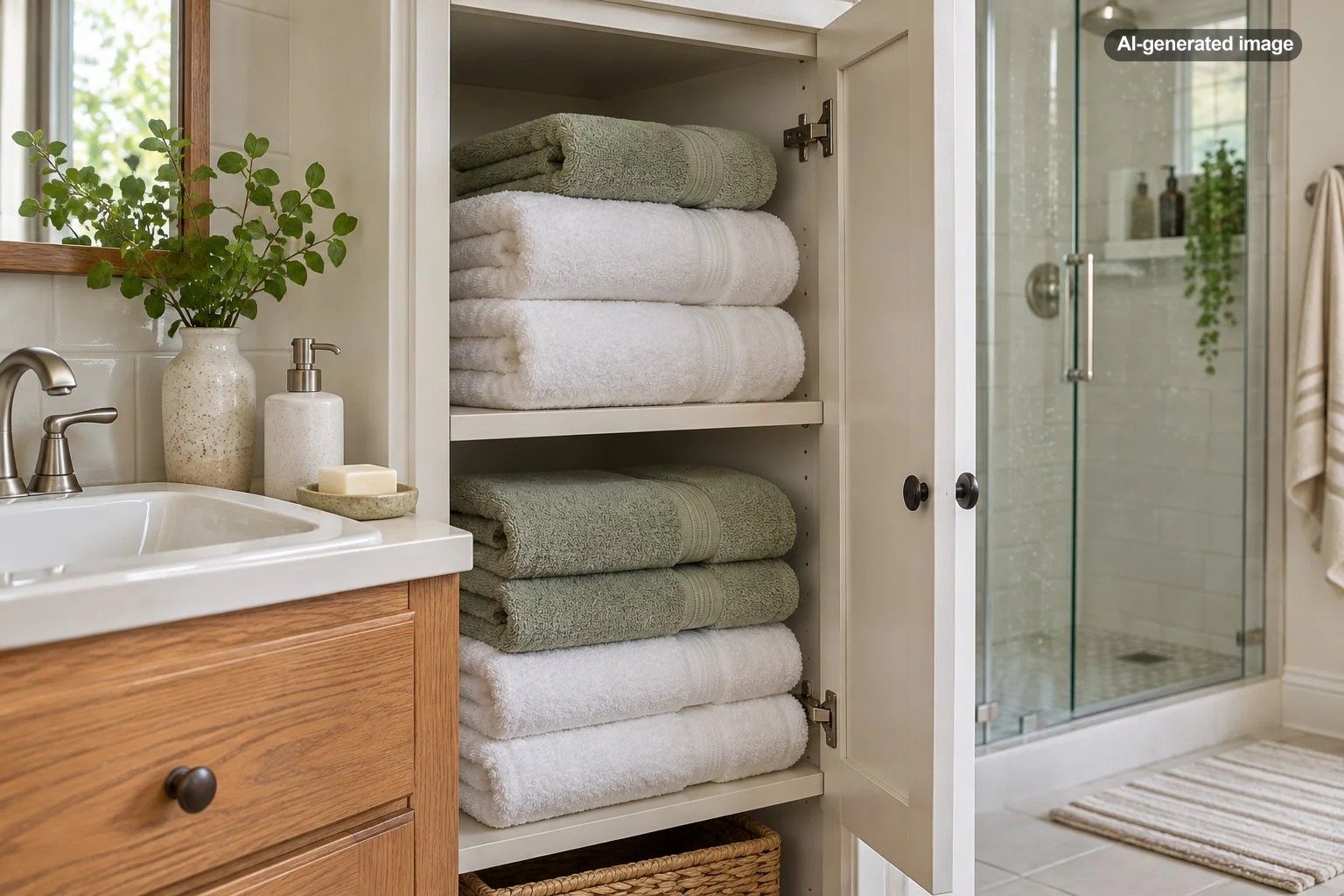
Open shelves are appealing because neatly folded towels introduce softness and texture to a bathroom. They can also make a guest bathroom feel welcoming without adding furniture.
Place shelves outside direct splash zones and away from the most concentrated shower steam. A few towels used regularly are a better choice than an oversized decorative stack that remains untouched for months.
Closed cabinets work best when the interior stays dry
A closed cabinet helps protect linens from everyday splashes and keeps the room visually organized. It can be especially useful in shared bathrooms where open shelving quickly becomes crowded.
Do not assume that an enclosed cabinet is moisture-proof. Check its interior periodically, especially if it sits against a damp wall or surrounds plumbing. Avoid packing towels so tightly that there is no room to handle and rotate them easily.
How to Store Bathroom Towels So They Stay Fresh
Good towel storage requires fewer accessories than most organizing photographs suggest. The essentials are fully dry fabric, a dry storage area, and a rotation system that matches how the household actually uses towels.
A simple towel storage routine
- Dry towels completely. Never fold recently used or partially dried towels into a clean linen stack.
- Check the storage area. Make sure shelves and cabinet interiors are clean, dry, and free of musty odors.
- Choose a protected location. Keep fresh towels away from shower spray, wet countertops, and vulnerable plumbing areas.
- Limit the quantity. Store enough for convenient daily use rather than the household’s entire towel collection.
- Rotate the stack. Place freshly laundered towels behind or beneath older clean towels so the older ones are used first.
- Inspect periodically. Check for dampness, odors, stains, and leaks when replenishing the shelf.
Do not place damp towels in plastic storage bins or airtight bags and assume the enclosure will protect them. Trapped moisture cannot simply disappear. For long-term storage, both the towels and their surroundings need to be dry.
Fragrance is also no substitute for dryness. Scented sachets may make a cabinet smell pleasant, but they cannot correct moisture problems. They may also transfer unwanted scents to towels used by people who prefer fragrance-free linens.
How Many Spare Towels Should Stay in the Bathroom?
The right number depends on household size, laundry frequency, storage space, and how often guests visit. There is no universal quantity that every bathroom needs.
A useful starting point for a two-person household might be two additional clean bath towels, a few washcloths, and one or two hand towels in the bathroom. The rest can stay in a hallway closet, bedroom cabinet, or another dry location. Adjust the quantity based on how quickly the supply is used.
For a busy family bathroom, a larger working supply may save trips to the linen closet. For a rarely used powder room, spare hand towels may be sufficient, with bath towels stored elsewhere.
Guest bathrooms benefit from a visible, modest supply. A clean folded bath towel and washcloth placed where a visitor can easily find them are more useful than a cabinet packed with towels whose purpose is unclear.
What About Towel Warmers and Heated Storage?
A towel warmer serves a different purpose from a linen cabinet. It can provide a comfortably warm towel before bathing, but it is not automatically a drying appliance, a sanitizing device, or a suitable place to keep your entire spare towel collection.
Bucket-style warmers and heated racks also function differently. Some are designed primarily to warm towels before use, while certain rack-style products may offer drying functionality when explicitly supported by their instructions. Always check the particular product’s intended use.
For example, the manufacturer describes the Zadro large towel warmer as an appliance for warming towels and other compatible fabrics, with timed operation and automatic shutoff. That does not make it a replacement for a dry storage cabinet.
Affiliate disclosure: CraneManor.com may earn a commission when you purchase through links on this page. This does not affect the price you pay. Learn more.
If you like having a warm towel ready after bathing, a Zadro towel warmer is one example of a separate comfort appliance to consider. It should be used according to its manufacturer instructions, including compatible fabrics, operating times, placement, and electrical safety precautions. Keep stored spare towels in an appropriate dry location instead.
Better Towel Storage Ideas for Small Bathrooms
Limited square footage does not necessarily mean every towel must live in the bathroom. Often, spreading the supply across two locations makes the space easier to maintain.
A narrow freestanding linen cabinet
In bathrooms with unused wall space, a slim cabinet can provide dedicated storage without visually overwhelming the room. Select a location away from regular splashes, and confirm that furniture is stable and properly secured where necessary.
Shelves above the toilet
These can be useful in a compact room, but position towels where they are not likely to be splashed or exposed to persistent dampness. Avoid stacking linens so high that retrieving them becomes awkward.
A nearby hallway or bedroom closet
This is often the simplest solution. Keep a small daily supply in the bathroom and place bulk reserves in a dry closet outside it. Matching baskets or labeled shelf sections can make replenishment straightforward.
A dresser drawer for rarely used guest towels
If guests visit infrequently, storing their towels in a clean, dry bedroom drawer may be more sensible than displaying them in a bathroom that gets steamy every day. Check the linens before visitors arrive rather than assuming long-stored towels will always smell fresh.
Frequently Asked Questions
Can clean towels become musty without getting visibly wet?
Yes. Towels can absorb moisture from humid air, and repeated exposure to damp conditions may contribute to stale odors. If clean towels consistently smell musty after storage, investigate the surrounding environment and make sure the towels were fully dry before folding.
Is it better to roll or fold towels for bathroom storage?
Either method works. Rolling can make towels easier to display in baskets or on shallow shelves, while folding often fits traditional cabinets more efficiently. Neither arrangement compensates for a damp storage environment. Choose the method that makes towels easy to retrieve and rotate.
Should towels be stored under the bathroom sink?
They can be stored there if the cabinet is clean, dry, and free from leaks, but plumbing makes this location worth checking more frequently. Avoid storing towels directly beneath connections that show signs of moisture, and keep them separate from cleaning chemicals.
Is bathroom towel storage a bad idea in humid climates?
Not necessarily. In humid regions, including coastal and subtropical areas, the important question is whether indoor humidity remains controlled. A bathroom with effective air conditioning and ventilation may be suitable, while one that stays damp is less appropriate for storing large quantities of linens.
Should guest towels be washed again after sitting in storage?
If they are clean, fully dry, and have remained fresh in a protected location, they do not automatically need another wash. If they smell stale, feel damp, or show signs of contamination, address the storage conditions and launder them as appropriate before use.
The Bottom Line
Storing extra towels in the bathroom is a sensible choice when convenience and moisture control work together. A small, frequently used supply in a clean, dry cabinet or protected shelf is usually more practical than a towering stack of linens exposed to daily steam.
If your bathroom struggles to dry out, move most of the spare towels to another room and address the underlying moisture issue. The best towel storage is not necessarily the most photogenic arrangement. It is the one that makes a fresh, dry towel easy to find when you need it.
Sources & Further Reading
- U.S. Environmental Protection Agency: A Brief Guide to Mold, Moisture and Your Home – General guidance on moisture control, condensation, and ventilation.
- U.S. Environmental Protection Agency: Mold Course, Chapter 2 – Background on indoor humidity and moisture-related mold conditions.
- U.S. Environmental Protection Agency: Biological Contaminants and Indoor Air Quality – Recommendations for ventilation and reducing indoor moisture.
- Zadro: Large Towel Warmer Bucket – Manufacturer product information, operating features, and safety guidance.