Can You Put a Fire Pit Near a Screen Enclosure?
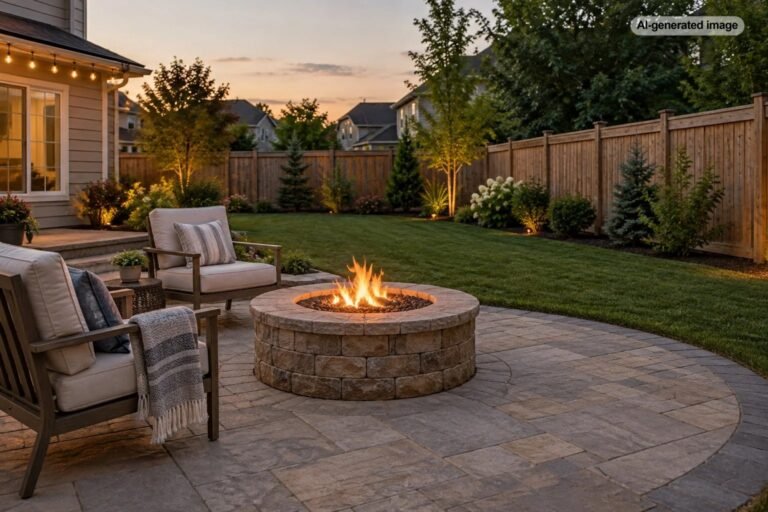
A fire pit can make a backyard feel inviting after sunset, but placing one near a screen enclosure requires more thought than arranging a few chairs. Screens, aluminum framing, roof structures, and nearby landscaping may respond differently to heat, sparks, and smoke. A fire pit that looks comfortably separated from the enclosure may still be too close for safe operation.
You can sometimes position a fire pit outside and near a screen enclosure, but only when the location meets the fire pit manufacturer’s clearance requirements and applicable local fire rules. Placing a conventional wood-burning or portable propane fire pit inside a screened pool cage or under a screened roof is generally a poor choice unless the exact appliance is specifically approved for that installation and every ventilation and clearance requirement is satisfied.
The distinction matters especially in Florida, where screened lanais and pool enclosures often sit directly beside outdoor seating areas. What feels like an open-air patio may still contain vulnerable overhead screening, structural connections, and combustible furnishings.
How Far Should a Fire Pit Be From a Screen Enclosure?
There is no single clearance distance that works for every fire pit and screen enclosure. The appropriate spacing depends on the fire pit’s fuel, construction, heat output, installation instructions, nearby materials, and local regulations.
The U.S. Fire Administration provides a useful general starting point: use fire pits, outdoor fireplaces, and chimineas outdoors at least 10 feet from the home or anything combustible. That recommendation is not a substitute for a manufacturer’s instructions or a local fire-code requirement.
Some jurisdictions require greater distances. For example, the Omaha Fire Department specifies a 15-foot separation from structures for certain portable outdoor fireplaces. This illustrates why homeowners should verify local requirements rather than treating a nationwide recommendation as universal permission.
When evaluating a screened enclosure, consider more than the nearest upright post. Measure and inspect the actual surroundings, including:
- The screen walls and any combustible trim or attached materials.
- The overhead screen panels, roof edges, gutters, and structural supports.
- Nearby patio furniture, umbrellas, cushions, and outdoor curtains.
- Mulch, shrubs, tree branches, fences, and stored household items.
- The distance between the fire pit and the house itself.
If a manufacturer requires a greater distance than a general fire-safety recommendation, follow the greater requirement. If local rules are stricter, those requirements also apply.
Why Screen Enclosures Can Be Vulnerable to Fire Pit Heat
Most residential screen enclosures combine relatively rigid framing with much lighter screening materials. Although aluminum framing does not burn like wood, that does not mean the entire enclosure is fireproof or suitable for exposure to sustained heat.
Screen mesh may melt or deteriorate
Many conventional pool and patio screens use fiberglass mesh with protective coatings or other synthetic screening materials. Their heat tolerance varies by product. High temperatures can potentially deform or damage screening even without direct contact with a flame.
A screen does not have to ignite for the homeowner to face an expensive repair. Localized melting, distortion, discoloration, or damaged screen connections can be enough to require replacement.
Metal framing does not eliminate the problem
Aluminum does not provide the same combustible hazard as wood or some plastics, but heat exposure can still affect finishes, nearby components, and the performance of an assembly. Screen enclosures also contain fasteners, sealants, spline materials, and other components that should not be assumed to tolerate fire pit temperatures.
Even when the primary structure is aluminum, nearby roof connections or combustible materials may create additional concerns.
Sparks can travel beyond the fire pit
Wood-burning fire pits introduce a hazard that gas fire pits generally do not: airborne embers. Wind can carry burning particles toward mesh, furniture, plants, or debris collected around the enclosure.
The U.S. Fire Administration recommends using a metal screen over wood-burning fires to help prevent sparks from floating away. A spark screen reduces the risk but does not make placement beside combustible materials automatically safe.
Can You Use a Fire Pit Inside a Screened Lanai or Pool Cage?
For a conventional portable fire pit, the safest practical answer is to keep it outside the screened enclosure rather than inside it.
Overhead screening is particularly important. A screened roof may look nearly transparent, but it still places material above the flame and rising hot air. An appliance designed for unobstructed outdoor use may explicitly prohibit overhead construction.
Ventilation is another concern. Screened walls admit air, but the ventilation available in an enclosure depends on its configuration, opening area, roof, and adjacent walls. A screened room should not automatically be treated as unrestricted open space.
Fuel-burning equipment can produce carbon monoxide, especially when combustion is incomplete. The U.S. Consumer Product Safety Commission warns that partially enclosed environments can allow dangerous carbon monoxide accumulation. Screening alone does not establish that a particular fire pit installation is adequately ventilated.
Some engineered gas fire-feature systems have manufacturer instructions addressing specific overhead structures or screened configurations. For example, certain Hearth Products Controls systems document clearance and ventilation conditions for particular installations. Those instructions are product-specific and do not authorize using an unrelated portable fire pit beneath screening.
If a homeowner wants a permanent flame feature within or directly adjacent to a screened structure, the appropriate approach is to consult the specific appliance manufacturer, the enclosure manufacturer, and a qualified outdoor gas-fire-feature professional before proceeding.
Is a Propane Fire Pit Safer Near Screening Than a Wood-Burning One?
Propane fire pits avoid the flying wood embers and much of the smoke associated with burning logs. That can make them more convenient for outdoor entertaining, but a cleaner-burning flame is not a cool flame.
Propane burners still generate substantial heat and require proper clearances, ventilation, fuel connections, and operating conditions. A propane fire table is not automatically suitable for a covered patio or screened pool enclosure.
| Consideration | Wood-burning fire pit | Propane fire pit |
|---|---|---|
| Airborne sparks | Embers can escape, especially in wind | No burning wood embers during normal operation |
| Smoke | Can drift into the enclosure | Usually less visible smoke with proper combustion |
| Radiant heat | Requires separation from vulnerable materials | Still requires manufacturer-specified clearance |
| Fuel concerns | Wood storage, ash, and ember disposal | Gas connections, cylinder placement, and ventilation |
| Best general location | Open-air area away from structures | Approved outdoor location with required clearances |
A propane fire pit may be preferable for a patio where smoke control and cleanup matter, provided there is a suitable location outside the enclosure. For a compact backyard without enough clearance, switching fuels does not solve the underlying space problem.
What About a Fire Pit Just Outside the Pool Cage?
Placing a fire pit outside the pool cage is often a more workable arrangement than placing it within the enclosure. However, the location still needs to meet clearance requirements.
Imagine a screened swimming pool surrounded by a narrow concrete walkway, with an open lawn farther away. The walkway may seem like an obvious location for a fire pit because it provides a firm surface and easy access from the seating area.
Yet if that walkway is immediately beside the pool cage, it may leave inadequate separation from the screening. Moving the fire pit to a dedicated open-air sitting area farther into the yard may be a better solution.
Keep seating arrangements realistic, too. Furniture should not crowd the flame simply because the fire pit itself meets the required distance from the screen enclosure. Leave safe circulation space and account for children, pets, and people moving between the pool and the yard.
Does Wind Change How Close a Fire Pit Can Be?
Wind can make an otherwise tempting fire pit location much less suitable. It can carry wood embers, redirect flames, and move hot gases and smoke toward nearby surfaces.
Screen enclosures can also change local airflow patterns. A patio may feel sheltered in one corner while air moves rapidly along another side of the structure.
Do not attempt to compensate for inadequate clearance by adding a windscreen, furniture barrier, or decorative panel unless the manufacturer specifically permits that configuration. Such additions can interfere with ventilation or create new heat-exposure problems.
On windy days, the sensible choice may be to leave the fire pit unlit. Follow the appliance manufacturer’s wind limitations and any local burning restrictions.
How to Choose a Safer Location for Your Fire Pit
The best fire pit arrangement begins with the available safe space, not the desired furniture layout. Before purchasing or moving an appliance, work through the actual conditions of the yard.
What to do
- Identify the fire pit model. Find its installation and operating instructions, including approved locations, minimum clearances, surface requirements, and ventilation limitations.
- Inspect the enclosure. Determine the screening type and identify overhead panels, roof edges, framing, attachments, and nearby combustible materials.
- Measure the available space. Check the distances to the enclosure, house, fences, landscaping, furniture, and anything overhead.
- Verify local restrictions. Contact the local fire department or permitting authority about applicable rules, especially for permanent gas installations or properties with HOA restrictions.
- Evaluate the surface. Confirm that the selected surface is stable and approved for the appliance. Do not assume that pavers, composite decking, or a protective mat automatically satisfy its instructions.
- Plan safe operation. Keep people and pets clear of the flame, maintain an appropriate fire-extinguishing method, and never leave the fire unattended.
For a permanent natural-gas or propane installation, have a qualified professional evaluate the fuel supply, shutoff arrangements, ventilation, and installation requirements. A decorative fire feature should not become an improvised gas project.
Common Mistakes to Avoid
Several seemingly reasonable assumptions lead homeowners toward fire pit locations that deserve reconsideration.
- Assuming aluminum means fireproof. The enclosure contains more than metal framing, and noncombustible framing does not establish adequate clearance for the whole assembly.
- Measuring only to the screen wall. Overhead screening, roof overhangs, and nearby combustible objects also matter.
- Assuming propane is safe under any roof. Gas fire pits still require open-air conditions or a specifically approved installation configuration.
- Relying on a spark screen alone. A mesh cover does not eliminate radiant heat, smoke, or every possible escaping ember.
- Ignoring changing conditions. Outdoor cushions, umbrellas, potted plants, and seasonal decorations can reduce previously available clearance.
- Using a fire pit despite visible heat damage. Warping, discoloration, scorching, or melting near the intended location is a reason to stop using the appliance and investigate the installation.
Alternatives When the Backyard Is Too Small
Not every outdoor space can safely accommodate an open flame near a screen enclosure. In a narrow side yard, compact pool deck, or screened condo patio, the most attractive solution may be one that does not involve combustion.
An outdoor-rated electric heater can be worth considering where permitted, although it has its own mounting, electrical, and clearance requirements. A professional should confirm suitability for the particular enclosure rather than treating electric heat as universally safe beneath screening.
For ambiance without a flame, consider warm outdoor lighting, low-voltage landscape fixtures, or rechargeable lanterns approved for outdoor use. Layering these around seating and planting areas can create a welcoming evening atmosphere without introducing sparks or combustion gases.
In some backyards, a separate open-air seating destination farther from the pool cage is the better design decision. The fire pit becomes a distinct gathering spot instead of competing for space with the screened patio.
Frequently Asked Questions
Can a propane fire pit melt pool screen?
Yes. Sufficient heat can damage or deform common screening materials, depending on their composition and exposure. Propane produces less smoke and no wood embers during normal operation, but the flame can still expose nearby screening to damaging temperatures.
Can you use a smokeless fire pit inside a screen enclosure?
Do not assume so. Smokeless fire pits still produce heat and combustion gases, and wood-burning models can still release sparks. The smokeless label does not establish approval for screened or covered locations.
Can you install a permanent gas fire pit in a screened patio?
Some specially engineered systems may permit certain screened or overhead configurations subject to detailed manufacturer requirements. Approval depends on the exact appliance, enclosure design, ventilation, clearances, and local regulations. Consult qualified installers and the relevant authorities before planning such an installation.
Is a concrete or paver patio automatically safe for a fire pit?
No. A noncombustible-looking surface does not resolve clearance to adjacent structures, overhead materials, or objects around the flame. The appliance must also be approved for the surface and installed or operated as instructed.
What if the screen enclosure is 10 feet away?
Ten feet aligns with the U.S. Fire Administration’s general recommendation for separating outdoor fire pits from homes and combustible materials, but it is not universal approval. Confirm the specific fire pit’s instructions, the enclosure’s surrounding materials, and applicable local requirements. A greater separation may be necessary.
The Bottom Line
A fire pit can coexist with a screened patio or pool enclosure, but thoughtful separation is essential. For ordinary portable fire pits, an uncovered outdoor location away from the screening is generally the more practical starting point.
Use the manufacturer’s installation instructions and local fire requirements to establish the actual safe location, not the appearance of the patio or a general assumption about aluminum screening. If there is not enough room to satisfy those conditions, choose a different location or a noncombustion alternative.
The goal is a backyard that remains inviting after dark without putting its most useful features at unnecessary risk.
Sources & Further Reading
- U.S. Fire Administration: Outdoor Fire Safety – General guidance for outdoor fire pits, clearances, spark screens, and supervision.
- U.S. Consumer Product Safety Commission: Carbon Monoxide Fact Sheet – Carbon monoxide hazards and the limitations of ventilation in enclosed and partially enclosed spaces.
- Omaha Fire Department: Burn Policy – Example of local outdoor fireplace placement and operating requirements.
- Hearth Products Controls: Fire Pit Installation Instructions – Product-specific clearance and ventilation illustrations for certain engineered fire-feature systems.
- MAD Design USA: Gas Fire Pit Clearance Requirements – Manufacturer guidance on measuring clearances and evaluating overhead and adjacent materials.