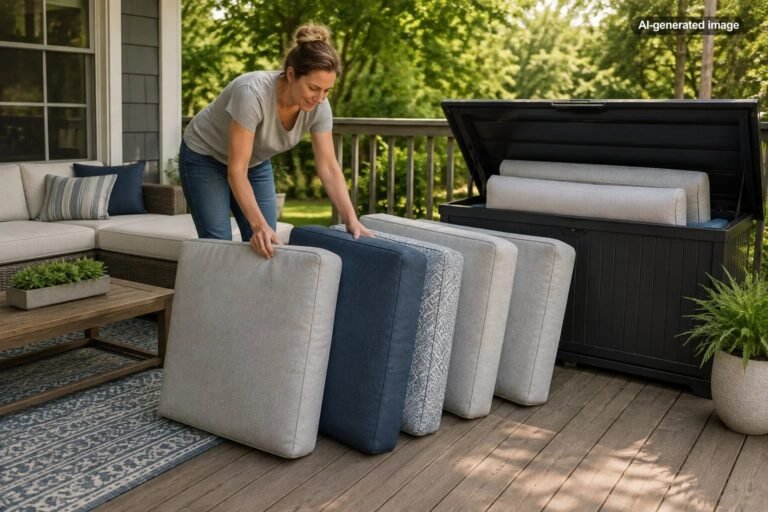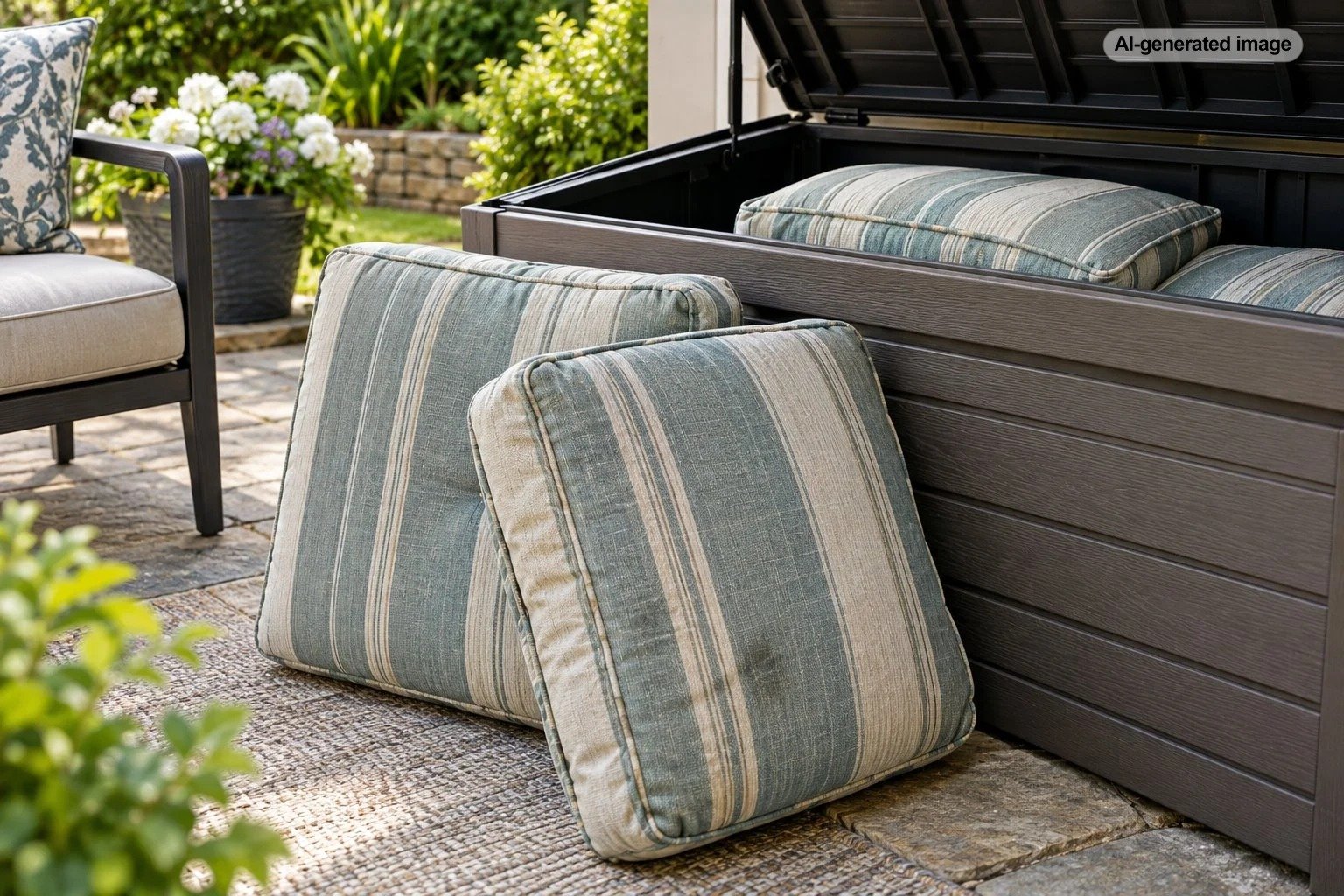
Why Do Outdoor Cushions Smell Musty After Storage?
Outdoor cushions usually smell musty after storage because moisture became trapped in the fabric, foam, or storage space. Even cushions that appeared dry when packed away can retain moisture around seams, inside their filling, or beneath protective covers. Combined with limited airflow and accumulated dirt, these conditions can encourage microbial growth and produce the familiar stale, damp odor.
The smell does not automatically mean your patio cushions are ruined. Sometimes the problem is simply stale storage air or surface contamination that responds well to cleaning and thorough drying. Other times, moisture has penetrated the cushion core, making the problem harder to solve.
The important distinction is whether the odor comes from the removable fabric cover, the internal filling, or the place where the cushions were stored. Finding that source can save considerable cleaning effort.
What Actually Causes the Musty Smell?
Outdoor cushions are designed to tolerate ordinary outdoor conditions, but weather resistance is not the same as immunity to moisture-related odors. Most patio cushions contain several layers, and each can behave differently when exposed to humidity.
Moisture Gets Trapped Inside the Foam
A cushion may feel dry on the outside while the foam beneath remains damp. This is especially likely after heavy rain, pressure washing, or cleaning shortly before storage.
Thick seat cushions can take much longer to dry than their fabric covers. Water may remain near the center, where airflow is limited. Once the cushion is placed inside a sealed bag or crowded storage box, that moisture has fewer opportunities to escape.
Quick-drying foam and cushions with effective drainage can reduce this problem, but they still require appropriate drying conditions.
Humidity Builds Up in Storage
A garage, deck box, shed, or outdoor storage bench can experience significant humidity fluctuations. Temperature changes may also encourage condensation on cooler surfaces.
Even if the cushions were initially dry, humid air entering the storage space can introduce moisture over time. Plastic wrapping and tightly closed containers may make matters worse when they trap existing moisture.
This is particularly relevant in humid climates and coastal areas, although damp storage conditions can develop almost anywhere.
Dirt and Organic Residue Remain on the Fabric
Pollen, dust, leaves, soil, spilled drinks, and food residue can accumulate on outdoor upholstery. These materials may provide nutrients for mold and mildew when moisture is present.
Some performance fabrics resist mildew growth on the fibers themselves, but that does not mean dirt sitting on the fabric cannot support growth. Cleaning cushions before storage helps remove material that could contribute to future odors.
The Storage Container Has Its Own Odor Problem
Sometimes the cushions are not the original source. A damp wooden storage chest, poorly ventilated shed, or dirty plastic deck box can transfer unpleasant odors to otherwise clean upholstery.
Look for water collecting along the bottom, damp walls, discoloration, or a similar smell when the container is empty. Cleaning cushions without correcting the storage environment may only provide temporary relief.
How to Tell Whether the Smell Is Surface-Level or Deeper
Before reaching for a cleaner, inspect the cushions outdoors in good light. Work with dry materials whenever possible, and avoid aggressively brushing suspected mold because that can disturb particles.
| What you notice | Possible explanation | Sensible next step |
|---|---|---|
| Faint stale smell, no visible spots | Storage odor or minor surface contamination | Air out, inspect, and clean as needed |
| Odor concentrated in the cover | Soiling or moisture in the fabric | Follow the cover’s cleaning label |
| Foam feels damp or smells strongly | Moisture retained inside the cushion | Assess drying feasibility and contamination |
| Visible fuzzy or spreading spots | Possible mold growth | Avoid ordinary reuse; evaluate cleaning or replacement |
| Odor returns after thorough drying | Persistent contamination or damp storage | Inspect the filling and storage location |
These observations are clues rather than definitive tests. A musty odor alone cannot identify a particular microorganism, and the absence of visible spots does not establish that the inside of a cushion is clean.
If the cover is designed to be removed, check the manufacturer’s instructions before opening it. Some cushion constructions are not intended for routine cover removal. Where removal is permitted, inspect the fabric and foam separately for moisture, discoloration, and odor.
How to Remove Musty Odors From Outdoor Cushions
For lightly affected cushions without substantial visible mold, a conservative cleaning process is usually the best starting point. The objective is to remove surface soil without unnecessarily saturating the filling.
A practical cleaning sequence
- Move cushions into a suitable outdoor work area. Choose a dry day with good airflow. Keep noticeably contaminated items away from clean upholstery.
- Read the care label. Identify whether the cover is removable, machine washable, spot-clean only, or suitable for a particular cleaning solution.
- Remove loose surface debris. For cushions without suspected mold contamination, gently remove leaves and loose dirt with an appropriate soft brush or other manufacturer-approved method.
- Clean the fabric carefully. If permitted, use mild soap and lukewarm water with a sponge or soft brush. Avoid excessive saturation, particularly when the foam cannot be removed.
- Remove cleaning residue. Rinse or blot according to the care instructions. Do not leave concentrated detergent inside the fabric or foam.
- Dry every accessible surface. Position cushions to encourage airflow around both faces and edges. Keep them out of storage until completely dry.
- Recheck the odor. Once dry, smell the cover and filling separately where possible. Persistent odor deserves further investigation rather than another automatic soaking.
Can You Machine Wash Outdoor Cushion Covers?
Some removable outdoor cushion covers are machine washable, but others are not. Fabric type, protective coatings, backing materials, zippers, and construction all affect the correct procedure.
If machine washing is permitted, follow the manufacturer’s water temperature, detergent, and cycle recommendations. Do not assume that removable automatically means washable.
Air drying is commonly recommended for performance outdoor upholstery. Machine drying can damage certain coatings, cause shrinkage, or affect fit unless the care label specifically permits it.
Should You Use Vinegar, Baking Soda, or Bleach?
Household odor remedies are popular because they are inexpensive and familiar. However, the safest treatment depends on the fabric and the actual cause of the smell.
Baking soda may help absorb some surface odors, but it cannot reliably remove mold growing inside foam. Vinegar is not a universal fabric disinfectant and may be unsuitable for certain finishes. Neither should substitute for cleaning and drying the underlying material.
Bleach requires particular caution. Some Sunbrella upholstery fabrics have manufacturer-approved diluted bleach cleaning procedures for mildew, but that does not make bleach suitable for every outdoor cushion. Other fabrics, dyes, threads, foam components, and decorative trims may be damaged.
Only use bleach when the specific fabric’s care instructions allow it, follow the stated dilution and precautions, and never mix bleach with vinegar, ammonia, or other cleaning chemicals.
Why Outdoor Cushions Sometimes Still Smell After Washing
One of the most frustrating situations is a cushion that smells acceptable immediately after cleaning but becomes musty again several days later.
This often indicates that the cleaning process addressed the outer fabric while leaving moisture or contamination deeper inside. Washing may even introduce additional water into foam that is difficult to dry.
Dense foam, layered batting, sewn-in padding, and waterproof or water-resistant covers can slow evaporation. A cover may also dry much faster than the cushion’s interior.
Another possibility is that the cushion was returned to the same damp storage area. In that case, even a successful cleaning does not address the environmental cause.
Instead of repeatedly soaking the cushion, determine whether the filling can be inspected, dried, or replaced. If significant mold contamination is present in porous material, thorough cleaning may not be practical.
When Is It Better to Replace the Cushion?
Not every musty cushion needs replacing. A removable cover with minor soil may be straightforward to clean, while a deeply contaminated foam insert presents a different challenge.
Consider replacement when there is substantial visible mold on or inside the foam, persistent odor despite appropriate cleaning and complete drying, deterioration of the filling, or repeated moisture penetration that cannot be corrected.
Porous materials can be especially difficult to restore because contamination may extend below the visible surface. The Environmental Protection Agency notes that moldy absorbent materials sometimes require disposal when complete cleaning is not feasible.
For expensive custom cushions, replacing only the foam insert may be possible when the cover is clean, intact, and suitable for reuse. Compare replacement foam and labor costs with the price of a complete new cushion before deciding.
Do not retain contaminated filling simply because the exterior fabric still looks attractive.
How to Store Outdoor Cushions Without Musty Smells
Preventing odors is usually easier than removing them. The most effective storage routine combines cleaning, complete drying, and a location that limits moisture exposure.
Clean Before Packing, Not After Unpacking
Remove pollen, spills, dust, and other residue before storing cushions for an extended period. Spot-clean as needed and allow enough drying time before packing.
For seasonal storage, schedule cleaning ahead of the day you intend to put everything away. Cleaning cushions in the morning and sealing them in a container that afternoon may not allow sufficient drying, especially in cool or humid weather.
Keep Cushions Elevated and Allow Air Circulation
Choose a clean, dry storage area rather than placing cushions directly against a damp garage floor or exterior wall.
Shelves, dry racks, or a suitable raised platform help separate cushions from potential floor moisture. Avoid tightly compressing foam for long periods unless the manufacturer approves it.
Breathable storage covers may be preferable to airtight plastic when humidity is a concern. However, breathable fabric cannot prevent moisture problems in a persistently damp shed or garage.
Understand the Limits of Deck Boxes
Outdoor deck boxes are convenient because they keep cushions near the patio. Their actual moisture protection, however, varies considerably.
A rain-resistant lid may keep most direct precipitation out while still allowing humid air to enter. Water can also accumulate through condensation, poor drainage, or leaks around seams.
Inspect the interior after heavy rain and during seasonal temperature changes. If the bottom becomes wet, correct the problem before returning textiles to the container.
Check Cushions During Long Storage Periods
If cushions remain stored for months, inspect them periodically when practical. Look for condensation, dampness, pest activity, and changes in odor.
In persistently humid indoor storage areas, improving ventilation or controlling humidity with an appropriately maintained dehumidifier may help. The goal is a reliably dry environment rather than a heavily fragranced one.
Does Outdoor Cushion Material Make a Difference?
Yes, but fabric and filling should be evaluated separately.
Performance acrylic fabrics, solution-dyed synthetics, and other outdoor upholstery materials may offer good resistance to fading and moisture exposure. Their cleaning requirements and protective finishes still vary by manufacturer.
Traditional upholstery foam can retain water longer than specialized quick-drying cushion constructions. Open structures and drainage-oriented designs can make it easier for water to escape, although their performance depends on the entire cushion assembly.
For uncovered patios, poolside furniture, and other frequently wet areas, prioritize removable covers, appropriate drainage, and filling that is designed for repeated outdoor moisture exposure.
For covered porches or cushions that are brought indoors after use, comfort, texture, and appearance may reasonably carry more weight, provided the materials are still suitable for the setting.
Remember that water resistance describes how a material responds to water; it does not eliminate the need for cleaning and drying.
Frequently Asked Questions
Will a Musty Outdoor Cushion Smell Go Away on Its Own?
A faint stale-storage odor may diminish with ventilation, particularly when no ongoing moisture or contamination is present. A persistent mildew-like smell generally requires investigation. Airing out a contaminated cushion does not guarantee that the underlying problem has been removed.
Can You Leave Outdoor Cushions in the Sun to Remove Odors?
Sunlight and airflow can help dry suitable outdoor fabrics, but sunlight alone is not a reliable method for removing mold from porous filling. Prolonged direct exposure can also affect some colors or materials. Follow the fabric manufacturer’s drying guidance and prioritize complete drying over intense heat.
Should Outdoor Cushions Be Stored in Plastic Bags?
Plastic bags can restrict airflow and trap moisture if cushions are not completely dry. For long-term storage, choose a clean, dry location and a storage method suited to the local humidity conditions. Avoid sealing questionable or damp cushions inside plastic.
Can Musty Cushions Make a Storage Box Smell?
Yes. Damp or contaminated cushions can introduce odors and moisture into an enclosed container. Remove the cushions, inspect the box, clean it according to its material, and allow everything to dry before using it again.
The Bottom Line
Outdoor cushions smell musty after storage primarily because moisture, limited airflow, and accumulated organic residue create conditions where unpleasant odors can develop. The fabric may be the source, but the foam and storage environment deserve equal attention.
Start with careful inspection, use cleaning methods appropriate for the material, and make complete drying a nonnegotiable step. When odor persists inside porous filling or significant mold contamination is present, replacement may be more sensible than repeated cleaning.
For future seasons, the best routine is uncomplicated: clean cushions before storing them, allow the entire cushion to dry, and choose a storage location that actually stays dry. A little attention before closing the deck box can make reopening it considerably more pleasant.
Sources & Further Reading
- U.S. Environmental Protection Agency: What Are the Basic Mold Cleanup Steps? – Guidance on moisture control, porous materials, and mold cleanup limitations.
- Sunbrella: Upholstery Care and Cleaning – Manufacturer instructions for cleaning outdoor upholstery, washable covers, and mildew contamination.
- National Institutes of Health: Instructions for Remediating Moisture in the First 48 Hours to Prevent Mold Growth – Guidance explaining the challenges of drying upholstered furniture and other moisture-affected materials.