Can You Pour Vinegar Down an AC Drain Line?
Yes, you can pour vinegar down many air conditioner condensate drain lines, provided the equipment manufacturer allows it and you use the correct access point. Ordinary distilled white vinegar can help manage the biological buildup that sometimes develops inside an AC drain. However, vinegar is not appropriate for every drainage system, and it cannot reliably remove a serious blockage.
The important distinction is whether you are performing routine maintenance on a working drain or trying to fix one that has already stopped flowing. A little preventive cleaning may be reasonable. Water pooling around an indoor air handler, on the other hand, deserves more careful attention.
Why Would You Put Vinegar in an AC Drain Line?
An air conditioner does more than cool indoor air. As warm, humid air passes over the cold evaporator coil, water vapor condenses into liquid. That moisture collects in a drain pan and normally travels through a condensate drain line to an approved discharge location.
In many residential systems, the drain line is made from PVC pipe. Depending on the installation, condensation may flow outdoors, into an appropriate plumbing connection, or through a condensate pump.
Because the drainage system regularly carries moisture, it can accumulate biological growth and debris. Dust, airborne particles, and other material may combine into a slimy deposit that restricts water movement.
Distilled white vinegar is mildly acidic. In a compatible drain, it may help reduce certain deposits associated with biological buildup. This is why some HVAC manufacturers mention it as an occasional maintenance option.
But vinegar does not remove every kind of obstruction. A thick accumulation of sludge, a blocked trap, a crushed drain pipe, or a malfunctioning condensate pump requires a different solution.
How Much Vinegar Should You Pour Down an AC Drain Line?
For systems whose manufacturers permit vinegar maintenance, approximately one cup of ordinary distilled white vinegar is a commonly described amount. Both Carrier and Trane discuss this quantity in their residential condensate drain guidance.
That does not make one cup a universal instruction. Equipment designs vary, and a mini-split, ducted central air system, high-efficiency furnace, or pump-assisted drain may have different requirements.
Before adding anything, check the installation or maintenance instructions for your particular equipment. If the documentation specifies a different cleaning method, follow that guidance instead.
| Drain condition | Is vinegar appropriate? | Better next step |
|---|---|---|
| Drain flowing normally | Potentially, if approved | Follow the manufacturer’s preventive maintenance instructions |
| Minor visible biological buildup | May help in compatible systems | Inspect and clean as directed, then verify drainage |
| Water backing up or overflowing | Not a reliable repair | Turn off the system and arrange proper drain clearing |
| Condensate pump installed | Depends on pump requirements | Check the pump manufacturer’s cleaning instructions |
| Unknown drain configuration | Do not assume | Have an HVAC technician identify the correct access point |
How to Clean an AC Drain Line With Vinegar
If your equipment documentation specifically permits vinegar, the access point is safely reachable, and the drain is not overflowing, a basic maintenance procedure may be possible without opening the air handler’s electrical or mechanical compartments.
What to do
- Turn off the air conditioner. Follow the manufacturer’s shutdown instructions. Do not work inside an energized air handler or remove electrical access panels.
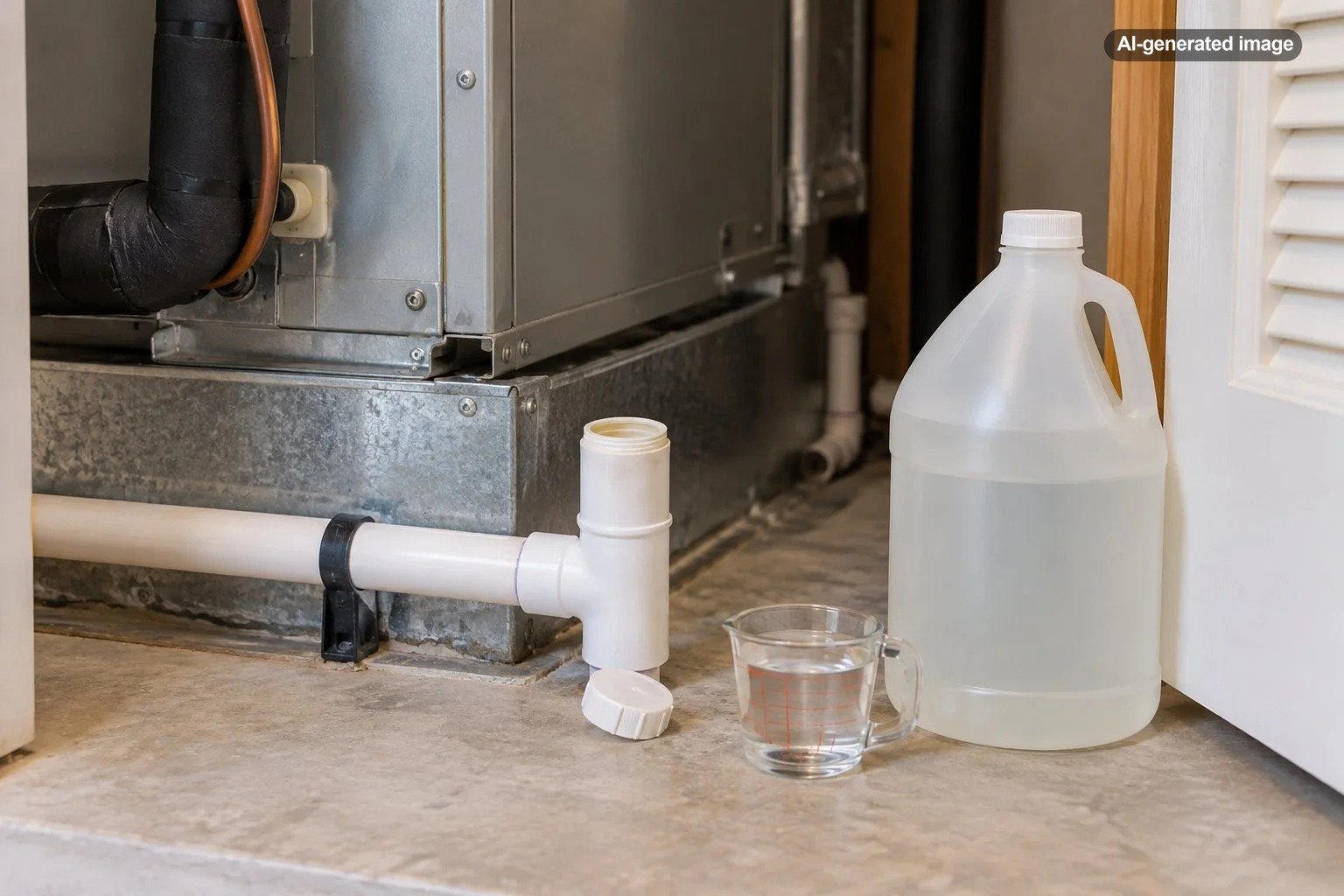
- Find the designated condensate drain access. Some central systems have a removable cap on an accessible drain-line service opening. Not every visible pipe opening is intended for adding cleaning liquid.
- Confirm the drain configuration. Make sure the opening leads to the correct drain section. Avoid pouring liquid into a vent opening, overflow connection, condensate pump, or equipment compartment without specific instructions.
- Add the manufacturer-approved amount. Where permitted, slowly introduce ordinary distilled white vinegar through the designated access point. Do not force liquid into a drain that appears blocked.
- Follow the specified cleaning and rinsing procedure. Any waiting period or water flush should come from your equipment instructions or HVAC technician, not an assumed universal formula.
- Verify normal drainage. Restore the system according to its instructions and check that condensate flows normally without leaks or overflowing water.
If the access cap is difficult to remove, the piping is unfamiliar, or liquid immediately backs up, stop. Forcing open fittings or introducing more liquid can turn a manageable maintenance issue into water damage.
Should You Use White Vinegar or Apple Cider Vinegar?
When an equipment manufacturer recommends vinegar, it typically specifies distilled white vinegar. This is the sensible choice because it is a relatively simple, readily available household product without the coloring and other components found in some alternative vinegars.
Apple cider vinegar, balsamic vinegar, flavored vinegar, and concentrated industrial vinegar are not interchangeable with ordinary distilled white vinegar.
A stronger vinegar is not necessarily a better drain cleaner. Higher acidity may create unnecessary compatibility concerns without solving the underlying obstruction.
Avoid improvising stronger mixtures or combining vinegar with other cleaners. The goal is to maintain a compatible drain, not to perform aggressive chemical cleaning.
Is Vinegar Better Than Bleach for an AC Drain Line?
Vinegar and bleach are different chemicals, and neither should be considered automatically appropriate for every air conditioning system.
Some manufacturers discuss distilled vinegar as a preventive maintenance option, while other equipment may call for a particular cleaner or a professional cleaning procedure. Bleach may be inappropriate for certain components or drainage configurations.
The safest approach is to follow your specific equipment instructions rather than substitute a familiar household cleaner.
Never mix vinegar with chlorine bleach. Combining an acid such as vinegar with bleach can release hazardous chlorine gas. Do not add vinegar if bleach or another cleaning chemical may still be present in the line. If you are uncertain what was previously used, ask a qualified HVAC professional before introducing another product.
Likewise, avoid pouring conventional household drain openers into an AC condensate pipe unless the equipment manufacturer explicitly authorizes the product and procedure. These chemicals are not automatically compatible with HVAC drainage materials.
What If Vinegar Does Not Unclog the AC Drain?
If water cannot move through the drain, vinegar may simply collect behind the blockage. A serious obstruction often requires physical removal rather than chemical treatment.
Professional HVAC technicians commonly use appropriate suction equipment to remove sludge and debris, then test the drainage system to verify that water flows correctly.
Depending on the installation, the problem may involve the drain trap, discharge outlet, piping slope, or condensate pump rather than biological growth alone.
Signs that the condensate drain may be clogged
- Water collects in or around the indoor air handler.
- The auxiliary drain pan contains standing water.
- The air conditioner shuts off unexpectedly because a condensate safety switch has activated.
- Water stains appear on nearby ceilings, walls, or flooring.
- The condensate drain repeatedly backs up after cleaning.
- The system produces condensate, but water does not reach its expected discharge point.
Not every unexplained AC shutdown is caused by a clogged drain. Similarly, the absence of visible dripping outdoors does not prove a blockage: condensate production varies with temperature, humidity, operating time, and system design.
Can You Use Vinegar if Your AC Has a Condensate Pump?
Some air conditioning systems use a condensate pump when gravity drainage is impractical. The pump collects water in a small reservoir and moves it through tubing to a suitable discharge point.
These systems require particular care because the drainage components include a pump motor, float mechanism, reservoir, and sometimes a safety switch.
Do not assume that vinegar instructions for a conventional PVC drain apply to a condensate pump. Check the pump manufacturer’s documentation for approved cleaning solutions, procedures, and maintenance requirements.
A pump that fails to operate, runs continuously, or causes repeated overflow needs troubleshooting. Vinegar will not repair a failed motor, electrical connection, float switch, or blocked discharge tube.
How Often Should You Put Vinegar in an AC Drain Line?
There is no maintenance interval that applies to every residential AC drain line. Frequency depends on the equipment, installation, local conditions, operating hours, and manufacturer recommendations.
Homes in humid climates may generate considerable condensate during long cooling seasons. However, high humidity alone does not mean every system needs monthly vinegar treatments.
Some homeowners receive a preventive drain maintenance procedure from their HVAC contractor. Others have equipment for which the manufacturer recommends a different method altogether.
At minimum, a regular cooling-system maintenance visit is a sensible opportunity to have the condensate pan, drain trap, and discharge route inspected. Carrier and Trane both emphasize professional drain inspection and cleaning as part of routine AC maintenance.
If your drain requires frequent emergency clearing, repeated vinegar applications are not a satisfactory long-term answer. The system may need closer investigation.
How to Prevent AC Drain Line Problems Without Relying on Vinegar
Preventing condensate trouble involves more than choosing a cleaning liquid. Dust control, proper drainage, working safety devices, and occasional inspection all matter.
Condensate drain maintenance checklist
- Inspect or replace air filters according to the filter and equipment instructions.
- Include condensate pan and drain inspections in professional AC maintenance.
- Watch for standing water, unusual odors, or moisture near the indoor unit.
- Keep accessible drain outlets free from obvious external obstructions.
- Have condensate safety switches and pump operation checked where applicable.
- Ask your technician to demonstrate the correct drain access and approved cleaning method.
- Investigate recurring clogs rather than repeatedly adding cleaning chemicals.
Drain location also affects how quickly homeowners notice a problem. An air handler in a garage or utility closet may be relatively easy to inspect. Equipment installed in an attic can leak into ceiling materials before anyone sees water near the unit.
For accessible, leak-prone locations, an audible water alarm can provide an additional warning if water reaches the floor. Such alarms are supplemental monitoring devices, not substitutes for proper drainage, HVAC safety switches, or maintenance.
Affiliate disclosure: CraneManor.com may earn a commission when you purchase through links on this page. This does not affect the price you pay. Learn more.
For example, a set of water leak detectors with local audible alarms can be placed in appropriate accessible areas near water heaters, sinks, or other locations where leaks might otherwise go unnoticed. These particular alarms sound locally; they do not provide Wi-Fi connectivity or phone notifications. They should be positioned where unexpected water is likely to collect, without obstructing HVAC equipment or electrical components.
Frequently Asked Questions
Can vinegar damage an AC drain line?
Ordinary distilled white vinegar is mentioned in maintenance guidance from manufacturers such as Carrier and Trane. Nevertheless, compatibility depends on the specific system, including its fittings, pump, and associated components. Follow the equipment instructions rather than assuming every drain is suitable.
Can you pour vinegar directly into the AC drain pan?
Not unless the manufacturer specifically directs you to do so. The drain pan is a different component from a designated drain-line access opening. Pouring liquid into the wrong location could cause overflow or expose components to an unsuitable cleaner.
Will vinegar unclog a completely blocked AC condensate line?
Do not count on it. Vinegar may help with limited biological buildup in an otherwise draining system, but a fully blocked pipe generally requires the obstruction to be removed and proper flow verified.
Can you leave vinegar in an AC drain line overnight?
There is no universally appropriate soaking time. Follow the manufacturer’s specified procedure, including any waiting or flushing instructions. Do not leave a suspected blockage untreated while water continues to accumulate.
Should you pour boiling water into the AC drain line?
No. Avoid boiling water because excessive heat is unnecessary and may damage temperature-sensitive drainage components. If your manufacturer allows a water flush, use the recommended water temperature and procedure.
The Bottom Line
Pouring distilled white vinegar down an AC condensate drain line can be a reasonable preventive maintenance step when your equipment manufacturer approves it. For compatible systems, approximately one cup is a commonly cited amount, but the correct procedure depends on the installation.
The more important question is whether the drain is actually functioning. Vinegar may help maintain a working drain; it cannot fix a failed pump, improper piping, or a substantial obstruction.
If the system is draining normally, follow its maintenance instructions and keep an eye on moisture around the indoor equipment. If water is backing up, the air conditioner has stopped on a safety switch, or leaks keep returning, have the cause professionally evaluated instead of reaching for another bottle of vinegar.
Sources & Further Reading
- Carrier: How to Clean an AC Drain Line – Manufacturer guidance on condensate drainage, vinegar maintenance, common obstructions, and professional cleaning.
- Trane: AC Condensate Drain Line Clogged? – Troubleshooting guidance covering blocked condensate drains, professional cleaning, and preventive maintenance.
- Carrier: HVAC Cleaning Guide – Guidance emphasizing manufacturer-approved cleaning procedures and caution with bleach solutions.
- Carrier: Why Is My AC Leaking Water? – Information about condensate drainage problems, water leaks, and maintenance.