How Do You Protect Outdoor TVs Before a Hurricane?
An outdoor television can make a covered patio feel like a second living room, but that comfortable setup becomes a liability when hurricane conditions approach. The safest way to protect an outdoor TV before a hurricane is to turn it off, disconnect its electrical and signal cables, remove it from its mounting bracket when that can be done safely, and store it inside a dry, secure building. Even televisions designed for outdoor use should not be assumed capable of surviving hurricane-force winds, wind-driven debris, or flooding.
If removing the television is impractical, the next priority is evaluating its mounting hardware, enclosure, surrounding structures, and electrical connections. A protective cover may help with ordinary weather exposure, but it cannot make an exposed television hurricane-proof. Preparation should happen well before dangerous winds arrive, and protecting people always takes precedence over protecting electronics.
Why Outdoor TVs Are Vulnerable During Hurricanes
Outdoor-rated televisions are generally designed to handle particular combinations of temperature, humidity, sunlight, and precipitation. Their environmental ratings vary significantly by model. None of those characteristics automatically establishes resistance to hurricane winds, flying debris, storm surge, or structural failure.
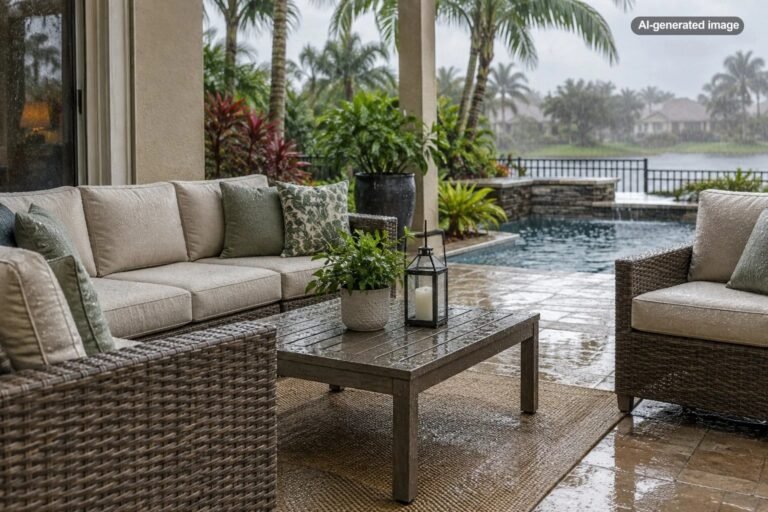
Hurricanes create several distinct hazards for patio electronics. Strong wind can damage a television directly or place unexpected forces on its mounting bracket. Flying branches, roofing materials, and patio accessories can break the screen or enclosure. Wind-driven rain can reach connectors and openings that normally remain sheltered beneath a roof.
Floodwater introduces an additional electrical hazard, while saltwater exposure in coastal locations can accelerate corrosion. Even if the television itself remains attached, a damaged pergola, patio roof, exterior wall, or mounting surface can leave the entire installation vulnerable.
The distinction matters because preparing for a hurricane is not simply a matter of making an outdoor TV more waterproof. The goal is to remove the television from a potentially destructive environment whenever possible.
Remove the Outdoor TV Before the Storm When Possible
Taking the television indoors is generally the strongest practical protection against hurricane-related damage. This applies to conventional indoor televisions used on patios as well as weather-resistant outdoor models.
Begin by reviewing the TV manufacturer’s instructions and the mounting system’s removal procedure. Some brackets have security screws, locking tabs, or release mechanisms that must be disengaged before lifting the television. Improvising with unfamiliar hardware can damage the screen or cause the television to fall.
How to prepare a removable outdoor TV
- Check conditions first. Work only while weather is calm, the area is dry, and there is enough time to finish safely.
- Turn off the television. Shut down connected streaming devices, receivers, and other accessories.
- Disconnect electrical power. Unplug the television from a dry, safely accessible outlet. Do not handle wet plugs or energized equipment in standing water.
- Label and disconnect cables. Identify HDMI, Ethernet, antenna, and other connections so reinstallation is easier.
- Release the mounting hardware. Follow the bracket manufacturer’s instructions rather than forcing the television away from the wall.
- Lift with assistance. Use enough capable helpers for the television’s size and weight, and keep pressure away from the display panel.
- Move the television indoors. Choose a dry, stable storage location away from windows, exterior doors, and anticipated floodwater.
A two-person lift may be appropriate for some smaller units, while large or unusually heavy installations can require professional assistance. Do not attempt removal from an unsafe ladder, an exposed roof, or a location where you cannot comfortably control the television.
Where should you store the television?
Keep the television upright when its manufacturer specifies upright storage or transport. An original shipping carton with fitted protective inserts can help protect the screen, but a suitable padded location may be more practical for a large outdoor model.
Avoid leaning an unprotected screen against furniture, placing heavy objects on the television, or storing it in a garage that may flood. An interior room above expected flood levels is preferable. If the television has already become wet, do not plug it in simply to check whether it still works.
What If the Outdoor TV Cannot Be Removed?
Some outdoor televisions are integrated into architectural features, mounted unusually high, or enclosed within built-in cabinetry. Removing them immediately before a hurricane may create more danger than leaving them in place.
In these situations, focus on realistic precautions rather than attempting a last-minute structural modification. If there is sufficient time before the storm, a qualified installer can review the mounting system, manufacturer guidance, and enclosure design.
The condition of the supporting structure matters as much as the bracket. Hardware attached to deteriorated wood, loose masonry, damaged siding, or an inadequately supported frame may fail under severe loading. A mount’s advertised weight capacity alone does not establish its resistance to hurricane conditions.
Can you leave an outdoor TV inside a protective enclosure?
A properly designed enclosure can provide useful protection against routine rain, dust, insects, and incidental contact. However, enclosure performance depends on the specific product, its installation, and the hazards it was designed to withstand.
A weather-resistant cabinet is not necessarily impact-rated or engineered to withstand hurricane winds. Even a sturdy enclosure may be compromised if the wall, post, or surrounding structure fails. If a manufacturer provides a documented severe-weather removal or closure procedure, follow that guidance.
Do not permanently seal ventilation openings, wrap powered equipment in plastic, or improvise rigid storm panels without considering ventilation, mounting loads, and the manufacturer’s requirements.
Why a Standard Outdoor TV Cover Is Not Enough
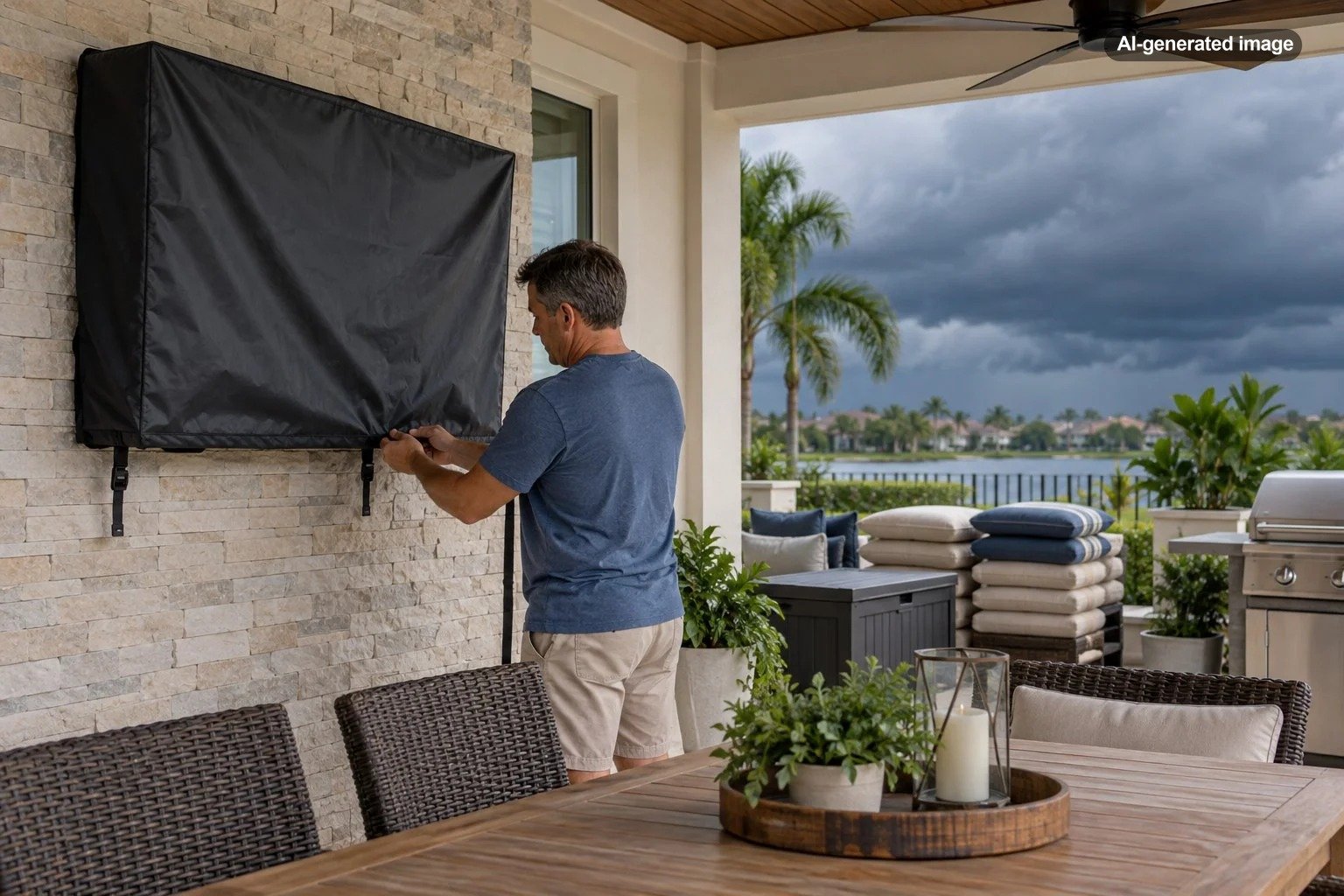
A fitted outdoor television cover is useful for everyday protection against dust, pollen, splashes, and ordinary exposure when used according to its instructions. Hurricane conditions are different.
Strong winds can pull at a loose cover, force rain through seams, or turn poorly secured material into additional debris. A soft fabric cover offers little meaningful resistance to a flying branch or roof fragment. Water trapped beneath a cover can also remain against electrical connections and mounting hardware.
| Protection method | Useful for | Main limitation |
|---|---|---|
| Soft outdoor TV cover | Routine dust and weather exposure | Not reliable protection from hurricane debris or structural damage |
| Weather-resistant enclosure | Normal outdoor exposure within its stated design limits | Storm performance depends on verified specifications and installation |
| Covered patio location | Reducing everyday direct rain and sun exposure | Wind-driven rain and debris can still reach the television |
| Indoor removal and storage | Reducing direct exposure to wind and debris | Requires safe removal and a protected storage location |
If you must leave the television outside, do not add a cover that the manufacturer advises against using in high winds. A cover that protects against ordinary rain should never be treated as a substitute for safe indoor storage.
Disconnect Power and Protect Outdoor Connections
Electrical precautions are especially important because hurricanes can bring heavy rain, flooding, damaged wiring, and prolonged power outages.
Before conditions deteriorate, turn off the television and safely unplug it from its electrical supply. Disconnect accessible signal cables and accessories according to the manufacturer’s instructions. Do not handle plugs, outlets, cables, or switches that are wet or submerged.
Outdoor outlets and electrical equipment should be suitable for their location and installed with appropriate weather protection and required ground-fault protection. A qualified electrician should address damaged receptacles, exposed conductors, loose wiring, or questionable outdoor electrical installations well before hurricane season.
A surge protector may help manage certain electrical transients within its rated capabilities, but it does not prevent flood damage, physical destruction, or every lightning-related surge. Unplugging safely before the storm provides a useful additional precaution.
Prepare the Rest of the Patio Around the TV
Protecting the television is only one part of reducing hurricane damage around an outdoor entertainment area. The objects surrounding it can become hazards of their own.
Bring portable speakers, streaming devices, remotes, lightweight furniture, decorative objects, planters, and loose lighting fixtures indoors while conditions remain safe. Secure items that cannot be moved in accordance with appropriate guidance for their size and construction.
Pay particular attention to items positioned near the screen. A lightweight side table or decorative lantern may not seem threatening on a quiet afternoon, but windborne objects can damage glass, screens, doors, and surrounding structures.
Affiliate disclosure: CraneManor.com may earn a commission when you purchase through links on this page. This does not affect the price you pay. Learn more.
For ordinary days between storms, a fitted water-resistant patio chair cover can help protect a compatible lounge chair from routine dirt and weather exposure. It should not be relied upon to secure furniture or protect it during hurricane-force winds.
Likewise, decorative solar lights for a garden path may be useful for everyday landscape illumination, but removable fixtures should be collected before severe winds. Solar landscape lighting is not a substitute for dependable emergency lighting during an outage.
Inspect overhead branches and surrounding structures during the off-season. Tree trimming, structural corrections, and other major maintenance belong on the preparation calendar long before a storm threatens, not on the final afternoon before landfall.
When Should You Start Protecting Outdoor Electronics?
The best time is before hurricane season, when there is an opportunity to evaluate the installation, identify the correct tools, and practice the removal process. Once a storm is forecast, the remaining work should be straightforward.
Do not wait for hurricane-force winds to arrive. Tropical-storm-force winds can begin well ahead of the storm’s center, and local conditions may deteriorate faster than expected. Follow National Weather Service forecasts and local emergency-management instructions rather than relying on a fixed number of hours before landfall.
Outdoor TV hurricane checklist
- Locate the TV and mounting bracket instructions.
- Confirm whether the television can be safely removed.
- Identify helpers and a protected indoor storage area.
- Document the television and installation with photographs.
- Disconnect power and signal cables while everything is dry.
- Bring removable electronics and loose patio accessories indoors.
- Secure the rest of the patio before dangerous winds arrive.
- Stop outdoor preparations and follow shelter or evacuation instructions when required.
Photographs can also support an accurate household inventory. Record the model and serial number when safely accessible, but do not assume a particular insurance policy covers hurricane damage to outdoor electronics. Coverage, exclusions, and deductibles depend on the actual policy.
What Should You Check After the Hurricane?
Wait until local officials indicate that it is safe to return or go outside. Avoid downed power lines, damaged electrical installations, unstable structures, and standing water near outlets or cables.
If the television remained outdoors, visually inspect it from a safe position before attempting to use it. Look for cracked glass, bent mounting components, damaged cables, shifted enclosures, corrosion, and evidence of water intrusion.
Do not operate a television that was submerged, exposed to floodwater, or visibly damaged. Electrical equipment affected by water may need professional evaluation or replacement. Avoid assuming that several hours of air drying have made it safe.
If the television was stored indoors and remained dry, check the condition of the outdoor bracket and electrical connections before reinstalling it. A mount damaged by wind or debris should not be reused without appropriate assessment.
It is also worth reviewing what made preparation difficult. If removing the television took several people, required an awkward ladder, or exposed cables to rain, consider a more serviceable installation before the next hurricane season.
Designing an Outdoor TV Setup That Is Easier to Protect
For homeowners planning a new patio entertainment area, hurricane preparation should influence the design from the beginning. The most attractive installation is not always the one that places the television highest or hides every fastening point.
A practical installation allows reasonable access to electrical connections and mounting hardware. It also provides a clear route for carrying the screen indoors without navigating narrow stairs, crowded furniture, or fragile landscape features.
Ask an experienced installer about a compatible mounting arrangement, secure cable management, the integrity of the supporting structure, and the manufacturer’s recommended storm procedures. In coastal locations, corrosion resistance and regular hardware inspections deserve particular attention.
For condominiums and townhomes, exterior mounting changes may be subject to building rules or association approval. These requirements vary by property. Residents should coordinate with building management well before a storm rather than modifying shared structures independently.
Frequently Asked Questions
Can an outdoor-rated TV survive a hurricane?
It might remain intact in some circumstances, but outdoor weather resistance does not establish hurricane survivability. Wind, flying debris, flooding, and failure of the supporting structure can damage even expensive outdoor-rated models. Indoor storage is the safer practical choice when removal is feasible.
Should you wrap an outdoor TV in plastic before a hurricane?
Plastic wrap is not a dependable hurricane protection method. It can trap moisture, interfere with ventilation, tear in high winds, and provide little protection from impact. Follow the equipment manufacturer’s instructions instead.
Can you leave an outdoor TV under a covered patio?
A patio roof may reduce ordinary rain and sun exposure, but it does not eliminate wind-driven rain, airborne debris, or structural hazards. The amount of shelter depends on the patio’s layout and the storm. Remove the television when it can be done safely.
Should you unplug an outdoor television before a hurricane?
Yes, when the outlet and surrounding area are dry and safely accessible. Disconnect the television and associated equipment before dangerous weather arrives. Never touch electrical connections that are wet or submerged.
What if there is not enough time to remove the TV?
Leave it in place rather than risking injury. Do not climb ladders, handle large screens, or work outdoors as dangerous winds approach. Follow emergency instructions and deal with possible property damage after conditions are safe.
The Bottom Line
Protecting an outdoor TV before a hurricane is primarily about removing it from the hazard, not finding a stronger fabric cover. A safely disconnected television stored inside a secure, dry building is generally better protected than one left mounted on an exposed patio.
When removal is not realistic, good preparation means understanding the limits of the equipment, maintaining the mounting structure, disconnecting power safely, and planning well before hurricane season. No television is worth taking unnecessary risks during a storm.
Sources & Further Reading
- National Weather Service: Hurricane Preparedness – Guidance on securing outdoor items, electrical equipment, and preparing before hazardous winds.
- National Weather Service: Before a High Wind Event – Steps for addressing unsecured items and reducing wind-related hazards.
- National Weather Service: During a Flood – Important precautions around floodwater and electrical hazards.
- National Weather Service: Mitigate Wind Damage Before the Storm – Practical recommendations for managing outdoor debris and preparing a home for damaging winds.