
What Is the Best Paint Finish for High-Traffic Hallways?
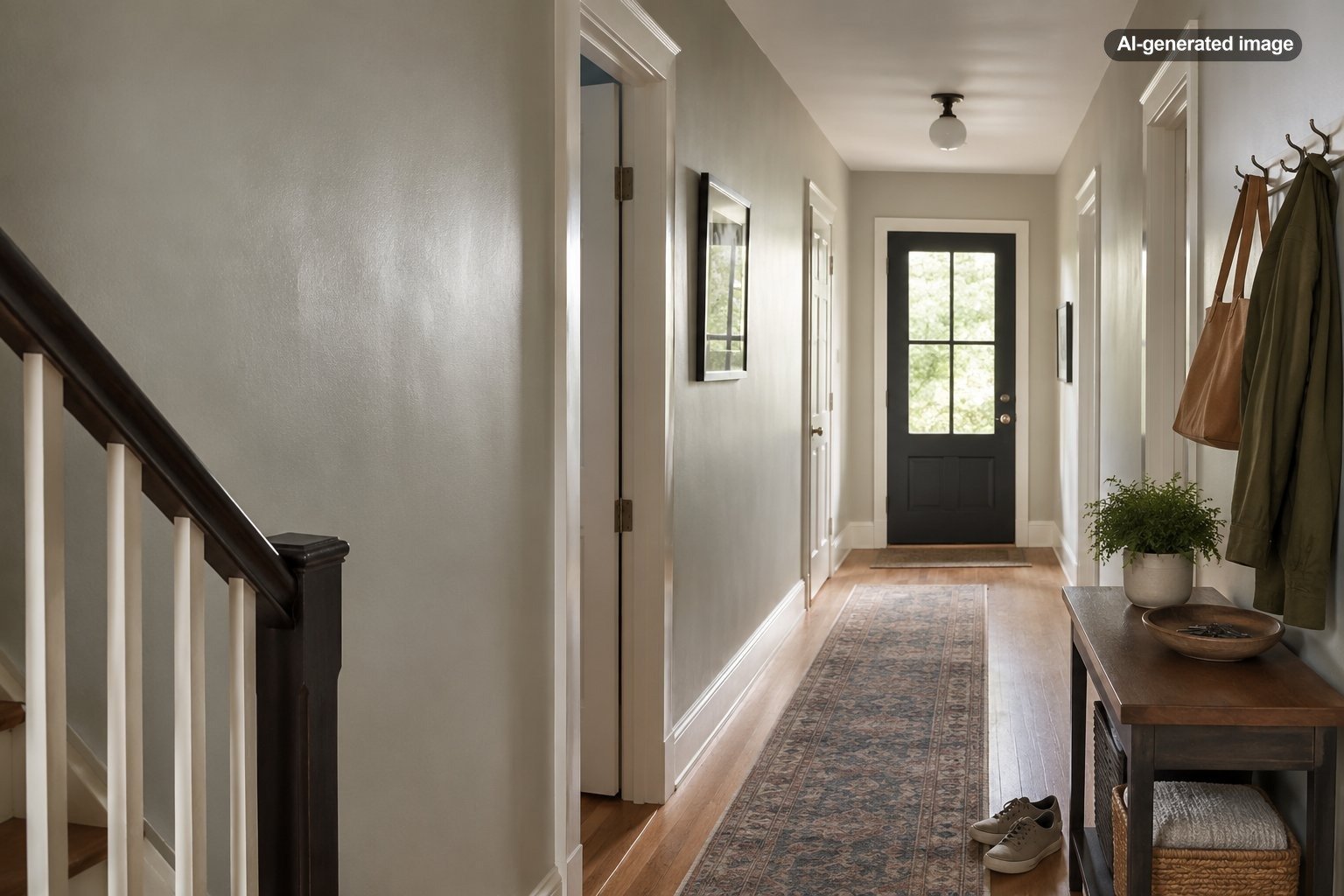
For most high-traffic hallways, satin is the best all-around paint finish. It offers a practical balance of washability, scuff resistance, and restrained shine. It is generally easier to clean than eggshell while looking less reflective than semi-gloss.
That does not make satin the automatic choice for every home. A well-formulated eggshell can be preferable when the walls have visible patches or texture, while semi-gloss may make sense in unusually hard-working areas such as mudroom passages. The condition of the wall, the amount of natural light, and the household’s cleaning habits all matter.
Why satin works well in a busy hallway
Hallways are narrow circulation spaces, which puts painted walls within easy reach of shoulders, hands, bags, pet fur, vacuum cleaners, and furniture being carried from one room to another. A finish that looks lovely but marks whenever someone brushes against it can quickly become tiresome.
Satin has enough sheen to create a smoother, more washable surface than a traditional flat finish. Fingerprints, light dirt, and many everyday scuffs can usually be addressed with gentler cleaning than a lower-sheen wall might tolerate. At the same time, satin is not as glossy as semi-gloss, so it can still feel appropriate across a large wall area.
Its modest light reflection can also help a dim corridor feel less flat. This is particularly useful in an interior hallway with no windows, although strong ceiling lights may reveal more wall texture than they would on an eggshell or matte surface.
The best hallway finish is not simply the toughest one; it is the toughest finish you will still enjoy seeing every day.
How eggshell, satin, and semi-gloss compare
| Finish | Best use in a hallway | Main advantage | Main tradeoff |
|---|---|---|---|
| Eggshell | Moderately busy hallways and walls with minor imperfections | Soft, low-luster appearance | May be less forgiving of repeated scrubbing |
| Satin | Most high-traffic hallway walls | Balanced washability and appearance | Can emphasize patches and uneven texture |
| Semi-gloss | Doors, trim, baseboards, and unusually demanding areas | Durable, easy-to-wipe surface | Reflective enough to highlight flaws and application marks |
| Matte or flat | Low-contact hallways with smooth household routines | Excellent at visually softening imperfections | Often less practical where frequent cleaning is expected |
The names on paint cans are useful, but sheen terminology is not perfectly consistent across manufacturers. One company’s eggshell may appear close to another company’s low satin. Compare actual samples from the product line you plan to use rather than choosing by the finish name alone.
When eggshell may be the better choice
Eggshell is a sensible alternative when appearance takes priority over maximum washability. Its lower luster gives hallway walls a calmer, more velvety look, especially in older homes where drywall repairs, plaster waves, and previous paint buildup are visible.
It can work well in an upstairs hallway used mainly by adults, a short passage leading to guest rooms, or a wide corridor where people are unlikely to brush the walls. It may also be preferable in a hallway flooded with daylight, since sunlight can make satin’s reflective quality more noticeable.
Eggshell is less convincing in a narrow family corridor where children regularly touch the walls, a large dog passes through after wet walks, or rolling luggage frequently grazes the corners. In those situations, the softer appearance may not compensate for the additional upkeep.
Should hallway walls ever be semi-gloss?
Semi-gloss is highly practical on baseboards, door casings, handrails, and painted doors, all of which receive concentrated contact. Using it across every hallway wall is a more complicated decision.
The extra reflectivity can make a narrow corridor look shiny, particularly under a row of ceiling fixtures. It also draws attention to dents, ridges, roller marks, drywall seams, and imperfect repairs. Careful preparation becomes more important as sheen increases.
Still, semi-gloss walls can be reasonable in a mudroom hallway, utility passage, or other compact zone that faces frequent splashes and wiping. It may also suit an intentionally lacquered or color-drenched design, where the shine is part of the visual plan rather than an accidental side effect.
Use different finishes for walls, trim, and doors
A hallway does not need one finish on every painted surface. In fact, separating the sheens often produces a more polished and maintainable result.
- Walls: Satin for most high-traffic corridors, or eggshell for moderate use and softer light reflection.
- Baseboards and casings: Satin or semi-gloss, depending on the desired contrast and cleaning needs.
- Interior doors: Satin or semi-gloss to handle fingerprints and repeated contact around knobs and edges.
- Ceiling: Flat or matte in most cases to minimize glare and disguise minor surface variation.
Using a slightly higher sheen on trim creates subtle definition even when the trim and walls share the same color. It also places the more washable finish where shoes, vacuum heads, and hands are most likely to make contact.
Consider wall condition before choosing a sheen
Higher-sheen paint does not create imperfections, but it can make them easier to see. Light reflects more distinctly from a smoother, glossier film, revealing uneven sanding, old drips, patched nail holes, and differences in texture.
Inspect the hallway with the existing lights switched on and again in daylight. Look along the wall rather than directly at it. This low viewing angle makes ripples and repairs easier to spot before they are covered with a finish that emphasizes them.
What to do before painting
- Clean fingerprints, dust, and oily residue from the walls using a method suitable for the existing coating.
- Fill dents and holes, then sand repairs until their edges blend into the surrounding surface.
- Prime repaired, stained, glossy, or otherwise inconsistent areas as appropriate for the products being used.
- Apply test patches of the actual color and sheen in more than one part of the hallway.
- View the samples during the day and under the hallway’s nighttime lighting.
Think about color and lighting together
Sheen affects more than cleaning. It can influence how a paint color appears as light moves across the wall. Satin may make deep colors look richer and can give pale colors a faint glow. Eggshell produces a quieter effect, while semi-gloss creates more distinct highlights.
In a long hallway with multiple light fixtures, satin may reveal repeating pools of reflected light. That can add dimension to a smooth wall, but it may look busy on heavily textured drywall. Sampling is especially important with dark navy, green, charcoal, or saturated clay colors because changes in sheen are often more visible on deeper shades.
For a very narrow corridor, avoid assuming that more shine will automatically make it feel larger. Light reflection can help, but glare and visible wall flaws may make the space feel more confined. A clean, softly reflective satin in a thoughtfully chosen color is usually a safer compromise.
Do not confuse washability with permission to scrub
Even durable paint can be damaged by abrasive pads, harsh cleaners, or aggressive rubbing. Burnished patches, dulled areas, and altered sheen can remain after the mark itself is gone.
Begin with a soft, damp cloth and light pressure. Test any cleaning solution in an inconspicuous location, particularly on deep colors. Follow the paint manufacturer’s curing and cleaning instructions, since newly painted walls may not be ready for routine washing immediately after they feel dry.
The best choice for different households
Busy families: Satin is generally the practical starting point, particularly in hallways connecting bedrooms, bathrooms, kitchens, and entry doors.
Homes with pets: Satin usually handles routine wiping better, but washable paint does not prevent scratches from claws, crates, gates, or leashes. Strategic wall protection may be needed in repeat-contact areas.
Older homes: Eggshell can soften the appearance of imperfect plaster. Satin remains an option when the walls are prepared carefully or when easy cleaning outweighs the visibility of surface character.
Rentals and apartments: Consider whether localized touch-ups or frequent whole-wall cleaning will be more likely. Lower sheens may blend touch-ups more easily, while satin may reduce the need for them by tolerating gentle cleaning.
Design-focused hallways: Satin is not merely a practical compromise. It can give saturated colors and architectural details a refined glow. Semi-gloss can be used deliberately for a more dramatic effect, but the wall preparation and lighting should support it.
Before you decide
- How often do people, pets, bags, or equipment touch the walls?
- Will the walls need regular wiping or only occasional dusting?
- Are patches, seams, dents, or texture currently visible?
- Does daylight strike the walls from the side?
- Do you prefer a soft, understated surface or a subtle reflective glow?
- Can you test the exact paint product before committing to the entire corridor?
Frequently asked questions
Is eggshell durable enough for a hallway?
It can be, especially in a moderately used hallway with limited wall contact. Satin is usually the more practical choice when frequent cleaning is expected.
Is satin too shiny for hallway walls?
Most satin wall paints have a moderate luster rather than a mirror-like shine. However, the effect varies by product, color, wall texture, and lighting, so a sample is worthwhile.
What finish should I use on hallway trim?
Satin or semi-gloss is commonly suitable for baseboards, casings, and doors because these surfaces receive repeated contact and benefit from easier cleaning.
Can I use matte paint if it is labeled washable?
Yes, a washable matte may work when you strongly prefer a low-sheen appearance. Review the exact product guidance and consider whether the hallway experiences routine scuffs, fingerprints, or pet contact.
Should a stairway hallway use satin paint?
Satin is often a strong choice because stair walls tend to collect handprints, furniture scuffs, and marks near railings. Eggshell may still be appropriate where the walls are imperfect and traffic is relatively gentle.
For the typical high-traffic hallway, satin remains the most balanced answer. It is durable enough for ordinary household contact, washable enough for realistic maintenance, and restrained enough to complement rather than dominate the surrounding rooms. Eggshell is the thoughtful alternative for softer-looking walls, while semi-gloss is best used selectively where maximum cleanability or a deliberately glossy design is the priority.