
Why Is There Condensation on the Inside of My Windows?
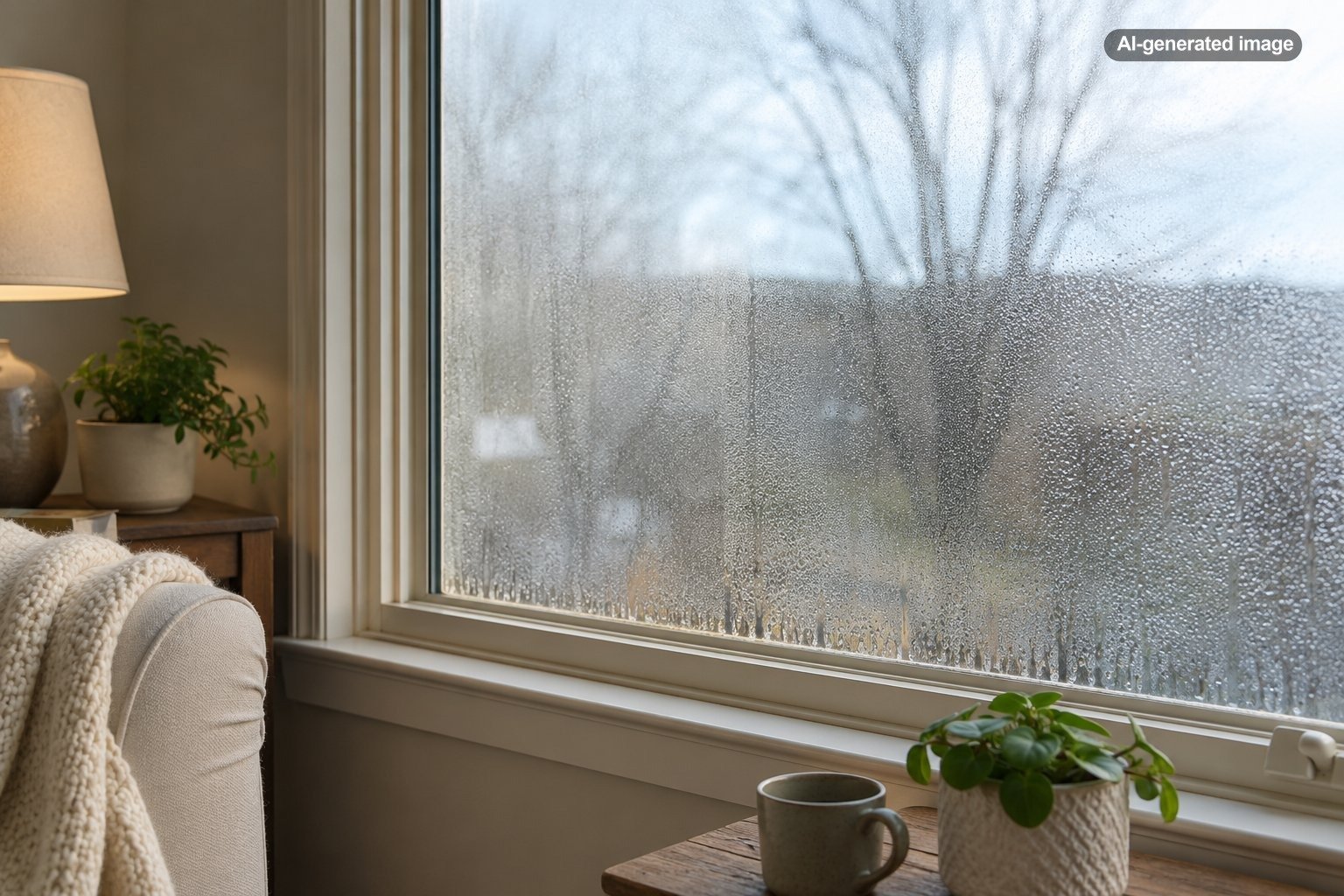
Condensation on the inside of a window usually means warm, moisture-laden indoor air is meeting glass that is cold enough to turn some of that water vapor into droplets. It is especially common during cold weather, after showers or cooking, and in bedrooms overnight.
An occasional light haze is not necessarily evidence of a defective window. Frequent dripping, soaked sills, peeling finishes, or recurring mold, however, means the moisture should be addressed rather than simply wiped away each morning.
Why condensation forms on the room side of glass
Air can hold only a limited amount of water vapor at a given temperature. When warm indoor air touches a cold window, the air immediately beside the glass cools. If it cools below its dew point, some of its moisture becomes liquid water.
The amount of condensation depends on two variables: how humid the room is and how cold the interior surface of the window becomes. That is why the same household may see clear glass on a mild day and dripping panes during a sharp cold snap.
Single-pane windows and highly conductive metal frames tend to develop colder interior surfaces than well-insulated window assemblies. Even efficient windows can condense when indoor humidity is high enough or outdoor temperatures fall far enough.
Window condensation is not caused by moisture appearing from nowhere; it is indoor water vapor becoming visible on the coldest convenient surface.
Common sources of excess indoor moisture
A home continuously gains moisture through ordinary routines. The issue is usually not one dramatic source but several small sources combined with limited ventilation.
- Showering and bathing without running a properly vented bathroom fan
- Boiling, steaming, and simmering food without using a range hood that exhausts outdoors
- Drying laundry indoors or operating a dryer that is not venting correctly
- Running a humidifier too aggressively
- Keeping many plants in a small or poorly ventilated room
- Moisture entering from a damp basement, crawl space, plumbing leak, or other water problem
- Normal breathing, particularly in a closed bedroom overnight
Newer or recently weatherized homes can also retain moisture more readily because they have fewer uncontrolled air leaks. Better airtightness can improve comfort and efficiency, but it makes intentional ventilation more important.
First determine where the moisture is located
| Location | What it usually means | Sensible next step |
|---|---|---|
| Room-facing glass | Indoor humidity is meeting a cold surface | Reduce moisture, improve ventilation, and increase airflow near the window |
| Outside surface | Humid outdoor air is condensing on cool exterior glass | Usually temporary and not an indoor moisture problem |
| Between sealed panes | The insulated-glass seal may have failed | Ask a qualified window professional about glass-unit or window replacement |
| Wall or trim beside the window | Possible surface condensation, air leakage, rain intrusion, or flashing problem | Dry the area and investigate the moisture source rather than assuming it is ordinary glass condensation |
This distinction matters. A dehumidifier may help with room-side condensation, but it will not remove fog sealed between panes. Likewise, replacing an insulated-glass unit will not solve high humidity throughout the home.
How to reduce condensation safely
What to do
- Dry the glass and frame. Wipe up standing water so it does not remain against wood, drywall, caulk, or painted surfaces.
- Measure indoor humidity. Use a basic hygrometer rather than judging humidity by comfort alone. The U.S. Environmental Protection Agency advises keeping indoor relative humidity below 60 percent and ideally between 30 and 50 percent when possible.
- Use exhaust ventilation. Run bathroom fans during showers and afterward, and use a kitchen exhaust fan when cooking produces steam. Confirm that these fans discharge outdoors rather than into an attic or another enclosed space.
- Adjust humidifiers. Reduce the setting during cold weather if windows begin to sweat. A comfortable setting on a mild day may be too high during a freeze.
- Improve air movement. Open blinds or curtains for part of the day, move furniture away from blocked registers, and avoid sealing warm room air away from the glass with heavy window coverings.
- Investigate hidden moisture. Check for plumbing leaks, damp basements, crawl-space moisture, blocked dryer vents, and HVAC drainage problems if humidity remains high.
The right humidity level is not one fixed number for every house or every week. Colder outdoor conditions generally require lower indoor humidity to prevent condensation on cold surfaces. Avoid making the air uncomfortably dry merely to keep every pane perfectly clear; the goal is to prevent repeated wetting and material damage.
When the window itself contributes to the problem
Older single-pane glass, poorly insulated frames, failed weatherstripping, and installation gaps can keep interior surfaces unusually cold. Storm windows, appropriate air sealing, repaired weatherstripping, or a better-insulated window assembly may reduce condensation by raising the temperature of the room-facing surface.
Do not caulk random drainage openings or weep holes in an attempt to stop moisture. Window systems are designed differently, and blocking a drainage path can trap water. Follow the window manufacturer’s instructions or have the assembly inspected when its design is unclear.
Replacement deserves consideration when condensation occurs between panes, frames are deteriorating, water enters during rain, hardware no longer operates properly, or there are persistent drafts that simpler maintenance does not correct. Condensation alone does not prove that every window in the house needs replacement.
When condensation becomes a warning sign
Water that repeatedly runs onto the sill can damage paint, stain trim, soften drywall, and provide the moisture mold needs. Prompt drying matters, but recurring wetness will continue until the underlying humidity, temperature, ventilation, or leakage issue is corrected.
If visible mold is limited, moisture control remains the essential first step; cleaning without correcting the water source commonly allows it to return. Larger areas, contaminated water, suspected HVAC contamination, or health concerns warrant professional guidance.
Frequently asked questions
Why is condensation worse in the morning?
Bedrooms gain moisture from breathing overnight, doors may remain closed, and outdoor temperatures often reach their lowest point before sunrise. Those conditions create a particularly favorable combination of humid air and cold glass.
Should I open a window in winter?
Brief ventilation can release humid indoor air when outdoor air is drier, but it is not the best answer in every climate or household. Exhaust fans and properly designed whole-home ventilation provide more controlled moisture management.
Will a dehumidifier stop window condensation?
It may help when excessive indoor humidity is the primary cause. It will not repair failed window seals, rain leaks, missing insulation, or serious air-leakage problems. Measure humidity and investigate why it is elevated rather than relying on the appliance alone.
Is condensation between double-pane glass fixable?
Moisture between sealed panes generally indicates loss of the insulating unit’s seal. Cleaning the room-side surfaces will not reach it. Depending on the window, a professional may be able to replace the insulated-glass unit without replacing the entire frame.
Does condensation always mean the windows are bad?
No. It often indicates that the glass is the coldest surface in a humid room. Window performance can contribute, but ventilation, weather, household moisture, curtains, and indoor temperature all affect whether droplets form.