
Why Does My Home Office Feel Colder Than the Rest of the House?
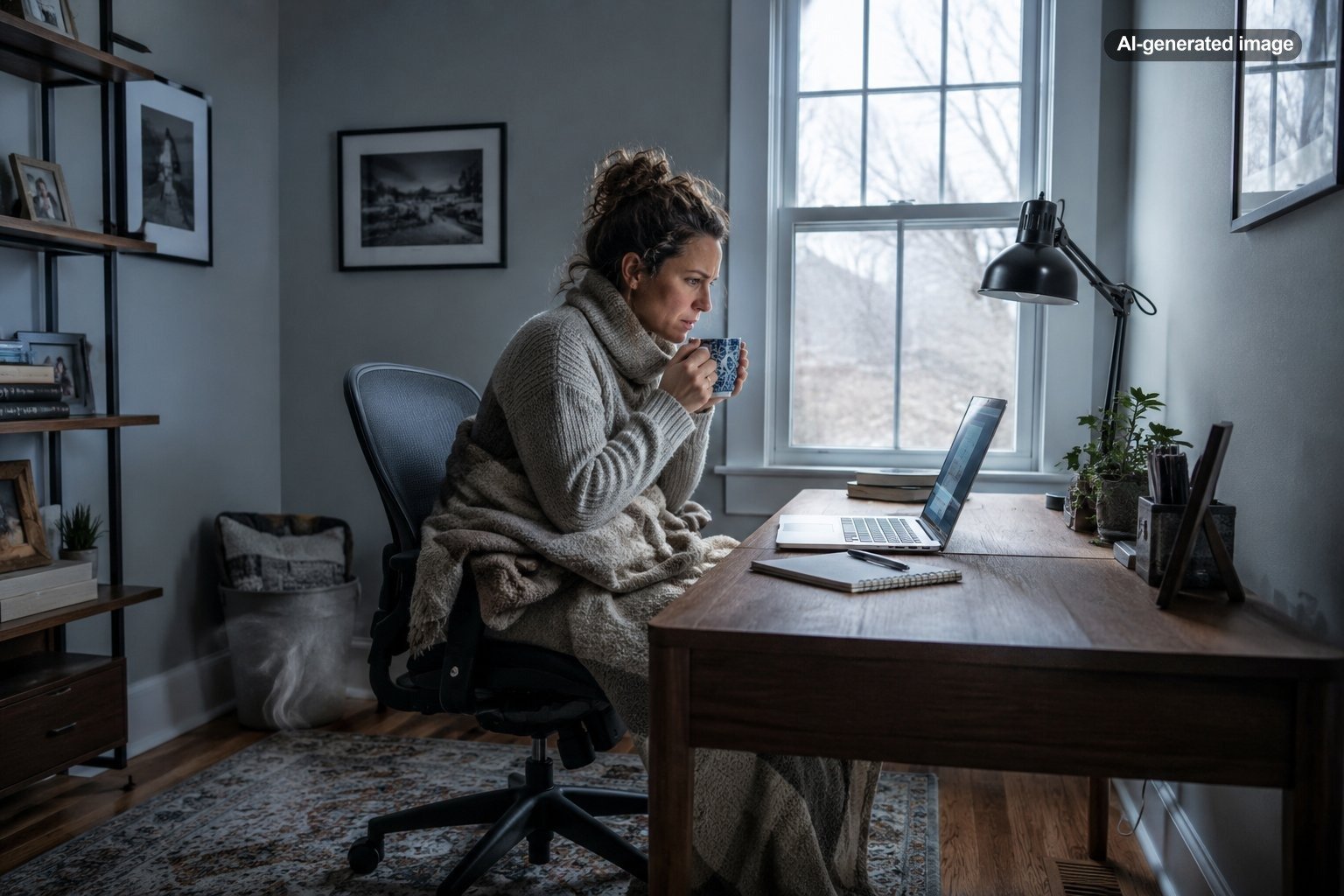
Your home office may feel colder than the rest of the house because it loses heat faster, receives less warm air, or cannot return air to the HVAC system effectively. Exterior walls, drafty windows, long duct runs, closed doors, blocked vents, missing insulation, and an inconveniently placed thermostat can all create the same frustrating result: the rest of the house feels comfortable while your typing fingers stage a small rebellion.
The useful clue is not simply that the room is cold. It is when the temperature difference appears, whether the HVAC system is running, and whether the problem changes when the office door is open. A few simple observations can help separate a furniture or airflow issue from a problem that deserves professional testing.
Start with the room itself
Home offices are often created in rooms that were not originally selected for all-day comfort. A spare bedroom over a garage, a converted porch, a corner room with two exterior walls, or a small room at the far end of the duct system may naturally gain and lose heat differently from an interior living space.
Look at the office’s position within the house. Rooms above unconditioned garages, beside attics, over crawlspaces, or at exposed corners generally have more surfaces through which heat can escape. Large windows can also make the area beside your desk feel colder even when the air temperature is not dramatically different. Your body exchanges heat with nearby cold glass and walls, creating a chilly sensation that a thermostat elsewhere cannot detect.
Check the supply vent and return-air path
With a forced-air heating system, warm air must enter the office and cooler room air must have a practical route back to the system. A fully open supply register does not guarantee strong airflow. The duct may be kinked, disconnected, undersized, leaking, poorly insulated, or restricted by a damper elsewhere.
First, remove the easy obstructions. Keep the register clear of a desk, filing cabinet, rug, curtain, or stack of storage boxes. Avoid attaching a magnetic cover or closing the register in an attempt to redirect air unless an HVAC professional has evaluated the system. Arbitrarily restricting registers can alter airflow and pressure without correcting the underlying imbalance.
Next, consider the office door. Many homes have centralized return registers in hallways rather than a dedicated return in every room. When the office door is closed, air supplied to the room still needs to reach that central return through a door undercut, transfer grille, jumper duct, or another designed pathway. If the room warms more successfully with the door open, a restricted return path may be part of the problem.
What to check during one heating cycle
- Open the office supply register completely and confirm that it is unobstructed.
- Note whether the airflow feels substantially weaker than airflow from a similar nearby register.
- Measure the office and hallway temperatures before the heat starts and again after it has run for about 15 to 20 minutes.
- Repeat the comparison once with the office door open and once with it closed.
- Listen for whistling and look for loose register boots, crushed flexible ductwork, or obvious duct separations in safely accessible areas.
Look for drafts around windows, doors, and wall penetrations
If the office becomes cold quickly after the heating cycle ends, uncontrolled air leakage may be more important than the amount of warm air entering the room. Common leakage points include window trim, worn weatherstripping, exterior-door thresholds, electrical outlets on exterior walls, cable penetrations, baseboards, recessed fixtures, attic hatches, and poorly sealed openings around mini-split or utility lines.
On a cold or windy day, slowly move your hand near trim and penetrations without touching electrical components. A lightweight tissue can also reveal air movement, although it should be kept away from flames, heaters, and moving equipment. Condensation, staining, damaged trim, or softness around a window suggests a possible moisture issue rather than a simple draft and should be investigated before cosmetic caulk is applied.
Window treatments can improve comfort near cold glass, but they should not block a supply register or trap moisture against the window. A lined shade or curtain may reduce the chilly radiant effect at night, while opening it during useful winter sunlight can provide some passive warmth.
Consider insulation and hidden duct losses
Uneven temperatures can indicate gaps or inconsistencies in the home’s thermal enclosure. Insulation may be missing above one room, compressed around wiring, disturbed during earlier work, or poorly installed at an exterior wall, knee wall, floor, or attic transition. ENERGY STAR identifies drafty rooms, hot or cold ceilings and walls, and uneven temperatures as signs worth investigating when evaluating insulation and air sealing.
Duct location matters as well. A branch serving the office may travel through a cold attic, crawlspace, garage, or other unconditioned area. Leaky or inadequately insulated ducts can lose heat before the air reaches the register. The U.S. Department of Energy also emphasizes the importance of balanced supply and return airflow, since pressure imbalances can contribute to comfort problems and unwanted air leakage.
Do not overlook the thermostat
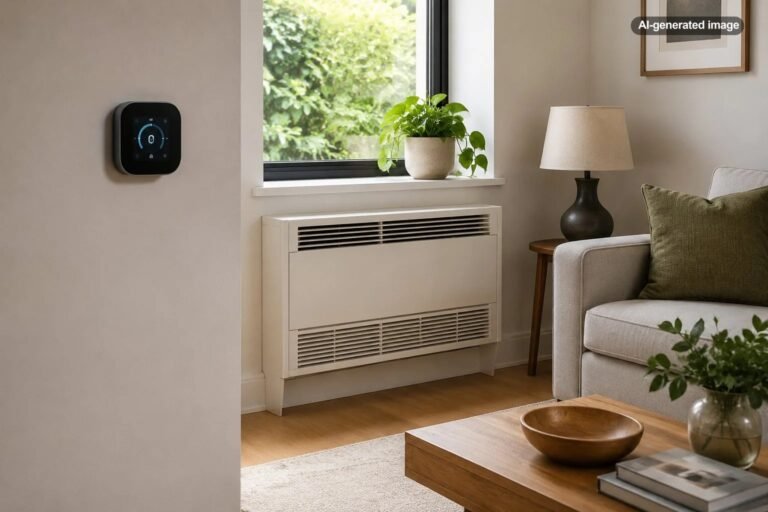
A central thermostat controls the system according to conditions where the thermostat is located, not where you happen to be working. If it sits in a warm interior hallway, near afternoon sun, close to the kitchen, or on a floor that heats faster, the system may shut off before the office catches up.
A compatible remote room sensor or properly designed zoning system can sometimes improve control, but these are not automatic cures. Averaging several room sensors may make the office more comfortable while overheating other spaces. Zoning also requires appropriate equipment design, controls, duct capacity, and pressure management. Have an HVAC professional assess compatibility rather than assuming that adding a smart device will correct weak airflow or missing insulation.
A thermostat can report the temperature accurately and still describe the wrong room.
Use localized warmth carefully
Once drafts and airflow have been addressed, small comfort adjustments may be perfectly reasonable. Move the desk away from exterior glass, place a rug over a cold hard floor, wear warmer layers, or use a heated desk pad designed for that purpose. These options warm the person rather than forcing the entire house to a higher temperature.
A portable electric space heater requires more caution. Follow the manufacturer’s instructions, place it on a stable surface with clear space around it, plug it directly into an appropriate wall outlet, and keep it away from paper, curtains, upholstery, and foot traffic. Do not use a heater to mask signs of damaged wiring, a malfunctioning HVAC system, severe drafts, or a room that cannot maintain a safe temperature.
When to call a professional
Professional evaluation is sensible when the temperature difference persists after basic checks, airflow is markedly weak, ducts run through inaccessible spaces, or the office has visible moisture damage. An HVAC contractor can measure supply airflow, inspect static pressure, check dampers and duct condition, and determine whether the system needs balancing. A qualified home-energy professional can use tools such as blower-door testing and infrared imaging to investigate air leakage and insulation without relying on guesswork alone.
The best fix depends on the pattern. A cold office only when the door is closed suggests a return-air problem. Weak airflow while the system runs suggests a delivery or balancing issue. Rapid cooling after each cycle points toward leakage or insulation. Discomfort concentrated beside a large window may be addressed partly through desk placement and window treatments. Diagnose the pattern first, then choose the least complicated correction that solves the actual problem.
Frequently asked questions
Should I close vents in warmer rooms to force more heat into the office?
Not as a first step. Closing several registers can change system pressure and airflow without delivering the intended result. Keep registers open unless a qualified HVAC professional recommends a specific balancing adjustment.
Why is the office colder only when the door is shut?
The closed door may restrict the room’s return-air path. Supplied air needs a way to leave the office and travel back to the central return. A professional can assess whether the door undercut or another return pathway is adequate.
Can a smart thermostat fix an unevenly heated room?
A remote sensor may help the system respond to the office temperature, but it cannot repair a leaking duct, blocked register, insulation gap, or inadequate return path. It may also make other rooms warmer, so the underlying cause should be evaluated first.
Would a ceiling fan help during winter?
It may help in a room with a high ceiling and noticeable temperature stratification. Use the lowest practical speed in the winter direction recommended by the fan manufacturer. A fan redistributes heat; it does not correct missing heat or a draft.