Should You Turn Off the Water Heater Before Evacuating?
If you are evacuating and authorities have told you to leave, getting out safely matters more than shutting down a water heater. When there is enough time and conditions are safe, however, turning off a water heater can be a sensible part of shutting down household utilities – especially if you are also closing the home’s main water supply or expect flooding, freezing, or an extended absence.
The important detail is that electric, gas, heat-pump, and tankless water heaters are not all shut down the same way. Emergency instructions from local authorities and the manufacturer’s directions for your specific appliance should take priority over a generic checklist.
Evacuation Comes Before Appliance Shutdown
A water heater is property. You are not. If an evacuation order has been issued, do not delay your departure to work through an elaborate utility shutdown routine.
Federal emergency guidance consistently puts evacuation first. FEMA advises households to follow local officials and notes that utilities may be shut off when authorities instruct residents to do so and when there is time to act safely. Its hurricane guidance likewise tells people not to delay once they have been told to evacuate.
This distinction matters during fast-moving hazards. A slowly approaching hurricane may provide hours to prepare a home. A wildfire, flash flood, gas leak, or rapidly changing storm can leave very little time. The correct decision for the same house can therefore change depending on the emergency.
If You Shut Off the Main Water Supply, Consider the Water Heater Too
One reason water-heater shutdown becomes relevant is that homeowners sometimes close the main water valve before leaving. FEMA preparedness material recommends knowing how to shut off household water and notes that damaged plumbing can contaminate a home’s supply after a disaster.
Once the home’s water supply is closed, it is reasonable to think about what happens to appliances that depend on that supply. A conventional storage water heater is designed to operate with a full tank. Under normal circumstances the tank remains full even after the main water valve is closed, but leaks, draining, plumbing damage, or maintenance can change that condition.
That is particularly important for electric resistance water heaters. Manufacturer instructions commonly warn against energizing the heater unless its tank is completely full. Energizing heating elements in an inadequately filled tank can damage them.
Turning off the water and turning off the water heater are related decisions, but draining the tank is a separate step.
For an Electric Water Heater, Cutting Power Is the Key Step
For a conventional electric storage water heater, the straightforward shutdown step is typically turning off the dedicated water-heater circuit breaker, provided the electrical panel can be reached safely and you know which breaker serves the appliance.
Do not remove access panels, disconnect wiring, or attempt electrical repairs as part of evacuation preparation. A breaker-level shutdown is different from servicing the appliance.
Department of Energy-hosted water-heater documentation instructs users to turn off power before draining a tank and cautions against restoring power until the heater is completely filled. Federal emergency-preparedness guidance similarly warns that a drained water heater must have its power circuit shut off and should not be turned back on until the tank is full.
What to do if time and conditions allow
- Follow evacuation and utility instructions from local officials first.
- If your panel is dry, accessible, and safe to approach, switch off the breaker labeled for the water heater.
- If you are shutting off the home’s water, close the appropriate main valve only if you already know how to operate it safely.
- Do not drain the water heater unless freezing risk, damage, manufacturer instructions, or another specific reason makes draining necessary.
- When returning, verify that the plumbing system and tank are full and undamaged before restoring water-heater power.
Gas Water Heaters Need Different Treatment
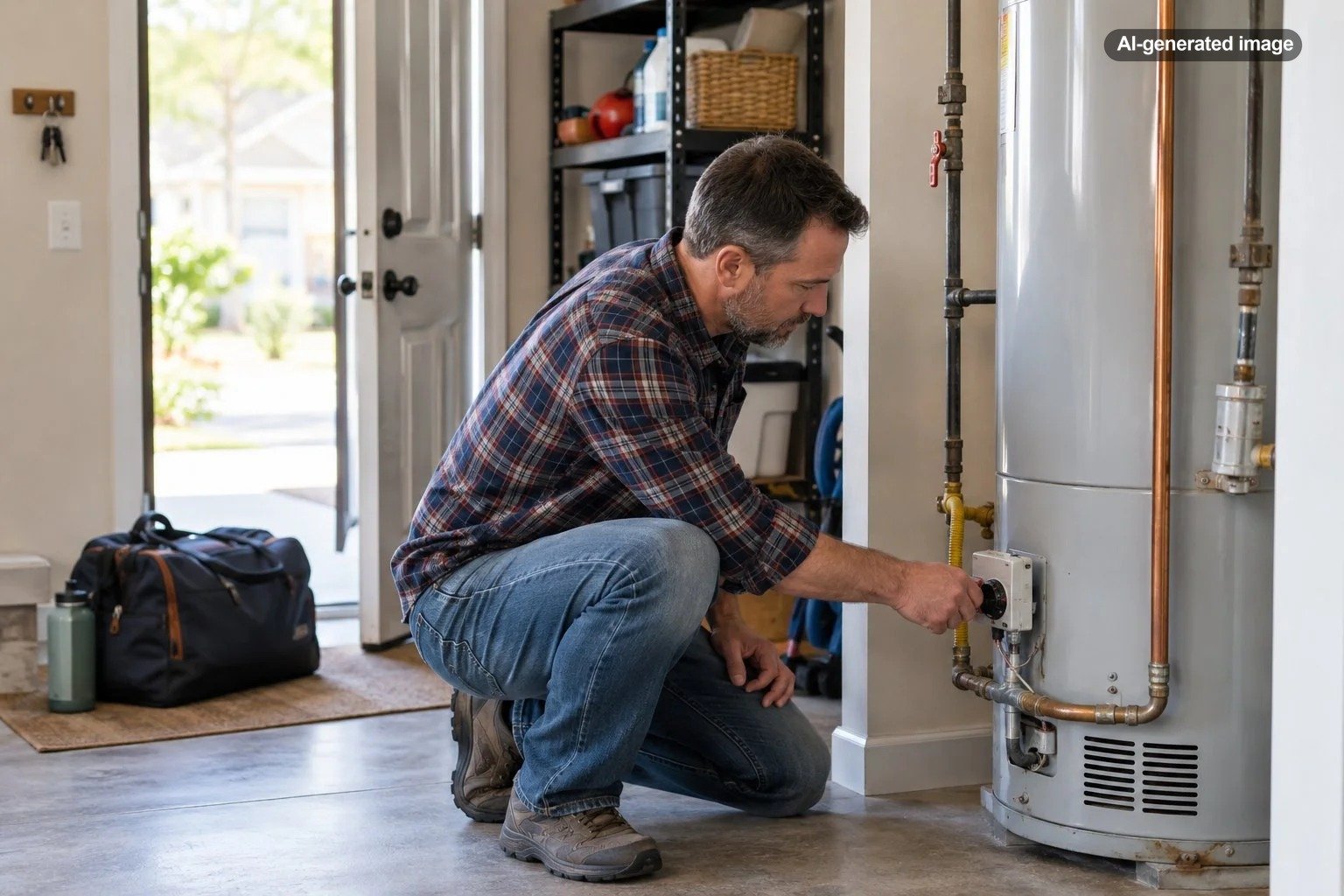
A gas-fired water heater should not be treated like an electric unit. It may have a gas control valve with settings such as OFF, PILOT, LOW, or VACATION, depending on the model. Some newer gas units also rely on electricity for controls or ignition.
Manufacturer guidance should determine the exact procedure. Rheem, for example, provides model-dependent shutdown guidance and notes that some gas water heaters can use vacation or pilot settings, while complete shutdown involves the appliance’s gas controls and potentially its supply.
There is also an important difference between shutting off a single appliance and shutting off gas service to the entire house. FEMA cautions that household gas should not casually be turned off. If gas service is shut off because of an emergency, restoration may require a qualified professional or the utility. If you smell gas or hear a blowing or hissing sound, evacuate rather than spending time experimenting with appliance controls.
Should You Drain the Water Heater Before Leaving?
Usually, no. Shutting off a water heater and draining a water heater are two different actions.
For a typical short-term evacuation, completely draining a storage tank is generally unnecessary unless there is a specific reason to do it. One such reason can be prolonged freezing conditions in a house expected to lose heat. Federal emergency guidance notes that plumbing components, including water heaters, may need to be drained where freezing is a concern during an extended power outage.
Draining also introduces additional steps: the energy source must be shut down, hot water presents a burn risk, a safe drain route is needed, and the tank must later be completely refilled and purged of air before an electric heater is energized. That makes draining inappropriate as a last-minute evacuation chore.
A full storage water heater may also represent a reserve of household water after certain disasters, although water from the plumbing system should not automatically be assumed safe after contamination or flooding. Follow public-health and emergency-management instructions regarding water safety.
What About Heat-Pump and Tankless Water Heaters?
Heat-pump water heaters are electrically powered appliances, so their dedicated electrical disconnect or breaker is relevant when a shutdown is appropriate. However, they contain additional controls, fans, and refrigeration components compared with basic electric resistance tanks. Use the manufacturer’s shutdown and restart procedure rather than improvising.
Tankless units require another distinction: there is no large storage tank to protect, but the appliance still has an energy source and a water connection. Gas-fired tankless models may require both gas-related and electrical considerations, while electric tankless units can draw substantial electrical power. Freeze-protection features on some equipment can also depend on electrical power, so an indiscriminate shutdown during cold weather can create a different risk.
If your evacuation planning depends on freeze protection, recirculation equipment, well pumps, leak shutoff systems, or other connected plumbing equipment, review the entire system rather than treating the water heater as an isolated appliance.
A Better Approach: Prepare the Shutdown Plan Before You Need It
The least stressful time to identify utility controls is an ordinary afternoon, not the hour before a hurricane makes landfall.
Before you decide
- Know where the main water valve is and verify that it can be operated.
- Identify the breaker or disconnect serving the water heater.
- Know whether the heater is electric, gas, heat-pump, or tankless.
- Keep the appliance manual accessible digitally or with household records.
- Learn your gas utility’s emergency procedures before attempting any whole-house gas shutdown.
- Include appliance shutdowns on an evacuation checklist, but place them after people, pets, medications, documents, and essential supplies.
This preparation also makes the return home safer. After a storm, flood, earthquake, or other event, damaged wiring, plumbing, gas lines, venting, or the water heater itself may make immediate restart inappropriate.
What Should You Check Before Turning the Heater Back On?
Do not automatically reverse every switch the moment you return. First follow local guidance about when reentry is safe and whether water, gas, and electric services are usable.
Look for obvious signs of trouble without dismantling the appliance: standing water around electrical equipment, a shifted or damaged tank, leaking plumbing, damaged venting, unusual odors, scorching, broken connections, or evidence that floodwater reached the heater or its controls. Flood-damaged gas or electrical equipment may need professional evaluation rather than a simple restart.
For an electric storage heater, make sure the water supply is restored and the tank is completely full before switching its breaker back on. A practical indication during normal refill is a steady, air-free flow from a hot-water faucet, but follow your heater manufacturer’s startup instructions.
If gas service to the entire property was shut off, do not assume you should reopen it yourself. FEMA emergency guidance says gas that has been shut off should be restored by a qualified professional.
FAQ
Should I turn off the water heater for every hurricane evacuation?
Not automatically. Follow local emergency instructions. If there is sufficient time and officials recommend shutting down household utilities, de-energizing the water heater may be appropriate. Never delay evacuation to do it.
Should I turn off the water heater if I turn off the main water?
Turning off the heater’s energy source is a prudent consideration when the home’s water will be shut off, particularly for an electric storage heater. The concern is avoiding operation if the tank later loses water. Use your manufacturer’s shutdown procedure.
Do I need to empty the tank?
Usually not for an ordinary evacuation. Draining may be relevant for prolonged freezing conditions, repairs, or other specific situations, but it adds steps and requires a careful refill and restart afterward.
Can I turn off the whole house gas supply myself?
Follow your gas utility and local emergency instructions. FEMA advises that gas shut off during an emergency should be restored by a qualified professional. If you smell gas, leave the building promptly instead of remaining inside to troubleshoot equipment.
What is the simplest rule to remember?
Evacuate first when instructed. Shut down utilities only when authorities recommend it, you have enough time, and the controls can be reached safely. For the water heater itself, follow the instructions for your particular fuel type and model.