Why Is There Water Staining Around an AC Vent?
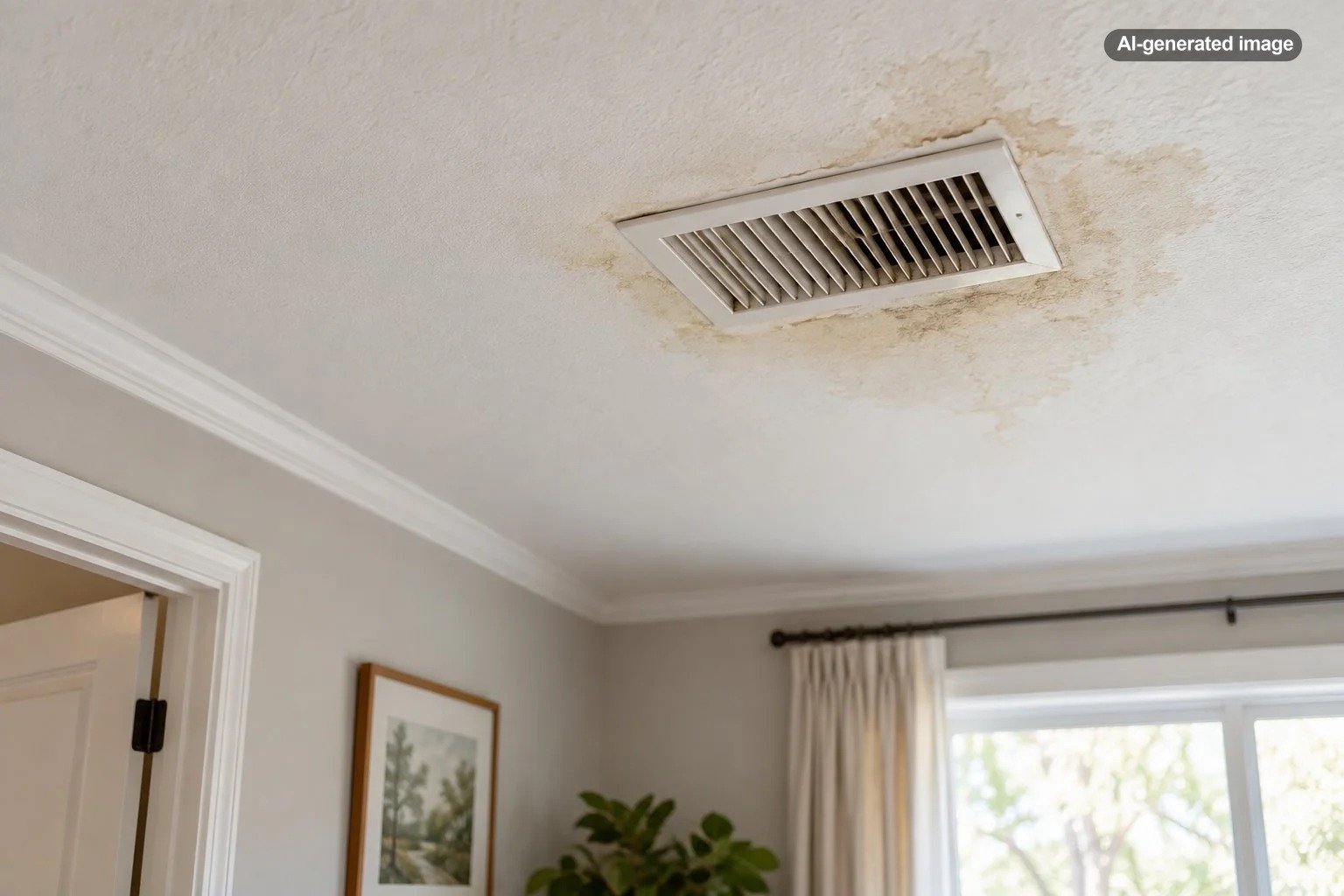
A water stain around an AC vent usually means moisture is reaching a surface that should stay dry. One of the most common explanations is condensation: cold ductwork, a cold metal register, or another chilled HVAC surface meets warm, humid air and water forms. But staining can also point to damaged or missing duct insulation, air leakage around the register, a condensate drainage problem, or water entering from an entirely different source.
The stain itself cannot tell you exactly which problem you have. The useful question is when the stain appears, where the moisture is actually coming from, and whether the area is merely discolored or actively getting wet.
Why an AC vent can develop condensation
Condensation occurs when humid air encounters a surface cold enough for airborne water vapor to condense into liquid. An air-conditioning system creates plenty of cold surfaces, including supply ducts, boots, registers, cooling coils, and refrigerant-related components.
The U.S. Environmental Protection Agency notes that condensation can occur when a surface temperature falls below the dew point of the surrounding air. The EPA also recommends that ductwork in unconditioned spaces be properly sealed and insulated to help prevent moisture caused by condensation.
This matters especially when a supply duct passes through a hot attic, crawl space, garage, or other humid unconditioned area. If insulation around the duct or register boot is missing, compressed, damaged, or poorly sealed, humid surrounding air may reach the cold surface. Moisture can then collect and eventually discolor drywall or ceiling paint around the vent.
Look at when the stain gets wet
The timing of the moisture is one of the simplest clues a homeowner can observe without dismantling the HVAC system.
| What you notice | What it may suggest |
|---|---|
| Moisture mainly during long AC cycles | Condensation near a cold register, boot, or duct |
| Staining is worse during very humid weather | Humidity and insulation or air-sealing issues may be contributing |
| Stain grows after rain | Roof, flashing, plumbing, or another building leak may need investigation |
| Water appears near the air handler or nearby ceiling | Condensate pan, drain, or another HVAC drainage problem may be involved |
| Stain remains dry and unchanged | The moisture source may have been corrected, leaving cosmetic discoloration behind |
These are clues rather than diagnoses. Water can travel along framing, pipes, ducts, and other materials before becoming visible, so the apparent location of a stain is not always the location of the leak.
Check the register before blaming the ductwork
Start with what you can see without opening walls or reaching into equipment. Look closely at the face of the vent and the painted surface surrounding it. Is the metal register itself beaded with moisture? Does the drywall feel damp? Is the stain concentrated along one edge, or does it extend well beyond the vent?
A register that repeatedly feels wet while the AC is operating can support the condensation theory. Moist air may be leaking through gaps around the boot, or the metal behind the register may lack adequate insulation. Even a relatively small amount of recurring moisture can leave a noticeable brown, yellow, or grayish ring over time.
Do not overlook the condensate drainage system
Air conditioners intentionally remove moisture from indoor air. That water normally collects at the cooling coil and is carried away through a condensate pan and drain system. The EPA recommends keeping air-conditioning drip pans clean and drain lines unobstructed and flowing properly.
If condensate is not draining correctly, water may accumulate where it should not. Depending on the equipment location and building layout, that moisture can show up as ceiling or wall damage. A ceiling-mounted or attic air handler makes unexpected water especially important to investigate because moisture can affect insulation, drywall, and concealed materials before a large stain becomes obvious.
Do not assume that clearing a visible vent or wiping away condensation solves a drainage issue elsewhere in the system. Standing water, recurring overflow, or water around HVAC equipment calls for inspection of the underlying cause.
Indoor humidity can make the problem easier to trigger
A cold vent is only one half of the condensation equation. Moisture in the surrounding air is the other. Higher indoor humidity raises the likelihood that cold HVAC surfaces will encounter air near its dew point.
The EPA advises keeping indoor relative humidity below 60 percent when possible and describes 30 to 50 percent as an ideal range for many indoor environments. A humidity meter can help show whether the room is consistently humid, although a humidity reading by itself will not identify a duct or insulation defect.
Homes can experience elevated moisture for many reasons, including humid outdoor air, cooking, showers, laundry, inadequate exhaust ventilation, or HVAC performance issues. That is why repeatedly staining a ceiling without addressing the moisture source often leads to the same mark returning.
Inspecting insulation and duct connections may require a professional
When the visible register offers no clear answer, the next useful area to inspect is often the duct connection behind it and the ductwork serving that register. In an attic or other unconditioned space, a technician may look for gaps, disconnected sections, damaged vapor barriers, inadequate insulation, or evidence that warm humid air is reaching cold duct surfaces.
The EPA specifically recommends properly sealing and insulating ducts in non-air-conditioned spaces to help prevent condensation. It also advises checking insulation near cooling coils for wet areas and addressing condensate drainage problems promptly.
What to do
- Photograph the stain so you can tell whether it grows or changes.
- Check whether the register or surrounding drywall becomes damp while the AC is running.
- Note whether the problem tracks humid weather, rainfall, or unusually long cooling cycles.
- Look for obvious water around accessible HVAC equipment without removing safety panels or reaching into electrical or mechanical components.
- If moisture returns, have the duct connection, insulation, condensate system, and nearby building materials evaluated rather than repeatedly covering the stain with paint.
Could the stain be mold?
Dark discoloration near a vent is sometimes casually labeled mold, but appearance alone is not enough to identify it. Dust can collect around supply registers, and old water staining can create irregular discoloration that looks concerning without revealing its cause.
What matters first is controlling the moisture. The EPA states that moisture control is central to preventing biological growth in ducts and notes that wet or moldy insulation inside insulated ducts may need to be removed and replaced rather than simply cleaned.
If there is visible or suspected mold associated with an HVAC moisture problem, substantial wet material, persistent musty odor, or contamination inside the system, professional evaluation may be appropriate. Do not treat an unknown dark stain with chemicals and assume the underlying moisture problem has been resolved.
Why painting over the stain usually comes last
Once the source of moisture has been identified and corrected, the area needs to dry before cosmetic repairs make sense. Depending on the extent of the damage, stained drywall may be cleanable and repaintable, or damaged material may require replacement.
Painting first can hide an important clue and may leave you repeating the job when the next humid spell brings the stain back. Think of the discoloration as a symptom: correct the moisture problem, confirm the area remains dry, and then repair the finish.
The stain is the visible part of the problem; the useful repair begins with finding out why that surface became wet.
Frequently asked questions
Is a little condensation on an AC vent normal?
A brief trace of moisture can occur under humid conditions, but repeated sweating that stains drywall or paint deserves investigation. Persistent condensation suggests that humidity, insulation, air sealing, or HVAC operation may need attention.
Can a dirty air filter cause water around a vent?
Airflow problems can affect HVAC performance, but a stain around one register should not automatically be attributed to a filter. The actual moisture path still needs to be identified. Follow the equipment manufacturer’s instructions for filter type and replacement or cleaning intervals.
Why does the stain appear only in summer?
Summer cooling creates cold duct and register surfaces while warm humid air may surround them, making condensation more likely. Seasonal staining that appears during cooling operation is therefore an important clue, particularly when ducts run through an attic or another unconditioned area.
Should I seal around the vent with caulk?
Sealing an appropriate gap may be part of a repair, but caulk should not be used as a substitute for identifying wet insulation, damaged ductwork, drainage problems, or another water source. The correct repair depends on where the moisture is originating.
When should an HVAC technician inspect the problem?
Arrange an inspection when moisture keeps returning, the register repeatedly sweats, an attic or concealed duct may have damaged insulation, the condensate system is not draining normally, or the source cannot be identified from accessible areas. Active leaks, sagging materials, or water near electrical components warrant more immediate attention.