Should You Drain a Swimming Pool Before a Hurricane?
No, you generally should not drain a swimming pool before a hurricane. Keeping water in an in-ground pool helps counter pressure from saturated soil around the shell, while an empty or substantially lowered pool can be more vulnerable when groundwater rises. University of Florida IFAS guidance specifically advises homeowners not to drain or partially drain residential pools ahead of a major storm.
That can feel counterintuitive when forecasts call for inches of rain. A homeowner may picture an overflowing pool and assume that creating a large empty space is the safest approach. In practice, a controlled overflow is usually less concerning than removing the weight of the pool water just as the surrounding ground becomes saturated.
Why an empty pool can be a problem during a hurricane
An in-ground swimming pool is not simply a container sitting independently in the yard. Its shell is surrounded by soil, and the balance of forces around that shell changes when heavy rain raises the water content of the ground.
UF/IFAS Extension warns that saturated soil surrounding a drained or partially drained residential pool can place damaging pressure on the pool structure. Depending on the pool, soil, drainage, groundwater, and storm conditions, problems can include movement or damage to the shell, plumbing, decking, or related systems.
Water inside the pool provides substantial weight. Removing that weight immediately before a period of intense rain can therefore create the opposite of the protection a homeowner intended.
The goal before a hurricane is not to make the pool empty enough for the rain; it is to keep the pool and its equipment as stable and protected as reasonably possible.
What about making room for hurricane rainfall?
This is where hurricane pool advice can vary by locality. UF/IFAS currently advises against partially draining a residential pool before a major rain event. Broward County’s hurricane preparedness guidance takes a somewhat different approach: it says to keep water in the pool but notes that the level may be lowered, with a limit of no more than one to two feet.
Those recommendations are not a reason to improvise. Pools differ in construction, groundwater conditions, drainage systems, and manufacturer or builder requirements. If your county issues hurricane-specific pool instructions, follow that current local guidance and any instructions applicable to your particular pool.
Prepare the area around the pool instead
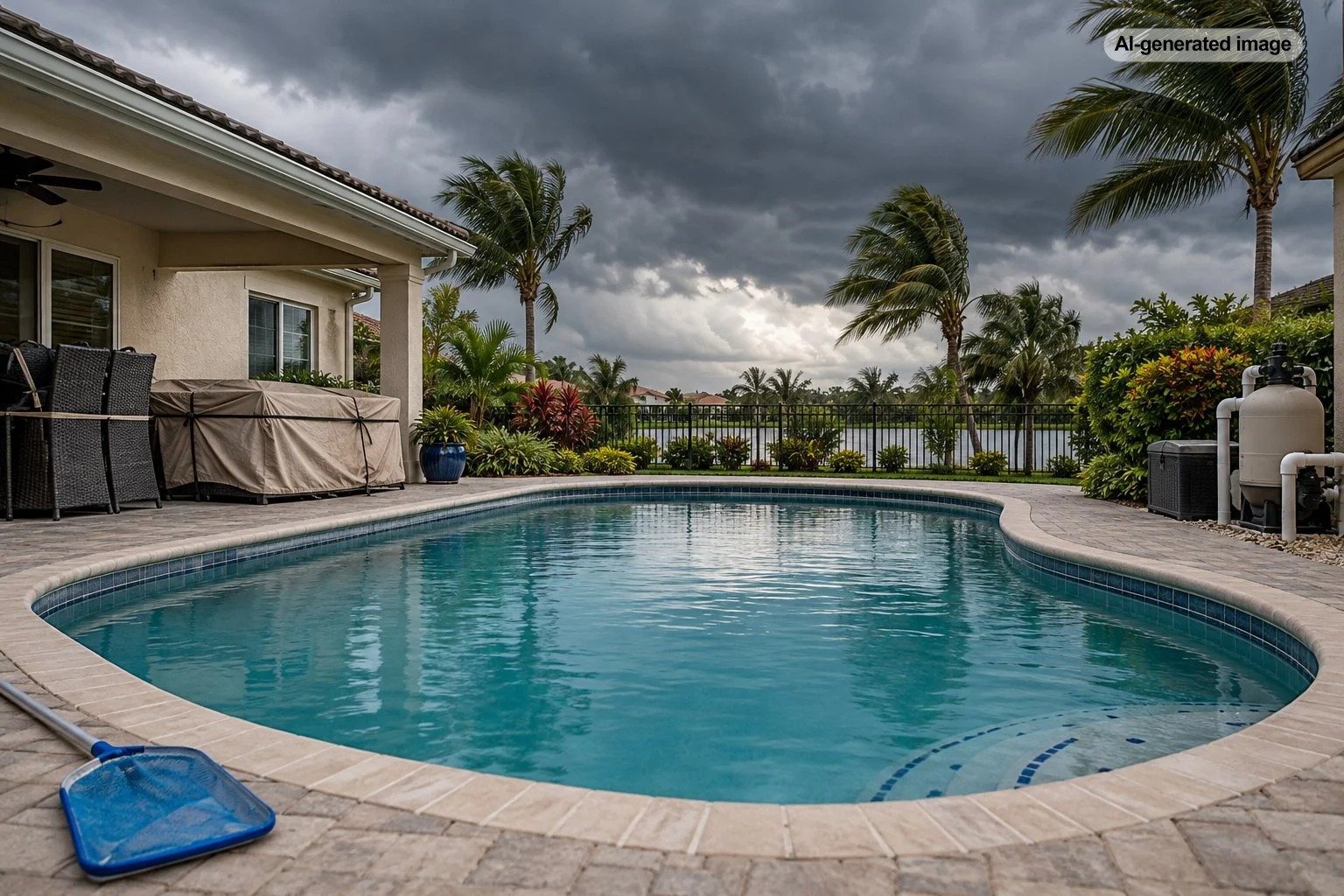
The more useful pre-storm work usually happens around the water rather than by removing it. Wind can turn lightweight deck items into projectiles, and electrical pool equipment may be exposed to wind-driven rain, flooding, or power disruptions.
What to do
- Remove loose furniture, umbrellas, planters, toys, cleaning tools, floats, and other movable objects from the pool deck and yard when practical.
- Store those items in a secure location rather than assuming the pool is a safe storage area.
- Follow current local guidance and the equipment manufacturer’s instructions for shutting down or protecting pumps, heaters, automation equipment, and other electrical components.
- Keep gates and pool barriers secured before the storm.
- Prioritize evacuation and household hurricane preparations over last-minute pool maintenance once conditions begin deteriorating.
Broward County’s preparedness guide advises turning off power to pool equipment and protecting equipment from storm exposure. Because electrical installations and flood risks vary, homeowners should not open, modify, or reconnect electrical components in wet conditions merely to follow a generic checklist.
Should you put patio furniture in the swimming pool?
It may sound like an efficient way to keep chairs from blowing away, but placing outdoor furniture and accessories in the pool is not a universally safe storm-preparation method. UF/IFAS specifically advises against putting outdoor furniture and accessories in a residential pool before a hurricane.
Furniture can damage interior finishes, stain surfaces, introduce contaminants, or become difficult to remove after a storm. Glass, sharp objects, powered equipment, and chemicals clearly do not belong in the water. Secure storage indoors or in another appropriately protected location is the cleaner solution whenever possible.
What if the pool overflows?
A pool reaching the top during torrential rain can look alarming, but overflow by itself is not a reason to empty the pool beforehand. UF/IFAS notes that residential pools are designed to hold water and advises leaving the pool filled during the storm rather than creating a large deficit in anticipation of rainfall.
The more important question is where excess water goes once it leaves the pool area. Drainage around a property is site-specific. If your yard routinely directs water toward the house, causes significant erosion, or develops persistent standing water, address that drainage problem separately rather than using the swimming pool as a stormwater reservoir.
What to do with the pool after the storm
Wait until local officials say conditions are safe before making the pool a priority. Downed electrical lines, unstable trees, damaged structures, contaminated floodwater, and hidden debris are more urgent hazards than cloudy pool water.
Once the area is safe, inspect the pool from outside the water. Remove obvious debris carefully, check barriers and gates, and look for visible damage to equipment, plumbing, decking, and the pool itself. Do not swim until debris has been removed, the circulation and treatment equipment are functioning properly, the water is clear enough for safe visibility, and the chemistry has been brought back into an appropriate range.
The Florida Department of Health has advised residents after hurricanes to avoid swimming in pools until they have been properly cleaned and are fully functional. Miami-Dade County also emphasizes prompt repair or temporary securing of damaged pool barriers because a pool remains a safety hazard even when it is empty.
When should you lower the water afterward?
After the storm has passed and surrounding ground conditions have had time to improve, excess water can be brought back toward the pool’s normal operating level if necessary. This is different from substantially draining the pool before the hurricane arrives.
Do not leave a draining pool unattended. Avoid discharging large amounts of pool water where it can enter the house, undermine landscaping, erode neighboring property, or violate local drainage rules. Local requirements for pool-water discharge can differ, so check municipal guidance when necessary.
Before you decide
- Is the pool in-ground or above-ground?
- Has your local emergency-management agency issued specific pool guidance?
- Has the pool builder provided hurricane or groundwater instructions for this installation?
- Is the property prone to high groundwater or flooding?
- Can pool equipment be shut down or protected without entering a wet or hazardous area?
- Are all gates, fences, and other pool barriers secure?
Does the advice change for an above-ground pool?
Above-ground pools have different structural considerations, so advice intended for an in-ground concrete, fiberglass, or vinyl-lined pool should not automatically be transferred to them. Follow the pool manufacturer’s storm, winterization, water-level, and disassembly instructions for that specific model.
Do not dismantle a large pool at the last minute unless the manufacturer specifically provides a safe procedure and weather conditions still allow the work to be performed without putting anyone at risk. Once a hurricane warning becomes urgent, household safety and evacuation instructions take precedence.
Frequently asked questions
Will keeping a pool full make flooding worse?
A full pool may overflow during intense rainfall, but intentionally emptying the pool can create structural concerns of its own. Property drainage and flood risk should be managed as broader site issues rather than by substantially draining an in-ground pool immediately before a hurricane.
Can I lower the pool a few inches before the storm?
Local guidance differs. UF/IFAS advises against partially draining residential pools before a major storm, while Broward County says homeowners may lower the water but no more than one to two feet. Follow current local instructions and guidance specific to your pool rather than selecting an arbitrary amount.
Should the pool pump run during the hurricane?
Do not assume normal operation should continue through severe weather. Broward County recommends shutting off power to pool equipment as part of hurricane preparation. Follow manufacturer instructions and local emergency guidance, and never handle electrical equipment while standing in water or when equipment has been flooded.
Can I swim as soon as the storm passes?
No. First make sure the area is safe, barriers are secure, debris is removed, the pool equipment is functioning, and the water has been properly cleaned and balanced. Storm debris and floodwater can introduce contamination and physical hazards.
The bottom line
For a typical in-ground residential pool, completely draining it before a hurricane is the wrong preparation strategy. Keep water in the pool, secure the surrounding area, protect equipment according to authoritative instructions, and follow any current local guidance that applies to your property.
If your pool has unusual structural conditions, known groundwater problems, existing shell movement, drainage issues, or storm damage, generic hurricane advice is not a substitute for an evaluation by a qualified pool professional. The safest plan is the one made before winds rise and rain starts falling.