How Far Should a Generator Be From the House?
For a portable generator, the safest general rule is straightforward: operate it outdoors at least 20 feet from the house, and point the exhaust away from the home and other occupied buildings. The U.S. Consumer Product Safety Commission specifically advises keeping portable generators at least 20 feet from homes and buildings, while the Centers for Disease Control and Prevention says generators should be more than 20 feet from windows, doors, and vents.
That distance matters because a generator’s engine produces carbon monoxide, or CO. The gas is colorless and odorless, so an apparently convenient location beside a garage door, under a porch, or close to an open window can create a serious hazard without giving you an obvious warning.
Why 20 Feet Is the Important Starting Point
The 20-foot recommendation is not simply about engine heat or noise. Its primary purpose is reducing the chance that generator exhaust will enter a building and allow carbon monoxide to accumulate indoors.
CPSC guidance says portable generators should be operated outside only, at least 20 feet from homes and buildings, with exhaust directed away from windows, doors, and vents. CDC guidance similarly tells homeowners to use generators outdoors and more than 20 feet from openings into the home.
Think of 20 feet as a minimum safety baseline rather than permission to ignore everything else around the machine. A generator 20 feet from the wall but aimed directly toward an open basement window is poorly positioned. A better location combines distance with an exhaust direction that carries fumes away from occupied spaces.
Safe generator placement is about both distance and where the exhaust can travel.
Do Not Put a Portable Generator in a Garage, Porch, or Carport
A garage can feel like an obvious place to protect a generator from rain, particularly when the garage door is open. It is not a safe substitute for operating the generator outdoors. CPSC warns against running portable generators in garages, basements, crawlspaces, sheds, or other enclosed areas, even when doors or windows are open.
A covered porch or carport presents a similar problem. These areas can be close enough to doors, windows, soffits, vents, or other openings for exhaust to reach the house. CPSC specifically warns that a porch or carport can place the generator too close to the home.
Measure From the House, Then Check Every Opening
When choosing a location, do more than pace off a rough distance from the nearest exterior wall. Look at everything within and around the intended exhaust path.
What to do
- Choose an outdoor location at least 20 feet from the house.
- Look for nearby windows, exterior doors, garage openings, crawlspace vents, fresh-air intakes, and other openings.
- Point the generator exhaust away from the house and away from other buildings where people may be present.
- Check whether neighboring buildings, fences, landscaping, or structures affect the available space or exhaust path.
- Read the generator’s manual for manufacturer-specific clearance, operating, grounding, electrical, and weather requirements.
- Use working carbon monoxide alarms inside the home as an additional layer of protection.
The shape of a property can make this more complicated than it sounds. A narrow side yard, townhouse lot, fenced patio, or small urban property may not provide a suitable location merely because there is technically an outdoor patch of pavement available.
If you cannot satisfy the safety guidance for your portable generator on the available property, do not improvise by reducing the clearance. A qualified generator or electrical professional can help evaluate appropriate options for the site.
What If the Generator Is 20 Feet Away but Near a Window?
The location still deserves attention. CDC guidance specifically references maintaining more than 20 feet of separation from windows, doors, and vents, not merely measuring from an arbitrary section of exterior wall. Openings are especially important because they provide potential paths into the home.
Before starting the generator, walk around the outside of the house and notice windows that may have been opened for ventilation, pet doors, basement entries, garage doors, and mechanical-air openings. Conditions can change between outages, so a location that seemed reasonable during one use should not automatically be treated as permanently suitable.
Do You Need More Than 20 Feet?
Possibly. Twenty feet is the widely stated federal safety recommendation for portable-generator placement, but the specific generator, property, surroundings, or manufacturer’s instructions may call for additional considerations.
For example, the first point that reaches 20 feet from the house may still be unsuitable if it positions the generator beside another occupied building or directs the exhaust toward a neighboring opening. Likewise, manufacturer instructions may contain operating clearances or requirements that apply to the particular model.
This is why generator placement should not be reduced to a single tape-measure number. The practical goal is to achieve adequate outdoor separation while preventing exhaust from being directed toward places where people could be exposed.
What About a Permanently Installed Standby Generator?
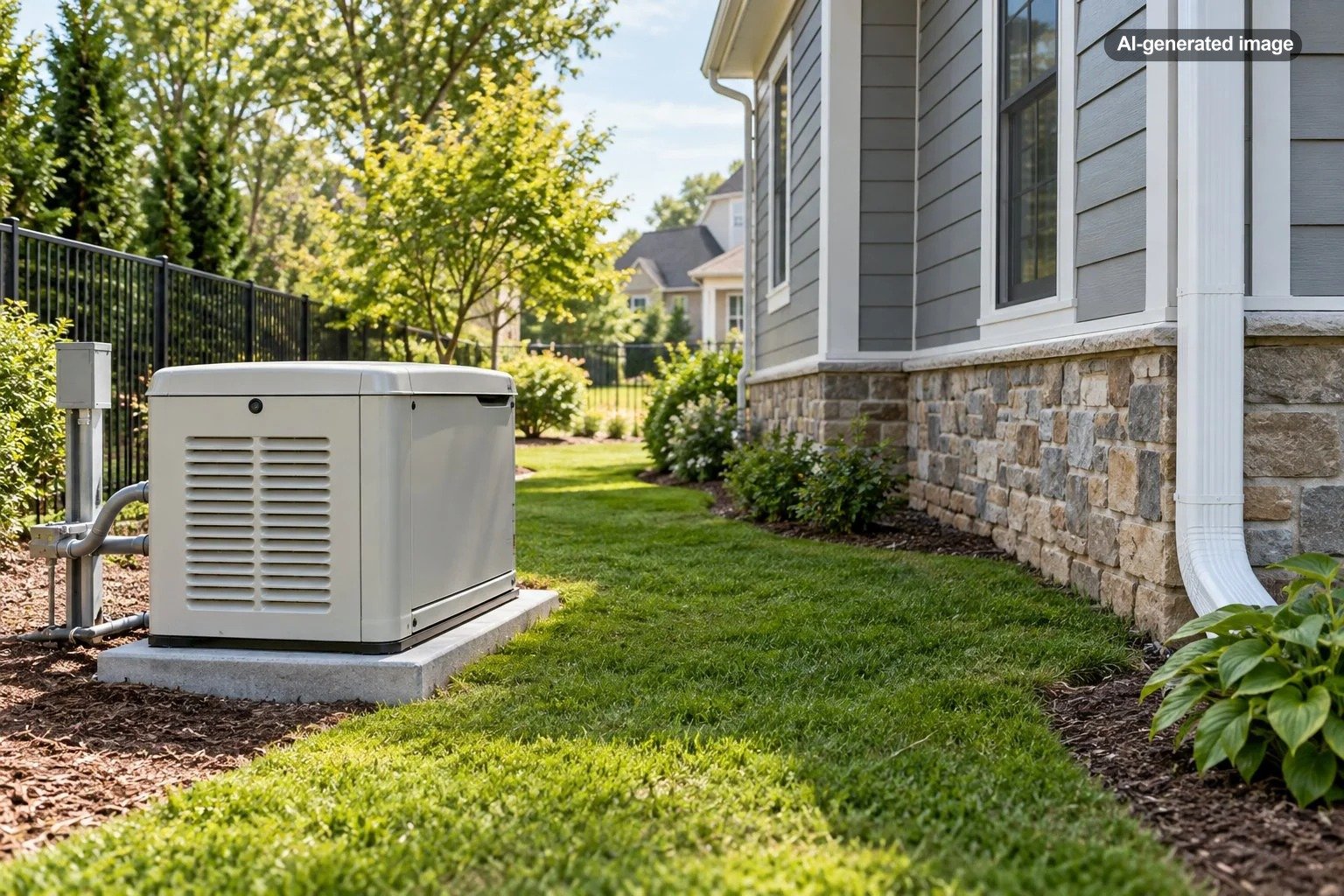
A permanently installed standby generator is a different situation from the portable generators addressed by the 20-foot guidance above. Standby systems are installed as permanent equipment and have model-specific installation requirements involving clearances, exhaust, fuel supply, electrical connections, and nearby openings.
Do not assume a portable-generator spacing rule determines where a standby unit should be installed. Follow the manufacturer’s installation documentation and applicable local requirements, and use qualified professionals for installation. Local rules can vary, so a dimension that is correct for one system or jurisdiction should not be treated as universal.
Remember Electrical and Weather Safety Too
Carbon monoxide is the major reason generator location receives so much attention, but safe operation also involves electricity, fuel, and weather. CPSC advises following manufacturer instructions regarding shock hazards during wet conditions. Depending on the equipment and conditions, the manufacturer’s guidance may specify an appropriate generator shelter or may advise against operation until conditions improve.
Never solve a rain problem by bringing a portable generator closer to the house or into an enclosed structure. The correct weather strategy is the one permitted by the generator’s instructions while preserving safe outdoor operation.
Electrical connection also deserves professional attention when a generator is intended to supply home circuits. Do not improvise connections to household wiring. A properly designed connection method should comply with the generator manufacturer’s instructions and applicable electrical requirements.
Carbon Monoxide Alarms Are an Important Backup
Correct generator placement reduces risk, but working carbon monoxide alarms add an important second layer of protection. CDC recommends using a battery-powered or battery-backup CO detector in the home when operating a generator.
CO alarms should not be used to justify placing a generator too close to the house. They are warning devices, not substitutes for outdoor placement and proper clearance.
If a carbon monoxide alarm sounds while a generator is operating, move to fresh air and follow emergency guidance rather than searching the building for the source. Symptoms such as headache, dizziness, weakness, nausea, vomiting, chest pain, or confusion can be associated with carbon monoxide exposure and warrant prompt attention.
A Practical Generator Placement Checklist
Before you decide
- The generator is outdoors, not in a garage, shed, porch, basement, crawlspace, or carport.
- It is at least 20 feet from the home.
- Nearby doors, windows, and vents have been considered when choosing the location.
- The exhaust points away from the house and other occupied buildings.
- The location follows the generator manufacturer’s operating and clearance instructions.
- Weather protection, if used, follows manufacturer guidance and does not enclose the generator.
- Working carbon monoxide alarms are present inside the home.
- Electrical connections are suitable for the intended use rather than improvised.
Frequently Asked Questions
Is 10 feet from the house far enough for a portable generator?
Current CPSC guidance says portable generators should be operated outdoors at least 20 feet from the home, so 10 feet does not meet that recommendation.
Can I run a generator in the garage with the garage door open?
No. CPSC advises never operating a portable generator inside a garage, even if doors or windows are open. The generator should be outside and properly separated from the home.
Can I put a generator under a covered porch?
A covered porch is not an appropriate substitute for the recommended outdoor placement. CPSC specifically warns against operating portable generators on porches and in carports because they are too close to the home.
Which way should generator exhaust face?
Point the exhaust away from your home and other buildings where people may be present. Do not rely on exhaust direction alone; maintain the recommended separation as well.
Does the 20-foot rule apply to standby generators?
The federal guidance discussed here specifically addresses portable generators. Permanently installed standby generators must be located according to their manufacturer-specific installation requirements and applicable local rules.