Can Closing Air Vents Damage an HVAC System?
Yes, closing several air vents can contribute to HVAC problems. A central heating and cooling system is designed to move a planned volume of air through its supply and return ducts. Shutting registers does not tell most systems to produce proportionally less conditioned air; it simply places more resistance in the route that air must travel.
Closing one register slightly for comfort is unlikely to cause an immediate failure in an otherwise healthy system. Closing multiple vents completely, however, may increase duct pressure, reduce airflow across the equipment, worsen room-to-room comfort, and aggravate existing weaknesses in the ductwork or system.
Why closing a vent does not work like turning off a light
A standard central HVAC system serves a network of rooms as one connected air-distribution system. The blower pushes air into supply ducts, while return ducts carry household air back to the equipment for another heating or cooling cycle.
The registers in individual rooms may have adjustable dampers, but they are not usually independent zone controls. Closing one blocks a delivery point while the blower continues trying to move air through the system. The remaining open branches must accept more of that airflow, and pressure within the duct system can rise.
This pressure is commonly discussed as static pressure: the resistance the blower encounters as it moves air. HVAC technicians measure total external static pressure and compare it with the equipment manufacturer’s published limits and blower-performance data. A register position alone cannot reveal whether a particular system is operating within those limits.
What restricted airflow can do to the system
Increase pressure in the supply ducts
Closing registers adds resistance on the supply side. Air may escape more readily through loose connections and existing duct leaks, especially in an older or poorly sealed system. That means some conditioned air can end up in an attic, crawl space, wall cavity, or mechanical area instead of the rooms where it belongs.
Reduce airflow across heating or cooling components
Equipment requires adequate airflow to exchange heat correctly. During cooling, insufficient airflow can allow the indoor coil to become too cold and potentially ice over. During heating, severely restricted airflow can contribute to excessive furnace temperatures and operation of a safety limit control. The precise outcome depends on the equipment, blower controls, duct design, filter condition, and degree of restriction.
Make the blower work under unfavorable conditions
Different blower types react differently to higher resistance. Some may move less air, while variable or electronically controlled blowers may increase their effort to maintain airflow within their operating range. Either response can undermine comfort, efficiency, or equipment performance. It is not safe to assume that a newer blower makes widespread vent closing harmless.
Create more noise without solving comfort
Whistling registers, rushing air, and louder airflow at the remaining open vents are common clues that the air path has become too restrictive. Meanwhile, the closed room may still exchange heat with neighboring spaces through interior walls, ceilings, floors, and the door. The expected energy savings may never materialize.
Is it ever acceptable to adjust a supply register?
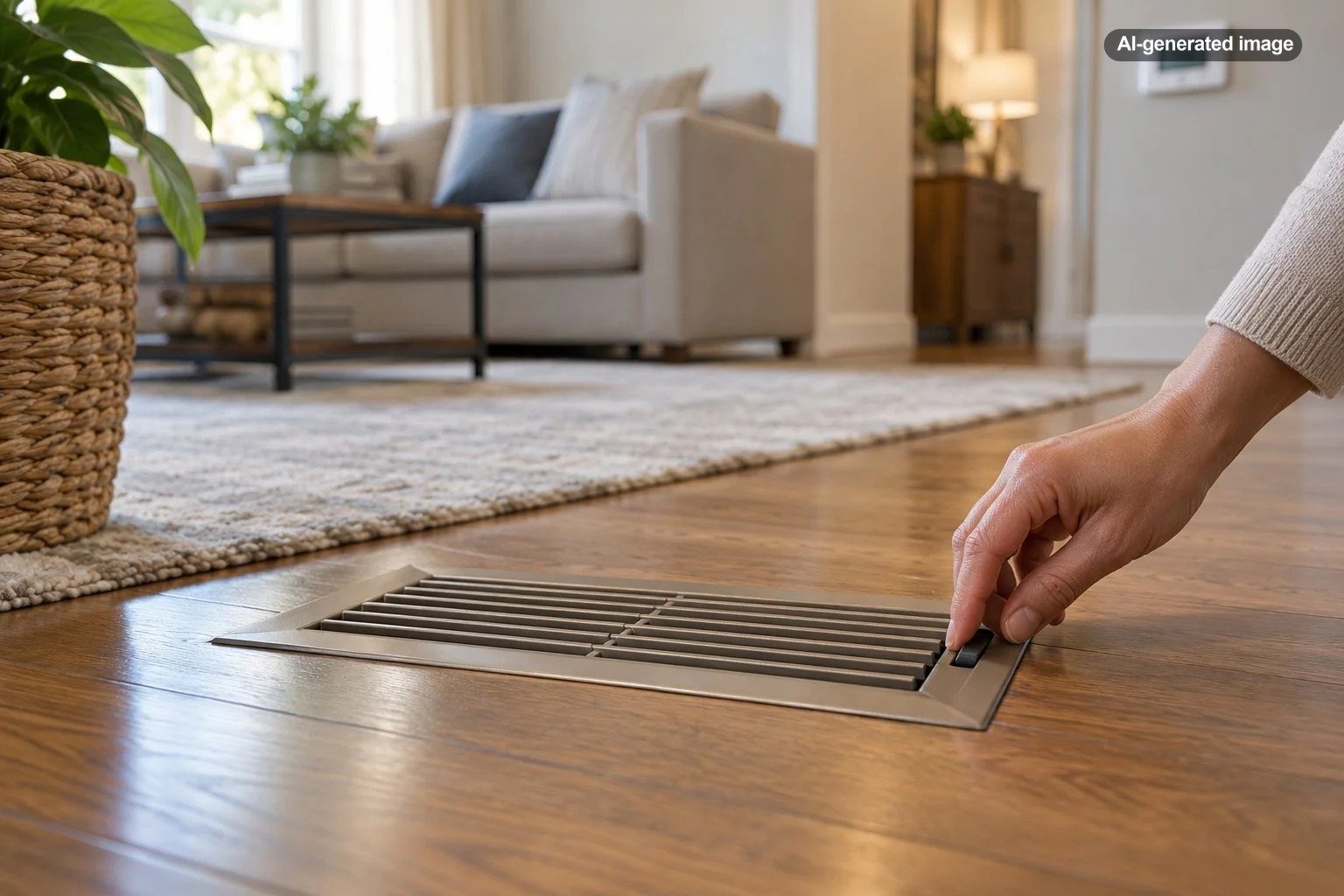
A small adjustment to a single supply register may be reasonable when fine-tuning comfort, provided the system remains quiet and performs normally. Trane advises that a vent in a room that runs warm may be closed slightly rather than shut completely. That is very different from closing multiple vents to stop conditioning unused rooms.
There is no universal safe number of vents to close. Systems vary in duct sizing, blower configuration, equipment capacity, zoning design, and existing static pressure. A system that is already struggling with an undersized return, dirty filter, restrictive coil, or poorly designed ductwork has less tolerance for additional resistance.
What to do when one room is too hot or too cold
Uneven comfort can come from far more than an overactive vent. Work through the simple, noninvasive possibilities before assuming the duct system needs alteration.
What to do
- Open the registers. Confirm that supply vents and return grilles are open, clean, and not covered by curtains, rugs, or furniture.
- Check the air filter. Use the filter type and replacement guidance specified for the equipment. A dirty or overly restrictive filter can reduce airflow throughout the home.
- Notice the pattern. Record whether the room is uncomfortable only in heating, only in cooling, at a certain time of day, or whenever the door is closed.
- Look for room-level causes. Sun exposure, large windows, attic conditions, air leaks, missing insulation, electronics, and room occupancy can change the heating or cooling load.
- Check for visible duct trouble. Accessible ducts may have a disconnected section, crushed flexible duct, damaged insulation, or an obvious leak. Do not enter unsafe attics or crawl spaces to investigate.
- Request a professional airflow assessment. Ask the technician to measure static pressure, airflow, temperature change, and duct performance rather than relying only on how strongly air seems to blow from a register.
Better options for controlling unused rooms
If the goal is to reduce conditioning in part of the house, a professionally designed zoning system is more appropriate than a collection of closed registers. True zoning may use motorized duct dampers, multiple thermostats or sensors, compatible controls, and equipment capable of responding to changing airflow demands. A bypass arrangement is not automatically appropriate; the design must suit the particular system.
Other solutions may be simpler. A technician can balance manual dampers located in the duct branches, correct an undersized or damaged duct, adjust an approved blower setting, or recommend a return-air improvement. Air sealing, insulation, window treatments, and solar control may solve a room-load problem without changing HVAC airflow at all.
For homes with spaces that are used on genuinely different schedules, separate equipment or properly engineered zoning may offer better control. The correct choice depends on room loads, layout, existing ducts, humidity needs, and the capabilities of the installed equipment.
Warning signs that justify an HVAC service call
A technician can determine whether vent restrictions are the main problem or merely exposing another one. Useful diagnostic work may include checking the filter and coil, verifying blower settings, measuring total external static pressure, comparing airflow with manufacturer data, inspecting duct restrictions, and checking the balance between supply and return air.
Do not drill test ports, open equipment panels, alter wiring, or adjust gas-fired equipment unless you are qualified to do so. Static-pressure testing and internal furnace or air-handler diagnosis involve locations and components that are not appropriate for casual DIY work.
Frequently asked questions
Will closing vents lower the energy bill?
Usually not in a conventional, non-zoned system. The equipment generally continues operating according to the thermostat, while the closed vents add resistance and may increase leakage or reduce effective airflow. Addressing duct leakage, insulation, thermostat strategy, and equipment maintenance is a more dependable approach.
Should vents be closed in unused rooms during winter?
Not as a general energy-saving practice. Keep the supply vent open and avoid blocking any return grille. If an unused area needs different temperature control, have the system evaluated for balancing or properly designed zoning.
Can furniture cover an air vent?
Furniture, rugs, and long curtains can restrict airflow even when the register damper is technically open. Rearrange the obstruction or use an appropriate deflector only if it does not create another restriction and is suitable for the register location.
Can smart vents solve the problem?
Motorized smart vents still restrict duct outlets, so compatibility depends on the system, controls, number of vents involved, and pressure-management strategy. Consult the HVAC equipment documentation and a qualified professional before using them throughout a home.
The practical answer
Closing one supply vent a little is not the same as condemning an HVAC system, but routinely shutting several vents is a poor substitute for airflow balancing or zoning. It can raise resistance, reduce airflow, increase noise, aggravate duct leakage, and place the equipment outside its intended operating conditions.
Keep the air path open, investigate why the room is uncomfortable, and use measurements rather than guesswork when the problem persists. A room that never feels right is useful evidence: it is often pointing to a load, duct, return-air, insulation, or control issue that deserves a proper solution.