Why Are My Towels Getting Thin So Quickly?
If your bath towels seem to be losing their plushness far sooner than expected, the problem is usually not one dramatic mistake. Towels gradually become thinner as fibers break, loosen, and leave the fabric through normal use and laundering. Washing conditions, dryer heat, friction, chemical exposure, and the towel’s original construction can all speed up that process.
A little lint and gradual thinning are normal, especially with frequently used cotton towels. What is worth investigating is a noticeable decline over a relatively short period, particularly if several towels in the household are developing flat areas, frayed edges, bare patches, or unusually heavy lint at the same time.
Start With the Difference Between Normal Shedding and Fast Wear
New cotton towels can shed loose fibers during their first several washes. That does not automatically mean the towel is defective or headed for an early retirement. Terry towels have thousands of loops that create surface area and absorb water, and some loose material can work free as the towel is washed and dried.
The more useful question is whether the towel stabilizes after those early washes. A towel that continues producing large amounts of lint while becoming visibly thinner deserves closer attention. Look at high-friction areas such as the center of the towel, folded edges, decorative borders, and places where loops are already being pulled or flattened.
High Dryer Heat Can Accelerate Fiber Wear
The dryer is one of the first places to look when towels seem to age quickly. Towels are heavy when wet and can require substantial drying time, which makes it tempting to use a high-heat setting or leave them tumbling well beyond the point when they are dry.
Repeated heat exposure combined with mechanical tumbling can be hard on textile fibers. Once towels are dry, continuing to tumble them adds friction without providing much benefit. If your dryer allows it, try a low or medium heat setting and remove towels when they are actually dry rather than routinely extending the cycle.
Line drying reduces dryer exposure, although air-dried cotton towels can feel stiffer. That change in feel does not necessarily mean the towel has suddenly become damaged. Shaking towels before hanging them and again when taking them down can help separate the loops, and a short low-heat tumble can soften them if desired.
Your Washing Routine May Be Creating More Friction Than Necessary
A washing machine cleans partly through movement, so some mechanical stress is unavoidable. Problems arise when towels are consistently packed into overloaded drums or washed with items that scrape, snag, or pull at their loops.
Zippers, hooks, hook-and-loop fasteners, and rough hardware can catch terry loops. Once a loop is pulled, trimming the loose loop carefully is generally better than tugging it, which can encourage additional unraveling. Separating towels from garments with exposed hardware can prevent many of these small injuries.
At the opposite extreme, using an unnecessarily aggressive wash setting for every load can subject towels to more agitation than they need. Follow the towel’s care label and reserve unusually intensive cycles for situations that genuinely require them.
What to do
- Check the care label before changing wash temperatures or cycles.
- Wash towels without garments containing exposed zippers, hooks, or rough fasteners.
- Leave enough room in the washer for towels to move and rinse properly.
- Use an appropriate amount of detergent rather than assuming more detergent cleans better.
- Dry on a moderate setting when the care label permits and avoid routinely overdrying.
More Laundry Product Is Not Always Better
When towels begin feeling flat or less luxurious, adding more detergent or fabric softener can seem like the obvious solution. That approach can create a different problem. Excess laundry products may leave residue if they are not thoroughly rinsed, changing the towel’s feel and absorbency.
Fabric softeners and dryer sheets can also deposit conditioning ingredients on fibers. They may make textiles feel smooth, but repeated use can reduce the open, absorbent character people usually want from terry towels. If towels feel coated rather than genuinely worn thin, product buildup may be contributing to the disappointing performance even though the fabric itself still has plenty of material.
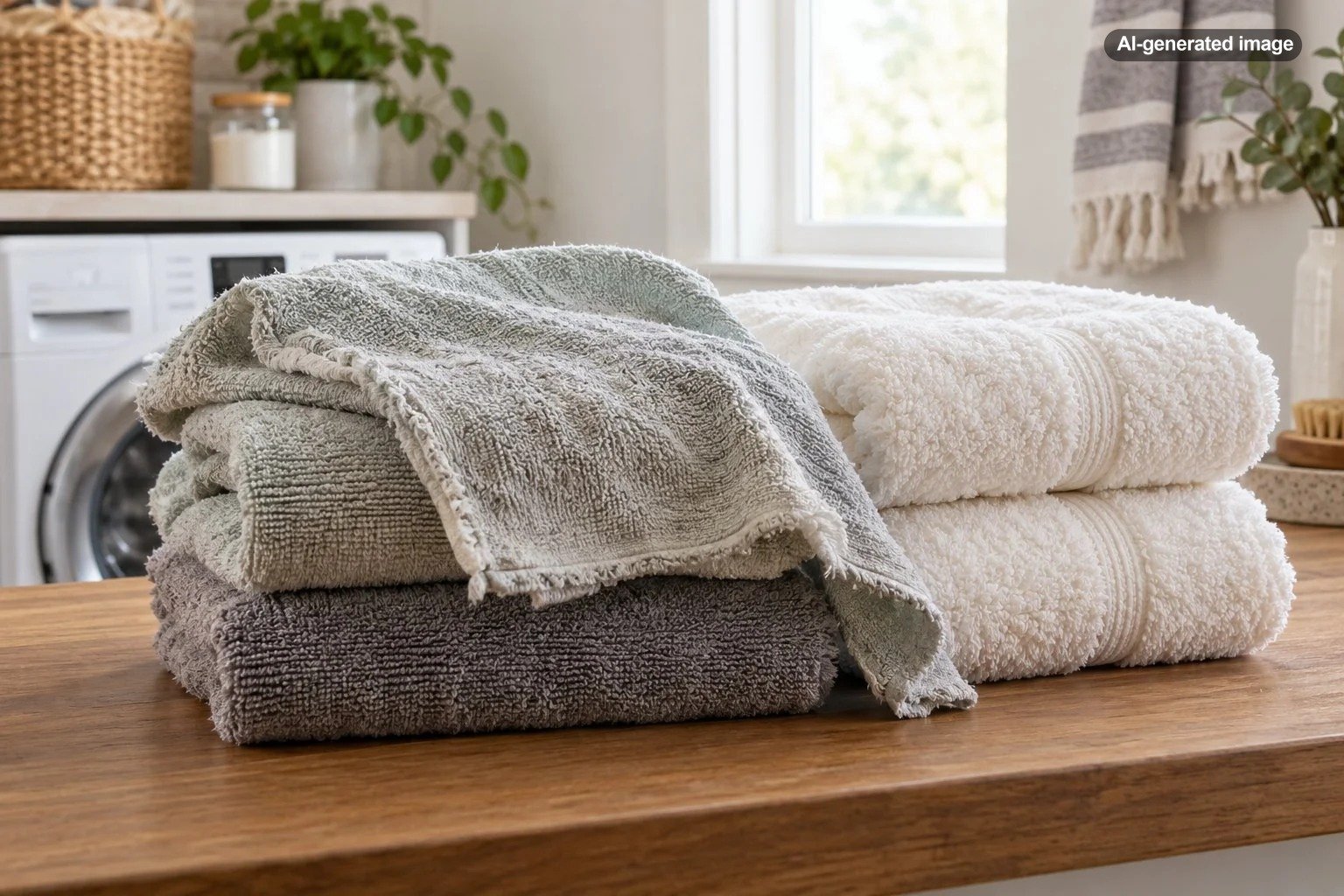
This distinction matters because a towel that feels flat is not necessarily a towel that has physically lost large amounts of fiber. Examine it against a light. Genuine thinning often appears as areas where the weave looks less dense or more light passes through compared with less-used portions.
Bleach and Stain Treatment Deserve a Light Touch
White towels are sometimes exposed to strong laundry treatments more frequently than colored linens because homeowners want to preserve a crisp appearance. Follow the textile’s care instructions and the directions for any laundry product rather than repeatedly increasing concentration or treatment time.
If staining is the recurring problem, address stains promptly instead of routinely subjecting an entire towel to unnecessarily harsh treatment. The goal is to clean the towel effectively without creating more chemical and mechanical stress than the fabric requires.
The longest-lasting towel routine is usually the one that gets towels clean and dry without treating every laundry day like a rescue operation.
The Towel’s Construction Matters More Than It May Seem
Laundry habits are only part of the story. Two towels can look equally fluffy on a store shelf yet age differently because of differences in yarn, loop construction, density, border design, and overall fabric weight.
A lighter towel can be appealing because it dries quickly, takes up less storage space, and feels less bulky in a small bathroom. The tradeoff is that there may simply be less textile material available to withstand years of repeated friction. A denser towel may maintain a substantial feel longer, although it can take more time to wash and dry.
Decorative details can also become wear points. Wide borders and elaborate woven bands sometimes shrink or behave differently from the terry field around them, while exposed loops are naturally vulnerable to snagging. None of this means one towel style is universally superior. It means longevity should be considered alongside softness, drying time, storage space, and personal preference.
Look at How the Towels Are Used Between Washes
Laundry equipment gets most of the blame, but daily handling matters too. Towels stuffed tightly onto hooks may stay damp longer and require more frequent laundering. Towels repeatedly dragged across rough countertops, textured baskets, unfinished shelving, or other abrasive surfaces can experience additional friction.
Give damp bath towels enough space to dry between uses. A wide towel bar generally exposes more fabric to air than a crowded hook. If several household members use towels in one bathroom, providing enough hanging space can improve everyday drying and make the laundry routine easier to manage.
How to Tell When a Thin Towel Is Actually Worn Out
A towel does not need to look new forever to remain useful. Slight fading, a less plush texture, or a few trimmed loops are mostly cosmetic. Replacement becomes more sensible when large sections are threadbare, edges are unraveling extensively, holes are developing, or the towel no longer performs well enough for its intended use.
Before discarding worn towels, consider whether they can move into another household role. Older bath towels can often become cleaning cloths, pet towels, workshop rags, or protective padding for messy household projects. A towel that has lost its place in the guest bathroom may still have plenty of practical life left.
FAQ
Why do my new towels shed so much lint?
Some initial shedding can occur as loose fibers left from manufacturing work free during early washes and drying. Pay more attention if heavy shedding continues and the towel is visibly losing density.
Does fabric softener make towels wear out faster?
Fabric softener is more commonly associated with coating fibers and reducing absorbency than with being the sole cause of rapid physical thinning. If towels feel slick, flat, or less absorbent, try simplifying the laundry routine and following the care label.
Should towels be washed separately?
They do not always require a completely separate load, but keeping them away from exposed zippers, hooks, rough fasteners, and strongly lint-attracting garments can reduce snagging and simplify care.
Can I stop towels from thinning completely?
No. Every textile gradually loses fibers through use and laundering. The practical goal is to avoid unnecessary stress so normal wear happens slowly rather than trying to prevent wear altogether.
Why is only one part of my towel getting thin?
Localized thinning often points to repeated friction or handling. Consider which area gets rubbed most during drying, contacts a hook or surface, or is repeatedly folded and grabbed. Uneven wear can reveal more about the cause than overall age alone.