How Do You Make Old Towels Soft Again?
Old towels can often be made noticeably softer again, especially when stiffness comes from detergent, fabric softener, body oils, or mineral residue rather than worn-out fibers. The most useful first step is usually not adding another softening product. It is removing the buildup that is keeping the towel fibers from moving freely.
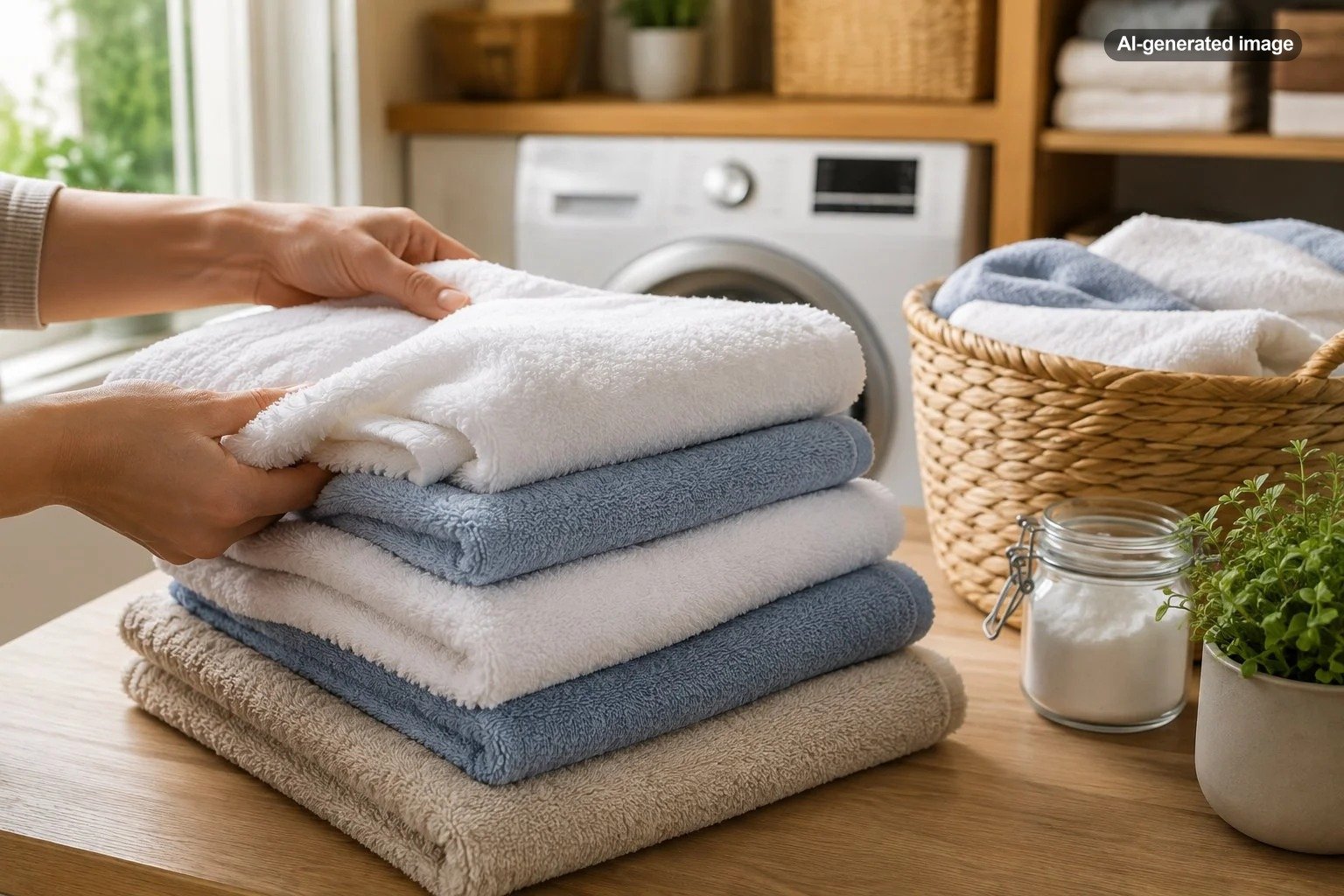
A careful wash with less detergent, a thorough rinse, and gentle drying can improve both softness and absorbency. The result may not feel exactly like a brand-new towel, because repeated washing and drying physically wear cotton fibers over time, but many towels that seem destined for the rag pile still have plenty of comfortable life left.
Why old towels start to feel stiff
Towel softness depends partly on the tiny loops and fibers in the fabric remaining flexible and able to separate from one another. Over time, several things can interfere with that.
- Too much detergent: More detergent does not necessarily mean cleaner towels. If it does not rinse away completely, residue can accumulate in the fibers and leave them feeling rigid.
- Fabric softener buildup: Conventional liquid softeners and dryer sheets can coat towel fibers. They may create a smooth hand feel initially, but repeated use can reduce the towel’s ability to absorb water.
- Minerals in the wash water: Hard-water minerals can contribute to a rough or less flexible feel, particularly when combined with detergent residue.
- Overdrying: Repeatedly exposing towels to more heat and drying time than they need can make already-aged fibers feel harsher.
- Normal wear: Cotton does not last forever. Eventually loops flatten, fibers break, edges thin, and the towel loses the plush structure it once had.
The distinction matters because buildup can often be corrected, while genuine fiber wear cannot be reversed. A towel that is stiff but still thick and intact is a much better restoration candidate than one that has become thin, scratchy, frayed, and nearly threadbare.
Start by washing away what may be coating the fibers
Check the towel’s care label first. Cotton, cotton blends, decorative towels, and specialty fabrics may have different temperature and drying requirements. Use the warmest water permitted by the label rather than automatically choosing the hottest setting.
For the next wash, use less detergent than you would normally use if you suspect you have been dosing generously. Modern washers can use relatively little water, so excess detergent may be harder to rinse away. An extra-rinse setting can also be useful when towels feel coated, unusually stiff, or slightly slippery rather than simply worn.
What to do
- Separate the towels from heavily soiled clothing and avoid overloading the washer.
- Read the care label and select an appropriate water temperature and cycle.
- Use a modest, properly measured amount of detergent rather than pouring by eye.
- Skip conventional fabric softener and dryer sheets during the restoration wash.
- Select an extra rinse if your washer offers one and detergent buildup seems likely.
- Dry the towels promptly, leaving enough room for them to tumble freely.
Should you use vinegar or baking soda on old towels?
Household laundry advice often treats vinegar and baking soda as universal towel remedies, but it is better to be selective. Baking soda is sometimes used in laundry to help with odors and stiffness, while diluted white vinegar is used in some textile-care situations to address alkaline residue. Neither should be treated as a guaranteed fix for every towel, dye, washing machine, or water condition.
If you choose to use a laundry additive, follow the appliance manufacturer’s guidance, the towel care label, and the product directions. Do not casually combine cleaning chemicals in the same load. In particular, vinegar and chlorine bleach should not be mixed.
Fabric softener can solve one problem while creating another
Liquid fabric softener sounds like the obvious answer to stiff towels, but towels are one category where restraint makes sense. Softeners work partly by depositing conditioning ingredients on fibers. With repeated use, that coating can interfere with the towel’s ability to take up water efficiently.
If maximum absorbency is important, consider leaving softener out of regular towel loads. The same caution applies to dryer sheets. People who strongly prefer the feel or fragrance of a softener may decide that the tradeoff is worthwhile, but it is better understood as a choice rather than a necessary step in towel care.
| Approach | Potential benefit | Possible drawback |
|---|---|---|
| Use less detergent | May reduce residue and stiffness | Too little detergent may not clean a genuinely dirty load well |
| Add an extra rinse | Helps remove remaining detergent | Uses additional water |
| Skip fabric softener | Helps preserve absorbency | Towels may have less fragrance or conditioned feel |
| Dry with room to tumble | Helps fibers separate and fluff | May require splitting an oversized load |
| Replace the towel | Restores plushness when fibers are truly worn | Unnecessary if buildup is the real problem |
Drying technique makes a surprising difference
Even a well-rinsed towel can come out disappointingly flat if the dryer is stuffed too tightly. Towels need room to tumble so the fabric can move and the loops can separate. Splitting a very large load may produce a better result than forcing every towel into one cycle.
Use the drying setting recommended by the care label and avoid repeatedly running towels long after they are dry. If you line-dry towels, they may naturally feel firmer than machine-dried towels because they do not receive the same tumbling action. Giving line-dried towels a shake before hanging them, and another firm shake when they are dry, can loosen the fabric somewhat.
The goal is not to coat an old towel until it feels soft; it is to help clean fibers move freely again.
How to tell whether your towels can still be revived
Try the restoration routine before replacing towels that are merely stiff. After washing and drying, check both feel and performance. A successful towel should feel less rigid, open up more easily when folded, and absorb water rather than pushing it around on the skin.
If the towel remains rough after several properly rinsed washes, look at its physical condition. Flattened loops, bald spots, thinning fabric, permanent roughness, unraveling hems, and widespread fraying point toward wear rather than residue. No laundry technique can reconstruct fibers that have physically broken down.
How to keep restored towels softer for longer
Once the towels improve, the easiest strategy is to prevent residue from rebuilding. Measure detergent instead of guessing, avoid routinely overfilling the washer, and make sure towels can rinse and tumble properly. Skipping or limiting softener can also help preserve absorbency.
Wash towels often enough that body oils and personal-care products do not become heavily embedded in the fabric, but continue following the care label rather than applying one aggressive routine to every textile. Decorative borders, specialty fibers, and certain finishes may require gentler treatment than ordinary cotton bath towels.
Before you decide to replace them
- Check whether the towels are still thick and structurally sound.
- Rule out detergent or softener buildup with a careful wash and thorough rinse.
- Make sure the washer and dryer are not overloaded.
- Judge absorbency as well as surface softness.
- Replace towels when the fibers themselves are worn, thin, frayed, or permanently rough.
Frequently asked questions
Why are my towels hard after washing?
Common possibilities include detergent residue, fabric softener buildup, hard-water minerals, an overloaded washer, insufficient rinsing, or ordinary fiber wear. Start with the easiest variables: detergent quantity, rinsing, load size, and drying method.
Does more detergent make towels softer?
No. Using more detergent than the washer and load require can leave residue behind, which may make towels feel stiffer rather than softer. Measure detergent according to the detergent and appliance directions.
Can fabric softener ruin towels?
Repeated softener use can coat towel fibers and reduce absorbency. That does not mean every use permanently ruins a towel, but frequent application may work against the performance most people want from bath linens.
Why do air-dried towels feel rougher?
Machine drying provides tumbling action that separates and fluffs fibers. Towels dried motionless on a line or rack can feel firmer even when they are perfectly clean. Shaking them before and after drying can help loosen the fabric.
When should old towels be replaced?
Replacement makes sense when towels are thin, heavily frayed, permanently scratchy, poorly absorbent despite proper washing, or simply no longer pleasant to use. Stiffness alone, however, is worth troubleshooting before you give up on them.