
What Is the Safest Way to Use a Generator at Home?
The safest way to use a portable generator at home is to run it outdoors, well away from the house, keep its exhaust pointed away from buildings, protect it from unsafe wet-weather exposure, and connect appliances or household circuits using equipment designed for generator use. The most important danger is carbon monoxide, but electrical shock, backfeeding, fire, fuel handling, and overloading also require careful attention.
A generator can make a power outage much easier to manage, but it is not simply an outdoor appliance that can be parked wherever an extension cord reaches. Safe operation begins before the engine starts, with deliberate placement, working carbon monoxide alarms, a sensible electrical connection plan, and a clear understanding of what the generator can power.
Put carbon monoxide safety first
Portable generators produce carbon monoxide, or CO, an odorless and colorless gas that can cause serious illness or death. The fact that a garage door is open, a window is cracked, or a fan is running does not make an enclosed or partially enclosed location safe for generator operation.
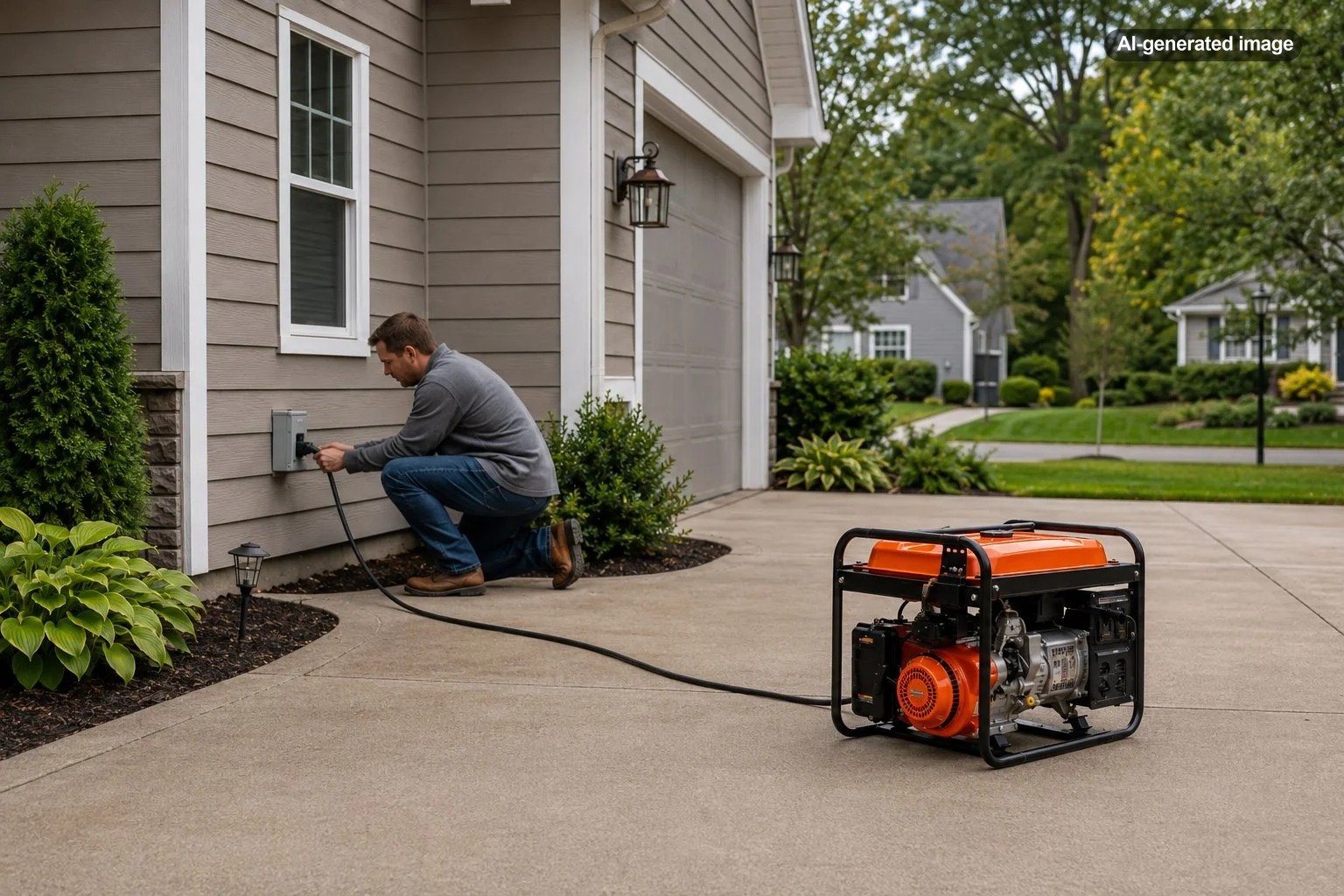
The U.S. Consumer Product Safety Commission advises using portable generators outside only, at least 20 feet from the home, with the exhaust directed away from the building. The Centers for Disease Control and Prevention likewise advises operating a generator more than 20 feet from windows, doors, and vents.
That 20-foot distance should be treated as a minimum safety guideline, not an invitation to aim the exhaust toward a neighboring home or another occupied building. Look at the entire surroundings: nearby doors, operable windows, soffit vents, dryer vents, fresh-air intakes, attached structures, and adjacent properties all matter.
Use working carbon monoxide alarms inside the home
A properly placed generator and carbon monoxide alarms serve different purposes. Safe placement reduces the chance that exhaust enters the home; alarms provide an additional warning if CO nevertheless reaches occupied areas.
CPSC recommends battery-operated CO alarms or alarms with battery backup on every level of the home and outside sleeping areas. Battery backup matters especially during a generator-worthy outage because a hardwired alarm without backup power may not operate when utility electricity is unavailable.
Check alarms before storm season or any period when generator use is likely. Follow the alarm manufacturer’s instructions for placement, testing, battery replacement, and end-of-life replacement rather than improvising locations.
Do not backfeed power into household wiring
One of the most dangerous generator mistakes is attempting to energize a home by connecting the generator to a household receptacle with an improvised cord. Often called backfeeding, this can send electricity into wiring in ways the home’s electrical system was not designed to handle and can create a hazard for occupants, equipment, and utility workers.
FEMA’s home generator safety guidance warns against hooking a generator directly into the home’s power supply without appropriate equipment. For a generator intended to power household circuits, have a qualified electrician install suitable transfer equipment in accordance with the applicable instructions and local requirements.
A generator should supply the loads you intentionally choose, not energize wiring through an improvised shortcut.
Choose the right way to connect your loads
There are two common approaches to portable generator use. The simpler approach is to connect selected appliances directly to generator receptacles with appropriately rated extension cords. A more integrated setup uses professionally installed transfer equipment so selected household circuits can receive generator power.
| Connection approach | Best suited to | Main considerations |
|---|---|---|
| Direct appliance connection | A limited number of essential portable loads | Requires suitable cords, careful routing, and load management |
| Transfer equipment | Homes that regularly need selected circuits powered | Requires compatible equipment and qualified installation |
For direct connections, FEMA advises using heavy-duty extension cords. In practice, the cord must also be suitable for the location and electrical load and should be used according to the generator and cord manufacturers’ instructions. Do not use damaged cords, loose connections, or cords that become unusually hot during operation.
A transfer setup can make recurring outages less cumbersome because refrigerators, certain lighting circuits, pumps, or other selected loads may be supplied through the home’s normal branch circuits. However, this is not a casual DIY connection project. The transfer equipment must match the electrical system and generator arrangement.
Keep the generator and electrical connections out of unsafe wet conditions
Power outages frequently arrive with hurricanes, thunderstorms, snow, or flooding, exactly when outdoor electrical equipment becomes more complicated to use. Water and energized electrical equipment are a dangerous combination.
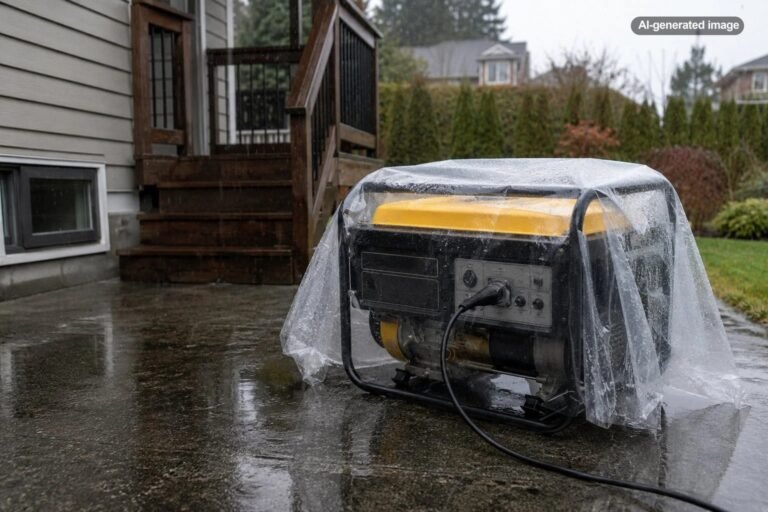
CPSC advises following the generator manufacturer’s wet-weather instructions. Depending on the equipment, those instructions may address an appropriate noncombustible generator cover or may advise waiting until conditions improve. Do not solve rain exposure by moving the running generator into a garage, carport, porch, shed, or other location that creates a carbon monoxide hazard.
Manage fuel as a fire hazard
Fuel deserves the same planning as electricity. Keep fuel in containers intended for the specific fuel and follow applicable manufacturer and local safety instructions regarding storage. Do not place fuel where it is exposed to ignition sources or where a leak could create an additional household hazard.
Never refuel a portable generator while it is running. CPSC advises turning the generator off and allowing it to cool before refueling. Hot engine and exhaust components can ignite spilled fuel or vapors.
Store the generator itself according to its manual after use. Long-term fuel storage, draining, stabilization, battery maintenance, and service procedures vary by generator type, so the owner’s manual should take precedence over generic maintenance routines.
Do not overload the generator
A generator has a finite electrical capacity. Trying to run every appliance that normally operates on utility power can overload the generator or create repeated shutdowns and poor performance. Instead, decide which loads genuinely matter during an outage.
Start with essentials such as refrigeration, necessary lighting, communications, or other critical household equipment, depending on the home’s needs. Heating, cooling, pumps, electric water heating, cooking appliances, and other large loads can materially change generator requirements.
Use the generator manufacturer’s rated-output information and appliance documentation when determining what can run at the same time. Some equipment requires more power during startup than during normal operation, making simple addition of steady-state numbers an incomplete planning method.
Before you decide what to power
- Identify the appliances or circuits that are genuinely necessary during an outage.
- Check their electrical requirements rather than relying on guesses.
- Account for equipment with higher startup demand.
- Stay within the generator manufacturer’s operating limits.
- Prioritize critical loads instead of trying to reproduce normal whole-house electricity use.
Inspect and prepare the generator before an emergency
The middle of a nighttime outage is a poor time to discover that the generator will not start, a cord is damaged, fuel is unavailable, or the planned operating location is unsuitable. CPSC recommends maintaining portable generators and following their labels, warnings, and owner’s manuals.
Before storm season or another period of elevated outage risk, review the manual, identify the outdoor operating location, verify your connection plan, check carbon monoxide alarms, inspect cords and accessories, and make sure everyone who may operate the generator understands the safety rules.
Do not perform maintenance beyond the procedures supported by the manufacturer’s instructions and your own competence. Electrical defects, damaged receptacles, fuel leaks, abnormal engine behavior, or problems involving installed transfer equipment justify evaluation by an appropriate qualified professional.
A safe generator setup should be planned, not improvised
A common failure pattern during outages is solving one problem by creating another: moving the generator under a carport to escape rain, running it in an open garage to keep it secure, using an unsuitable cord because the correct one is too short, or inventing a connection to power the house because transfer equipment was never installed.
If outages are frequent or the household relies on electrically powered medical, accessibility, water, climate-control, or other essential systems, generator planning becomes more consequential. Consider discussing the electrical setup and transfer arrangement with a qualified electrician before an emergency rather than building the system under pressure during an outage.
Frequently asked questions
Can I run a generator in a garage if the garage door is open?
No. CPSC and CDC guidance says portable generators should never be operated in garages, even with doors or windows open. Operate the generator outdoors at least 20 feet from the home and direct its exhaust away from buildings and openings.
Can I put a generator on a covered porch or in a carport?
No. CPSC specifically warns against operating portable generators on porches and in carports because they are too close to the home and can allow carbon monoxide to enter occupied spaces.
Can I plug a generator into a wall outlet to power my house?
No. Do not improvise a connection from a generator to household wiring. If you want a portable generator to power selected home circuits, use appropriate transfer equipment installed for that purpose by a qualified electrician.
How far should a portable generator be from the house?
CPSC advises at least 20 feet from the home, while CDC advises more than 20 feet from windows, doors, and vents. Exhaust should point away from the home and other occupied buildings.
Should I have a carbon monoxide alarm even if the generator stays outdoors?
Yes. CPSC recommends working CO alarms on every level of the home and outside sleeping areas, using battery-operated alarms or alarms with battery backup.