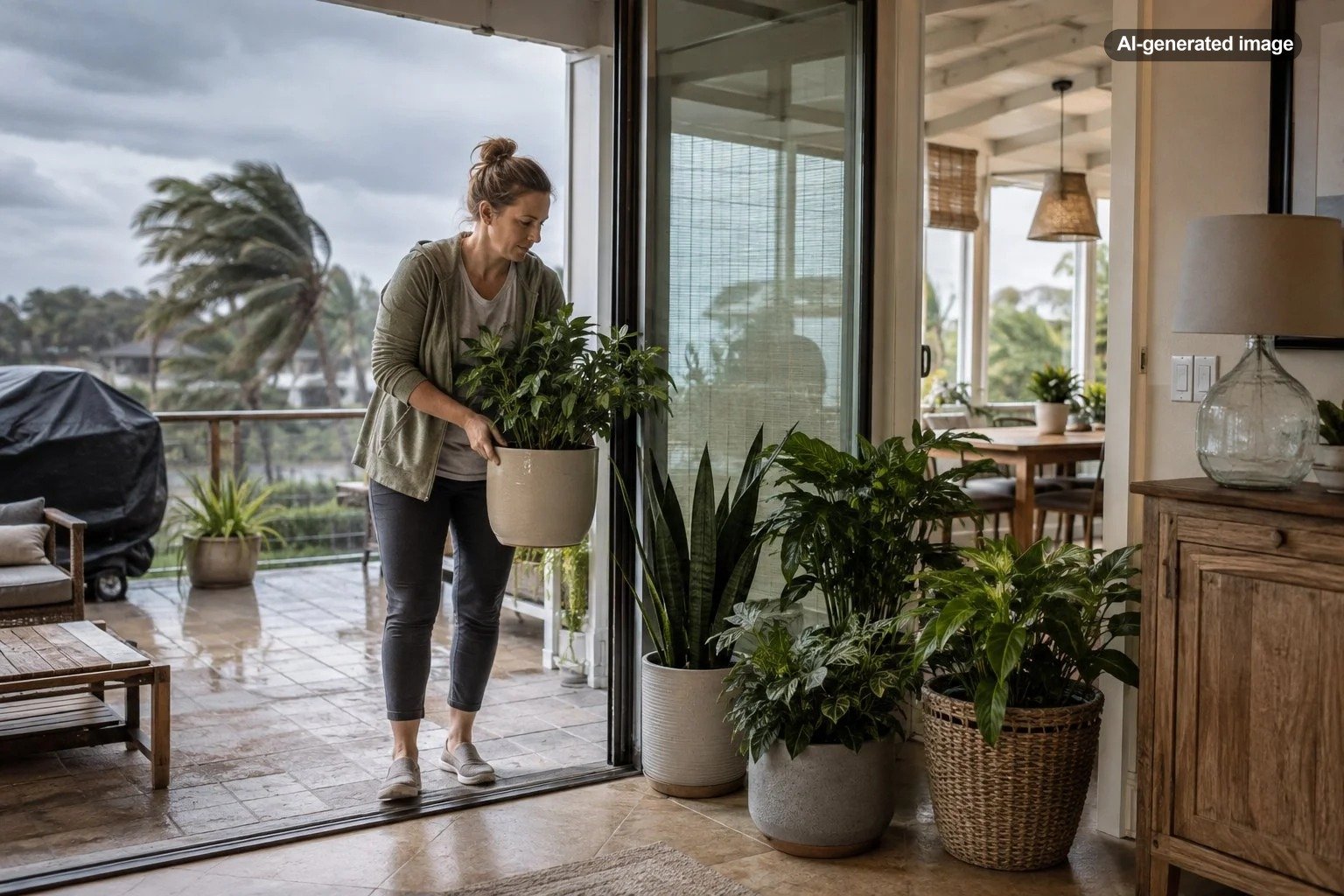
Should You Bring Potted Plants Inside Before a Hurricane?
Yes. If you can move your potted plants safely, bringing them into a protected enclosed space before a hurricane is usually the best choice. The main concern is not simply whether a favorite fern or hibiscus survives the storm. Pots, hanging baskets, plant stands, and other loose outdoor objects can be picked up, tipped over, shattered, or moved by strong wind and wind-driven water.
That makes hurricane plant preparation partly a gardening job and partly a home-safety job. Small and medium containers should generally come inside. Large containers that cannot reasonably be moved need a different strategy: lower them, group or shelter them where appropriate, and keep them away from doors, windows, walkways, vehicles, and other vulnerable areas.
Why Potted Plants Become a Hurricane Hazard
A heavy planter may feel immovable on an ordinary afternoon, but tropical-cyclone winds are not ordinary conditions. Hurricanes can turn small outdoor objects into windborne debris, while larger containers may topple, roll, crack, or shed branches and soil.
The shape of the plant matters too. A tall top-heavy palm in a relatively narrow container can catch considerably more wind than a low pot of compact foliage. Hanging baskets and lightweight decorative planters are particularly obvious candidates for moving indoors because they are already elevated or easy to displace.
Think beyond the pot itself. Decorative stands, saucers, watering cans, lightweight trellises, hooks, small garden tools, and loose patio accessories should be included in the same cleanup. Hurricane preparation works best when the outdoor area is treated as one system instead of a collection of individual objects.
If an outdoor object can be moved easily on a calm day, do not assume it will stay politely in place during hurricane-force winds.
Where Should You Put Potted Plants During a Hurricane?
The best location is a sturdy enclosed space where the plants will not create another hazard. Depending on the home, that may be a garage, enclosed storage room, utility area, or another protected space that is not part of an evacuation route.
Inside the main living area can work for manageable houseplant-size containers, but consider water, dirt, pests, pets, and floor finishes. A waterproof tray or other suitable floor protection can make cleanup easier. Avoid stacking pots precariously or placing them where someone could trip over them during a power outage.
A screened porch, open carport, balcony corner, or covered patio should not automatically be treated as equivalent to an enclosed room. These areas may still experience damaging wind or wind-driven rain. Apartment and condo residents should also follow any building-specific storm-preparation instructions, especially for balconies, terraces, and shared corridors.
| Plant or container | Preferred preparation | Main concern |
|---|---|---|
| Small pots | Move into an enclosed protected area | Can become windborne or overturn |
| Hanging baskets | Take down and bring inside | Exposed position and lightweight hardware |
| Plants on stands | Move both plant and stand inside | Stand may tip or separate from pot |
| Large movable containers | Relocate early with safe lifting equipment or help | Weight and injury risk |
| Very large containers | Shelter or lower them when practical | Toppling, breakage, and plant damage |
What If a Planter Is Too Heavy to Bring Inside?
Do not injure yourself trying to move a container that is beyond your ability to handle safely. Large ceramic pots, mature container trees, and saturated planters can be far heavier than they appear.
For large container plants, University of Florida hurricane guidance for nurseries recommends laying vulnerable large potted plants down in appropriate situations and placing valuable plants in protected spaces. Residential conditions differ from nurseries, but the useful principle is the same: reducing exposure and lowering a top-heavy plant can be safer than leaving it upright in an open, windy location.
If laying a plant down is practical, consider the container material, trunk and branch structure, nearby surfaces, and whether moving it could damage the plant or create a lifting hazard. A brittle ceramic container or awkward mature specimen may not be suitable for this approach.
Should You Put Plants in the Pool?
Submerging patio furniture or planters in a swimming pool is sometimes passed around as storm advice, but it is not a sensible default for container plants. Salt, fertilizer, potting media, plant debris, metal components, and container materials can create problems for the plant or pool, and moving heavy objects into or out of water introduces another handling risk.
An enclosed and protected storage location is generally the cleaner approach for portable containers. If you have questions about securing specialized pool-area furnishings or equipment, follow the instructions from the applicable manufacturer and your local storm-preparation guidance rather than improvising.
Do Plants Need Light While They Are Indoors?
For a short storm-related stay, immediate wind protection matters more than creating perfect growing conditions. Many outdoor plants can tolerate a temporary period in a garage or another protected area with limited light better than they can tolerate being battered, toppled, or broken outside.
Still, do not forget them after the storm. Once officials indicate conditions are safe and you can inspect the property without encountering hazards, gradually return plants to appropriate light conditions. A plant accustomed to shade may not appreciate being moved abruptly into intense sun merely because its temporary storm shelter was dark.
Should You Water Potted Plants Before Bringing Them In?
Avoid turning hurricane preparation into a race to saturate every container. Water according to the plant’s actual needs, keeping in mind that an already-heavy planter becomes even harder to move when the potting mix is soaked.
If plants will remain sheltered for several days, check the potting mix rather than watering automatically. Containers held indoors may dry more slowly because they are protected from sun and wind. Make sure pots can drain without damaging floors, but do not leave standing water where it creates a slip problem or encourages unnecessary mess.
What About Thorny, Toxic, or Pest-Prone Plants?
Bringing a plant inside does not mean it belongs in the middle of the living room. Plants with thorns, irritating sap, toxic foliage, or unstable branches should be placed where children and pets cannot reach them. The same principle applies to heavy containers that could tip if bumped.
A quick visual inspection can also prevent ants, spiders, snails, or other outdoor hitchhikers from becoming temporary houseguests. Keep the inspection practical; hurricane preparation is not the time for a detailed repotting project.
How Early Should You Bring Plants Inside?
Move plants while conditions are still calm and while doing so will not interfere with evacuation or more important preparations. Waiting for the first strong gusts makes a simple patio chore unnecessarily hazardous.
If your area is under tropical-storm or hurricane alerts, monitor the National Hurricane Center, local emergency management, and local weather information. Your personal deadline should leave enough margin to finish outdoor work before conditions worsen. Do not remain outside to protect plants after authorities advise people to shelter or evacuate.
What to do
- Start with hanging baskets, lightweight pots, plant stands, tools, and loose garden accessories.
- Move portable containers into a sturdy enclosed location without blocking exits or emergency supplies.
- Identify containers that require a second person, dolly, or other safe moving method.
- For exceptionally large plants, decide whether they can be safely sheltered or lowered rather than lifted.
- Clear remaining loose objects from the patio, balcony, porch, or yard.
- Stop outdoor preparation well before wind and rain make the work unsafe.
What Should You Do With the Plants After the Hurricane?
Do not rush outside immediately after the worst weather appears to pass. Downed power lines, flooding, unstable trees, broken glass, sharp debris, and additional storm bands may make the property hazardous. Wait until local authorities say conditions are safe.
Then inspect containers before moving them. Look for cracked pots, damaged branches, displaced stakes, saturated soil, blocked drainage holes, or containers that have become unstable. Move plants back to their normal locations when conditions permit, adjusting light exposure gradually when appropriate.
If a plant was damaged, remove obviously broken material when it is safe and appropriate to do so, but avoid unnecessary last-minute or post-storm pruning of large trees or hazardous limbs. Work involving damaged trees, overhead branches, electrical hazards, or unstable structures belongs with qualified professionals.
Frequently Asked Questions
Can I leave heavy concrete planters outside?
Weight alone does not make a planter risk-free. A large container may still overturn, crack, or allow a tall plant to shed branches. Evaluate its exposure, shape, plant height, and proximity to windows, doors, vehicles, and walkways.
Are potted plants safe on a screened porch?
Not necessarily. Screens and covered outdoor areas may still be exposed to substantial wind and wind-driven rain. A sturdy enclosed location is preferable for portable pots when available.
Should I bring plants inside for a tropical storm, too?
If damaging winds are expected, securing or bringing in loose outdoor objects is sensible even when the system is not classified as a hurricane. Follow the forecast and local emergency guidance rather than relying only on the storm’s category or label.
Can I leave plants next to an exterior wall?
A protected location near a structure may reduce some exposure for a container that cannot be moved indoors, but it is not equivalent to secure enclosed storage. Do not place large or loose objects where they could damage doors, windows, utilities, vehicles, or evacuation routes.