
Where Should You Place an Air Purifier in a Living Room?
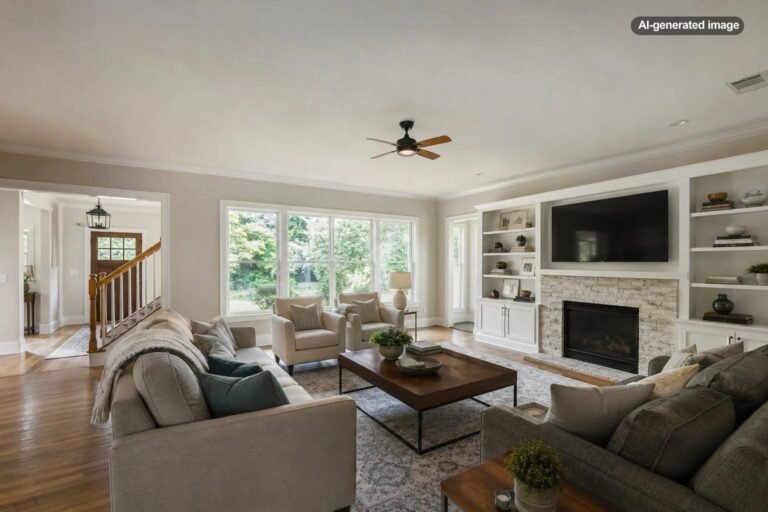
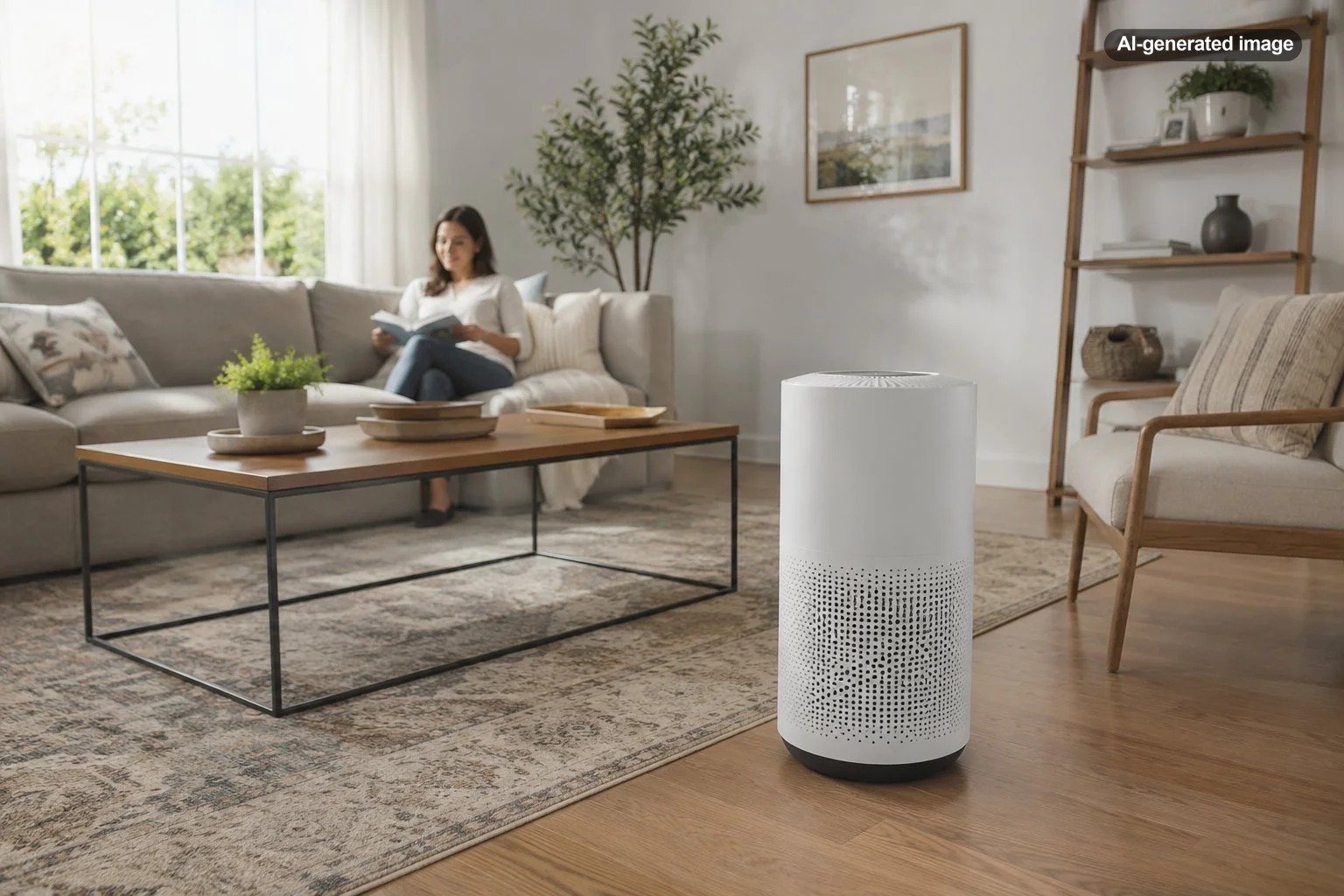
The best place for an air purifier in a living room is usually an open, unobstructed location where air can move freely into and out of the unit. That often means somewhere near the main seating area or within the central portion of the room, rather than tucked behind a sofa, squeezed against curtains, or hidden in a cabinet.
Placement matters because a portable air purifier has to draw room air through its filters and send filtered air back into the space. Even a capable unit can be less useful when furniture, walls, drapery, or decorative objects interfere with that circulation.
Start with the part of the living room you actually use
The U.S. Environmental Protection Agency recommends placing portable air cleaners in rooms where people spend the most time. For many homes, that makes the living room an obvious location, particularly when it functions as the main gathering space.
Within that room, think about your normal routine. A purifier positioned in an unused corner on the opposite side of a large room may be less practical than one situated closer to the occupied zone, provided airflow remains unobstructed. You do not necessarily need to put the appliance in the geometric center of the room.
A good location might be along the edge of the main conversation area, beside a media console with adequate clearance, or between connected living and dining areas. The goal is not visual symmetry. The goal is dependable circulation without creating a nuisance.
Give the air intake and outlet room to work
Before choosing a location, identify where your purifier takes air in and where it sends air out. Designs vary considerably. Some pull air through the front, some through the sides, and others use multiple intake surfaces. Clean air may leave through the top, front, or another vent.
Do not block either path. The EPA advises keeping portable air cleaners away from curtains and other objects that can obstruct airflow. Manufacturer instructions may be more specific, so those directions should take priority for the model you own.
For example, Coway’s general placement guidance recommends leaving approximately 6 to 12 inches between an air inlet and nearby objects. Instructions for individual models can call for different clearances, which is why the manual is more useful than a universal rule.
Before you decide
- Locate the purifier’s intake vents.
- Locate its clean-air outlet.
- Check the manual for required wall and furniture clearance.
- Make sure curtains cannot drift across the intake.
- Keep the top outlet clear if the purifier exhausts upward.
- Choose a stable location where the cord will not create a trip hazard.
Do not hide the purifier behind the sofa
Behind a sofa is tempting because it keeps an appliance out of sight, but it is frequently a poor location. A tall sofa can restrict an intake or interfere with the path of filtered air. The same problem can occur behind an accent chair, beneath a console table, inside a bookcase, or in the narrow gap between furniture and a wall.
If appearance is important, treat the purifier more like a small functional appliance than something that must disappear. A deliberately open spot near a side table often looks more considered than a machine awkwardly wedged into the only hidden corner available.
An air purifier should be visually quiet if you prefer, but it should not be physically smothered by the room.
Should an air purifier sit in the middle of the room?
Not necessarily. Open air around the purifier can help circulation, and EPA guidance notes that a central location can work well, but an air cleaner does not have to occupy the middle of your rug or interrupt a walking path.
A practical compromise is often an open position closer to the perimeter of the seating arrangement. Think several inches or more away from obstructions as required by the manufacturer, not shoved tightly against a wall. A location that allows you to run the machine consistently is generally more sensible than a theoretically ideal spot that makes the room uncomfortable to use.
Placement in an open-concept living room needs extra thought
An open-plan living room may connect directly to a dining room, kitchen, hallway, or entry. In that situation, placement and sizing become related decisions. The EPA advises considering the entire area that a portable air cleaner is expected to serve when evaluating room size.
If your purifier is sized only for a small enclosed room, moving it into a much larger open space does not magically increase its capacity. Place it where airflow is reasonably open, but also verify that its clean air delivery rate or manufacturer room-size guidance makes sense for the connected area.
Large open layouts may be better served by a higher-capacity unit or more than one appropriately sized purifier rather than trying to make one undersized appliance cover every adjoining space.
What about placing it near the kitchen?
If the living room opens directly into a kitchen, placing the purifier near the transition between the spaces may seem logical. It can be, but do not position a portable purifier where heat, heavy grease, moisture, or cooking splatter can reach it. A range hood that exhausts outdoors, when available and appropriate to use, addresses cooking contaminants at their source in a way a portable purifier cannot replace.
Coway, for example, cautions against putting its purifiers too close to a stove or oven because heat, oil, and mist can affect the appliance and filters. Check your own manufacturer’s instructions before choosing a kitchen-adjacent location.
Keep it away from curtains, doors, and awkward traffic paths
Window treatments deserve particular attention. Long curtains can move with drafts and end up against an intake. They can also cover the purifier when the curtains are opened or closed. Leave enough space that fabric cannot interfere during ordinary use.
Doorways can provide good access to moving air, but the purifier should not become an obstacle. Avoid putting a floor-standing unit where someone can easily kick it, trip over its cord, or strike it with a door. The same applies to heavily traveled paths between a sofa, kitchen, patio door, and hallway.
If children or pets use the room, stability and cord placement become even more important. Follow the manufacturer’s safety instructions and avoid improvised stands or elevated surfaces unless the appliance is specifically designed for that type of installation.
Should the purifier be on the floor or a table?
That depends on the appliance. The EPA notes that many portable air cleaners are intended for the floor while others are designed for tabletop use. Follow the instructions for your unit rather than assuming elevation automatically improves performance.
A floor model should sit on a stable, level surface with the required clearance around it. A tabletop model needs a sturdy surface large enough to support it without blocking vents. Avoid soft upholstered surfaces, unstable stools, or locations where the unit could be easily knocked over.
Do not confuse better placement with greater capacity
Moving a purifier from a cramped corner into open air can improve its operating conditions, but placement cannot compensate for a machine that is too small for the room. The EPA recommends choosing a portable air cleaner with a clean air delivery rate, or CADR, appropriate for the size of the area being served.
Ceiling height matters too. A living room with unusually high ceilings contains more air than a room with the same floor area and a standard-height ceiling. Open staircases and adjoining rooms can further increase the effective space.
A practical placement test for your living room
If you are unsure between two or three locations, evaluate them by function rather than appearance alone.
What to do
- Choose a location in or near the part of the living room where people spend the most time.
- Check the appliance manual for wall, furniture, and overhead clearance requirements.
- Confirm that neither the intake nor outlet will be blocked by a sofa, curtain, table, or decorative object.
- Make sure the purifier sits securely and the power cord stays out of the walking path.
- Run the purifier at a useful fan speed and notice whether the airflow creates an uncomfortable draft.
- If needed, reposition the appliance while preserving the required clearances.
The EPA notes that higher fan speeds and longer operating times generally increase the amount of air filtered. That makes livability important: if a purifier is so close to the sofa that its draft or noise makes you switch it off, a slightly different location may be the better everyday choice.
If you are choosing a purifier for the room
Placement is easier when the purifier itself suits the space. Look for a unit sized appropriately for the area and consider where its intake and outlet are positioned before buying. A design that fits naturally beside your existing furniture may be easier to keep unobstructed than one that forces you to rearrange the room.
Affiliate disclosure: CraneManor.com may earn a commission when you purchase through links on this page. This does not affect the price you pay. Learn more.
One example of a conventional room appliance is a Coway Airmega purifier. The Airmega AP-1512HH includes automatic operation, an air-quality indicator, timer settings, and filter-status indicators. Regardless of model, confirm room sizing and placement requirements from current manufacturer documentation before deciding where it belongs.
Frequently asked questions
Can I put an air purifier against a wall?
Only if the manufacturer permits that placement and the required intake and outlet clearances remain available. Many purifiers need space between the appliance and nearby walls or objects.
Can I put an air purifier behind a couch?
It is usually better not to if the couch blocks airflow. If there is ample clearance and none of the vents are obstructed, follow your specific model’s instructions.
Should an air purifier be near a window?
It does not need to be near a window simply to work properly. Prioritize unobstructed airflow, room usage, manufacturer clearances, and a safe location. Avoid direct sunlight if your manufacturer’s instructions caution against it.
Is one air purifier enough for a large open living room?
It depends on the purifier’s capacity and the size of the connected space. For open floor plans, evaluate the entire area the unit is expected to serve rather than only the footprint around the sofa.