
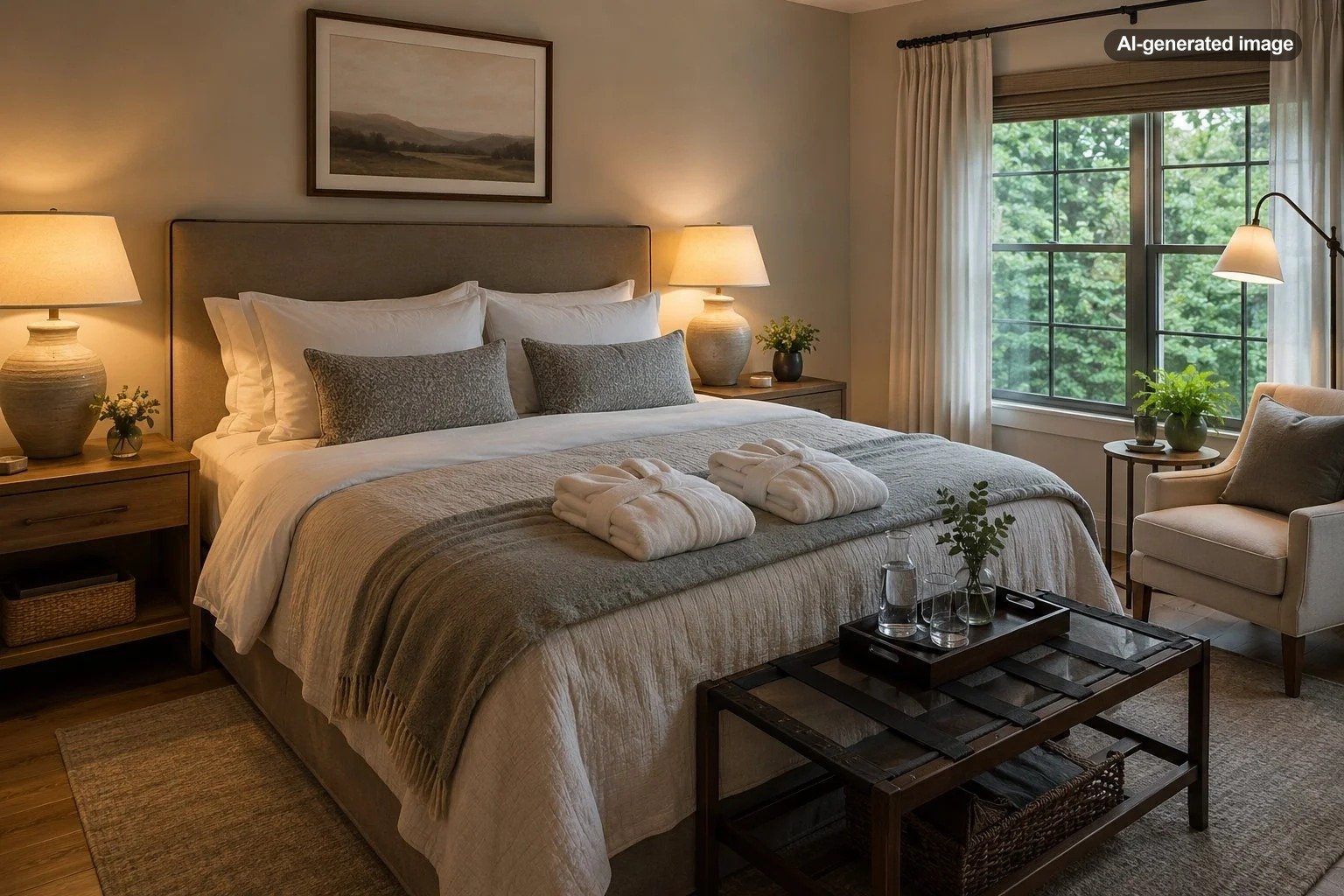
How Do You Make a Guest Room Comfortable for Couples?
Making a guest room comfortable for couples is less about filling it with decorative extras and more about planning for two people to use the room at the same time. A comfortable bed matters, but so do two reachable surfaces, convenient lighting, space for two sets of belongings, privacy, charging access, and enough room to move without negotiating an obstacle course.
The best approach is to think in pairs where it counts and keep everything else pleasantly simple. Two people should not have to share one pillow option, one tiny nightstand, one accessible outlet, or the only clear corner of the floor for their luggage.
Start With a Bed That Works for Two People
The bed is the first place to focus because small annoyances become much more noticeable when two adults are sharing it. Before buying decorative pillows or adding another piece of furniture, check whether the mattress feels reasonably supportive, the fitted sheet stays in place, and both sides of the bed are practical to enter and exit.
For bedding, layers are more useful than one very heavy cover. A sheet, duvet or comforter, and an accessible lighter blanket give guests more control when one person sleeps warmer than the other. If the existing duvet insert is in good condition but the room needs a fresher appearance, changing the cover can be a relatively simple update.
Affiliate disclosure: CraneManor.com may earn a commission when you purchase through links on this page. This does not affect the price you pay. Learn more.
For example, a neutral duvet cover with matching shams can give an existing insert a more finished guest-room look without requiring an entirely new comforter. Confirm the dimensions and care instructions before ordering, since the insert itself is not included.
Offer More Than One Pillow Choice
Couples rarely have identical sleep preferences. One guest may like a fuller pillow while the other prefers something flatter, so a guest bed benefits from more flexibility than a perfectly matched pair chosen mainly for appearance.
A practical arrangement is to place two sleeping pillows on each side if space permits, then keep decorative cushions limited. Extra pillows should be clean, easy to identify as usable, and simple to remove at bedtime. A closet shelf or clean basket is usually more useful than making guests relocate a mountain of accent pillows every evening.
If the current guest pillows have become noticeably flattened, a two-pack of standard/queen pillows is one straightforward way to refresh the bed. Pillow comfort is highly personal, however, so providing options is more considerate than assuming one style will suit every sleeper.
A couple-friendly guest room gives two people room to have different habits without turning those differences into inconveniences.
Give Both Sides of the Bed a Job to Do
A beautiful guest room can still feel awkward if only one side of the bed is functional. Ideally, each sleeper should have somewhere to put a phone, glasses, a book, or a glass of water. Matching nightstands are not required. A compact table, wall-mounted shelf, stool, or narrow ledge can perform the same job when space is limited.
Lighting deserves the same two-person treatment. Separate bedside lamps or sconces allow one person to read while the other settles down. The controls should be reachable from the bed rather than forcing guests to cross an unfamiliar dark room after switching off the only lamp.
Charging is another small detail with an outsized effect. If outlets are hidden behind furniture, use a sensible room layout that leaves them accessible rather than expecting guests to crawl behind a headboard. Keep cords organized and avoid creating trip hazards along walking paths.
Make Room for Two Suitcases
Couples arrive with twice the luggage, shoes, jackets, and everyday objects. Yet guest rooms often double as storage rooms, leaving visitors with nowhere to put anything except the bed or floor. Clearing even one drawer, a section of closet rod, and a few hangers can make the room feel substantially more usable.
Luggage also needs a deliberate landing place. If the room is large enough, a bench can work well. In smaller rooms, a folding stand can be stored away between visits. A pair of guest-room luggage racks can give two travelers separate places to open their bags while keeping suitcases off the bed. Before buying, consider the available floor area, folded-storage space, suitcase dimensions, and how stable the stands will be on your flooring.
Protect Privacy Without Making the Room Feel Closed In
Window treatments in a guest room need to do more than finish the decor. Guests should be able to change clothes and sleep without feeling exposed to a neighboring house, sidewalk, patio, or bright exterior light. If decorative curtains do not provide adequate privacy, pair them with a practical shade or other appropriate covering.
Think about privacy inside the home as well. A guest-room door should close properly, and household members should treat it as private while someone is staying there. If the room shares a bathroom or sits near a busy hallway, a fan or other ordinary background sound may also make nighttime routines feel less conspicuous.
Let Guests Adjust Their Own Comfort
Temperature is one area where couples may disagree immediately. You may not be able to provide separate climate controls, but you can make adjustment easier with layered bedding and an extra blanket stored somewhere obvious. If a ceiling or portable fan is normally available in the room, make its controls easy to find.
Do not make visitors conduct a scavenger hunt for basic items. Place spare towels where they can see them or explain where they are. Leave a few hangers empty. Provide a wastebasket. Make the Wi-Fi information available if guests are expected to use it. These details are inexpensive, but they reduce the number of small questions visitors need to ask their hosts.
Before your guests arrive
- Make sure both people can comfortably enter and exit the bed.
- Check that each side has a reachable surface and useful light.
- Provide clean pillows plus at least one additional bedding layer.
- Clear space for two suitcases rather than one.
- Leave closet or drawer space if the stay is longer than a night.
- Confirm window coverings provide appropriate privacy.
- Make outlets, Wi-Fi information, towels, and basic room controls easy to find.
Avoid Overdecorating the Guest Room
Because a guest room may sit unused for stretches of time, it is tempting to fill every surface with framed photographs, collections, spare furniture, seasonal decor, or household overflow. That often works against comfort. Visitors need empty surfaces more than they need elaborate styling.
Keep enough personality that the room still belongs to the home, but leave visual and physical breathing room. One or two pieces of art, a pleasant bedside lamp, simple bedding, and a few intentional textures can feel warmer than a room crowded with objects guests are afraid to disturb.
The same principle applies to furniture. A chair is helpful only if there is enough room to use it. A dresser is useful only if drawers are available. A decorative trunk at the foot of the bed is not helping if guests have to sidestep it every time they walk across the room.
Think About the Stay Length
A couple staying for one night needs a different level of accommodation than relatives staying for a week. For a short visit, prioritize sleep, bedside convenience, towels, luggage space, and privacy. Longer stays benefit from more hanging space, empty drawers, a place to sit, and enough surface area for personal items without making the room look perpetually cluttered.
If the guest room also functions as an office, workout room, or hobby space, decide which function takes priority while visitors are present. Put away work papers, equipment, and personal projects when practical rather than simply moving them onto the other half of the bed.
What Makes the Biggest Difference?
If you are preparing a guest room for couples and do not want to redo the entire space, concentrate on the friction points that two people notice fastest. Improve the bed and pillows first, then make both sides of the bed functional, create places for two bags, and clear enough storage that visitors are not living entirely out of open suitcases.
After that, look at privacy, lighting, temperature flexibility, charging, and the amount of clutter in the room. Those practical details create a more comfortable stay than decorative perfection. A guest room succeeds when two people can settle in easily, sleep well, and use the space without constantly coordinating around each other.
Frequently Asked Questions
Does a guest room for a couple need two nightstands?
No. Each sleeper benefits from a reachable surface, but the pieces do not need to match or even be traditional nightstands. Small tables, stools, or wall-mounted shelves can work in tight rooms.
How many pillows should a guest bed have?
There is no universal number, but couples benefit from having more than one usable pillow option per person when space allows. Keep decorative pillows restrained so guests are not forced to remove a large pile every night.
What should be removed from a guest room before visitors arrive?
Remove household overflow that occupies useful surfaces, blocks drawers or closets, crowds walking paths, or makes the room feel like storage. Personal decor can remain, but visitors should have obvious empty space for their own belongings.
What if the guest bedroom is very small?
Prioritize circulation and essential functions instead of trying to reproduce a large hotel room. Compact bedside surfaces, wall-mounted lighting, folding luggage stands, under-bed storage, and fewer decorative objects can preserve comfort without consuming valuable floor space.