Can a Clogged AC Drain Line Make the House Smell Musty?
Yes, a clogged AC drain line can make your house smell musty. When the line that carries condensation away from your air conditioner becomes blocked, water can collect in the drain pan, overflow into nearby materials, or contribute to damp conditions around the air handler. That moisture can support microbial growth and create the stale, earthy odor people often associate with mildew.
The smell may become more noticeable when the air conditioner starts running, particularly if moisture or contamination is present near the cooling coil or inside the air-handling system. However, a musty odor does not automatically mean the drain line is clogged. Dirty cooling components, damp insulation, high indoor humidity, and unrelated household moisture problems can produce similar symptoms.
The useful approach is to look for evidence of a drainage problem before attempting a repair. A few careful observations can help you determine whether the condensate system deserves attention.
Why a Clogged AC Drain Can Cause Musty Odors
Air conditioners do more than lower indoor temperatures. As warm, humid air passes over the cold evaporator coil, moisture condenses on the coil’s surface. That water normally drips into a condensate pan and exits through a drain line.
When everything works properly, the water leaves the system without lingering around the equipment. When the line becomes restricted, several odor-producing conditions can develop.
Standing Water in the Condensate Pan
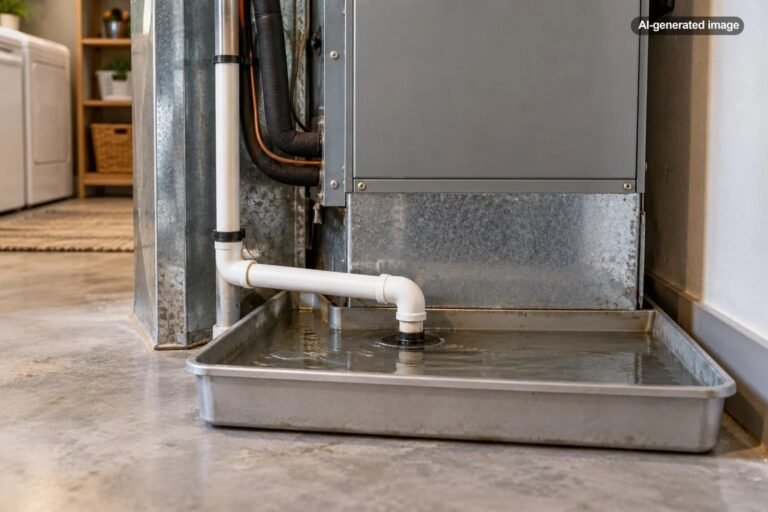
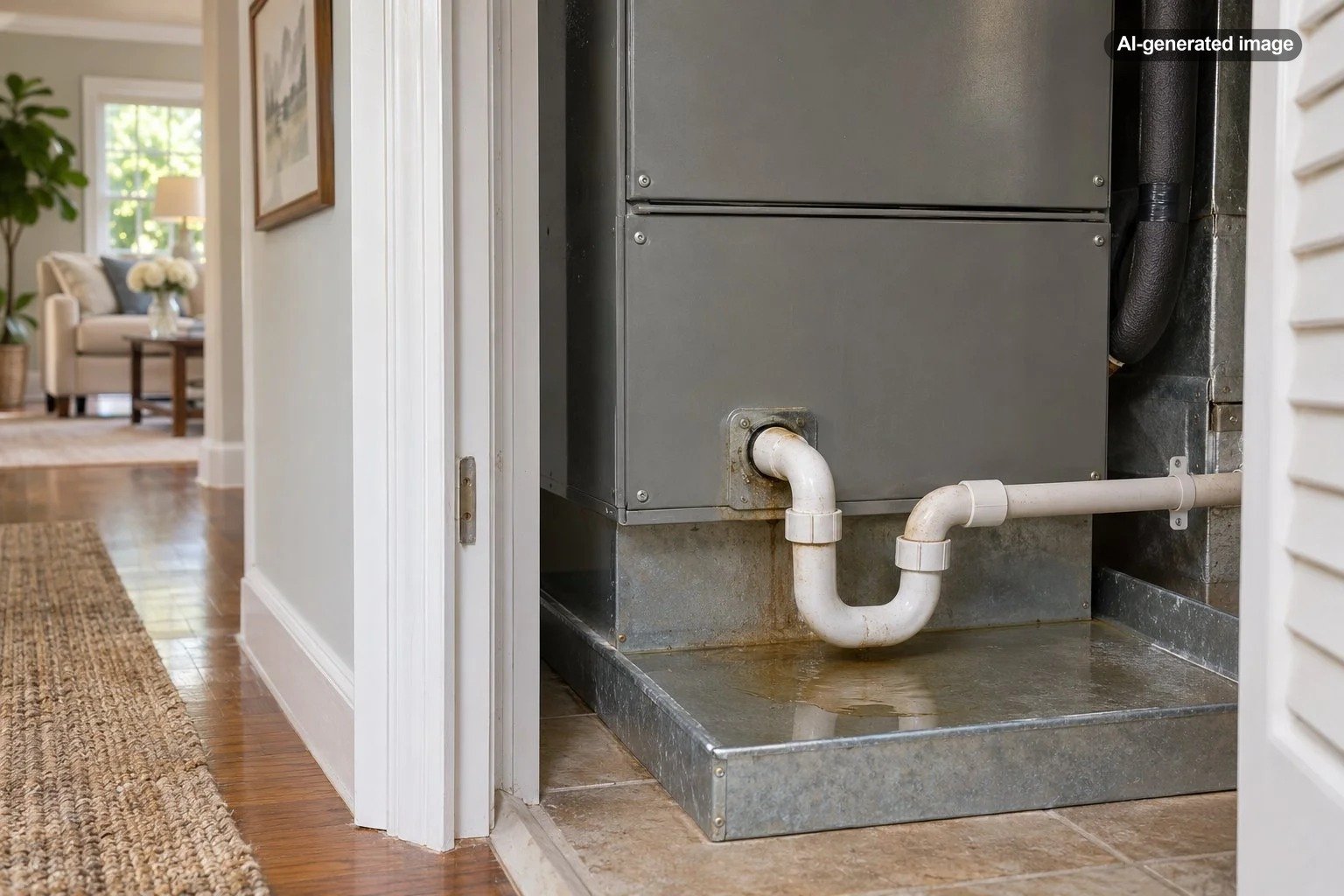
A partial blockage may slow drainage, leaving water in the pan longer than intended. A more severe obstruction can cause the pan to fill or overflow. Dust and accumulated debris can make consistently damp areas more favorable for microbial growth.
The U.S. Environmental Protection Agency identifies poorly draining HVAC condensate pans as potential moisture and mold problems. A musty smell can be an indication of microbial growth, although odor alone cannot establish exactly what is growing or where it is located.
Moisture Reaching Nearby Materials
If condensation escapes the intended drainage path, it can wet insulation, flooring, drywall, or materials around the air handler. Some of these areas are hidden behind access panels or within ceilings and closets.
The resulting odor may come from damp building materials rather than the drain line itself. Clearing the obstruction will address the drainage problem, but any affected materials still need to be evaluated and dried appropriately.
Contamination Near the Airflow Path
The condensate system is associated with the indoor cooling coil and air handler. If moisture contributes to contamination on nearby components or surfaces exposed to moving air, the odor may be noticeable at supply vents.
This does not mean that air routinely travels through the drain pipe. Instead, the concern is moisture and contamination in areas connected to the HVAC airflow system. The distinction matters because cleaning a drain line alone may not eliminate odors originating elsewhere.
Signs That Your AC Drain Line Might Be Clogged
A musty smell is one possible clue, but drainage problems are easier to identify when several signs appear together.
- Water around the indoor unit: Damp flooring, staining, or visible dripping near the air handler can indicate an overflow or another condensate problem.
- Standing water in an accessible drain pan: Persistent accumulation suggests that water may not be leaving as intended.
- An unexpected AC shutdown: Some installations have a condensate safety switch that interrupts cooling when water reaches a certain level. Not every system has this protection.
- Odors during cooling cycles: A smell that appears or intensifies when the blower operates may point toward the cooling system, although it does not identify the exact component.
- Water stains near a ceiling-mounted or attic air handler: Discoloration can indicate that condensate has escaped and reached surrounding materials.
- Unusually humid indoor conditions: A drainage or cooling problem can accompany poor moisture control, but elevated humidity can have many causes.
No single symptom proves that a clog is responsible. For example, a frozen evaporator coil can also create an unexpected water problem as ice melts, while a damaged drain pan may leak even with an open drain line.
How to Check for a Possible Drainage Problem
Start with observations that do not require opening electrical compartments, disconnecting plumbing, or reaching into equipment.
What to do
- Notice when the odor appears. Determine whether it begins when cooling starts, continues after the system stops, or remains present regardless of HVAC operation.
- Locate the indoor cooling equipment. Depending on the home, the air handler may be in a utility closet, basement, garage, attic, or another mechanical area.
- Look for visible moisture. From an accessible location, check for water around the unit, staining, damp flooring, or an overflowing secondary drain pan. Do not enter an unsafe attic or open electrical compartments.
- Identify the drain outlet if it is clearly accessible. During normal cooling operation, condensation may discharge intermittently. The absence of visible discharge during a brief observation does not prove a clog.
- Check the surrounding rooms. Look for other likely odor sources, including plumbing leaks, damp carpets, bathroom moisture, and water-damaged surfaces.
- Arrange an HVAC inspection if evidence points to the equipment. A technician can evaluate the drain, pan, coil, traps, safety devices, and surrounding materials.
If water is actively overflowing or approaching electrical components, stop cooling operation using the normal controls if it is safe to do so. Avoid touching wet electrical equipment. Have the problem evaluated before restarting the system.
Can You Clear a Clogged AC Drain Line Yourself?
Some condensate systems have accessible maintenance openings and manufacturer-approved procedures for clearing minor buildup. However, drain arrangements vary considerably between systems.
A line may include a trap, pump, float switch, specialized fittings, or connections that should not be disturbed without understanding the installation. Incorrect handling can create leaks, interfere with drainage, or damage components.
The safest starting point is the equipment’s maintenance documentation. Follow the manufacturer’s instructions for any homeowner maintenance it explicitly permits. If the procedure is unclear, the drain is difficult to access, or the problem has already caused an overflow, use a qualified HVAC technician.
A professional service visit may involve inspecting the condensate trap, clearing the obstruction using an appropriate method, cleaning the pan where necessary, confirming drainage under operating conditions, and checking that safety controls work correctly.
If the odor persists afterward, the technician may need to investigate other moisture-affected components or recommend further evaluation. A successfully cleared pipe is not proof that all associated moisture damage has been corrected.
What If the House Still Smells Musty After the Drain Is Cleared?
A persistent odor deserves a broader investigation rather than repeated treatment of the same drain line. Several conditions can overlap.
| Possible source | Useful clue | Next step |
|---|---|---|
| Dirty evaporator coil or pan | Odor closely follows cooling operation | Request inspection and appropriate cleaning |
| Wet insulation or drywall | Staining, soft materials, or odor near the air handler | Locate the moisture source and assess affected materials |
| High indoor humidity | General dampness or condensation in multiple rooms | Measure humidity and investigate moisture control |
| Damp duct components | Odor near vents or signs of moisture around ductwork | Have the duct system evaluated |
| Plumbing or drainage issue | Odor concentrated near a fixture or floor drain | Check plumbing and traps |
| Unrelated household moisture | Smell persists when the HVAC system is off | Inspect likely building and room-specific sources |
One easily overlooked distinction is the difference between an earthy musty smell and a sewer-like odor. Some HVAC drain configurations involve traps and connections to drainage systems. An improperly functioning or dry trap can sometimes allow unwanted gases to enter the equipment area. That is a separate issue from an ordinary blockage and may require evaluation of the drain arrangement.
Likewise, a smell strongest near a bathroom, laundry room, or basement floor drain may originate from plumbing rather than the air conditioner.
Does a Musty AC Smell Mean There Is Mold?
Not necessarily. A musty odor raises a reasonable concern about mold or other microbial growth, but it is not a definitive diagnosis.
The EPA explains that characteristic moldy odors can arise from compounds released during microbial activity. It also advises investigating persistent musty smells because hidden moisture and mold may be present even when growth is not visible.
It is important to distinguish between a small, accessible area of surface contamination and a larger moisture problem involving porous building materials or HVAC components. Wet insulation and internally lined ducts can require specialized assessment because cleaning their exposed surfaces may not resolve contamination within the material.
For substantial contamination, recurring water damage, or suspected growth within the air distribution system, consult a qualified professional familiar with HVAC moisture problems and appropriate remediation practices.
How to Prevent AC Drain Clogs and Related Odors
Preventive maintenance is generally easier than dealing with an overflow and the resulting cleanup. The most useful steps focus on keeping the condensate pathway clear and the cooling system in good condition.
Include Drainage in Routine HVAC Service
ENERGY STAR recommends that a contractor inspect the condensate drain during maintenance. An HVAC service visit can also address coil condition, airflow, and other factors that influence cooling and moisture removal.
For systems that run heavily through long, humid cooling seasons, drainage deserves particular attention. Follow the manufacturer’s service recommendations and adjust the maintenance plan based on the system’s condition and operating environment.
Maintain the Air Filter
Inspect the HVAC filter regularly and replace or clean it according to the equipment and filter manufacturer’s instructions. Restricted airflow can contribute to cooling performance problems and, under some conditions, coil icing.
A clean filter will not prevent every drain clog, but proper filtration and airflow are important parts of maintaining the overall system.
Control Indoor Humidity
The EPA recommends keeping indoor relative humidity below 60 percent, ideally between 30 and 50 percent when practical. A basic hygrometer can help identify whether humidity is persistently elevated.
In humid climates, this may require evaluating cooling performance, ventilation, moisture entry, or supplemental dehumidification. Simply lowering the thermostat is not always an effective solution to excessive indoor humidity.
Monitor Areas Where Leaks Could Cause Damage
If an air handler sits above a finished ceiling or inside a utility closet, even a modest overflow can affect materials that are difficult to inspect. A properly installed secondary drain pan and condensate safety switch can provide important protection where applicable.
For accessible locations with a suitable surface, a separate water alarm may offer an additional warning when water reaches the sensor. It does not clear a drain, identify mold, or replace equipment-specific condensate protection.
Affiliate disclosure: CraneManor.com may earn a commission when you purchase through links on this page. This does not affect the price you pay. Learn more.
For example, the METAK 5-pack of water leak detectors provides local audible alarms that can be placed in suitable leak-prone areas, such as beneath sinks or near accessible household equipment. These are audible alarms, not Wi-Fi devices, and they do not send remote phone notifications. Placement should account for whether escaping water would actually reach the sensor.
Monitoring is an additional precaution, not a substitute for correcting a recurring blockage. If the condensate line frequently clogs, have the technician investigate its routing, slope, trap configuration, and other possible causes rather than repeatedly treating the symptom.
When Should You Call an HVAC Technician?
Professional attention is appropriate when the problem goes beyond straightforward visual observation or maintenance specifically approved by the manufacturer.
Arrange service if the drain repeatedly blocks, the indoor unit leaks, the condensate safety switch stops cooling, the drain pan remains full, or a musty odor continues after drainage has been restored.
Service is particularly important when the equipment is installed above finished living space, water has reached electrical components, or there is evidence of contamination inside the air handler or ductwork.
If ceilings, walls, or other absorbent materials have become wet, address the water damage promptly. The EPA advises drying water-damaged materials within approximately 24 to 48 hours when possible to reduce the likelihood of mold growth. Materials that remain wet or become contaminated may need further evaluation or replacement.
Frequently Asked Questions
Can a clogged AC drain line make every room smell musty?
It can contribute to odors noticed in multiple rooms, especially when damp or contaminated components are near the central airflow path. However, a widespread musty smell may also indicate high humidity, duct contamination, or an unrelated building moisture problem.
Will the musty smell disappear once the AC drain is unclogged?
Sometimes. If the odor was associated with temporary standing water and no lasting contamination or damage occurred, restoring drainage may resolve it. If moisture affected insulation, drywall, the coil area, or other materials, additional cleaning, drying, or repairs may be necessary.
Can an AC drain line smell musty without being blocked?
Yes. A drain line or pan can contain buildup even when water still flows. Odors can also originate from the cooling coil, nearby damp materials, or a different moisture source entirely.
Why does the smell get stronger when the air conditioner turns on?
The blower moves air through the HVAC system and distributes it to occupied rooms. If an odor source is within or near that airflow path, the smell may become easier to notice during operation. This pattern suggests an HVAC-related investigation but does not prove the drain line is responsible.
Is a musty AC smell an emergency?
A faint musty odor without visible leakage is not automatically an emergency, but it should be investigated. Active overflowing water, moisture near electrical equipment, significant water damage, or suspected extensive HVAC contamination calls for prompt professional attention.
The Bottom Line
A clogged AC drain line can absolutely contribute to a musty-smelling house, but the real concern is what happens to the water when it cannot drain properly. Standing moisture, damp building materials, and contamination around cooling equipment can all create persistent odors.
Start by looking for visible moisture and determining whether the smell follows AC operation. Avoid improvised chemical treatments or unfamiliar mechanical repairs. Once the drainage problem is corrected, make sure any remaining damp materials and odor sources are addressed as well.
Keeping condensate drainage, cooling components, and indoor humidity under control helps protect both the comfort of the home and the materials surrounding the system.
Sources & Further Reading
- ENERGY STAR: Heating and Cooling Maintenance Checklist – Recommended HVAC maintenance, including condensate drain inspection.
- U.S. Environmental Protection Agency: A Brief Guide to Mold, Moisture and Your Home – Moisture control, condensate drainage, humidity, and drying guidance.
- U.S. Environmental Protection Agency: Should You Have the Air Ducts in Your Home Cleaned? – Guidance on moisture near cooling coils, drain pans, insulation, and ductwork.
- U.S. Environmental Protection Agency: What Does Mold Smell Like? – Information about mold-associated odors and the importance of moisture control.
- U.S. Environmental Protection Agency: Mold Course, Chapter 9 – HVAC drain pan maintenance and potential microbial contamination.