
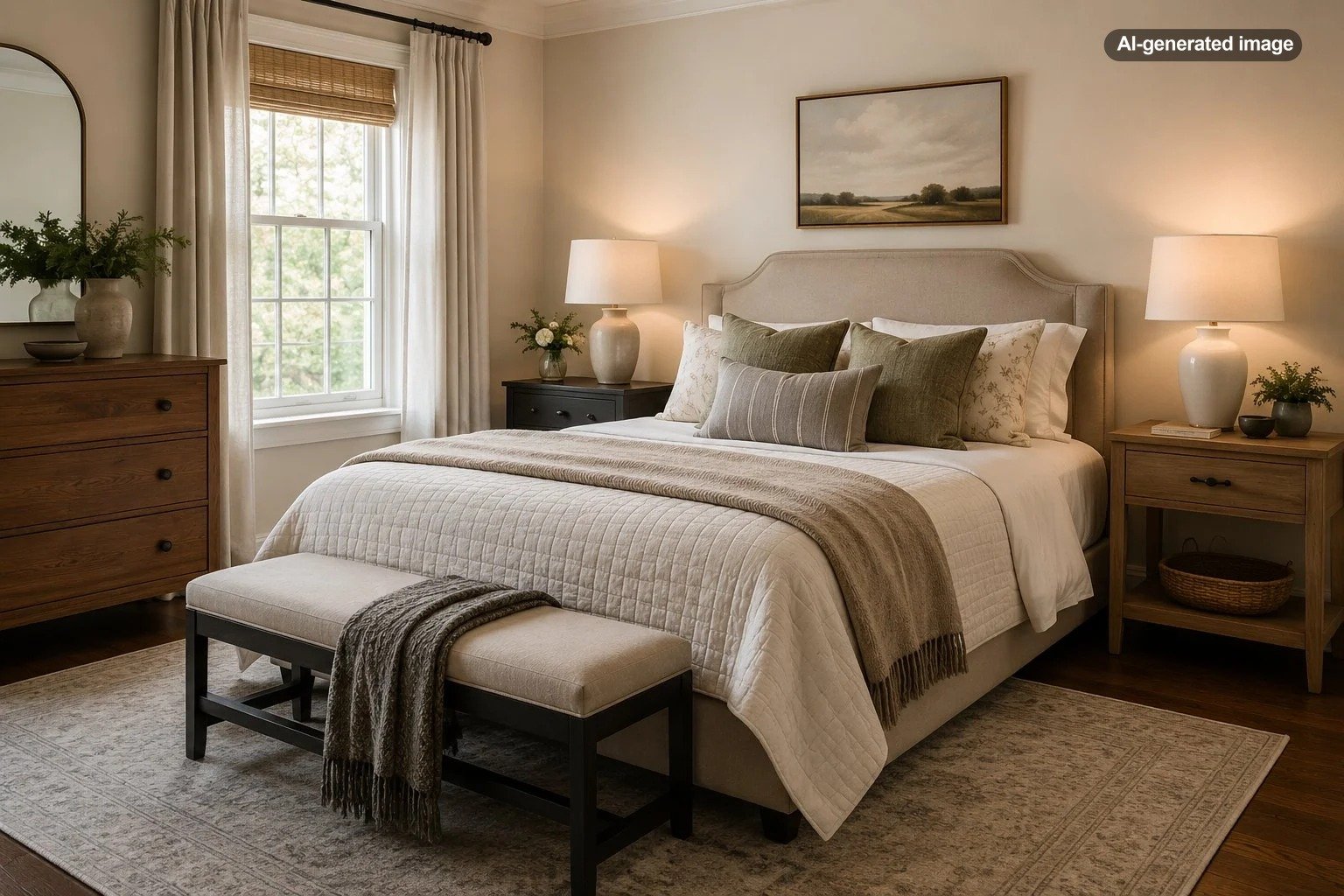
Should a Guest Room Have Matching Furniture?
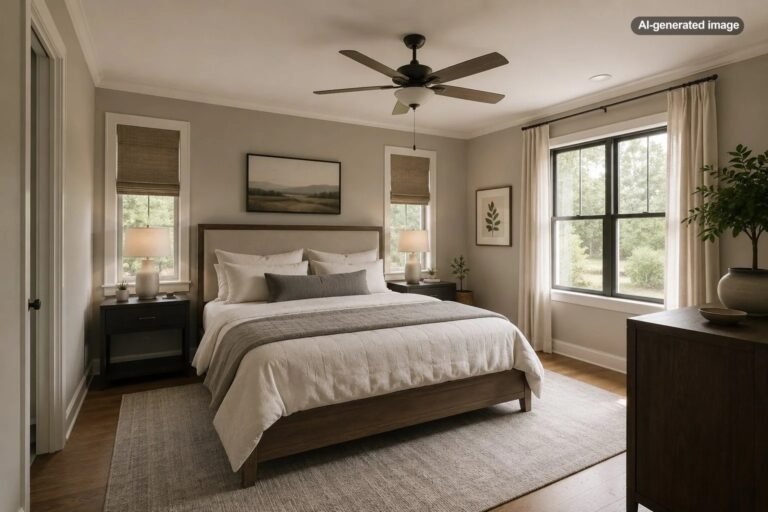
No, a guest room does not need matching furniture. A complete bedroom suite can look calm and polished, but thoughtfully coordinated pieces often feel warmer, more collected, and better suited to the room you actually have.
The important distinction is between matching and belonging together. The bed, nightstands, dresser, and chair can differ in age, material, or style if they share enough visual connections and still serve a guest comfortably.
Matching furniture is an option, not a design rule
Matching sets solve several decisions at once. Their proportions, finishes, and details are designed to relate, which can be helpful when furnishing an empty room quickly. In a traditional guest room with space for a bed, two nightstands, and a dresser, that consistency may produce the quiet, balanced effect you want.
The tradeoff is that a full set can feel visually heavy, especially in a small bedroom. Repeating the same dark wood or bulky profile around every wall may make the room appear more crowded than it is. A set can also leave little room for a vintage table, painted chest, or compact desk that would make better use of an awkward corner.
Mixed furniture offers more freedom. It lets you reuse a good piece from another room, shop gradually, or combine closed storage with a lighter bedside table. The result only looks accidental when the pieces compete in scale, repeat nothing, or create an inconvenient layout.
| Approach | Best fit | Main advantage | Watch for |
|---|---|---|---|
| Matching set | Symmetrical or traditional rooms | Fast visual consistency | Too much bulk or one dominant finish |
| Coordinated mix | Layered, transitional, or eclectic rooms | More character and flexibility | Unrelated shapes, heights, and colors |
| Mostly matching with one contrast | Rooms needing a safe middle ground | Order with a focal accent | A contrast piece that overwhelms the set |
Start with function before choosing a look
A guest room succeeds when a visitor can sleep well, set down a phone and glass of water, reach a light, unpack a few things, and move around without negotiating an obstacle course. Matching furniture cannot compensate for a nightstand that blocks a closet or a dresser that leaves too little clearance at the foot of the bed.
Begin with the bed, since it establishes the largest shape and the main circulation paths. Then decide what the room genuinely needs. Occasional guests may be well served by one dresser, a luggage rack, and compact bedside surfaces. Longer stays may justify drawer space, two reading lights, and a chair or small desk. A room that doubles as an office may need furniture that can perform more than one job.
How to make mixed furniture look intentional
You do not need every piece to share the same feature. In fact, trying to match several different woods almost perfectly can draw more attention to the differences. Aim for a clear relationship instead of a near miss.
Repeat a limited color palette
Choose one dominant neutral, one secondary color, and perhaps one restrained accent. A walnut bed, cream-painted nightstand, and black metal luggage rack can coexist when black appears again in a lamp, frame, or drawer pull. Bedding and window treatments can bridge furniture finishes without disguising them.
Balance visual weight
A substantial upholstered bed usually needs bedside pieces with enough presence to hold their own. They do not have to be identical, but their tops should sit at reasonably usable heights beside the mattress and their overall masses should feel balanced. If one nightstand is a closed chest and the other is an airy table, a similar lamp height or matching wall art can restore equilibrium.
Connect shapes or details
Curved corners, tapered legs, woven fronts, brass hardware, or simple slab shapes can become a quiet motif. Repeat one detail two or three times, then stop. Too many coordinated cues can make mixed furniture look like a set assembled by committee.
Let one piece be the lead
If the room contains an ornate antique dresser, a bold painted bed, or a sculptural chair, allow it to be the focal point. Keep supporting pieces simpler and relate them through color or proportion. Multiple statement pieces need breathing room; otherwise the room can feel like a furniture showroom with several salespeople talking at once.
A coordinated guest room repeats a visual language, not necessarily a furniture label.
When matching pieces are the better choice
Matching nightstands are especially useful when symmetry is central to the room. They can visually anchor a bed placed on a broad wall, make two sleepers feel equally accommodated, and simplify lamp placement. Matching does not have to extend to the dresser, bench, or chair.
A set may also make sense when the room already has strong pattern, architectural detail, or colorful art. Quiet furniture gives those elements space to lead. It can be a practical choice for someone who dislikes prolonged shopping or wants fewer opportunities for a mismatch.
Even then, avoid buying every available piece simply because it belongs to the collection. Select only what fits. Leaving out an oversized chest or replacing a matching mirror with artwork can make the room feel considered rather than cataloged.
When mixed furniture works especially well
A coordinated mix is useful in small rooms, rentals, older homes, and spaces furnished over time. It allows each piece to answer a specific constraint: a shallow dresser for a tight passage, a round table beside a closet door, or a bench that doubles as luggage space.
Mixed furniture also suits guest rooms because these spaces often inherit worthwhile pieces from elsewhere in the home. The key is editing. One vintage dresser can add history; five unrelated castoffs can make guests feel as though they have been assigned the household holding area.
Use textiles to create cohesion, but do not expect them to solve poor scale. A simple coverlet, coordinated shams, and a throw can connect different finishes and refresh the room without requiring new case goods. The furniture still needs to fit the walls, clear doors and drawers, and provide useful surfaces.
Common mistakes to avoid
- Matching color but ignoring scale: Two espresso pieces do not automatically relate if one is delicate and the other is massive.
- Using furniture as storage overflow: Keep enough empty drawer, hanging, and surface space for the guest.
- Blocking circulation: Check that doors, closets, drawers, and luggage can open without conflict.
- Overfilling the room: A clear path and a useful bedside surface matter more than a complete suite.
- Repeating every finish: A controlled mix usually feels more natural than making the bed, dresser, lamps, frames, and hardware identical.
Before you decide
- List the tasks the room must support besides sleeping.
- Measure the walls, door swings, closet access, and usable bedside space.
- Choose one lead piece and two or three elements to repeat.
- Compare the height and visual weight of pieces near the bed.
- Remove anything that reduces comfort without adding useful function.
Frequently asked questions
Do guest room nightstands have to match?
No. Matching nightstands create easy symmetry, but different tables can work when their heights, visual weight, or lamps feel balanced. Each side should still offer a reachable surface if the bed commonly hosts two people.
Can you mix wood tones in a guest bedroom?
Yes. Choose a dominant wood tone, then repeat the undertone or contrast it clearly. Textiles, metal hardware, and painted pieces can create transitions between woods without requiring an exact match.
Should the dresser match the bed?
It does not have to. Relate the dresser to the bed through shape, color temperature, hardware, or nearby decor. Proportion and placement are usually more important than an identical finish.
How many furniture styles can one room handle?
There is no fixed number, but restraint helps. One primary style with one contrasting influence is an approachable formula. If every piece represents a different era, repeat color and shape more deliberately and keep accessories quiet.
The final verdict
A guest room should feel coherent, comfortable, and easy to use; it does not need a matching furniture set. Choose matching pieces when simplicity and symmetry serve the space. Choose a coordinated mix when the room benefits from flexibility, character, or better-fitting furniture.
Measure first, identify the room’s essential functions, and repeat a few visual cues. When those decisions are sound, guests are unlikely to wonder whether the dresser and bed came from the same collection. They will simply notice that the room feels ready for them.