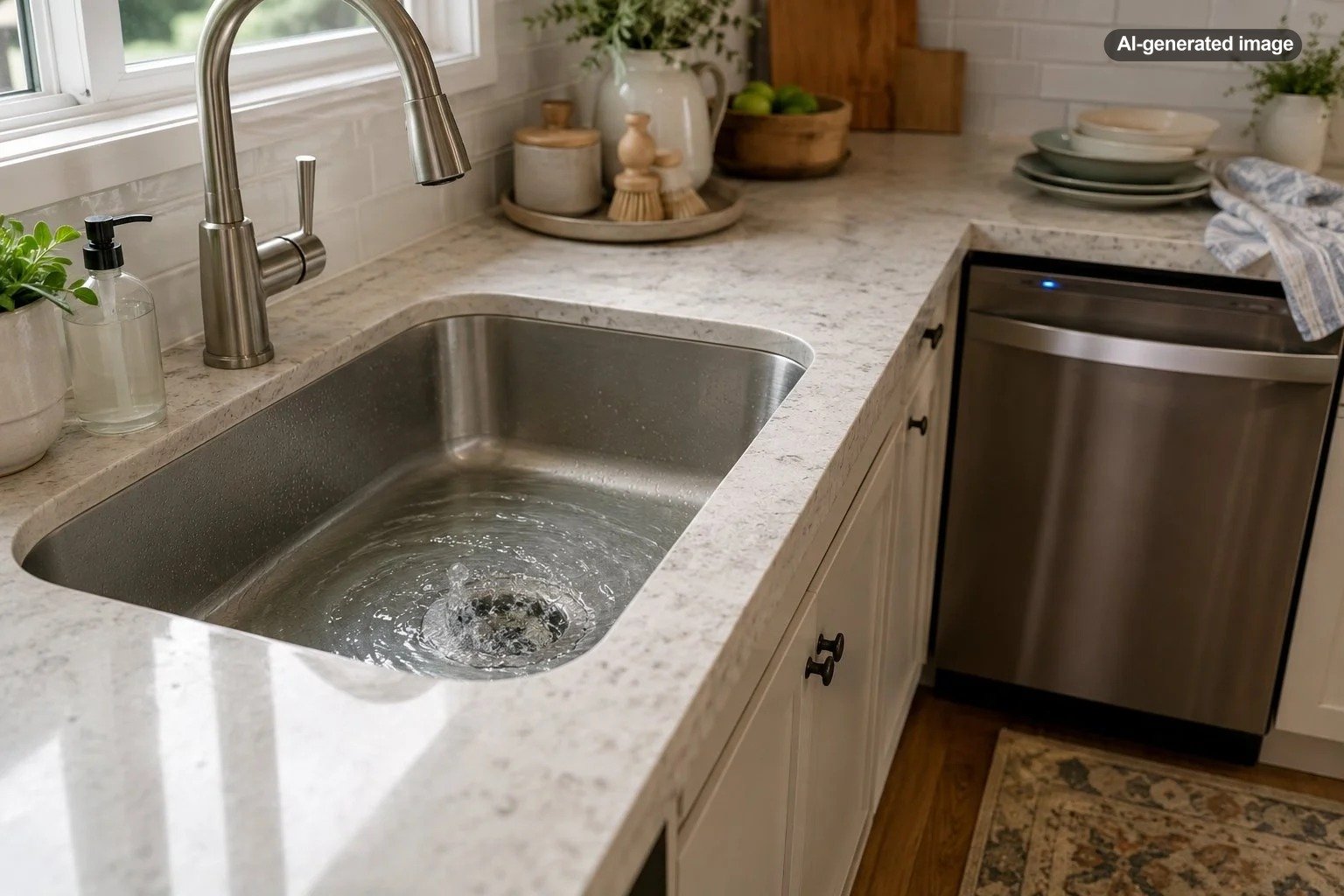
Why Does My Kitchen Sink Gurgle When the Dishwasher Runs?
A kitchen sink that gurgles when the dishwasher runs is usually reacting to a drainage or airflow problem. The dishwasher sends a substantial amount of water into the kitchen drain over a short period, and that sudden flow can expose a partial clog, a poorly vented drain, or an issue with the dishwasher’s drain connection.
The noise alone does not always mean you have a plumbing emergency. However, it should not be ignored if the sink drains slowly, water backs up into the basin, the dishwasher leaves water behind, or unpleasant odors accompany the sound.
Why the dishwasher can make the sink gurgle
Your dishwasher does not usually have a completely independent drain. In many kitchens, its drain hose connects to a garbage disposal inlet or to a branch fitting beneath the sink. When the dishwasher pumps out used wash water, that water enters the same drainage system serving the sink.
A healthy drain allows the water to move away while air enters through the plumbing vent system. If water encounters resistance, it can push and pull pockets of air through the nearest opening. The sink drain may then produce bubbling, gulping, or gurgling sounds.
The timing offers a useful clue. A noise that appears only during the dishwasher’s drain portion points toward the shared kitchen drain, dishwasher hose, disposal connection, or venting. A sink that gurgles during ordinary faucet use may indicate a broader drain problem.
The most likely causes
A partial clog in the kitchen drain
A partial clog is the most common explanation. Grease, food residue, soap film, and fine debris can gradually narrow the drainpipe without blocking it completely. The sink may seem normal under a gentle stream of water but struggle when the dishwasher releases water quickly.
Watch the sink basin while the dishwasher drains. Water that rises briefly, swirls slowly, or carries debris into the basin makes a partial obstruction especially likely.
A dirty or obstructed garbage disposal
If the dishwasher hose connects to the disposal, water must pass through that area before entering the drain. Food buildup inside the disposal chamber or the pipe immediately beyond it can restrict flow.
Run the disposal with cold water before starting the dishwasher, provided the disposal is operating normally. Never place a hand inside it. If the unit hums, jams, leaks, or repeatedly trips its reset, stop using it until the problem is addressed.
A blocked dishwasher air gap
Some sinks have a small cylindrical air-gap fitting mounted beside the faucet. It helps prevent dirty sink water from flowing backward into the dishwasher. Debris inside the cap or connected hoses can interfere with drainage and sometimes cause gurgling or water discharge near the faucet.
Remove only the removable outer cap and clean visible residue according to the dishwasher or air-gap manufacturer’s instructions. If water continues to spill from the fitting, a hose or downstream drain may be obstructed.
A kinked or poorly routed drain hose
The dishwasher drain hose should not be crushed behind the appliance or pinched inside the sink cabinet. Depending on the installation, the hose may also need a high loop beneath the countertop or a connection through an air gap to reduce backflow.
A sagging hose can collect dirty water, while a sharp bend can slow the discharge. Do not pull the dishwasher out unless you can do so without damaging the flooring, supply line, electrical connection, or drain hose.
A blocked or inadequate plumbing vent
Plumbing vents allow air to enter the drainage system so wastewater can move smoothly. When a vent is blocked, undersized, or improperly configured, drains may gurgle as they search for air through nearby fixtures.
Vent problems are more likely when several fixtures make noise, trap water levels fluctuate, or odors appear in more than one room. Roof-level vent inspection is not a sensible casual DIY task; a qualified plumber can evaluate the venting safely.
A practical troubleshooting sequence
What to do
- Pause the dishwasher if water is backing up. Avoid adding more water until the sink has drained.
- Clean the sink strainer. Remove food scraps and visible residue from the drain opening.
- Run the garbage disposal briefly. Use cold water, and stop if the disposal sounds abnormal or fails to spin.
- Clean the dishwasher filter. Follow the appliance manual, since filter designs and removal methods vary.
- Inspect the air gap and visible hose. Look for residue, loose connections, kinks, or standing water beneath the sink.
- Test the sink separately. Fill the basin partway, then release the water. Slow drainage or bubbling supports the partial-clog theory.
- Stop if the problem persists. A deeper clog, damaged pipe, or venting issue usually requires proper drain-cleaning or diagnostic equipment.
What not to pour into the drain
A gurgling drain can tempt you to reach for the strongest chemical cleaner available. That is not always a good first move. Harsh drain products may damage certain pipes or finishes, create hazardous splashes, and leave corrosive material in the line for anyone who later opens the plumbing.
Do not mix drain cleaners with bleach, ammonia, vinegar, or other household chemicals. If you have already used a chemical product, tell the plumber before work begins.
Boiling water also deserves caution. It may soften some grease, but it is not appropriate for every piping material, sink finish, disposal, or plumbing connection. Very hot water can move melted grease only far enough to let it harden deeper in the pipe.
When the gurgling needs professional attention
Call a qualified plumber when basic cleaning does not restore quiet, free-flowing drainage. Professional evaluation is especially sensible when the problem returns quickly, affects several fixtures, or involves pipes hidden inside walls or floors.
A plumber may need to inspect the branch drain, clean the line with appropriate equipment, check the trap and fittings, or assess the venting arrangement. In an apartment or condo, notify the landlord, property manager, or association before authorizing work on shared plumbing.
How to reduce future gurgling
Prevention is mostly about limiting what enters the kitchen drain and keeping the dishwasher’s drainage path clear. Scrape plates into the trash or compost before loading them, even when the dishwasher is designed to handle small food particles. Excess grease, flour, coffee grounds, fibrous scraps, and starchy food can contribute to stubborn buildup.
- Clean the dishwasher filter on the schedule recommended for your model and household use.
- Run the disposal before the dishwasher when both share the same drain connection.
- Keep the sink strainer clear instead of washing collected food into the pipe.
- Wipe greasy cookware with a paper towel before washing it.
- Check periodically for moisture, loose fittings, or hose kinks beneath the sink.
- Address slow drainage early rather than waiting for a full backup.
A gurgle is often the drain’s early warning that water and air are no longer moving as freely as they should.
Frequently asked questions
Can I keep using the dishwasher if the sink only gurgles?
You may be able to finish a cycle if the sink drains normally and no water is backing up, but continued use can worsen a developing clog. Investigate the noise before it becomes a more disruptive drainage problem.
Why does water come into the sink when the dishwasher drains?
Water entering the sink usually means the shared drain cannot carry the dishwasher discharge away quickly enough. A partial clog near the disposal, trap, or branch drain is a common cause.
Can a dirty dishwasher filter cause sink gurgling?
A dirty filter can slow the dishwasher’s own drainage and contribute to poor performance, but sink gurgling more often points to the hose connection, disposal, shared drain, or plumbing vent. Cleaning the filter is still a sensible early step.
Does gurgling always mean the plumbing vent is blocked?
No. A partial kitchen-drain clog is generally a more straightforward explanation, especially when only the sink reacts to the dishwasher. Vent trouble becomes more plausible when multiple fixtures gurgle or trap odors appear elsewhere.
Why did the problem begin after a new dishwasher was installed?
The drain hose may be kinked, connected incorrectly, missing the required routing, or attached to a disposal inlet that was not properly prepared. Ask the installer or a qualified plumber to verify the drain configuration rather than assuming the new appliance itself is defective.