
How to Keep a Bathroom Mirror From Fogging Up
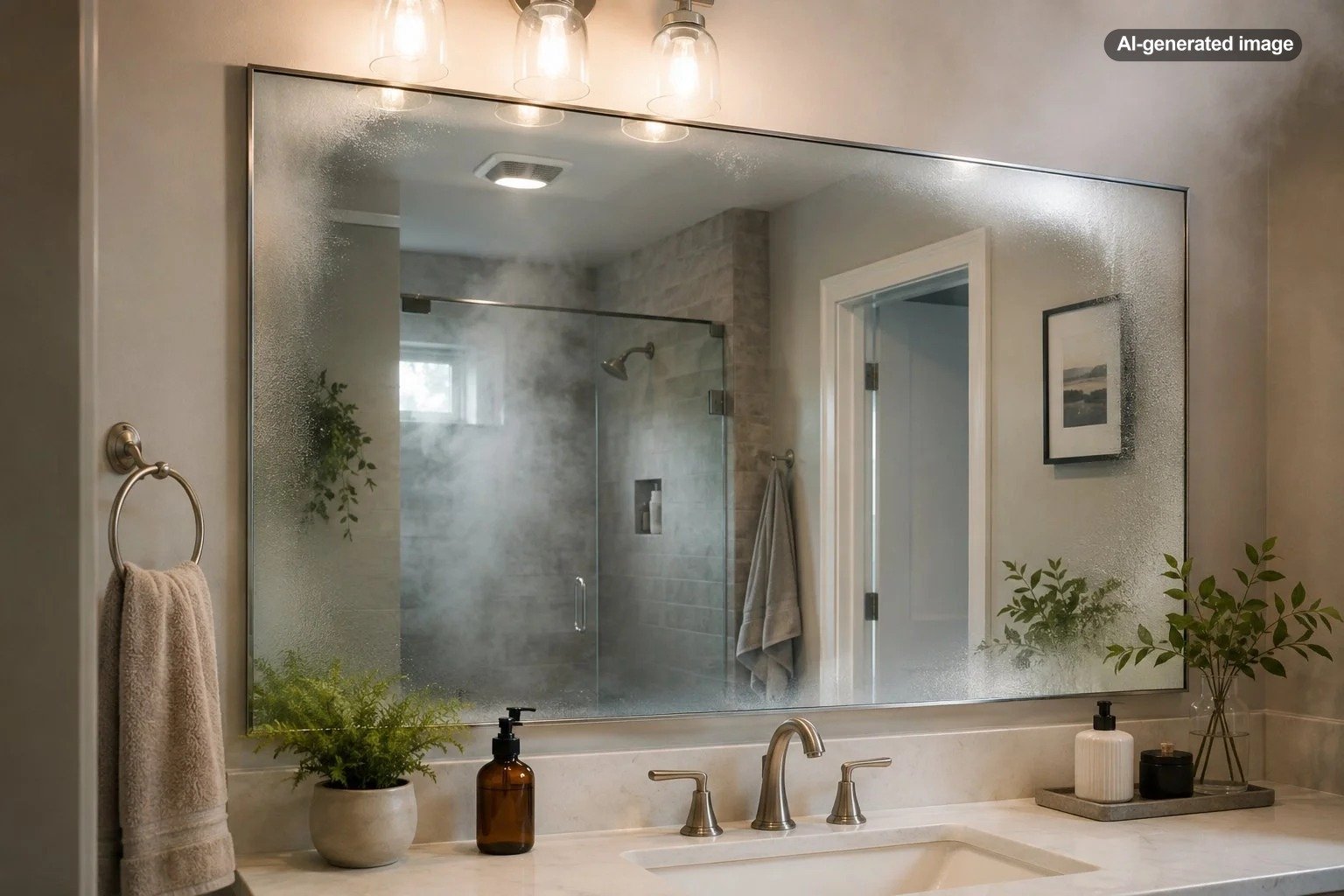
A foggy bathroom mirror is caused by warm, moisture-heavy air meeting a cooler glass surface. The water vapor condenses into tiny droplets that scatter light, turning an otherwise useful mirror into a hazy gray rectangle. To keep the mirror clear, you need to remove humid air more quickly, warm the glass, reduce the amount of steam reaching it, or apply a temporary anti-fog layer.
The most effective long-term solution is usually better ventilation. However, a few small changes to your shower routine can make a noticeable difference immediately, even in a rental or a bathroom without an exhaust fan.
Start the exhaust fan before the room gets steamy
Turn on the bathroom exhaust fan shortly before starting the shower rather than waiting until the mirror is already opaque. Early operation begins moving humid air out of the room before moisture levels peak.
Leave the fan running after the shower as well. The exact drying time varies with the room, fan, shower length, climate, and amount of moisture produced, so use the room itself as your guide. The mirror, walls, and ceiling should begin drying rather than remaining visibly damp.
A fan only helps if it exhausts air outdoors and can move air effectively. A recirculating or duct-free unit may reduce odors, but it does not remove the same volume of moisture from the building. Long, crushed, obstructed, or sharply bent ductwork can also reduce airflow.
Reduce the amount of steam reaching the mirror
A very hot, lengthy shower fills the room with more water vapor than a shorter or moderately warm shower. You do not need to take a cold shower, but turning the temperature down slightly can reduce visible fog.
If the bathroom layout allows it, keep the shower enclosure closed during and immediately after bathing. A shower door or curtain will not contain all the moisture, but it can slow the movement of steam toward the vanity. Afterward, spread a wet curtain so it can dry rather than leaving it bunched in a damp corner.
Opening the bathroom door can also help, provided sending humid air into the adjoining space will not create another moisture problem. In humid weather or a poorly ventilated home, an open window may be less helpful than expected because the outdoor air can already contain substantial moisture.
Warm the mirror before or during the shower
Condensation forms more readily when humid air touches a surface that is cooler than the air’s dew point. Warming the glass makes that temperature difference smaller, which is why heated mirrors and mirror demister pads can maintain a clear area during a shower.
A purpose-built heated mirror is the cleanest permanent option during a renovation. Retrofit demister pads may be installed behind compatible mirrors, but they require access to the wall and an appropriate electrical connection. Electrical work in a bathroom involves location-specific safety and code requirements, so installation should be handled or reviewed by a qualified professional.
For a no-installation workaround, warming the room before showering may delay fogging slightly. It is less direct and less reliable than heating the mirror itself, but it can help when the bathroom is particularly cold.
Use a mirror-safe anti-fog treatment
Anti-fog sprays and wipes work by changing how condensed moisture spreads across the glass. Instead of forming many distinct droplets that scatter light, the moisture forms a more uniform film, allowing the mirror to remain clearer.
Follow the product directions and confirm that it is suitable for the mirror’s surface, backing, frame, and any specialty coating. Apply it to clean glass, buff away residue as directed, and reapply when the effect begins to fade. Avoid allowing excess liquid to run behind the mirror, especially around unsealed edges.
Several household substances are often suggested as improvised treatments, including diluted dish soap, shaving cream, or a small amount of liquid soap. They may create a short-lived anti-fog film, but they can also leave streaks, attract dust, or affect nearby finishes. Test a tiny area first, use very little product, and keep it away from porous frames and exposed mirror edges.
What to do
- Clean the mirror with a product appropriate for plain glass and dry it completely.
- Apply a small amount of mirror-safe anti-fog treatment according to its directions.
- Buff the surface evenly with a clean, lint-free cloth.
- Check the glass in angled light for streaks or residue.
- Repeat only when fog begins returning rather than layering on unnecessary product.
Improve airflow around the vanity
Mirror fog can be worse when the vanity sits in a poorly ventilated recess or when a tall cabinet traps humid air against the glass. The exhaust fan may be operating, yet the moisture may not travel efficiently from the shower area to the fan grille.
Keep the grille clean and unobstructed. Dust buildup can restrict airflow, while closed doors, heavy towels, or furnishings may interfere with the room’s air path. If the mirror clears much faster when the bathroom door is open, the room may not be receiving enough replacement air when closed.
In a large bathroom, fan placement matters. A fan located far from the shower or separated by a partition may remove moisture more slowly. Persistent problems can justify an evaluation of the fan’s capacity, location, duct route, and exterior termination rather than simply replacing the mirror.
A clear mirror is usually the result of controlling the room’s moisture, not repeatedly wiping the glass.
Avoid wiping the mirror with bath towels
Wiping away fog provides a temporary clear patch, but a damp bath towel often leaves lint, streaks, and residue. The glass may fog again within moments because the room is still humid.
If you need the mirror immediately, use a clean, dry microfiber cloth and wipe gently. Do not press hard on decorative frames, aging mirror edges, or loose wall-mounted glass. Follow with ventilation so the room can actually dry.
Frequent wiping is also a clue that the underlying moisture has not been addressed. The goal is not merely to clear the center of the mirror; it is to prevent water from lingering on ceilings, walls, trim, and cabinetry.
Know when fogging signals a larger moisture problem
Brief mirror fog during a hot shower is common. More concern is warranted when water regularly beads on the ceiling, drips down walls, softens paint, causes wallpaper to lift, swells cabinetry, or leaves the bathroom smelling persistently musty.
Cleaning visible residue without correcting the moisture source will not prevent it from returning. Likewise, painting over recurring damage can conceal the symptom while dampness continues beneath the finish.
Choose the right solution for your bathroom
| Approach | Best for | Main tradeoff |
|---|---|---|
| Run the exhaust fan earlier and longer | Most bathrooms with a working outdoor-vented fan | Limited benefit if airflow or ducting is poor |
| Lower shower temperature or duration | Immediate, no-cost improvement | Requires a change in routine |
| Open the door slightly | Small or tightly sealed bathrooms | Moves some humidity into the adjoining space |
| Apply anti-fog treatment | Renters and quick cosmetic control | Needs periodic reapplication |
| Install a heated mirror or demister | Renovations and consistently foggy mirrors | Higher cost and possible electrical work |
| Upgrade or correct ventilation | Whole-room condensation and slow drying | May require professional assessment |
For most households, begin with the least complicated combination: start the fan before showering, provide a path for replacement air, reduce excessive steam, and leave the fan running until damp surfaces begin drying. Add a mirror-safe anti-fog product when you need immediate clarity. Consider a heated mirror or ventilation improvement when the problem is frequent, stubborn, or accompanied by moisture elsewhere in the room.
Frequently asked questions
Why does my mirror fog even when the fan is on?
The mirror may be unusually cold, the fan may have insufficient airflow, the duct may be restricted, or the closed room may lack enough replacement air. Fan placement and the distance between the shower and grille can also affect how quickly steam is removed.
Does opening a window prevent mirror fog?
It can help when the outdoor air is cooler and drier than the bathroom air. It may provide little benefit during hot, humid weather and should not replace a properly functioning exhaust system where one is needed.
Will shaving cream keep a mirror from fogging?
A very thin, buffed film may reduce fog temporarily, but it can leave residue or streaks. A product specifically labeled for mirrors is easier to use consistently and should still be tested on an inconspicuous area.
Are heated bathroom mirrors worth considering?
They are useful for households that regularly need a clear mirror immediately after showering. They solve fog on the heated portion of the glass, but they do not remove moisture from the room, so adequate ventilation remains important.