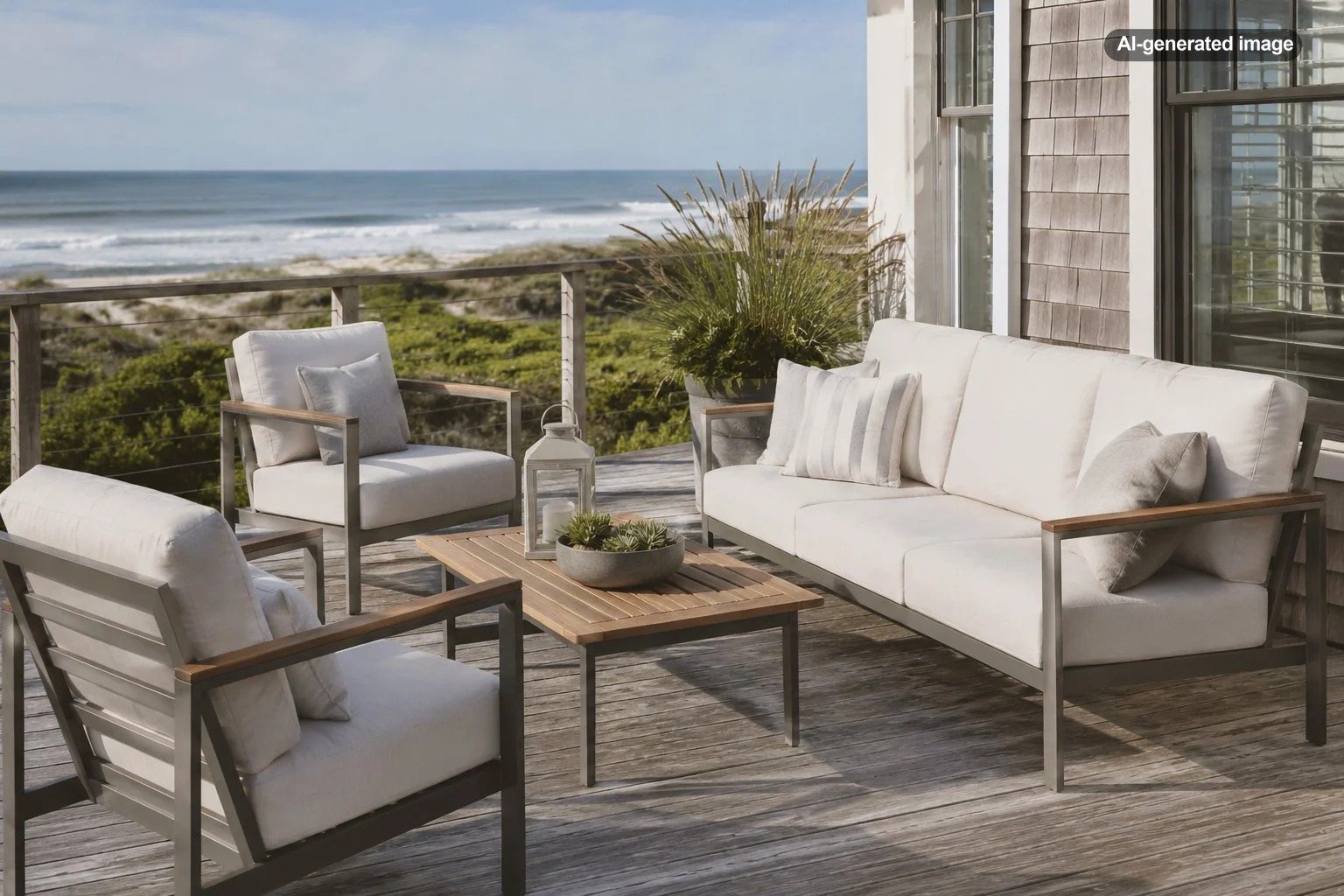
What Is the Best Patio Furniture Material Near Salt Air?
The best patio furniture material near salt air is usually high-density polyethylene, or HDPE, lumber. It does not rust, is nonporous, and requires less upkeep than most wood or metal options. Its weight also helps it remain stable in breezy coastal settings.
That does not make HDPE the only sensible choice. Powder-coated aluminum, quality synthetic wicker, and teak can all perform well near the coast. The right material depends on how directly the furniture receives salt spray, how much maintenance you will tolerate, whether wind is a concern, and the look you want.
Why salt air is unusually hard on patio furniture
Coastal furniture rarely faces just one problem. Salt residue settles on frames and hardware, humidity keeps surfaces damp, sunlight attacks finishes and fabrics, and wind carries abrasive sand into joints and woven material. Even a covered patio may receive airborne salt when it sits close to open water.
Metal corrosion is the most obvious concern, but it is not the only one. Moisture and sunlight also weather wood, while inexpensive plastics may fade, grow brittle, or become too light for windy locations. Cushions can remain damp in humid conditions, encouraging surface mildew on accumulated dirt even when the fabric itself is intended for outdoor use.
Near the coast, the best furniture is not merely weather-resistant; it is easy to rinse, slow to corrode, and substantial enough for the site.
How the main patio furniture materials compare
| Material | Salt-air performance | Maintenance | Main tradeoff |
|---|---|---|---|
| HDPE lumber | Excellent | Low | Heavy and sometimes visually bulky |
| Powder-coated aluminum | Very good when the finish remains intact | Low to moderate | Lightweight in strong wind |
| Teak | Very good | Moderate | Color changes unless maintained |
| Synthetic wicker | Good when resin and frame are high quality | Moderate | Quality varies widely |
| 316 stainless steel | Very good with routine cleaning | Moderate | Can show cosmetic surface marks |
| Wrought iron or ordinary steel | Poor to fair | High | Rust risk at chips, joints, and fasteners |
| Natural wicker | Poor | High | Vulnerable to moisture and wind |
HDPE lumber: the strongest all-around choice
HDPE lumber is a dense plastic material shaped into boards and furniture components. It does not absorb water like wood and cannot rust like metal. Salt residue can generally be removed with fresh water, mild soap, and a soft brush.
Its weight is especially useful on exposed decks, balconies, and patios where light chairs tend to migrate during gusty weather. The material also avoids splinters, peeling paint, and the recurring sealing schedule associated with many wood products.
Advantages
- Resists moisture, salt exposure, insects, and rot
- Needs no painting, staining, or sealing
- Usually heavy enough for breezy patios
- Available in many colors and traditional profiles
Tradeoffs
- Can be cumbersome to rearrange
- May cost more initially than basic molded plastic
- Thick components can appear substantial in small spaces
- Dark colors may become warm in direct sun
Inspect more than the visible boards. Hardware still matters because screws and bolts remain exposed to the same coastal conditions. Look for corrosion-resistant fasteners, solid joinery, and replacement hardware availability.
Powder-coated aluminum: best for lighter, cleaner lines
Aluminum does not rust in the same way as iron or carbon steel, making it a practical frame material near salt air. A durable powder-coated finish adds another protective layer and offers a broad range of colors and styles.
The weak point is usually not the aluminum itself but damage to the coating, low-quality fasteners, or joints where salty moisture collects. Examine welds, underside surfaces, chair feet, and hardware rather than judging a piece only by its showroom-facing surfaces.
Aluminum is easy to move, which suits balconies, dining areas, and households that frequently rearrange seating. That same lightness can be a disadvantage on an exposed waterfront patio. Wider bases, substantial tabletops, and secure storage plans become important in windy locations.
Teak: best when natural wood is the priority
Teak remains one of the more practical natural woods for outdoor furniture. It offers a warm, refined appearance and enough weight to feel stable in coastal wind. It can be allowed to weather to a silvery gray or maintained closer to its original golden-brown color with cleaning and appropriate care products.
Choosing teak does not eliminate maintenance. Outdoor wood is still affected by sunlight, moisture, surface dirt, and weathering. Furniture should be cleaned according to its manufacturer’s instructions, and owners who want to preserve a particular color should expect periodic attention.
Construction quality is crucial. Smooth joinery, well-fitted components, corrosion-resistant hardware, and responsible wood sourcing matter as much as the species named on the label. Be cautious with vague descriptions such as teak finish or teak color, which may refer to appearance rather than solid teak construction.
Synthetic wicker: comfortable, but the hidden frame decides its lifespan
Synthetic wicker can work beautifully on a sheltered coastal porch. Unlike natural rattan or plant-based wicker, outdoor synthetic wicker is typically made from resin designed to tolerate moisture. Its woven texture gives lounge furniture a softer, more residential look than broad plastic lumber boards or exposed metal frames.
Quality varies considerably. Thin strands can crack or loosen, and an attractive weave may conceal a steel frame that is poorly suited to salty conditions. For coastal use, favor substantial outdoor-rated resin woven over a powder-coated aluminum frame with corrosion-resistant hardware.
Wicker also requires more detailed cleaning because salt, pollen, sand, and food debris collect between strands. A gentle rinse and soft brush are safer than aggressive pressure washing unless the manufacturer specifically permits another method.
What about stainless steel, wrought iron, and ordinary plastic?
316 stainless steel, often described as marine grade, can be a strong contemporary option. It still benefits from regular fresh-water rinsing, and cosmetic surface discoloration can occur in harsh environments. Verify the actual grade rather than assuming every silver-colored frame is equally resistant.
Wrought iron and ordinary steel are less forgiving. Their weight is useful in wind, but scratches, chips, exposed welds, and aging fasteners can rust quickly near salt. They are better suited to owners willing to inspect and touch up finishes consistently.
Basic injection-molded plastic will not rust and may suit a rental or temporary setup, but lightweight pieces can blow over, fade, or become brittle. It should not be confused with heavier HDPE lumber simply because both are plastics.
Hardware, cushions, and covers matter as much as the frame
A durable chair can still become frustrating if its screws corrode, cushion foam stays wet, or protective cover traps condensation. Look for outdoor performance fabrics, removable cushion covers, quick-draining construction, and hardware identified for demanding exterior environments.
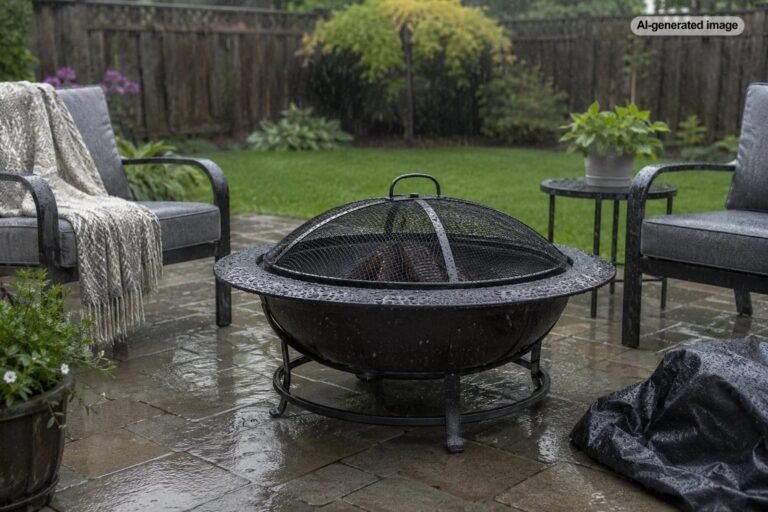
Furniture covers can reduce exposure to bird droppings, dirt, sunlight, and blowing debris between uses. However, a cover should fit correctly, remain secure in wind, and allow ventilation. A cover pressed tightly against damp furniture can hold moisture where you least want it.
Affiliate disclosure: CraneManor.com may earn a commission when you purchase through links on this page. This does not affect the price you pay. Learn more.
For a compatible lounge chair, a water-resistant patio chair cover can reduce routine exposure between uses. Measure the chair carefully, secure the cover, and leave enough airflow to avoid trapping moisture underneath.
How to choose for your particular coastal space
Before you decide
- Estimate salt exposure: Direct oceanfront spray is harsher than occasional salty air several blocks inland.
- Account for wind: Choose heavier furniture or pieces that can be secured and stored before storms.
- Inspect hidden components: Check fasteners, welds, feet, glides, undersides, and internal frames.
- Plan for rinsing: Furniture near direct spray should be easy to hose with fresh water.
- Consider heat: Dark metal and dark plastic surfaces may become uncomfortable in full sun.
- Check cushion drainage: Favor removable, washable covers and inserts intended for outdoor use.
- Read care instructions: Confirm cleaning limits before using bleach, solvents, abrasives, waxes, or pressure washers.
A simple coastal maintenance routine
No patio furniture is maintenance-free when salt repeatedly settles on it. Fortunately, the most important habit is also the simplest: remove salt before it accumulates.
What to do
- Rinse exposed furniture with fresh water after heavy salt spray or as buildup becomes visible.
- Wash periodically with mild soap and a soft cloth or brush.
- Clean crevices, feet, undersides, fasteners, and woven areas where residue collects.
- Dry metal hardware and inspect it for discoloration, loose connections, or coating damage.
- Let cushions dry completely before covering or storing them.
- Secure or move furniture before severe weather rather than relying on its everyday weight.
Avoid steel wool, harsh abrasives, and unapproved chemicals. They can scratch protective finishes or damage the surface. Follow the furniture maker’s instructions whenever they differ from general care advice.
Frequently asked questions
Is aluminum or HDPE better near the ocean?
HDPE is generally better for maximum corrosion resistance, weight, and minimal upkeep. Aluminum is better when you want slimmer frames and easier movement, provided the coating, hardware, and construction are suitable for coastal exposure.
Does teak rot in salt air?
Quality teak is commonly used outdoors and performs better than many woods, but it still weathers. Keep it clean, follow the manufacturer’s care guidance, and decide whether you prefer its natural silver-gray patina or want to maintain a warmer color.
Can outdoor furniture stay uncovered near the coast?
Furniture designed for exterior use may remain outdoors, but covers, sheltered placement, and routine rinsing can reduce grime and finish wear. Covers must be ventilated and securely fitted so they do not trap moisture or become airborne.
What patio furniture should be avoided near salt water?
Untreated steel, chipped wrought iron, natural wicker, indoor furniture, and pieces with unidentified hardware are higher-risk choices. Very lightweight furniture can also be impractical where coastal winds are common.
What is the final verdict?
For most homes near salt air, HDPE lumber is the best all-around patio furniture material because it combines moisture resistance, easy cleaning, and useful weight. Powder-coated aluminum is the strongest alternative for a lighter modern look, while teak and quality synthetic wicker remain worthwhile choices for homeowners who accept a little more care.