
How to Make a Patio Feel More Inviting After Sunset
A patio becomes more inviting after sunset when it feels intentionally lit, comfortable, and easy to use rather than simply visible. The most effective approach is to layer several gentle light sources, arrange seating for conversation, add a few soft or natural textures, and remove the small inconveniences that make people retreat indoors.
You do not need an elaborate renovation or a sprawling backyard. Even a compact apartment balcony or modest concrete patio can feel welcoming at night when the lighting, furniture placement, and practical details work together.
Build the Mood With Layers of Light
One bright fixture rarely creates a pleasant patio. A strong overhead light may help you find your keys, but it can flatten the space, create harsh shadows, and make the patio feel more like a loading area than a place to linger.
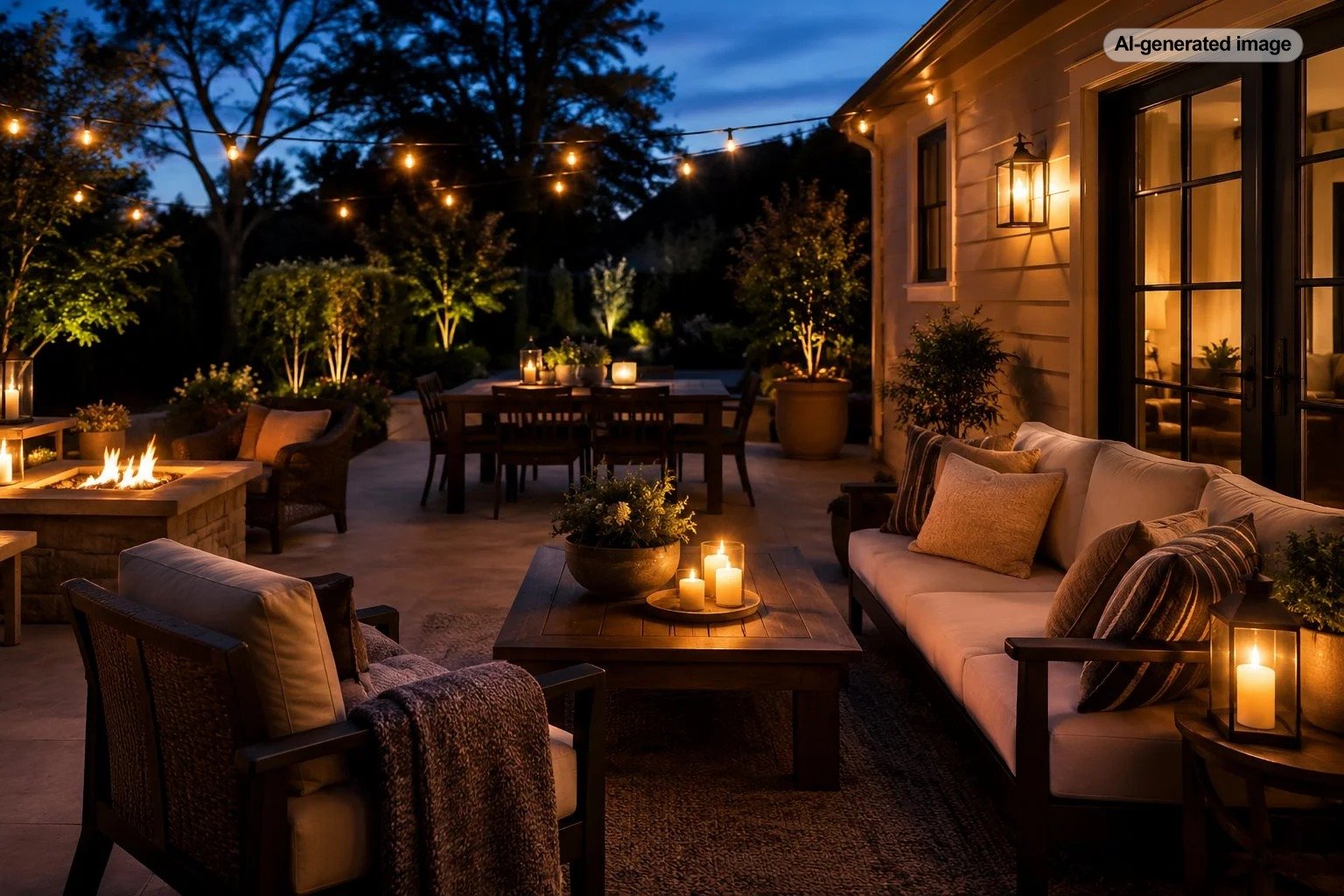
Instead, use light at different heights. Overhead string lights or a covered-patio fixture can provide general illumination. Lanterns, rechargeable table lamps, or wall-mounted lights can brighten faces and tabletops. Low pathway or landscape lighting can define the edge of the patio and make the surrounding yard feel connected to the seating area.
A useful lighting arrangement might include:
- One soft source above or behind the main seating area
- A table-height lamp or lantern near drinks and conversation
- Low lighting along a walkway, planter edge, or step
- A subtle accent light aimed at a tree, textured wall, or large container plant
Keep the overall effect restrained. The goal is not to illuminate every corner equally. A few darker areas create depth and make the lit portions of the patio feel more intimate.
Arrange Furniture for Conversation, Not Daytime Storage
Patio furniture often ends up pushed against walls or lined up along a railing because that arrangement leaves the most open floor space. It may look tidy during the day, but it can feel disconnected once people sit down.
Bring chairs close enough for comfortable conversation. As a general planning principle, seated guests should be able to speak without leaning forward or raising their voices. Angle chairs slightly toward one another instead of placing every seat in a rigid row.
A coffee table, small dining table, or pair of side tables helps define the gathering area. It also gives guests a practical place for drinks, phones, or small plates. On a narrow balcony, a slim stool or compact wall-mounted ledge may serve the same purpose without blocking circulation.
Add Comfort People Can Feel Immediately
Lighting may attract people outside, but physical comfort determines whether they stay. Outdoor seating should feel supportive enough for more than a brief visit. Add cushions where the furniture needs softness, but avoid piling on so many pillows that guests have to relocate them before sitting down.
Choose fabrics intended for outdoor conditions and store removable textiles when severe weather is expected. A nearby outdoor storage box can keep cushions, lightweight throws, and small accessories organized while reducing visible clutter.
In warm weather, airflow matters as much as softness. A ceiling fan on a covered patio or a properly placed outdoor-rated fan can make still evenings more comfortable. In cooler seasons, offer a basket with a few washable throws rather than covering every chair in heavy fabric.
Comfort also includes stability. Check that chairs do not wobble, tables sit level, and rugs lie flat. An attractive patio loses its appeal quickly when a drink tips over or a rug edge becomes a tripping nuisance.
Use Textures That Still Read Well in Low Light
Fine details can disappear after sunset, so focus on materials with enough scale and contrast to remain visible. Woven planters, slatted wood, textured ceramic, striped cushions, and broad-leaf plants tend to register more clearly than tiny patterns or delicate accessories.
An outdoor rug can visually gather a seating arrangement, especially on a large concrete slab or deck. It should fit the furniture rather than float beneath only the center table. Ideally, at least the front legs of the main chairs or sofa should rest on the rug so the arrangement feels connected.
Color can be quieter at night than during the day. Pale neutrals reflect available light, while deep greens, navy, charcoal, and terracotta can add richness without looking overly busy. Repeating one or two colors across cushions, planters, and tabletop pieces creates cohesion.
An inviting evening patio feels collected around the people using it, not decorated around the empty space.
Create One Focal Point After Dark
Every patio benefits from one feature that gives the eye a place to settle. At night, that focal point should be visible without overwhelming the seating area.
A large planter illuminated from below can create a sculptural silhouette. A small group of lanterns can add depth near a blank wall. A trellis, water feature, or piece of outdoor artwork may become more interesting with gentle side lighting. Even a dining table can serve as the focal point when it is centered beneath a pendant or string-light canopy.
A fire feature can provide both light and a natural gathering point, but it should be selected, installed, and used according to its manufacturer instructions and any applicable property rules. Renters and condo residents should confirm what is permitted before bringing flame-producing equipment onto a balcony or shared property.
Make the Transition From Indoors Feel Natural
A patio feels more usable when the route from the house is clear and visually connected. Remove obstacles near the door, illuminate any steps, and keep the threshold free of loose objects. Guests should not have to navigate around watering cans, folded furniture, or tangled cords to reach a chair.
Consider how the patio looks from inside. A softly lit planter or seating group visible through a window can make the outdoor space feel like an extension of the room. Matching one material or color across the threshold, such as black metal, warm wood, or a muted green textile, can strengthen that connection without making the spaces identical.
Doorway glare can interfere with the mood. If an interior fixture shines directly onto the patio, dim it or use a nearby lamp indoors instead. This reduces reflections on glass and lets the outdoor lighting do its job.
Remove the Details That Make People Leave Early
Even a beautifully styled patio can feel uninviting when guests are bothered by practical annoyances. Before adding more decor, notice what makes the space difficult to use after dark.
Before you settle in
- Clear leaves, toys, tools, and loose cords from walking paths.
- Wipe tables and seating before guests arrive.
- Check that pathway lights reveal changes in level.
- Provide a convenient place for drinks and small belongings.
- Keep trash and recycling containers away from the main seating area.
- Store extra accessories so the patio does not feel crowded.
Insects can also determine how long people remain outside. Avoid placing bright, exposed lights directly beside faces or food. Keep standing water from accumulating in saucers and containers, and use screens or air movement where appropriate. The solution should fit the property and climate rather than relying on an overpowering fragrance or an assortment of distracting gadgets.
Avoid Common Patio Lighting Mistakes
The most common mistake is using too much light. When every surface is equally bright, the patio loses depth and can feel exposed. Another mistake is choosing fixtures without considering where people will sit. A decorative bulb at eye level may look charming from across the yard but become uncomfortable at the table.
Also avoid mixing several noticeably different light tones in one compact area. A cool security light beside warm string lights can make the arrangement feel accidental. Security lighting and atmospheric lighting serve different purposes; position or control them so one does not overpower the other during normal patio use.
Temporary cords should not cross walking paths or sit where they may be damaged or exposed contrary to product instructions. Use outdoor-rated products in exterior locations, follow manufacturer directions, and have permanent electrical work handled appropriately.
Finish With a Simple Evening Setup
Once the main pieces are in place, create a routine that takes only a few minutes. Turn on the accent lights, straighten the cushions, wipe the table, and bring out only the items needed for that evening. This makes the patio feel prepared without requiring constant styling.
For casual nights, a lamp, two comfortable chairs, and a clear tabletop may be enough. For dinner, add task lighting over the table and keep serving pieces compact. For a larger gathering, create more than one place to sit so guests can move between conversation areas without dragging furniture across the patio.
The most inviting patio after sunset is not necessarily the most elaborate one. It is the space where people can see one another, sit comfortably, set down a drink, and enjoy the evening without being distracted by glare, clutter, or awkward furniture placement.
Frequently Asked Questions
What color light is best for a cozy patio?
Warm-looking light generally creates a softer, more relaxed atmosphere than noticeably cool or blue-toned light. Consistency matters as well, particularly when several fixtures are visible at once.
How can I improve a patio without installing permanent fixtures?
Use rechargeable table lamps, freestanding lanterns, weighted planters, outdoor cushions, a compact rug, and movable side tables. These additions can define the space without requiring permanent changes.
How many light sources does a small patio need?
Two or three well-placed sources are often more useful than one bright fixture. Combine general light with a lower lamp or lantern, then add pathway lighting only where circulation requires it.
Should outdoor furniture match?
It does not need to be a complete matching set. Pieces can feel coordinated when they repeat a material, finish, shape, or limited color palette and are arranged as one functional seating group.