
Do You Need an Indoor Humidity Monitor in a Florida Home?
Yes, an indoor humidity monitor is a sensible tool for many Florida homes. It does not remove moisture, diagnose mold, or replace a well-maintained air-conditioning system, but it tells you whether the air is staying consistently damp enough to justify action. In a climate where outdoor air often carries substantial moisture, that small piece of information can be far more useful than guessing by how a room feels.
What an indoor humidity monitor actually tells you
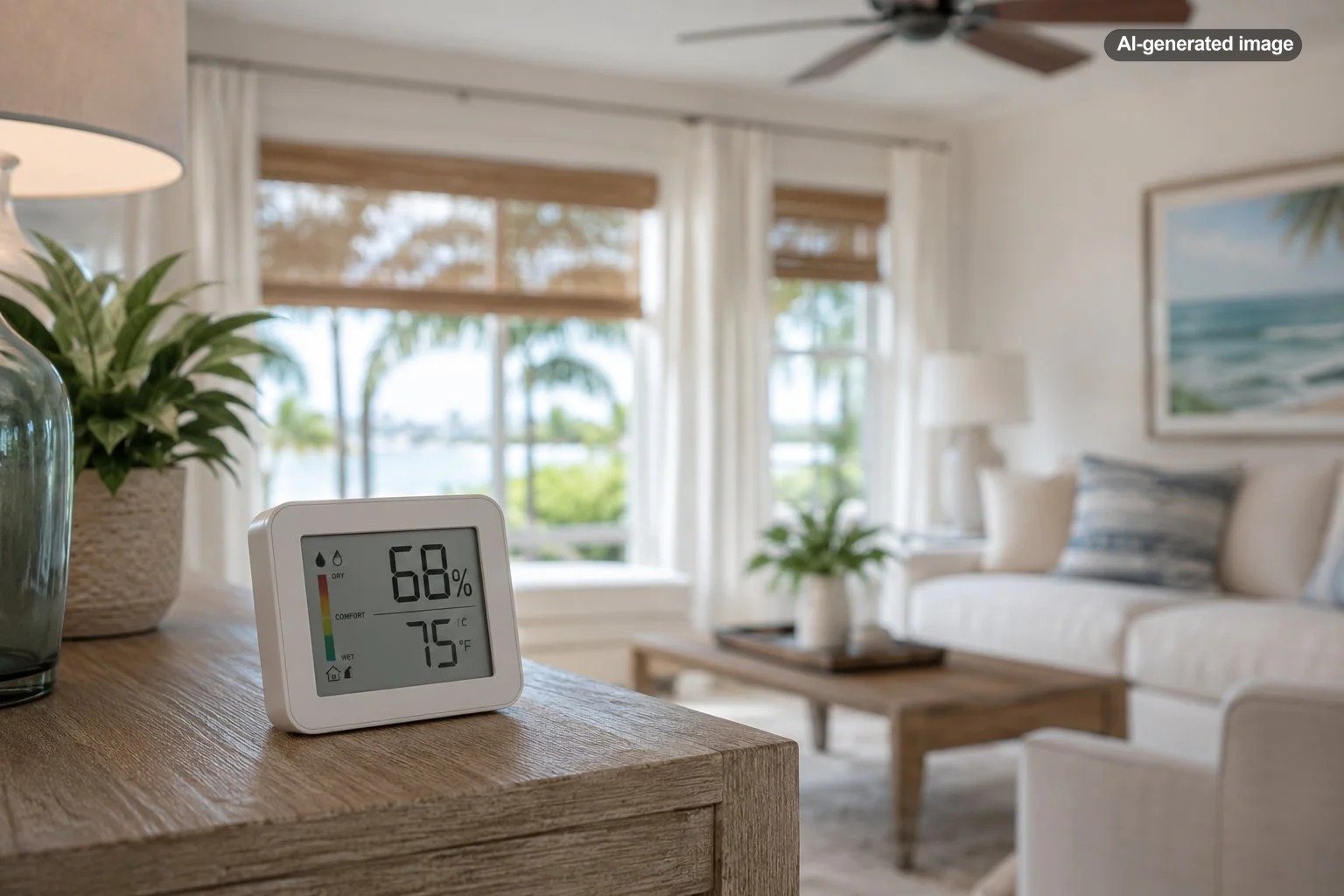
Most small humidity monitors display relative humidity, usually abbreviated as RH, along with room temperature. Relative humidity describes how much moisture the air contains compared with the maximum it could hold at that temperature. Because warmer air can hold more water vapor than cooler air, the same amount of moisture can produce a different RH reading as the temperature changes.
That is why one isolated number is less useful than a pattern. A bathroom may briefly rise after a shower, while a bedroom might climb overnight and fall after the air conditioner runs. A consistently elevated reading in a closed closet is more concerning than a short spike in a well-ventilated kitchen.
The useful question is not whether humidity ever rises, but whether it stays high long enough to keep materials damp.
Why Florida homes benefit from monitoring
Florida homes face a combination of warm outdoor air, frequent rain, long cooling seasons, storm-related power outages, and buildings that may sit vacant for weeks or months. Air conditioning normally cools and dehumidifies at the same time, but moisture control can slip when equipment is oversized, poorly maintained, set too warm, or unable to run during an outage.
Humidity can also vary sharply from room to room. A thermostat in a central hallway may report comfortable conditions while a north-facing bedroom, closed guest room, laundry area, or packed closet remains damper. A portable monitor helps reveal those differences without requiring permanent installation.
What humidity level should you look for?
For a practical household target, many homeowners try to keep indoor relative humidity near 50 percent. EPA guidance says indoor humidity should remain below 60 percent and ideally between 30 and 50 percent when possible. The Centers for Disease Control and Prevention advises keeping it no higher than 50 percent throughout the day for mold prevention.
Those recommendations are guideposts rather than a reason to panic over every brief excursion. Cooking, showering, mopping, opening exterior doors, or a heavy rainstorm can cause temporary increases. The more meaningful warning is a room that remains above roughly 60 percent for extended periods or repeatedly returns there despite normal air-conditioning operation.
| Reading pattern | What it may mean | Sensible next step |
|---|---|---|
| 40-50 percent most of the day | Generally comfortable moisture control | Continue normal monitoring |
| Brief rise after showering or cooking | Normal moisture generation | Use exhaust ventilation and recheck later |
| Above 60 percent for many hours | Persistent excess moisture may be present | Check ventilation, HVAC operation, and hidden dampness |
| One room much higher than the rest | Airflow, temperature, leak, or enclosure issue | Compare locations and inspect that room carefully |
| Sudden change from the usual baseline | Weather, equipment, drainage, or water intrusion may have changed | Look for the cause rather than merely lowering the thermostat |
Where to place the monitor
Start in the main living area, away from supply vents, exterior doors, sunny windows, kitchens, and bathrooms. The goal is to measure typical room air, not a blast of conditioned air or steam. Set the device on a shelf or table with open air around it rather than pressing it against a wall or hiding it behind decor.
After establishing a baseline, move it to places where moisture problems often hide: a guest room kept closed, a walk-in closet, a laundry room, a room over a garage, a cabinet near plumbing, or a space that has developed a musty odor. In a larger house, using two or three monitors can make comparisons easier.
What to do
- Place the monitor in a central room for several days.
- Check it in the morning, afternoon, and evening.
- Move it to a suspect room without changing your normal routine.
- Compare readings at similar times and temperatures.
- Write down persistent differences instead of reacting to one spike.
How to interpret readings without overreacting
Consumer humidity monitors are best treated as trend tools. Two units placed side by side may not display exactly the same number, and readings can take time to stabilize after the device is moved. What matters most is whether the room is routinely dry enough, trending upward, or markedly different from the rest of the home.
Affiliate disclosure: CraneManor.com may earn a commission when you purchase through links on this page. This does not affect the price you pay. Learn more.
A compact digital hygrometer can be a practical way to check temperature and relative humidity in rooms that feel damp or remain closed for long periods.
Do not assume that a high reading automatically proves there is mold, and do not assume a normal center-of-room reading rules out a localized leak. Moisture can collect behind furniture, inside wall cavities, under flooring, around air-conditioning equipment, or in materials that were previously wet.
What to do when humidity stays high
Begin with ordinary moisture sources. Run bathroom and kitchen exhaust fans that vent outdoors, confirm the clothes dryer exhaust is unobstructed, avoid leaving exterior doors or windows open during muggy weather, and make sure air can circulate around furniture and inside problem closets.
Next, confirm that the air conditioner is operating normally. A dirty filter, blocked return, clogged condensate drain, malfunctioning equipment, or thermostat strategy that limits runtime can reduce moisture removal. Lowering the temperature dramatically is not always the right answer and may create cold surfaces where condensation forms.
A dehumidifier may help a persistently damp room or a vacant home, but it should not be used to conceal a leak or equipment problem. Follow the manufacturer’s placement, drainage, and electrical instructions, and remember that a portable unit adds heat to the room while it operates.
After a storm, flood, roof leak, plumbing failure, or extended power outage, monitoring becomes more important. EPA and CDC guidance emphasizes drying wet materials promptly and correcting the moisture source. If materials remain wet, visible mold is widespread, or anyone in the household has significant respiratory concerns, seek appropriate professional guidance rather than relying on the monitor alone.
Who may not need a dedicated monitor?
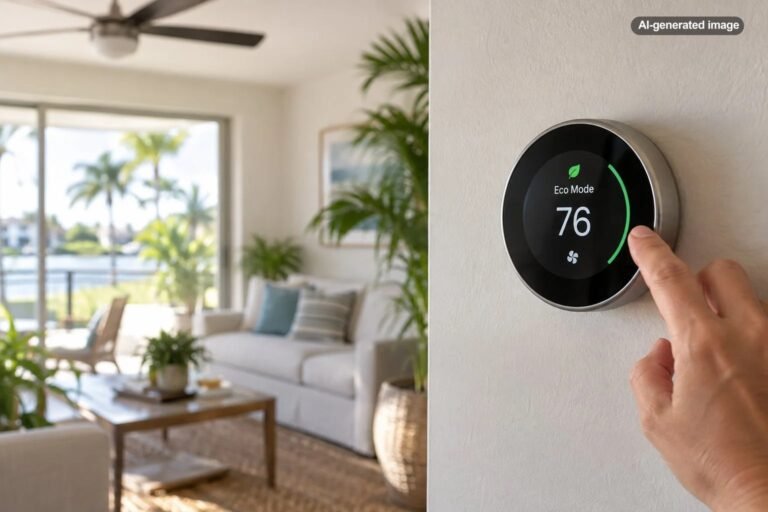
A dedicated device may be less necessary when a well-calibrated smart thermostat or indoor air-quality system already reports room humidity and the home has no signs of moisture trouble. Even then, the thermostat reflects conditions near its own location. A portable monitor can still be useful for checking a distant bedroom or closet.
Renters can also benefit because a small monitor is inexpensive, movable, and does not alter the property. It provides a record of patterns to discuss with a landlord or property manager, although it is not a substitute for documenting visible leaks, water damage, or malfunctioning ventilation.
The bottom line
For a Florida home, an indoor humidity monitor is a modest purchase that can answer a surprisingly important question: is the house merely warm, or is it staying damp? It is most valuable when used to compare rooms, observe daily patterns, and verify whether ventilation or dehumidification changes are working.
Use the readings as evidence, not a diagnosis. Keep an eye on sustained humidity, inspect for moisture sources, maintain the HVAC system, and act promptly when dampness is accompanied by condensation, odors, stains, or water damage.
Frequently asked questions
Can I use the humidity reading on my thermostat?
Yes, but it reflects conditions near the thermostat. A portable monitor is better for comparing bedrooms, closets, laundry rooms, and other spaces that may behave differently.
How long should I leave a monitor in one room?
Give it enough time to stabilize, then observe it across at least a full day of normal occupancy and air-conditioning cycles. Several days provide a more useful baseline.
Does a high humidity reading mean I have mold?
No. It means conditions may support dampness and should be investigated. Mold assessment depends on visible growth, odor, water history, material condition, and the location of the moisture source.
Should I open windows to lower indoor humidity?
Only when outdoor air is actually drier. In humid Florida weather, opening windows can increase the moisture load inside the house.