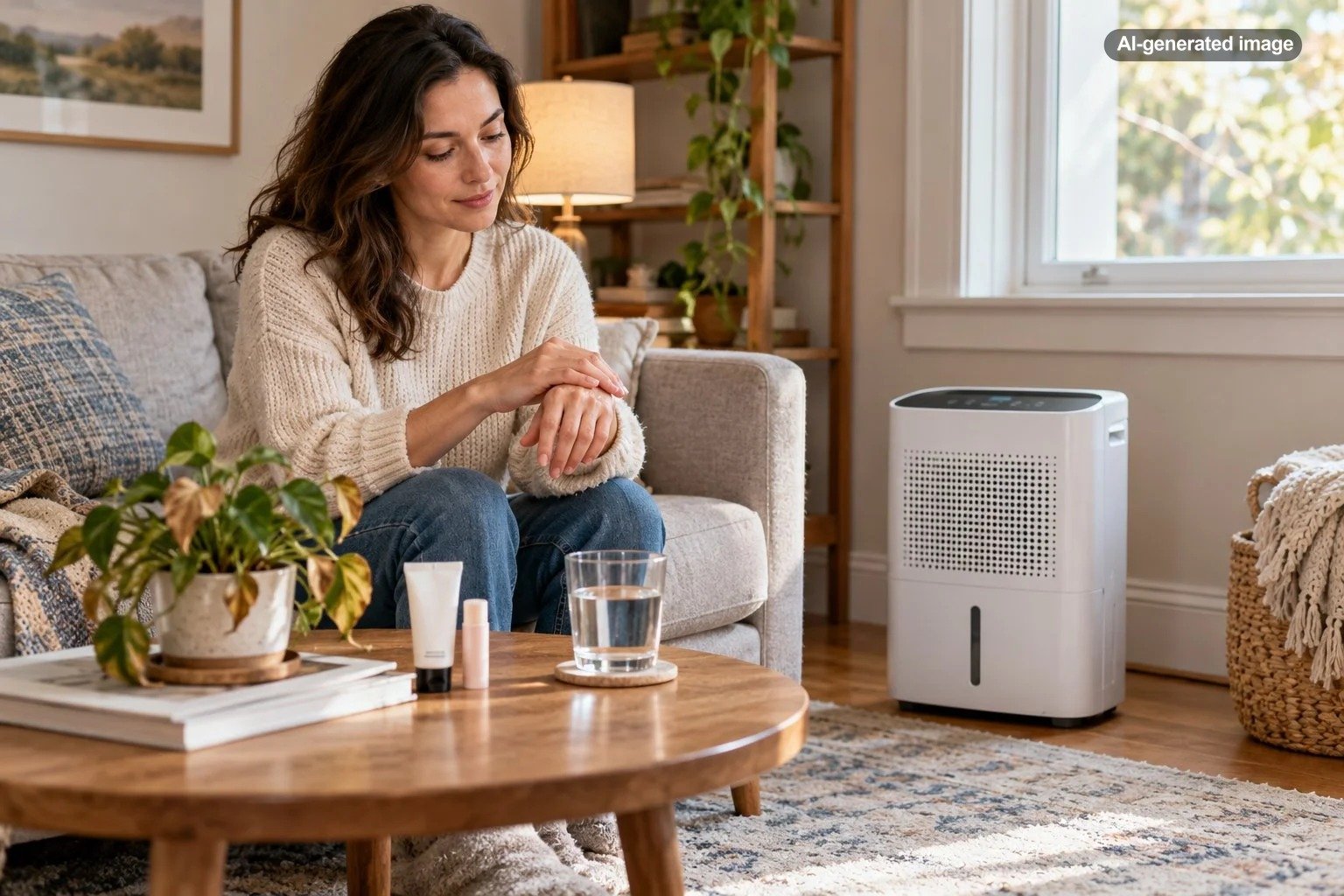
Can a Dehumidifier Make a Room Too Dry?
Yes, a dehumidifier can make a room too dry, particularly when it runs continuously or is set to maintain an unnecessarily low humidity level. Although dehumidifiers are designed to remove excess moisture, removing too much can leave a space uncomfortable. The goal is not to eliminate humidity but to maintain a balanced indoor environment.
For most homes, a relative humidity level between 30% and 50% is a useful target. A dehumidifier that repeatedly pushes humidity below the lower end of that range may be doing more than the room needs. Fortunately, a few simple measurements and adjustments can usually bring conditions back into balance.
How Dry Is Too Dry for a Room?
Relative humidity describes how much water vapor is present in the air compared with the maximum amount the air could hold at its current temperature. Because that capacity changes with temperature, the same amount of moisture can produce different relative humidity readings as a room warms or cools.
The U.S. Environmental Protection Agency recommends keeping indoor humidity below 60%, ideally between 30% and 50%. ENERGY STAR identifies the same general range for buildings and notes that colder climates may require approximately 30% to 40% during heating season to limit window condensation.
These guidelines provide a practical starting point rather than a perfect number for every house. A basement with persistent moisture intrusion has different needs from a bedroom that becomes dry when the heating system runs.
| Relative humidity | What it may indicate | Practical response |
|---|---|---|
| Below 30% | Unnecessarily dry indoor conditions | Reduce or stop dehumidification and verify the reading |
| 30% to 40% | Within the recommended range, but relatively dry | Often appropriate in colder weather; consider comfort and condensation |
| 40% to 50% | A useful target for many occupied rooms | Maintain and monitor rather than continuing to lower humidity |
| 50% to 60% | Higher moisture levels that deserve monitoring | Check for persistent dampness and consider moisture control |
| Above 60% | Humidity above EPA’s recommended upper limit | Investigate moisture sources and improve humidity management |
A reading briefly below 30% does not automatically indicate damage or a serious household problem. However, consistently low readings suggest that the dehumidifier setting, runtime, or overall indoor climate deserves attention.
Why a Dehumidifier Might Remove Too Much Moisture
The humidity setting is unnecessarily low
Many portable dehumidifiers let users select a target relative humidity. If that target is set to 30% or lower in a room that does not need such aggressive moisture removal, the appliance may continue extracting moisture after the space is already comfortably dry.
Lower numbers do not necessarily mean better air quality. Once indoor humidity is within a suitable range, additional drying may offer little practical benefit.
Continuous operation bypasses normal humidity control
Some dehumidifiers include a continuous operating mode intended for unusually damp conditions. Depending on the model, this setting may keep moisture-removal equipment running without following the normal humidity target.
Continuous operation can be useful for certain temporary moisture problems, but it is not necessarily appropriate for everyday humidity maintenance. Check the appliance manual to understand exactly how its continuous mode operates.
The humidity sensor does not reflect the entire room
A dehumidifier measures conditions near its own sensor. That reading may differ from humidity across the room, particularly when the appliance sits close to a damp wall, exterior door, or another source of changing air conditions.
Temperature differences and sensor accuracy can also affect readings. A separate hygrometer positioned in the occupied portion of the room provides a useful comparison.
Another system is already drying the air
Air conditioning removes some moisture during cooling, while winter heating can lower indoor relative humidity as air warms. A dehumidifier operating alongside these conditions may be unnecessary during part of the day or season.
This is especially relevant during transitional weather, when a room may be humid in the afternoon but comparatively dry overnight.
Signs Your Dehumidifier May Be Making the Room Too Dry
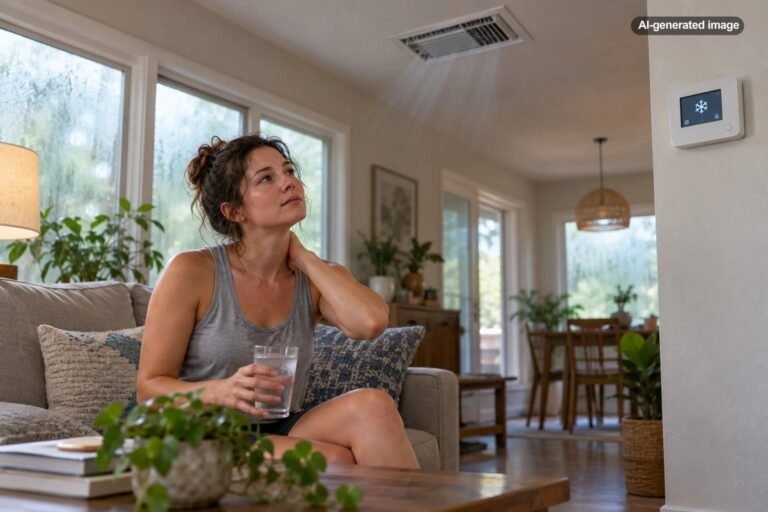
The most reliable indication is a consistently low relative humidity reading. Physical sensations and changes around the room can provide additional clues, although they are not proof that the dehumidifier is responsible.
- Dry-feeling skin or lips: Low humidity can contribute to discomfort, particularly during colder months.
- Dryness in the nose or throat: Some people notice irritation when indoor air becomes unusually dry, although other causes are possible.
- More static electricity: Static shocks and clingy fabrics can become more noticeable in dry conditions.
- Changes in wood furnishings: Wood responds to changing moisture conditions, and sustained dryness may contribute to shrinkage or movement in susceptible materials.
- Humidity readings below 30%: Repeated measurements below the recommended range provide a stronger reason to adjust the equipment.
None of these clues should be treated as a standalone diagnosis. If irritation persists despite comfortable humidity readings, consider other indoor environmental factors and seek appropriate medical advice when symptoms are concerning.
What Humidity Should You Set Your Dehumidifier To?
For an ordinary occupied room, starting around 45% to 50% relative humidity is generally reasonable. This leaves some flexibility within the EPA’s preferred range and avoids unnecessarily aggressive drying.
Different rooms and seasons may call for adjustments:
- Bedrooms and living rooms: Begin around 45% to 50%, then verify comfort and actual humidity levels.
- Basements: A similar target can be useful, but ongoing dampness may require attention to water entry, drainage, or ventilation.
- Bathrooms and laundry areas: Address moisture at its source using properly functioning exhaust ventilation rather than relying entirely on a portable appliance.
- Cold-weather rooms: A lower target within the recommended range may help limit condensation on cold windows and surfaces.
- Humid coastal homes: Monitor indoor humidity throughout the day because outdoor moisture, air conditioning, and ventilation can create changing conditions.
There is no need to choose the lowest available setting merely because a dehumidifier offers it. A properly selected target should keep the room comfortable without encouraging persistent dampness.
How to Tell Whether Your Dehumidifier Is Over-Drying the Room
Before changing several settings at once, measure the actual conditions and observe how the appliance responds.
What to do
- Check the current setting. Confirm the selected humidity target and whether continuous operation is enabled.
- Measure the room independently. Place a hygrometer away from direct airflow, windows, and obvious moisture sources, following its instructions.
- Compare the readings. Note whether the dehumidifier display agrees reasonably with the separate monitor.
- Raise the target if necessary. If humidity regularly falls below 30%, increase the setting or temporarily switch off the appliance.
- Observe another daily cycle. Check conditions at different times, particularly after air conditioning, heating, showering, or cooking.
- Investigate unusual behavior. If the unit continues removing moisture despite readings below its target, consult the manual or arrange qualified service if needed.
Do not judge the result from a single measurement immediately after moving the appliance or changing the setting. Give the room time to stabilize and look for a consistent pattern.
Does a Larger Dehumidifier Make a Room Too Dry Faster?
A higher-capacity dehumidifier may remove moisture more quickly when conditions allow, but capacity alone does not determine whether a room becomes too dry.
The control system matters just as much. A properly functioning humidistat should stop or reduce moisture removal when the selected target is reached, although the fan may continue operating on some models.
A larger unit can be suitable for a particularly damp basement or another moisture-heavy area. It may be unnecessary for a small bedroom with only occasional humidity increases.
Capacity also affects convenience, equipment size, noise, energy use, and water collection. A smaller appliance is not automatically the better choice, particularly if it cannot manage the room’s actual moisture load.
Choosing Controls That Help Prevent Over-Drying
A built-in humidistat is one of the most useful features for routine dehumidification. It allows the appliance to respond to a target humidity level rather than depending entirely on a timer or manual operation.
ENERGY STAR-certified dehumidifiers include built-in humidistats. Still, a separate hygrometer can help confirm actual room conditions, especially if the unit’s display seems inconsistent with how the space feels.
For rooms with substantial, recurring moisture loads, equipment with adequate capacity and convenient drainage can also make maintenance easier. One approved example of a larger portable option is the Frigidaire 50-Pint Portable Dehumidifier, which is intended for humidity-prone spaces where a small tabletop unit may be insufficient.
However, a larger model is not automatically necessary for occasional humidity problems. Before purchasing equipment, determine whether the room actually needs additional moisture removal and check the intended appliance’s specifications, controls, and drainage requirements.
Affiliate disclosure: CraneManor.com may earn a commission when you purchase through links on this page. This does not affect the price you pay. Learn more.
For a persistently damp basement or similar area, a Frigidaire dehumidifier is one large-capacity option to evaluate. Check the current model documentation for available controls, operating clearances, collection requirements, and drainage instructions. Continuous drainage requires appropriate hose routing and a suitable drain.
What to Do If the Room Is Already Too Dry
If an independent humidity reading confirms that the room is consistently below 30%, the simplest response is usually to stop unnecessary moisture removal.
Switch off the dehumidifier or raise its humidity target. If the appliance has a continuous mode, return it to humidity-controlled operation when appropriate. Continue monitoring before making additional adjustments.
It is generally unnecessary to run a humidifier simply to offset a dehumidifier operating in the same room. That combination can waste energy and make humidity harder to control.
If indoor air remains too dry after dehumidification stops, consider seasonal heating, ventilation, and outdoor conditions. A humidifier may be appropriate in some circumstances, but it introduces cleaning and moisture-management responsibilities of its own.
Inspect windows and other cold surfaces for condensation before adding humidity, particularly during winter. Excess moisture in one part of a home can coexist with dry-feeling conditions elsewhere.
Do Not Confuse Over-Drying With a Solved Moisture Problem
A dehumidifier manages moisture in the air. It does not repair plumbing leaks, foundation seepage, roof problems, or persistent condensation caused by building conditions.
If a basement repeatedly becomes damp whenever the dehumidifier stops, investigate the source rather than continuously lowering the humidity setting. Check accessible areas for leaks, standing water, blocked drainage, and visible moisture damage.
Clean the dehumidifier’s bucket, filter, and other user-serviceable components according to the manufacturer instructions. Keep the appliance’s airflow unobstructed and follow its electrical and placement guidance.
Frequently Asked Questions
Can a dehumidifier lower humidity below 30%?
Yes. Some dehumidifiers can lower humidity below 30% under suitable conditions, especially with a low target setting or continuous operation. Actual results depend on the appliance, room temperature, moisture sources, and airflow. A separate hygrometer can confirm what is happening.
Is 40% humidity too dry for a bedroom?
Not generally. A reading of 40% is within the commonly recommended 30% to 50% indoor relative humidity range. If the room feels uncomfortable, verify the reading and consider other contributing conditions rather than assuming the dehumidifier is solely responsible.
Should a dehumidifier run all day?
Not necessarily. A humidity-controlled dehumidifier may operate intermittently as needed to maintain its setting. Running continuously is not inherently necessary for normal humidity maintenance and can be inappropriate when the room is already dry.
Can a dehumidifier dry out furniture or wood floors?
Sustained low humidity can contribute to moisture loss and dimensional changes in wood. The risk depends on the material, finish, construction, and duration of exposure. Maintaining stable indoor humidity is generally preferable to repeatedly moving between very damp and very dry conditions.
Should you use a dehumidifier during winter?
Only when humidity measurements and room conditions indicate a genuine need. Heated indoor air is often relatively dry in colder climates, although damp basements and other moisture-prone areas can still require dehumidification. Monitor the room rather than following the same setting throughout the year.
The Bottom Line
A dehumidifier can absolutely make a room too dry, but the solution is usually straightforward: measure indoor humidity, select a sensible target, and allow the appliance to respond to changing conditions.
For most homes, maintaining relative humidity around 30% to 50% is more useful than removing as much moisture as possible. A starting setting near 45% to 50%, supported by an independent hygrometer, offers a practical way to balance comfort with moisture control.
The best dehumidifier setting is not the lowest number on the display. It is the one that keeps the room comfortably dry without creating a new problem.
Sources & Further Reading
- U.S. Environmental Protection Agency: A Brief Guide to Mold, Moisture and Your Home – Recommended indoor humidity levels, moisture control, and warning signs of moisture problems.
- ENERGY STAR: Dehumidifiers – Humidistat operation, humidity targets, equipment selection, and practical moisture management.
- U.S. Environmental Protection Agency: Care for Your Air – Indoor humidity measurement and general household air-quality guidance.