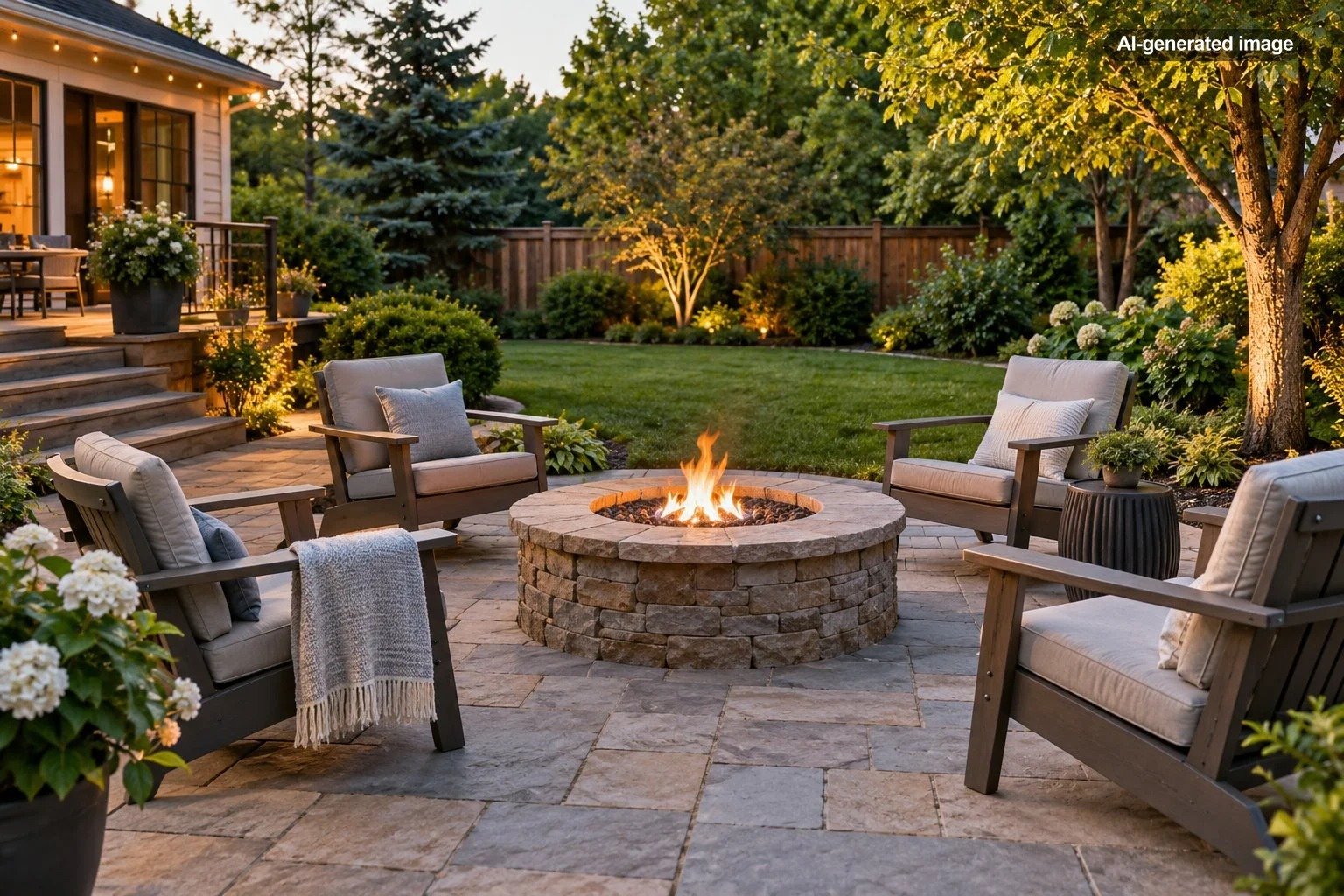
How Far Should a Fire Pit Be From Trees and Shrubs?
A fire pit should be positioned well away from trees, shrubs, overhanging branches, dry mulch, fences, and anything else that can burn. As a practical baseline, the National Fire Protection Association advises keeping outdoor fireplaces and similar products at least 10 feet from a home or anything combustible. That is a useful minimum reference point, but it should not be treated as permission to squeeze a fire pit exactly 10 feet from every tree or shrub. More clearance is often the better choice, especially around mature trees, dry vegetation, windy yards, sloped sites, or wood-burning fires that can release sparks.
The safest location is an open, level area with generous overhead and side clearance, a noncombustible surface, and no dry vegetation close enough to ignite from heat or embers. Manufacturer instructions, local fire rules, temporary burn bans, and site conditions should always take priority over a general spacing rule.
Why distance from landscaping matters
A fire pit creates more than a visible flame. It also produces radiant heat, rising hot air, sparks, and in some cases lightweight embers that can travel beyond the rim. Trees and shrubs may look green and healthy while still containing dry twigs, dead interior growth, fallen leaves, peeling bark, or accumulated debris that can ignite more readily than the living foliage suggests.
Overhead branches deserve particular attention because heat rises directly toward them. A fire pit that appears comfortably separated from a tree trunk may still sit beneath a low canopy. Likewise, a shrub several feet from the bowl can have fine outer twigs, dried flowers, ornamental grasses, or leaf litter extending toward the fire.
Spacing also needs to account for what is on the ground. Bark mulch, pine needles, dry leaves, ornamental grasses, stored firewood, wooden edging, and combustible outdoor furniture can create a path for fire to move away from the pit.
Use 10 feet as a starting point, not the whole plan
The NFPA advises using chimineas, patio fireplaces, and similar products outdoors and at least 10 feet from the home or anything that can burn. For a backyard layout, that makes 10 feet a useful minimum reference when evaluating nearby trunks, branches, shrubs, fencing, furniture, and structures.
Still, a single measurement cannot capture every yard. A large wood fire can throw sparks farther than a small enclosed gas flame. A dense evergreen can present more combustible material than a low, well-watered planting. A fire pit at the bottom of a slope may also sit beneath vegetation that would not appear directly overhead on a flat site.
A good fire pit location is not merely one that meets a measurement; it is one that leaves obvious breathing room around and above the flame.
If the only available spot puts the pit close to a mature tree, hedge, fence, deck, shed, or other combustible feature, relocating the fire pit is usually the cleaner solution than trying to make a marginal location work.
Do not forget overhead branches
Horizontal distance is only part of the placement decision. Look straight up before choosing a location. There should be no low branches, hanging foliage, vines, pergola fabric, umbrellas, string-light cords, or other combustible material over the fire unless the fire feature and overhead structure are specifically designed and approved to work together.
Trees also grow. A young branch that is comfortably outside the heat plume today may extend over the fire area later. If you are designing a permanent patio, consider the mature size of nearby trees and shrubs instead of planning only around their current shape.
Keep the ground around the fire pit clear
The area surrounding the pit should be free of easily ignited debris. Before lighting a fire, remove dry leaves, twigs, pine needles, dead grass, paper, and other loose combustible material. Avoid placing the pit directly on dry vegetation or combustible mulch unless the product manufacturer specifically permits that installation and the surrounding setup complies with local requirements.
Hardscape can help create a useful separation zone. Stone, concrete, pavers, gravel, or another suitable noncombustible surface can reduce direct exposure of nearby ground cover, although hardscape does not make nearby branches or shrubs immune to heat and sparks.
NFPA wildfire guidance also emphasizes breaking up continuous vegetation and using features such as patios, paths, and other noncombustible areas to reduce how easily fire can move through landscaping.
Different fire pits create different placement concerns
Wood-burning fire pits
Wood fires can produce sparks and embers, so generous separation from vegetation is especially important. Use appropriately sized fuel, avoid building an unnecessarily large fire, and consider a spark screen when the fire pit is designed to use one. Never assume a screen makes it acceptable to operate beneath branches or beside dry shrubs.
Propane and natural-gas fire features
Gas fire pits usually do not produce the same flying embers as burning wood, but they still generate significant flame and radiant heat. Follow the manufacturer’s stated clearances for combustible materials, ventilation, overhead structures, and fuel components. Those instructions can be more specific than a general backyard guideline.
Portable and tabletop fire products
Small size does not necessarily mean low risk. The U.S. Consumer Product Safety Commission has repeatedly warned about certain pooled-alcohol and liquid-fuel fire products because of flame-jetting and uncontrolled fire hazards. Never add liquid fuel to a flame or a fire that may still be burning, and do not use gasoline to start or restart a backyard fire.
Before you decide
- Measure from the fire area to the nearest tree trunk, shrub, fence, structure, furniture, and other combustible material.
- Look directly overhead for branches and foliage, not just outward at ground level.
- Check whether leaves, mulch, pine needles, grass, or other dry material can collect near the pit.
- Read the fire pit manufacturer’s placement and clearance instructions.
- Check local fire restrictions, especially during dry, windy, or drought conditions.
- Choose a different location if the site feels crowded or requires constant pruning to remain usable.
Wind can turn an acceptable location into a poor one
Wind changes the direction of heat, sparks, and embers. A spot that seems open on a calm evening may become unsuitable when wind blows directly toward a hedge, tree canopy, dry lawn, neighboring property, or wooden fence.
The CPSC advises against burning when wildfire risk is high. Local authorities may also issue burn bans or other restrictions during dry or dangerous conditions. If conditions are gusty, very dry, or subject to an active restriction, postpone the fire rather than trying to compensate by moving chairs or adding water around the landscaping.
How to evaluate an existing fire pit near a tree or hedge
If the fire pit is already installed, assess the entire surrounding volume rather than measuring only to the nearest trunk. Start at the edge of the fire feature and identify every combustible object or plant around it. Then look upward and outward for branches, vines, fences, furniture, dry grasses, and any place where wind routinely deposits leaves.
What to do
- Measure the nearest combustible materials and compare them with the manufacturer’s required clearances.
- Check the canopy above the fire for low limbs, dead twigs, or foliage extending over the flame area.
- Clear dry leaves, pine needles, mulch, and other loose fuel from the immediate surroundings.
- Notice the prevailing wind direction and whether sparks would move toward vegetation or structures.
- Review current local fire restrictions before each use during dry weather.
- If the site remains crowded, relocate the fire pit or have a qualified local professional review the installation.
Common placement mistakes
One common mistake is measuring only from the fire pit to the tree trunk while ignoring branches that extend much closer. Another is assuming green shrubs cannot burn. Living plants can contain dry interior growth, and the litter underneath them may be more vulnerable than the foliage itself.
Homeowners also sometimes create an attractive ring of ornamental grasses around a fire feature. Visually, it can be appealing. Functionally, mature grasses often produce dry blades and seed heads, which makes generous separation particularly important.
Finally, do not let a permanent stone patio create false confidence. Noncombustible paving helps at ground level, but it cannot protect a low tree canopy, wooden fence, fabric shade, or nearby hedge from radiant heat and sparks.
Frequently asked questions
Is 10 feet from a tree always enough?
No. Ten feet is a useful minimum reference from NFPA guidance for outdoor fireplaces and combustible materials, not a universal guarantee for every tree, fire pit, or property. Larger fires, overhanging branches, dry vegetation, wind, manufacturer requirements, and local rules may justify substantially more separation.
Can a fire pit go under a tree if the branches are high?
Avoid placing a fire pit beneath a tree canopy simply because the branches appear high. Rising heat, sparks, changing wind, and future branch growth can all matter. An open location without overhead vegetation is easier to manage safely.
How close can shrubs be to a gas fire pit?
Use the manufacturer’s required combustible clearances as the controlling specification. Gas units still create substantial heat, and plant growth can gradually reduce the original clearance over time.
Should mulch be removed around a fire pit?
Combustible mulch, dry leaves, pine needles, and similar material should not be allowed to accumulate close to an active fire. A noncombustible zone of suitable hardscape around the pit generally makes the area easier to manage, but exact installation requirements depend on the fire feature and local rules.
What should be nearby in case the fire spreads?
The CPSC recommends keeping a hose or fire extinguisher nearby when using a backyard fire pit. Use only equipment appropriate for the type of fire, keep the area attended, and make sure the fire is fully extinguished when you are finished.