How Far Should a TV Be From the Sofa?
For most living rooms, the right distance between the TV and sofa depends less on an old fixed rule and more on the size of the screen, its resolution, and how immersive you want the picture to feel. With a modern 4K television, sitting roughly 1 to 1.5 times the screen’s diagonal measurement away is a useful starting range for many rooms, while a little more distance can suit casual television viewing.
The important point is that today’s high-resolution screens can generally be viewed from closer than older televisions. A 65-inch TV does not automatically require an enormous living room, and pushing the sofa too far away can make a large screen feel unexpectedly small.
Start With Screen Size, Not Room Size
TVs are measured diagonally, so a 65-inch television has a 65-inch diagonal screen rather than being 65 inches wide. That distinction matters when translating screen size into a viewing distance.
A useful way to think about the relationship is field of view: how much of your vision the television occupies from the sofa. For mixed everyday viewing, a screen filling roughly 30 degrees of your field of view is a comfortable reference point. Moving closer creates a more cinematic effect, while moving farther back makes the television less visually dominant.
| TV size | Comfortable starting range | Room impression |
|---|---|---|
| 43 inches | About 4-6 feet | Good for compact rooms and secondary viewing areas |
| 50 inches | About 5-7 feet | Works well in smaller living rooms |
| 55 inches | About 5.5-7.5 feet | A flexible size for everyday viewing |
| 65 inches | About 6.5-9 feet | Feels substantial without requiring a huge room |
| 75 inches | About 7.5-10 feet | Creates a noticeably more immersive focal point |
| 85 inches | About 8.5-11.5 feet | Best when the room can visually support a large screen |
These are practical starting ranges rather than rigid limits. The closer end favors movies, games, and viewers who enjoy an immersive picture. The farther end generally feels more relaxed for news, conversation-heavy television, and rooms where the screen should not dominate the furnishings.
Why 4K TVs Can Be Closer to the Sofa
Older viewing-distance advice often assumed lower-resolution television. Sitting very close to those screens could make individual pixels or picture imperfections easier to notice. A 4K display packs far more pixels into the same screen area, so the picture remains detailed at shorter distances.
This is why replacing an older television with a modern 4K model can change the proportions that feel appropriate. If an old 50-inch screen looked comfortable from 9 feet away, a new 65-inch or even larger 4K television may make better use of that same viewing distance.
Measure From Your Eyes, Not the Sofa
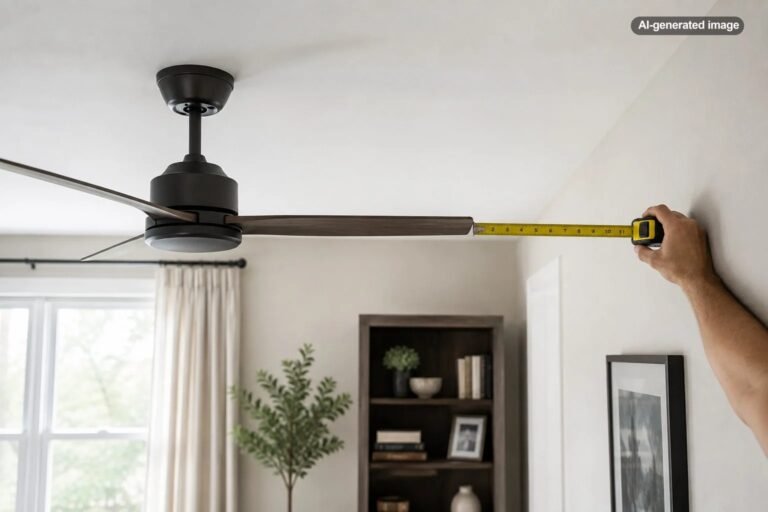
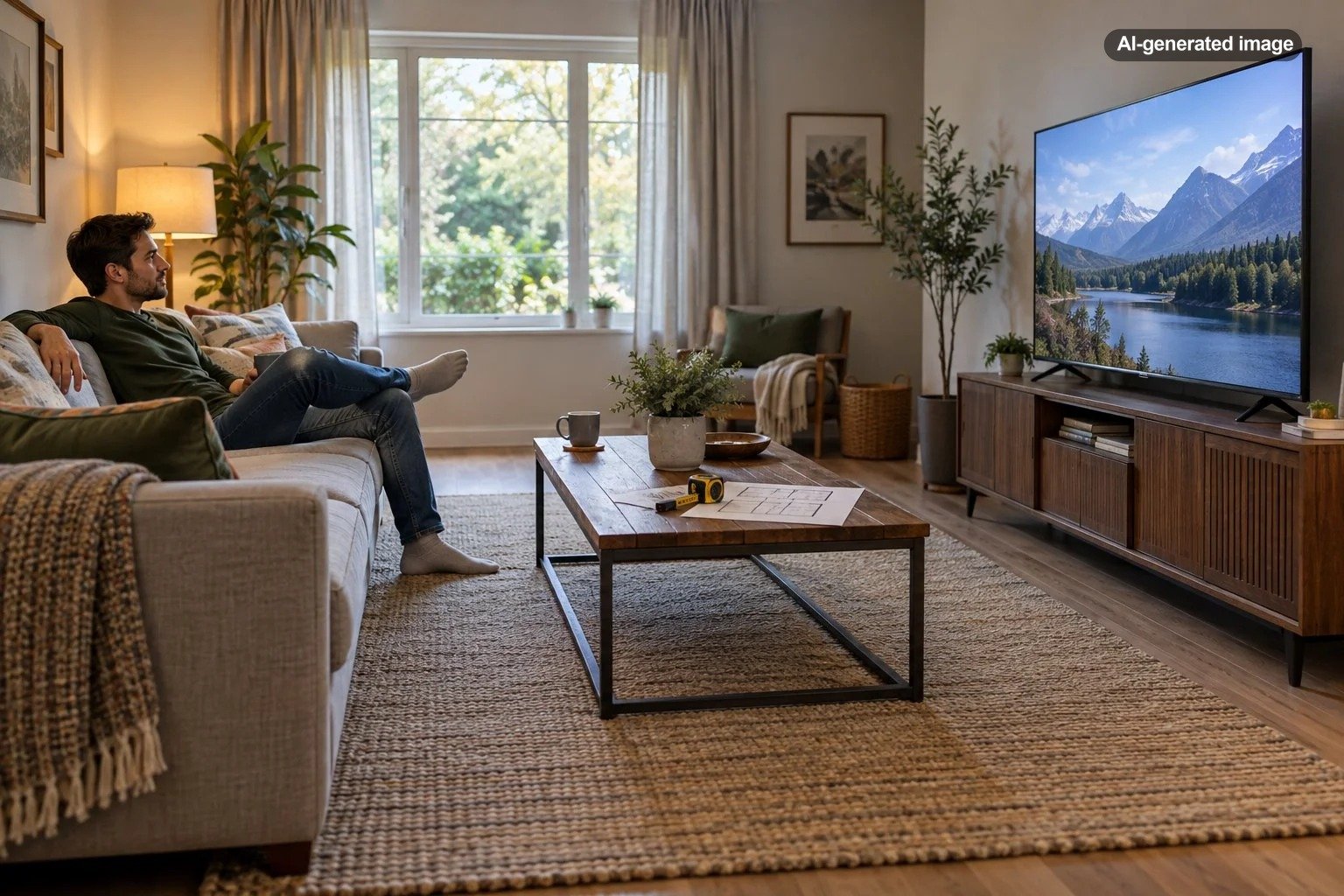
The most useful measurement runs from the television screen to the approximate position of your eyes when you are seated. Measuring to the front of a deep sofa can shorten the number by a foot or more and give you the wrong impression of the actual viewing distance.
What to do
- Sit in the position you use most often.
- Have someone measure from your approximate eye position to the television screen.
- Compare that distance with the size of your current TV or the size you are considering.
- Mark the dimensions of a prospective larger screen on the wall with removable painter’s tape.
- Sit down again and judge both the viewing experience and how the screen relates to the rest of the room.
The last step matters because television placement is both a functional and an interior-design decision. The mathematically reasonable size is not necessarily the size that looks best beside a fireplace, between built-ins, or above a long media console.
When the Sofa Is Too Far Away
A sofa can be too far from the television even when the room technically allows the extra distance. Small text becomes harder to read, subtle picture detail is less noticeable, and a large television may begin to look strangely modest.
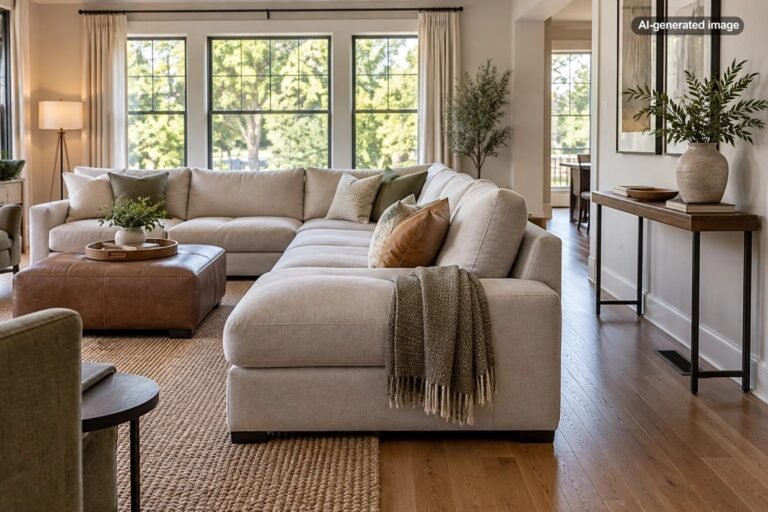
This commonly happens in open-plan rooms where the sofa is pushed toward a distant wall simply because there is space available. Floating the sofa closer to the television can improve viewing while also creating a more deliberate conversation area behind or around the seating.
When the Sofa Is Too Close
Being close to a modern 4K television is not automatically a problem, but comfort still matters. If you find yourself moving your eyes or head significantly to follow action across the screen, the combination may feel too aggressive for everyday viewing.
The effect is particularly noticeable with very large screens in narrow rooms. A television chosen primarily for maximum impact can become visually tiring when the sofa has no practical way to move farther back.
Before buying an especially large TV, reproduce its outline on the wall. The taped rectangle will not simulate the moving image, but it makes the physical scale far easier to understand than a diagonal measurement on a product page.
Consider How You Actually Watch TV
Two households with identical rooms may prefer very different viewing distances. Someone who primarily watches films in the evening may enjoy a larger screen at a shorter distance. A household that leaves the television on casually while cooking, talking, or moving around an open-plan space may prefer a less dominant setup.
Gaming can also favor sitting somewhat closer because menus, interface elements, and fine details benefit from greater apparent screen size. Sports viewers may appreciate a large picture while still preferring enough distance to take in the entire field comfortably.
Before you decide
- Measure the actual eye-to-screen distance.
- Confirm whether the TV is 4K or a lower resolution.
- Consider whether viewing is casual or intentionally cinematic.
- Check that traffic paths still work if the sofa moves forward.
- Judge the TV against the width and scale of the media furniture.
- Check sight lines from secondary seats, not only the center cushion.
Do Not Forget TV Height
Distance is only one part of comfortable placement. A television can be the right number of feet from the sofa and still feel awkward if it is mounted unnecessarily high.
In a typical seated arrangement, keeping the central portion of the screen reasonably close to seated eye level usually creates a more natural viewing position. The exact height will vary with sofa height, screen size, room architecture, and whether the television must clear furniture or another feature.
This is one reason fireplace installations require particular thought. A television placed high above a mantel can create a steeper viewing angle than the same television mounted on a conventional media wall.
Make the Sofa and TV Work With the Whole Room
The best layout should solve more than the television equation. A sofa needs appropriate circulation space, comfortable relationships with chairs and tables, and enough visual breathing room around the media wall.
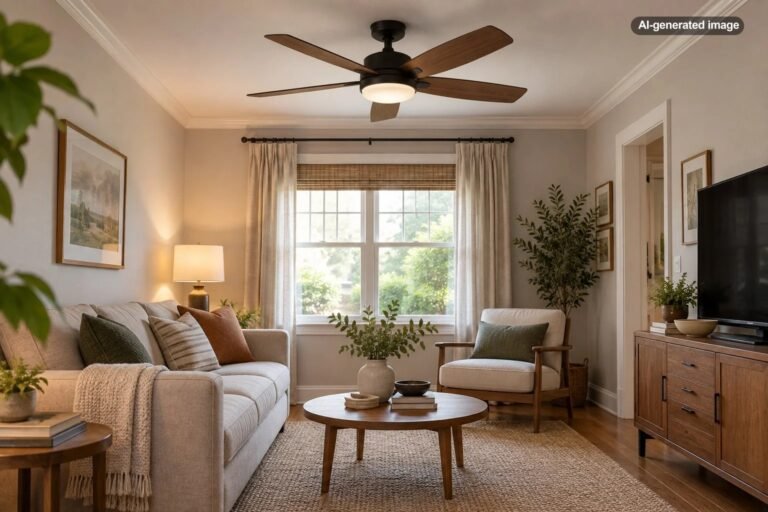
In a narrow living room, the available distance may effectively choose the TV size for you. In a large open room, the opposite is often true: rather than automatically selecting an enormous television, you can bring the seating group inward and let the furniture define a more intimate zone.
Small apartments also benefit from resisting the assumption that the sofa belongs against the farthest possible wall. Even a modest gap behind seating can help define zones, while a carefully chosen screen size keeps the television useful without making it the room’s only visual feature.
The best TV distance is the one that makes the screen feel comfortably substantial while allowing the room to function beautifully around it.
Frequently Asked Questions
How far should a 55-inch TV be from the sofa?
About 5.5 to 7.5 feet is a useful starting range for many 4K setups. Sit closer for a more immersive experience or farther away if you prefer the television to feel less dominant.
How far should a 65-inch TV be from the sofa?
Roughly 6.5 to 9 feet works well as a practical starting range for many rooms. A 65-inch 4K screen can be comfortable at distances that would once have seemed unusually close for a television that size.
Is 10 feet too far from a 55-inch TV?
It is not necessarily uncomfortable, but the television may look relatively small from that distance. If fine details or on-screen text feel difficult to see, either moving the sofa closer or choosing a larger screen can make the viewing experience feel better proportioned.
Should the sofa be centered directly in front of the TV?
The primary seat benefits from a reasonably direct sight line, but the entire sofa does not need mathematical alignment with the screen. Slightly asymmetrical layouts can work well when they improve circulation, accommodate chairs, or respond better to fireplaces and windows.
Should I move the sofa or buy a larger television?
Try the furniture move first if the room allows it. Bringing seating forward costs nothing, may improve conversation and room zoning, and gives you a clearer idea of whether a larger television is actually necessary.