What Should You Put Behind a Sofa That Floats in the Room?
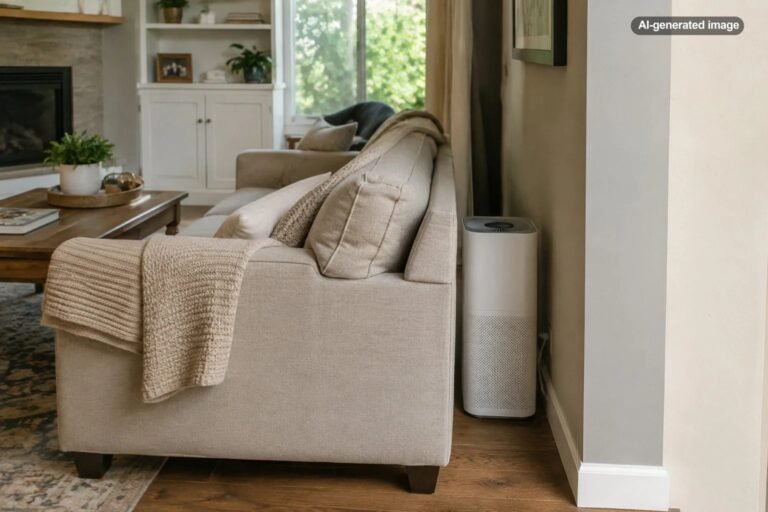
When a sofa floats away from the wall, the space behind it can become one of the most useful parts of the room. A slim console table is the classic choice, but it is not automatically the best one. Depending on how people move through the room, you might use a bench, low cabinet, pair of stools, reading station, or simply leave the area open.
The goal is not to fill every visible gap. The goal is to make the back of the sofa look intentional while protecting comfortable circulation and keeping the room visually balanced.
Start With the Reason the Sofa Is Floating
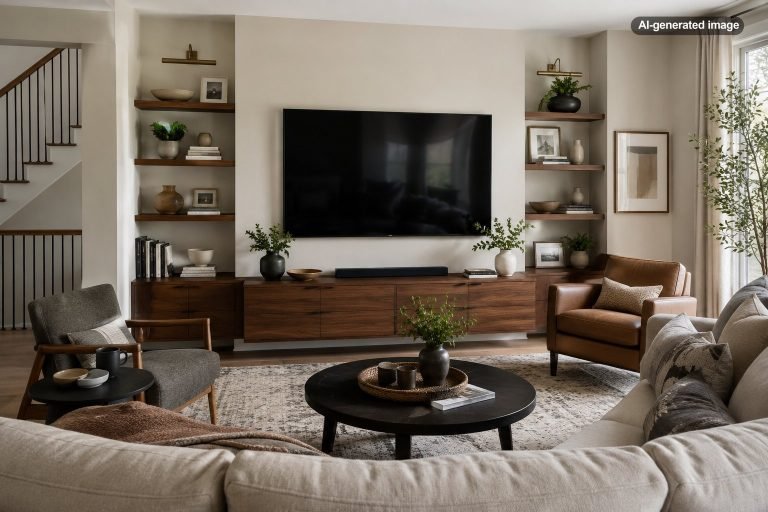
A floating sofa usually serves a purpose. It may divide a living area from a dining room, face a fireplace or television without hugging a wall, create a conversation zone in a large room, or define a seating area in an open floor plan.
That purpose should guide what goes behind it. If the back of the sofa faces a major walkway, adding furniture may make movement awkward. If it faces an open dining area and there is generous space, a console can create a polished transition between zones. If the sofa divides a living room from an entry, a useful drop zone may make more sense than purely decorative furniture.
The best piece behind a sofa solves a problem the room actually has.
A Console Table Is the Most Flexible Option
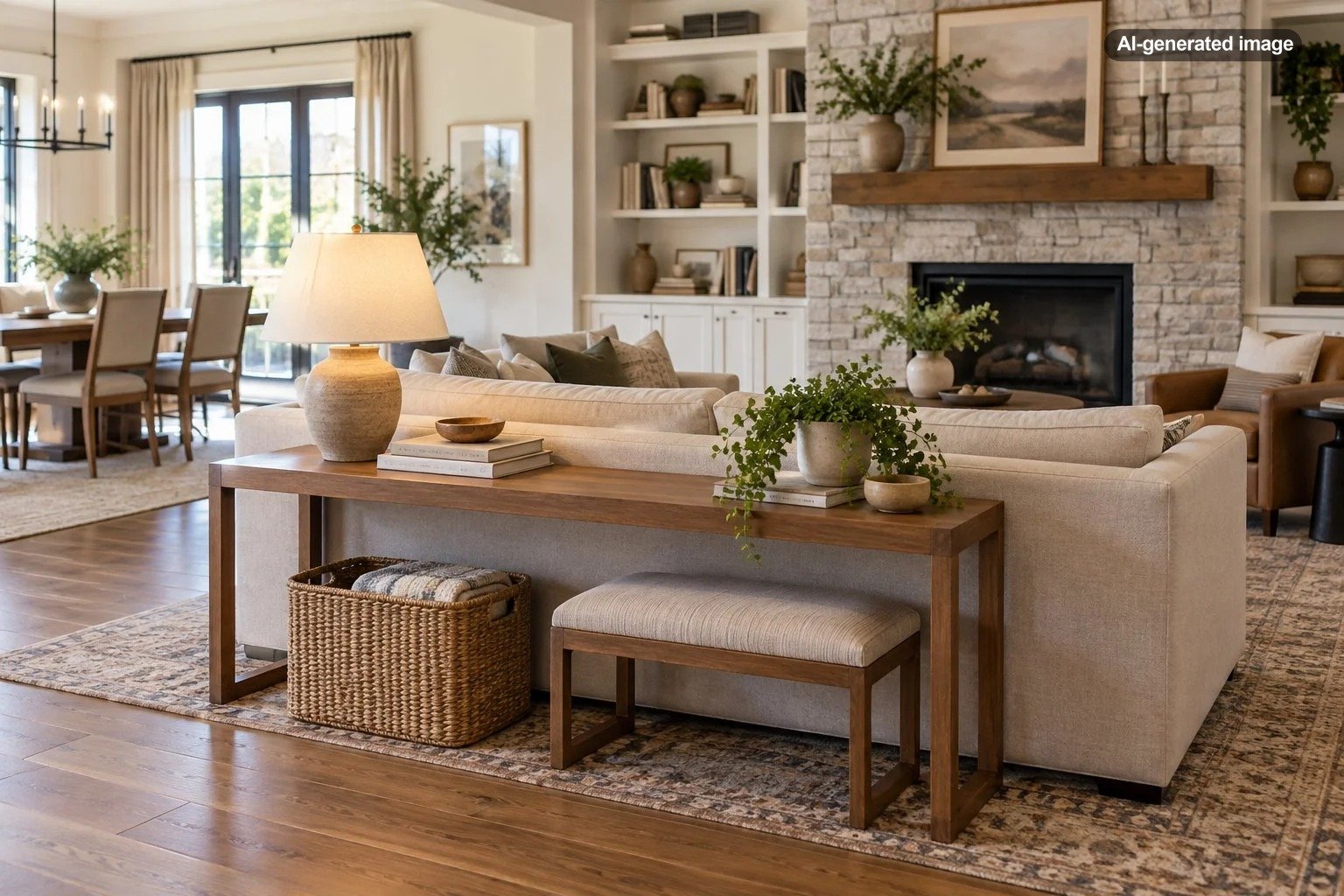
A console table is popular behind a floating sofa because it can visually finish the sofa without creating the mass of another large piece of furniture. It also provides a surface for lamps, books, bowls, small objects, or other restrained decor.
For the cleanest result, the console should generally look subordinate to the sofa rather than towering over it. A piece that sits around the height of the sofa back or somewhat below it tends to feel integrated. Very tall furniture can create an abrupt wall-like effect unless the room is large enough to support that scale.
Width matters too. A console does not need to match the sofa from arm to arm. Leaving visible breathing room at both ends usually looks more deliberate than choosing a piece that extends beyond the sofa. In a large room, a longer console can give the arrangement more presence; in a smaller room, a shorter and visually lighter piece may prevent crowding.
Choose the depth according to the walkway
The available depth behind the sofa matters more than whether a particular console looks good in isolation. A deep cabinet can turn an easy passage into a squeeze. If the space behind the sofa functions as a primary route through the room, protect that route first and choose the shallowest furniture that still serves a purpose.
Before you decide
- Identify whether the area behind the sofa is a walkway.
- Measure the sofa width and back height.
- Measure the space available before the next wall or furniture zone.
- Decide whether you need lighting, storage, seating, display space, or nothing at all.
- Check that drawers, doors, stools, and chairs can be used without blocking circulation.
Use a Bench When You Want a Lower, Lighter Look
A backless bench can work beautifully when a console feels too formal or visually busy. Because a bench sits lower, it keeps sightlines open and can make a large sofa feel less imposing from behind.
This option is especially useful when occasional extra seating would help. The bench can remain mostly clear and be pulled into service when guests arrive. It may also hold a folded throw or a small tray when it is not being used for seating.
A bench is less useful when you need table lamps, concealed storage, or a dependable landing place for everyday items. It can also attract clutter if its purpose is not clear, so consider whether it will function as seating or become a permanent holding zone.
Try Low Storage in Rooms That Need More Function
A low cabinet, credenza, or shallow storage unit can make sense behind a floating sofa when the room needs storage more than display space. It can hide games, media accessories, serving pieces, office supplies, or other items that would otherwise migrate around an open-plan room.
The tradeoff is visual weight. Closed storage tends to look more substantial than a leggy console, so it works best when there is enough room for the sofa and cabinet to read as separate pieces rather than one bulky block.
Also think about access. Cabinet doors or drawers should open without colliding with the sofa or forcing someone to stand in a busy passage. If storage cannot be comfortably used, it is probably not the right choice for that location.
A Desk or Work Surface Can Be Practical in Multipurpose Rooms
If the living room also functions as a work area, a narrow desk behind the sofa can use otherwise inactive space. This arrangement can be especially effective when the sofa faces the main living area and the desk faces outward toward a window or open room.
Before choosing this setup, account for the chair. A desk that technically fits may still fail if pulling out the chair blocks the main walkway. Cords are another consideration. A work surface in the middle of a room is easiest to manage when power access can be handled neatly without creating a trip hazard.
For occasional laptop use, a shallow surface may be enough. For full-time work, prioritize ergonomics and comfortable chair clearance rather than forcing a workstation into a location that is too tight.
Use Stools or Ottomans for Flexible Seating
A pair of stools or compact ottomans can add function without creating one long horizontal line behind the sofa. This can be useful when the room already contains several large rectangular pieces and needs a break in its geometry.
They can serve as occasional seats, footrests, or movable surfaces if their construction is appropriate for the intended use. Because they are easy to move, they also work well in rooms that need to change for entertaining.
Keep the arrangement edited. Several small pieces lined up behind the sofa can quickly look like furniture storage rather than a deliberate composition.
Create a Reading or Conversation Zone in a Large Room
In a particularly large living room, the space behind the sofa does not have to belong to the sofa at all. There may be enough room for a small secondary zone, such as a reading chair with a side table and floor lamp or a compact conversation area.
This approach works when the room has enough depth to create two genuinely usable areas. It is less successful when the secondary furniture is squeezed tightly against the sofa simply to occupy empty floor space.
Sometimes the Best Choice Is Nothing
Leaving the back of a floating sofa exposed is completely acceptable. A sofa does not require a console simply because you can see its back.
Open space is particularly valuable in smaller rooms, apartments, and layouts where the sofa already sits near a dining table, kitchen island, entry path, or another major furniture group. Adding another piece can make the room feel narrower and can complicate everyday movement.
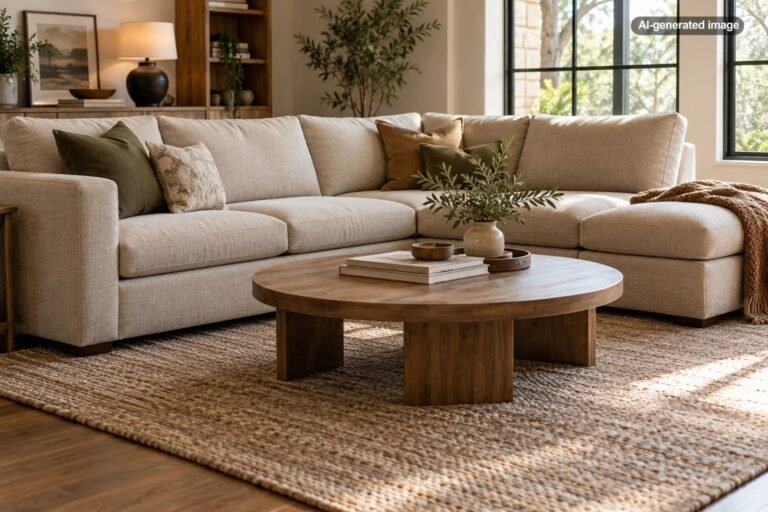
An attractive area rug can do much of the visual work instead. By clearly defining the seating zone beneath the sofa and surrounding furniture, the rug can make the floating placement feel intentional without adding anything behind it.
Pay Attention to Lamps and Decorative Objects
If you use a console behind the sofa, resist the urge to cover the entire surface. A few objects with different heights generally look calmer than a row of small accessories. Lamps can be useful when the sofa needs reading light, but their shades and cords should not interfere with people seated nearby.
Consider the view from every direction. A lamp that looks attractive from the front may expose an awkward cord or unfinished back when viewed from the dining area. Open-plan rooms reward objects and furniture that look considered from multiple angles.
Common Mistakes to Avoid
The most common mistake is choosing furniture before measuring the circulation space. A second piece can look perfectly proportioned to the sofa and still make the room frustrating to use.
- Using a piece that is too deep: Protect comfortable movement before adding storage or display space.
- Going too tall: Furniture that rises well above the sofa can visually divide the room more than intended.
- Adding furniture without a purpose: Empty space is preferable to a piece that merely collects clutter.
- Ignoring the rear view: In an open room, backs, cords, finishes, and hardware may remain visible.
- Overdecorating the console: The sofa and table already create strong horizontal lines, so a restrained arrangement often looks better.
How to Make the Final Choice
Start with function, then scale, then style. If you need a surface for lighting or a few decorative objects, choose a console. If you need occasional seating, consider a bench or stools. If storage is the priority, look at a low cabinet. If the room needs a workstation, test whether a desk and chair can operate without blocking circulation.
And if the room already functions well, leave the area open. A floating sofa can look finished simply because its position creates a strong seating zone and sensible traffic pattern.
Frequently Asked Questions
Does a floating sofa need a table behind it?
No. A table is optional. Leave the area empty when furniture would interfere with circulation or make the room feel crowded.
Should a console table be as long as the sofa?
It does not have to be. A slightly shorter console often looks balanced and leaves visual breathing room near the sofa arms.
Can you put a cabinet behind a sofa?
Yes, provided there is enough space to use its doors or drawers comfortably and the piece does not overwhelm the sofa or restrict the walkway.
What can go behind a sofa besides a console table?
Options include a bench, stools, ottomans, a low cabinet, a narrow desk, a separate reading area, or nothing at all.
How do you make a floating sofa look intentional?
Define the seating area with a coherent furniture arrangement and, when appropriate, an area rug. Keep traffic paths clear and use anything placed behind the sofa to support the room’s function rather than simply filling space.