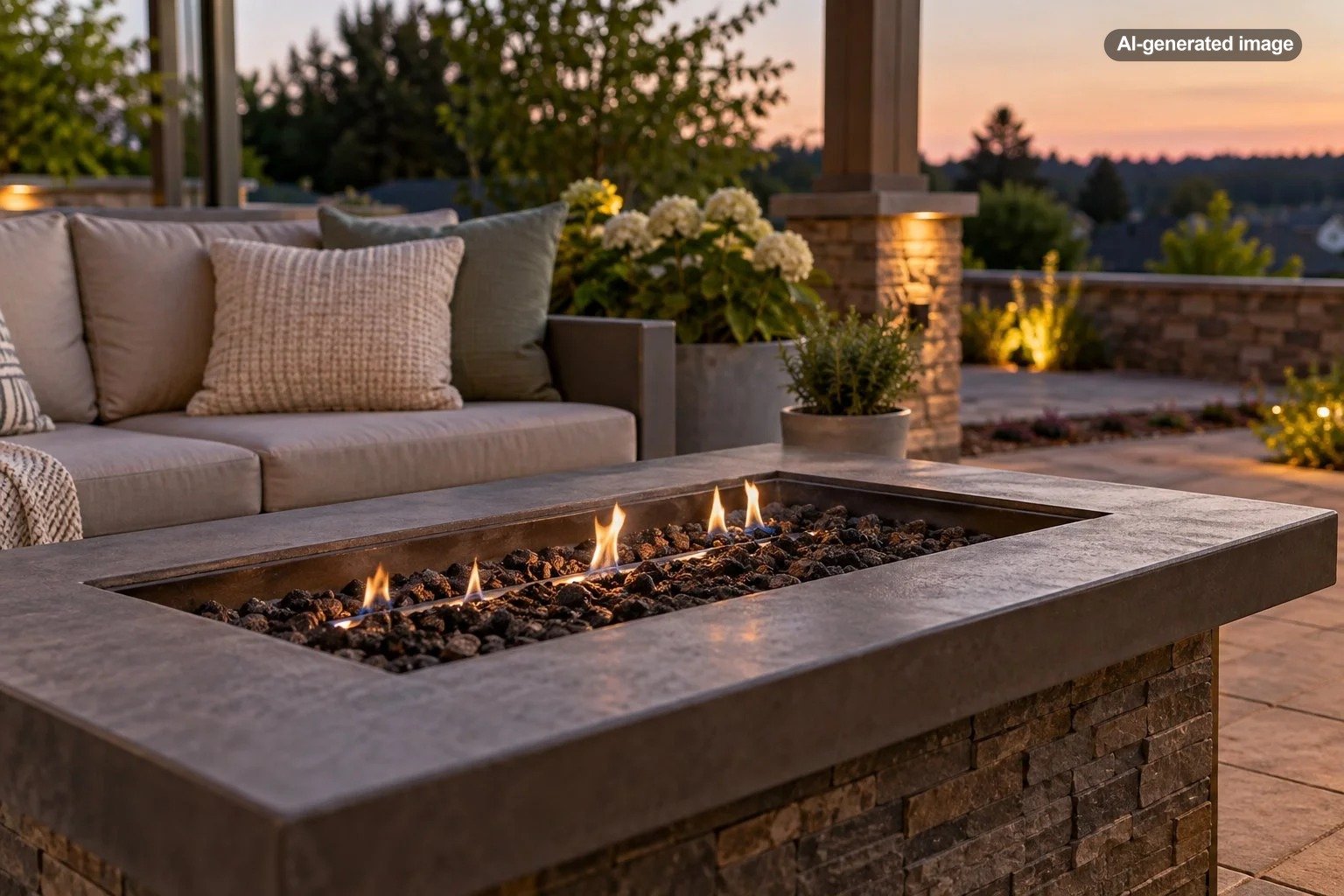
Why Does My Gas Fire Pit Flame Keep Going Out?
A gas fire pit flame that keeps going out usually points to a problem with fuel flow, wind, the lighting sequence, a dirty or obstructed burner, or the flame-sensing safety system. If the fire pit lights normally but dies as soon as you release the control knob, the thermocouple or flame-sensing area deserves particular attention. If the flame gradually becomes weak or disappears, low propane or restricted gas flow may be more likely.
Because this involves combustible gas and an open flame, troubleshooting should stay within the inspection and maintenance steps allowed by your fire pit’s manual. Do not bypass safety devices, modify regulators, enlarge burner openings, or disassemble gas-control components simply to keep the flame burning.
Why a gas fire pit may light and then go out
A steady gas flame depends on several things happening at once. The fuel supply must provide adequate pressure, the regulator and hose must allow the intended flow, the burner ports must remain open, combustion air must reach the burner, and any thermocouple or flame-sensing system must confirm that a flame is present.
When one of those conditions changes, the fire pit may shut down or produce such a weak flame that a breeze extinguishes it. The timing of the problem is often your best clue.
| What you notice | What to investigate first |
|---|---|
| Flame dies when you release the control knob | Lighting procedure, thermocouple heating, debris near the flame sensor |
| Flame is unusually low | Fuel level, regulator flow, hose condition, burner orifice blockage |
| Flame goes out mainly on breezy evenings | Wind exposure and fire pit placement |
| Flame pattern is uneven | Blocked or dirty burner ports |
| Problem appeared after reconnecting a propane tank | Possible excess-flow safety activation and the manufacturer’s reset procedure |
1. Make sure the propane supply is not simply running low
A propane cylinder can still contain some fuel while delivering disappointing fire pit performance. Owner’s manuals commonly list an empty or low cylinder among the first things to check for a weak flame or a burner that will not remain lit.
Cold conditions can make marginal fuel-supply problems more noticeable as well. Some fire pit manuals specifically warn that low tank levels and low outdoor temperatures can reduce burner performance. If the tank is nearly empty, replacing or refilling it is a sensible first step before assuming a component has failed.
2. Check whether the regulator’s excess-flow protection has activated
Many propane fire pits incorporate an excess-flow safety feature intended to restrict gas flow under certain conditions. On some models, opening the propane cylinder valve too quickly can contribute to a low-flow condition. The result may be a flame that is tiny, difficult to adjust, or prone to going out.
Manufacturer procedures vary, so use the reset sequence in the manual for your exact fire pit. Typical instructions involve turning the appliance and cylinder valves off, relieving or resetting the connection as directed, reconnecting it correctly, checking for leaks where instructed, and then opening the cylinder valve slowly before relighting.
3. Follow the complete lighting sequence
Some fire pits require the control knob to remain depressed for a period after ignition. This gives the flame-sensing thermocouple time to heat. If you release the knob too quickly, the safety valve may close and extinguish the burner even though ignition itself worked perfectly.
The required hold time is model-specific. Some manuals call for roughly 30 seconds, while others specify a different period. That is why the instructions printed on the appliance or supplied by its manufacturer matter more than a generic timing rule.
If the flame repeatedly disappears the instant you release the knob even though you are following the prescribed lighting procedure, debris around the thermocouple, a dirty sensor, a connection problem, or a failed control component may need attention.
4. Look for debris around the burner and flame-sensing area
Outdoor fire pits live in an environment full of dust, leaves, insects, moisture, and shifting decorative media. Lava rock or fire glass can also move into places where it interferes with burner openings or the ignition area.
Several fire pit manuals specifically warn users to keep burner or venturi passages clear and to watch for insect nests or other obstructions. A partially blocked burner may produce an irregular flame pattern, weak combustion, or a flame that does not reach the thermocouple properly.
What to do
- Turn the fire pit off and close the fuel supply.
- Allow the appliance to cool completely before touching burner components.
- Check the burner area for visibly misplaced fire media, dirt, leaves, webs, or insect debris.
- Use only the cleaning method approved in the manufacturer’s manual.
- Confirm that decorative media is positioned according to the instructions and is not covering areas that must remain open.
Do not poke, drill, or enlarge gas orifices unless the manufacturer explicitly directs a service procedure. Precision gas components are not ordinary clogged holes, and altering them can change combustion behavior.
5. Consider wind before assuming the fire pit is broken
Gas fire pits are outdoor appliances, but that does not make every location equally suitable. Strong or gusting wind can distort the flame enough to pull it away from the burner or flame sensor. Some manuals list excessive wind as a direct reason a burner may shut down.
If the fire pit works reliably on calm evenings but repeatedly goes out during gusty conditions, placement may be part of the problem. Follow the manufacturer’s clearance and ventilation requirements rather than improvising a wind barrier that could trap heat or interfere with combustion air.
The pattern of the failure often tells you more than the failure itself.
6. Inspect the hose and connections without attempting gas-system surgery
A pinched or visibly damaged supply hose can interfere with proper operation and deserves attention. The hose should follow the routing specified by the manufacturer and remain away from surfaces or components that could damage it.
If you smell gas, shut off the gas supply and extinguish open flames. Do not continue attempting to relight the appliance while investigating a suspected leak. CPSC materials addressing gas appliances emphasize the fire and explosion hazards associated with leaking fuel, and outdoor decorative gas appliances fall under recognized safety standards.
7. Know when the thermocouple or control valve may need service
The thermocouple is part of a safety system on many gas fire pits. It senses heat from the flame and helps permit continued gas flow. When it does not become hot enough, the appliance may interpret the situation as a lost flame and shut off the gas.
Sometimes the problem is simple: the prescribed lighting sequence was not followed, decorative media is obstructing the ignition area, or dirt is preventing the flame from properly reaching the sensor. If those possibilities are ruled out and the burner still dies every time the control knob is released, the thermocouple, its connection, or the valve may require service or replacement according to the manufacturer.
This is the point where troubleshooting should become model-specific. Replacement parts, adjustment procedures, and control assemblies are not interchangeable across every fire pit.
A practical troubleshooting order
Rather than taking the fire pit apart, work from the least invasive explanation toward the more technical ones.
Before you decide
- Confirm that the propane cylinder has adequate fuel.
- Notice whether the problem happens mainly in strong wind.
- Repeat the exact lighting procedure from your owner’s manual.
- Check for visible debris or displaced decorative media around the burner and flame sensor.
- Inspect the hose for pinching or obvious damage.
- If low flow began after reconnecting the tank, follow the manufacturer’s regulator or excess-flow reset procedure.
- Stop if you smell gas or find damaged gas-system components.
What not to do
Do not defeat or bypass a thermocouple or other flame-safety device because the fire will not stay lit. Do not substitute an unapproved regulator, enlarge a gas orifice, or alter the burner to produce a larger flame. Do not obstruct required ventilation in an attempt to shield the flame from wind.
It is also important not to treat every fire pit as identical. Propane and natural-gas models may use different components, pressures, connections, and lighting systems. Always identify the exact model before ordering replacement parts or following a service procedure.
FAQ
Why does my gas fire pit go out when I release the knob?
The flame-sensing system may not yet be hot enough, the control knob may not have been held for the required time, or the flame may not be reaching the thermocouple properly. Follow the model’s lighting instructions first. Persistent failure can indicate a thermocouple, connection, or valve issue that needs service.
Can wind make a propane fire pit turn off?
Yes. Strong or gusting wind can disrupt the burner flame, and some manufacturers specifically identify excessive wind as a cause of flame shutdown. Use the fire pit only in conditions and locations consistent with its manual.
Why is my fire pit flame suddenly very small?
Common possibilities include low propane, restricted fuel flow, a pinched hose, a blocked burner orifice, or activation of an excess-flow safety feature. The exact reset and cleaning procedure should come from the manufacturer’s instructions for your model.
Should I replace the thermocouple myself?
Only if the manufacturer provides a user-serviceable procedure for your specific model and you can follow it exactly. Otherwise, gas-control repairs are better left to a qualified service provider.