What Indoor Humidity Level Is Best for a Florida Home?
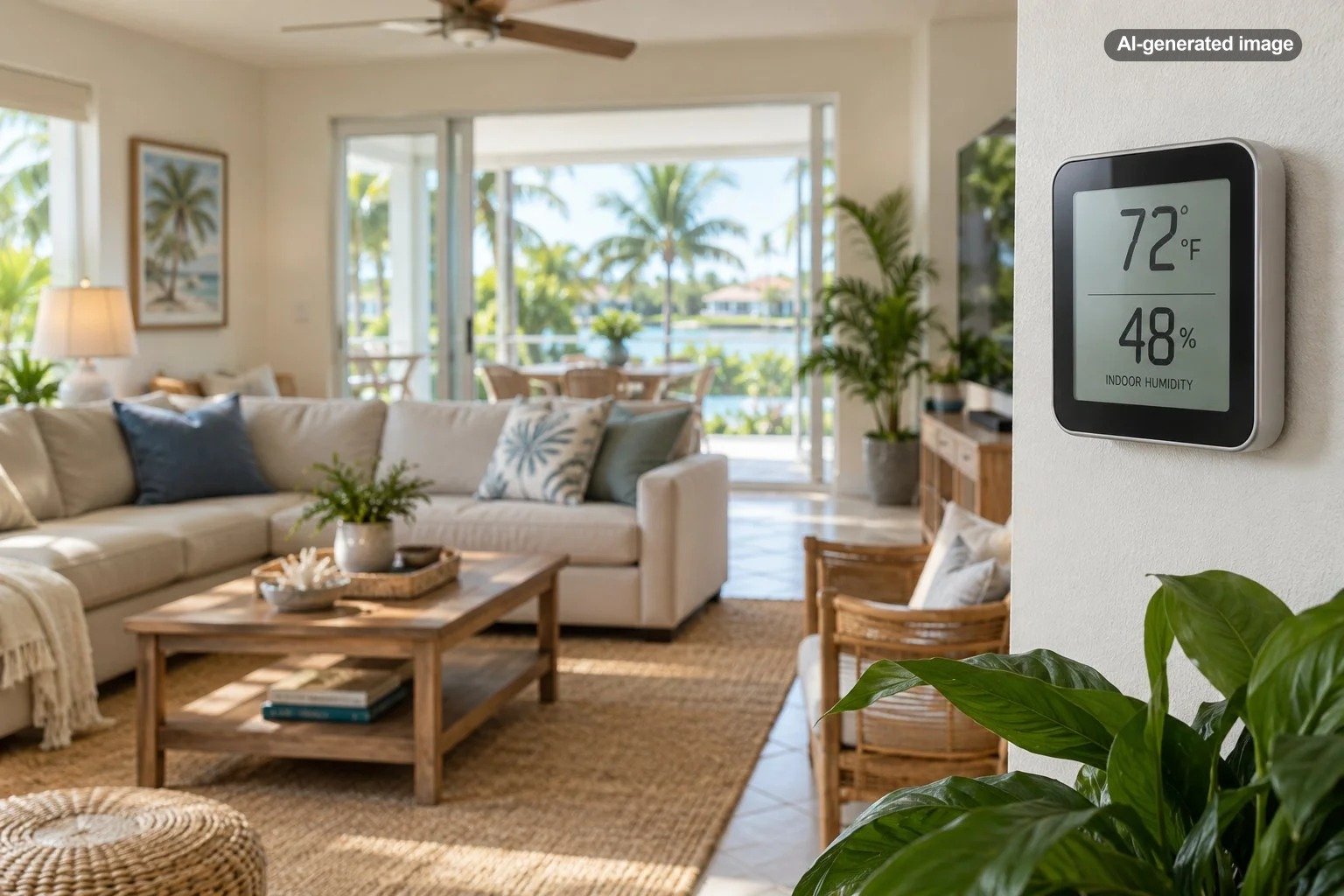
For most Florida homes, a practical indoor relative humidity target is roughly 45% to 55%. The U.S. Environmental Protection Agency recommends keeping indoor humidity between 30% and 50% when possible and, importantly, below 60%. In Florida’s persistently humid climate, maintaining the low end of that range at all times can be difficult, so consistently staying around the upper 40s to low 50s is a sensible goal for many homes.
The number matters because humidity affects more than whether a room feels a little sticky. Excess indoor moisture can contribute to condensation, musty conditions, biological growth, and deterioration of moisture-sensitive materials. In a Florida house, humidity control is therefore part of ordinary HVAC and home-maintenance strategy rather than a seasonal afterthought.
Why Florida homes need closer humidity attention
Florida homes operate in an unusually moisture-heavy environment for much of the year. Warm outdoor air can carry substantial water vapor, and that moisture can enter through normal door openings, air leaks, ventilation, and everyday household activity. Cooking, showering, laundry, and wet cleaning add still more moisture indoors.
Air conditioning normally performs two jobs at once: it cools the air and removes moisture as water condenses on the cooling coil. That second job is especially important in Florida. A home can reach its thermostat temperature yet still feel damp if the cooling system is not removing enough moisture.
This is one reason temperature alone is a poor measure of indoor comfort. A 74-degree room at moderate humidity can feel very different from a 74-degree room with persistently high relative humidity.
How to interpret the number on your humidity monitor
| Indoor relative humidity | How to think about it in a Florida home |
|---|---|
| Below 40% | Drier than many Florida homes require; investigate before deliberately trying to maintain very low humidity. |
| 40% to 45% | Comfortably dry for many households when achieved without excessive cooling. |
| 45% to 55% | A practical target range for many Florida homes. |
| 55% to 60% | Worth watching, particularly if the level remains elevated for long periods or certain rooms feel damp. |
| Above 60% | Investigate sustained high humidity and possible moisture sources; EPA guidance recommends keeping indoor RH below 60%. |
One reading is less useful than a pattern. Relative humidity naturally changes as the air conditioner cycles, showers are taken, exterior doors open, rain moves through, or outdoor conditions change. What matters more is whether the house repeatedly returns to a reasonable range or remains humid for hours at a time.
Placement matters as well. A humidity monitor sitting beside an air-conditioning supply register, bathroom door, sunny window, or cooking area may not represent conditions throughout the house.
Affiliate disclosure: CraneManor.com may earn a commission when you purchase through links on this page. This does not affect the price you pay. Learn more.
If your thermostat does not display relative humidity, a digital hygrometer can provide a simple reference point. Moving the meter among bedrooms, living areas, closets, and other rooms over several days can also reveal whether a humidity problem is whole-house or localized.
What causes indoor humidity to stay too high?
Persistent humidity is usually a moisture-control problem rather than a decorating or housekeeping problem. Start with the ordinary possibilities before assuming something more serious is wrong.
- Short air-conditioning cycles: A system that reaches the thermostat setting very quickly may have less operating time available for moisture removal.
- Bathroom moisture: Long showers without effective exhaust ventilation can push moisture into adjacent rooms.
- Cooking: Boiling water and other moisture-producing cooking methods can raise indoor humidity, especially without outdoor-vented exhaust.
- Air leakage: Gaps around doors, windows, penetrations, or other parts of the building envelope may allow humid outdoor air indoors.
- Condensate problems: A clogged or poorly draining HVAC condensate system deserves prompt attention.
- Water leaks: Plumbing, roof, window, wall, or appliance leaks can create localized moisture that air conditioning alone cannot solve.
- Vacant-home operation: Seasonal Florida homes still need moisture control when no one is there to notice changing conditions.
What to do if your Florida home stays above 60% humidity
What to do
- Confirm the reading. Check humidity in more than one room and at different times of day for several days.
- Look for obvious moisture sources. Check for plumbing drips, roof or window leakage, damp materials, condensation, and HVAC drain problems.
- Use exhaust ventilation properly. Run bathroom and kitchen exhaust fans when producing moisture, provided those fans vent outdoors as intended.
- Check normal HVAC operation. Make sure filters and accessible maintenance items are being handled according to the equipment manufacturer’s instructions.
- Consider dehumidification. A portable or whole-house dehumidification approach may be appropriate when the cooling system cannot maintain reasonable humidity on its own.
- Call a qualified HVAC professional when the pattern persists. Sustained high humidity can involve equipment sizing, airflow, controls, duct conditions, building-envelope issues, or other factors that cannot be diagnosed from an indoor humidity reading alone.
Simply setting the thermostat colder is not an ideal universal fix. It may increase energy use and make occupants uncomfortable while leaving the underlying moisture source unresolved. The better question is why the house is retaining or gaining moisture faster than the system is removing it.
Watch the rooms where moisture problems hide
Whole-house averages can conceal local trouble spots. Closets on exterior walls, rooms with limited airflow, bathrooms, laundry areas, spaces near leaky windows, and areas around HVAC equipment deserve occasional inspection.
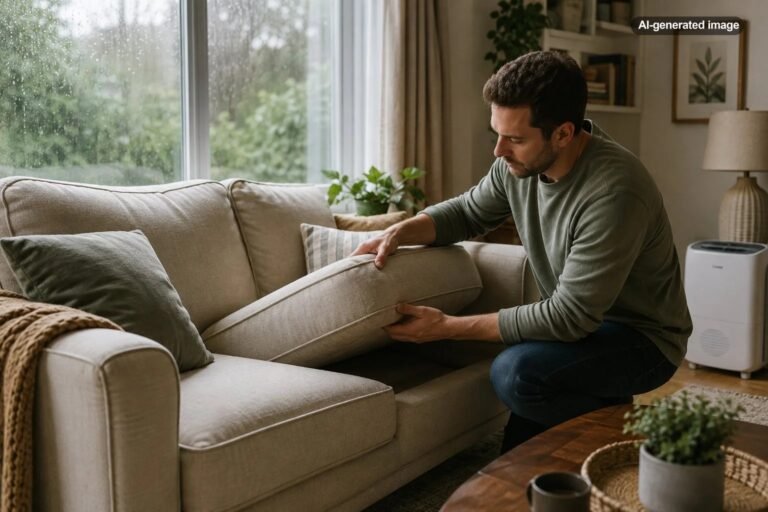
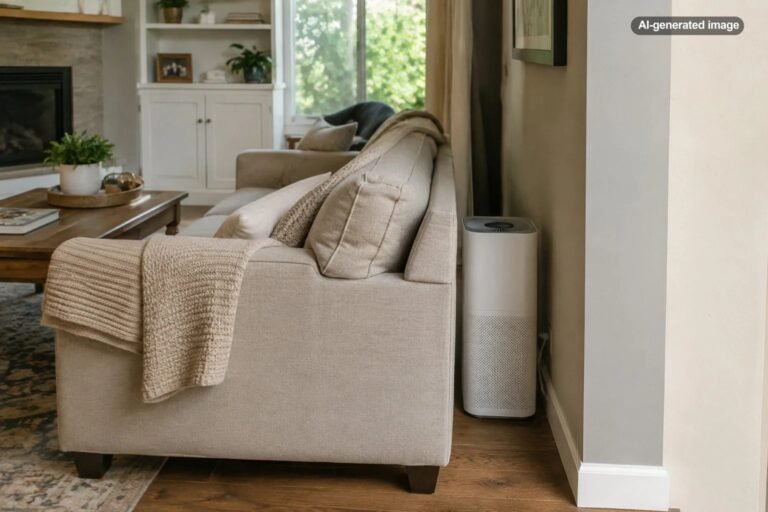
Furniture placement can matter, too. A large cabinet or upholstered piece pressed tightly against an exterior wall may restrict air movement, creating a cooler, less ventilated pocket where moisture behaves differently from the center of the room.
What about a Florida home that sits vacant?
Humidity management becomes particularly important when a home is vacant for weeks or months. Turning cooling off entirely can leave interior conditions dependent on outdoor moisture, air leakage, building design, and incidental heat gain. Conversely, running the air conditioner colder than necessary is not automatically the most effective moisture-control strategy.
University of Florida guidance for seasonal homes emphasizes maintaining air-conditioning operation and controlling indoor moisture rather than simply shutting the system down. Owners of seasonal properties may also benefit from humidity monitoring that makes unusual conditions easier to catch during an absence.
FAQ
Is 60% indoor humidity too high in Florida?
A brief rise near 60% is not the same as sustained high humidity, but EPA guidance recommends keeping indoor relative humidity below 60% and ideally between 30% and 50%. If a Florida home stays at or above 60% for long periods, investigate why.
Is 50% humidity good for a Florida home?
Yes. Around 50% relative humidity is a very reasonable target for many Florida homes and falls within EPA’s preferred range.
Should I set my thermostat lower to reduce humidity?
Not automatically. Air conditioning removes moisture while it operates, but lowering the temperature is not a substitute for identifying poor moisture removal, leaks, ventilation issues, or HVAC problems. Persistent humidity is better evaluated as a system and moisture-control issue.
Do I need a dehumidifier in Florida?
Not every Florida home needs a separate dehumidifier. If the existing HVAC system maintains reasonable humidity, adding one may be unnecessary. A dehumidifier becomes more relevant when humidity remains elevated despite normal cooling and moisture-control practices.
What is the simplest way to monitor indoor humidity?
Use the humidity reading on a reliable thermostat or a separate hygrometer and watch trends over several days. Checking more than one room is especially useful when only part of the house feels damp.
The sensible target for most Florida homes
Think of 45% to 55% relative humidity as a practical working range rather than a rigid magic number. EPA guidance provides the broader benchmark: 30% to 50% is ideal when possible, and indoor humidity should remain below 60%. Recent University of Florida guidance likewise emphasizes keeping Florida homes around 55% or lower.
The best-performing home is not necessarily the one with the lowest humidity reading. It is the one that controls moisture consistently, avoids prolonged high-humidity conditions, manages everyday moisture sources, and uses its HVAC system effectively without making the house unnecessarily cold.
Sources & further reading
- U.S. Environmental Protection Agency: Care for Your Air – A Guide to Indoor Air Quality
- U.S. Environmental Protection Agency: A Brief Guide to Mold, Moisture and Your Home
- University of Florida IFAS Extension: Understanding Florida Homes
- University of Florida IFAS Extension: Closing Your Seasonal Home