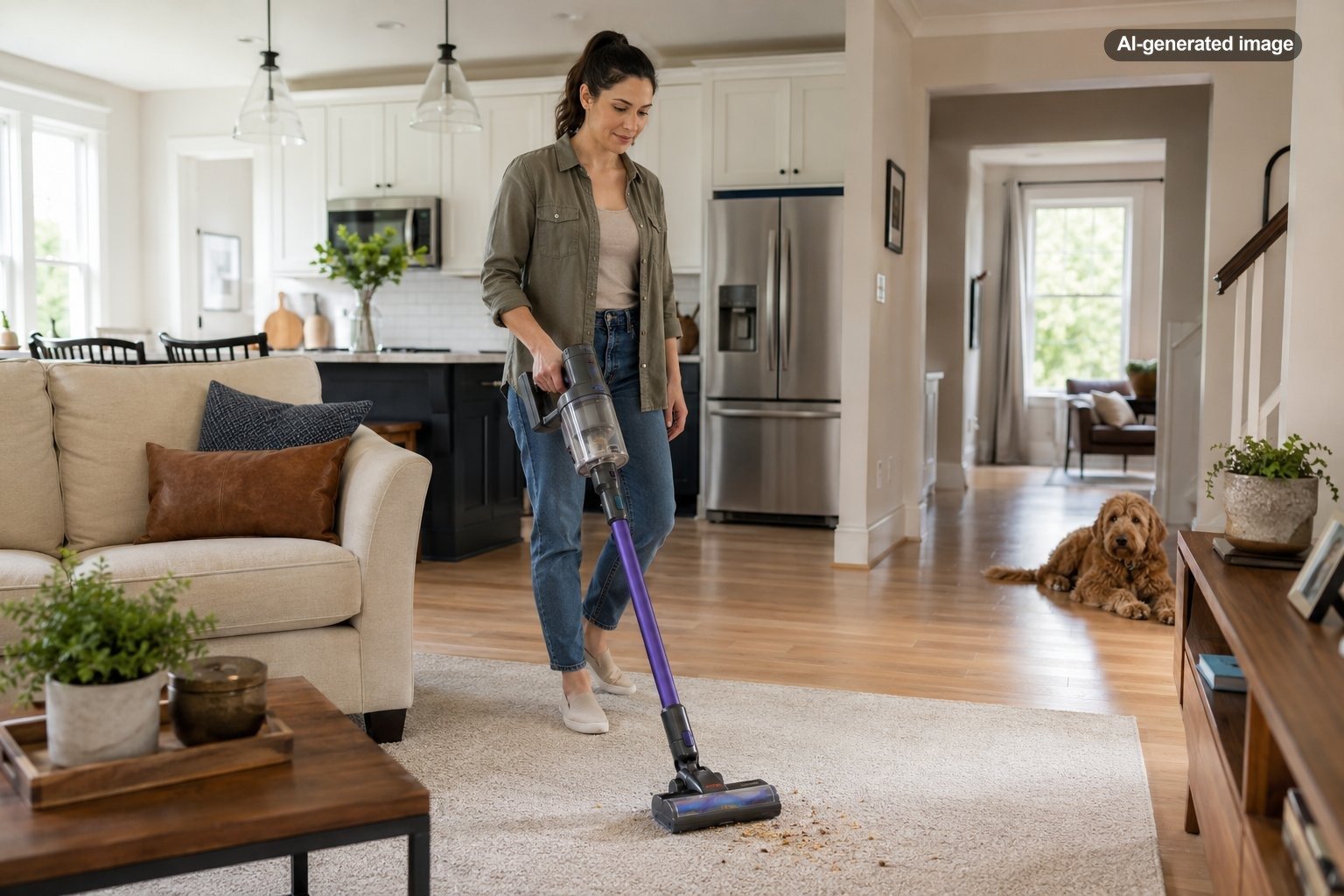
Are Cordless Stick Vacuums Powerful Enough for an Entire House?
Yes, a good cordless stick vacuum can be powerful enough to clean an entire house, particularly when the home has mostly hard flooring, low- to medium-pile rugs, and a manageable amount of daily debris. The important qualification is that advertised suction and runtime do not tell the whole story.
A cordless model must deliver enough cleaning performance, usable battery time, dust-bin capacity, and brush-roll effectiveness for your particular combination of square footage, carpet, stairs, pets, and cleaning habits. For some households, it can replace a corded upright or canister completely. For others, it works better as the convenient everyday vacuum while a larger machine handles occasional deep cleaning.
What whole-house capability actually means
Calling a vacuum suitable for an entire house can mean several different things. One homeowner may vacuum a 900-square-foot apartment twice a week. Another may clean two carpeted stories, a staircase, upholstered furniture, and the tumbleweeds produced by two large dogs.
Instead of treating the phrase as a simple yes-or-no claim, consider whether the vacuum can complete your normal cleaning route without creating unnecessary interruptions. A practical whole-house model should pick up visible debris and embedded dirt from your main floor types, reach the spaces you regularly clean, and finish the job without repeated charging, emptying, or brush-roll maintenance.
Battery runtime is usually the first limitation
Manufacturers may advertise runtimes of roughly 40 to 70 minutes on current cordless models, but those figures are often measured under favorable conditions, such as using the handheld unit in an energy-saving mode. Motorized floor heads, automatic dirt detection, carpet, and maximum-power modes can reduce the time available for actual floor cleaning.
This does not make the claims meaningless, but it does mean that the largest number on the box should not be treated as your guaranteed whole-house cleaning time. A vacuum that adjusts suction automatically may conserve energy on clean hard floors and increase power over dirtier sections, which can be more useful than running at maximum power continuously.
For a larger home, look for a removable battery, the option to purchase a second compatible battery, or a model with enough real-world runtime to finish one floor at a time. A permanently installed battery is not automatically a poor choice, but it gives you fewer options when runtime declines with age.
Floor type matters as much as suction
Hard floors are generally friendly territory for cordless stick vacuums. Crumbs, dust, hair, and light tracked-in grit can often be collected efficiently, especially with a soft roller or a cleaner head designed to maintain close contact with the floor.
Carpet is more demanding. The vacuum must combine airflow with effective agitation from the brush roll. Low-pile carpet and flatwoven rugs are usually easier than plush carpet, dense wool rugs, or deep pile that resists the cleaner head. A machine can feel impressively powerful on kitchen flooring yet struggle to lift embedded grit from a carpeted family room.
| Household condition | Likely cordless fit | What to prioritize |
|---|---|---|
| Mostly hard floors | Very good | Soft roller, floor detection, easy steering |
| Hard floors with area rugs | Good | Automatic surface adjustment and a capable brush roll |
| Mostly low-pile carpet | Possible with the right model | Carpet pickup, usable runtime, cleaner-head design |
| Plush or deep-pile carpet | More challenging | Strong agitation, adjustable power, easy pushing |
| Heavy pet shedding | Possible, with interruptions | Hair resistance, larger bin, upholstery tools |
| Large multistory home | Depends on the cleaning routine | Removable battery, light weight, convenient charging |
Dust-bin size can interrupt a cleaning session
Cordless stick vacuums are compact, and their dust bins usually reflect that. In a tidy home with routine cleaning, a smaller bin may be perfectly reasonable. In a house with shedding pets, tracked-in soil, renovation dust, or long gaps between cleaning sessions, it can fill quickly.
Emptying the bin once during a whole-house clean is a minor inconvenience. Emptying it after every room can make a cordless vacuum feel less capable than its motor actually is. Check whether the bin can be emptied without pulling hair and compacted debris out by hand, and note whether the internal screen or shroud tends to collect fine dust.
Auto-empty docks can reduce day-to-day contact with debris, but they add another appliance-size component, occupy floor space, and do not eliminate filter or brush-roll maintenance. They are most appealing when convenience and frequent light cleaning matter more than having the smallest possible setup.
Pets change the definition of enough power
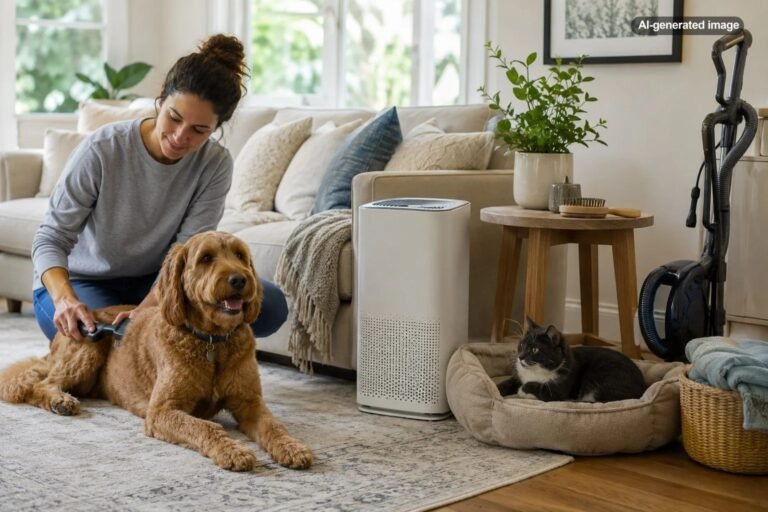
Pet hair is not merely another type of dust. It can cling to upholstery, weave itself into carpet, wrap around rotating parts, and fill a compact bin with surprising speed. A cordless vacuum for a pet household should be judged by its cleaner head, hair management, upholstery tools, filtration design, and capacity as well as its suction.
Long human hair creates similar issues. A self-cleaning or hair-resistant brush roll can reduce maintenance, but no design should be assumed to be completely immune. Inspect the roll, end caps, and air pathways regularly, particularly when pickup begins to decline.
Weight and maneuverability affect how thoroughly you clean
A lighter vacuum that is easy to retrieve often gets used more consistently than a powerful machine hidden in a closet. Cordless sticks are particularly useful for stairs, edges, quick kitchen cleanups, and transitions between rooms because there is no cord to relocate.
However, the weight listed for a vacuum does not fully describe how it feels. Much of a stick vacuum’s mass may sit near the hand, which can tire the wrist and forearm during long sessions or above-floor cleaning. Test the balance, trigger or power-button arrangement, steering, and resistance of the floor head when possible.
For aging-in-place households or anyone with limited grip strength, a model that remains on without continuously squeezing a trigger may be easier to use. A self-standing design or stable charging dock can also reduce awkward bending and prevent the machine from being leaned precariously against furniture.
Filtration and maintenance still matter
Strong pickup is only one part of effective cleaning. A well-sealed vacuum with appropriate filtration helps keep collected fine particles from escaping through gaps or exhaust air. Manufacturer filtration claims should be read carefully because the performance of an individual filter is not necessarily the same as the performance of the complete vacuum system.
Filters, bins, cleaner heads, and air pathways also need regular attention. Follow the manual for filter washing or replacement, and allow washable components to dry fully before reinstalling them. Operating a vacuum with a damp filter or obstructed airway can impair performance and may damage the machine.
When a corded vacuum may still be the better choice
A corded upright or canister remains compelling when you want uninterrupted runtime, have extensive carpeting, routinely collect substantial debris, or prefer a larger dust container. Corded machines also avoid the long-term question of battery capacity, although they bring their own inconveniences in the form of storage, weight, and cord management.
Keeping two vacuums is not necessarily redundant. A cordless stick can handle frequent maintenance cleaning, stairs, crumbs, and visible pet hair, while a corded machine handles periodic carpet cleaning. This division often works better than expecting either machine to be perfect at every task.
Before you decide
- Estimate how long your normal vacuuming route takes, rather than relying only on square footage.
- Count the carpeted rooms, area rugs, stairs, and upholstered pieces you expect to clean.
- Check whether the published runtime applies to the motorized floor head and the power mode you will use.
- Consider a removable battery if the house is large or cleaning sessions are long.
- Look at bin capacity and emptying design if you have pets or abundant carpet.
- Confirm that replacement filters, batteries, and brush rolls are available for the model.
- Assess handle weight and controls if grip strength, wrist comfort, or mobility is a concern.
The bottom line
Cordless stick vacuums have moved well beyond the role of crumb collector. Strong current models can deliver legitimate whole-house cleaning, and many households will value their convenience enough to use them more often than a traditional vacuum.
The best candidates are homes with mostly hard floors, moderate square footage, routine cleaning, and limited heavy shedding. The case becomes less certain as carpet depth, pet hair, square footage, and cleaning time increase. Choose according to the work your house creates, not the most dramatic power claim on the product page.
Frequently asked questions
Can a cordless stick vacuum replace an upright?
Yes, especially in a smaller or medium-size home with hard floors and low-pile rugs. A corded upright may remain better for extensive carpet, large debris loads, or long uninterrupted sessions.
How much runtime is enough for a whole house?
That depends on the home’s layout and how thoroughly you clean. Time your current routine and compare it with the manufacturer’s runtime for the motorized cleaner head and the mode you are likely to use, not simply the highest advertised figure.
Are cordless vacuums good for pet hair?
Many are, but brush-roll design, bin capacity, upholstery tools, and resistance to hair wrapping are critical. Heavy-shedding households may still need to empty the bin during a cleaning session.
Do cordless vacuums lose power as the battery drains?
Performance varies by design. Many modern machines are engineered to deliver consistent operation until the battery approaches depletion, but available runtime decreases in higher-power modes and battery capacity can decline with age.
Is a second battery worth buying?
It can be worthwhile for large homes, extensive carpeting, or households that clean several floors in one session. Confirm compatibility, charging arrangements, and storage recommendations before purchasing an additional battery.